Do you have a group of strange people around you who take a deep breath every time they arrive at a gas station? The reason is that the smell of gasoline permeating the air is as sweet to them as the fragrance of flowers. I, on the other hand, feel nauseous at the smell of gasoline and cannot understand this, but I do take a deep breath when passing by an underground garage… Some people might be obsessed with the smell of disinfectant, rubber, pharmacies, the scent of rain, or even the smell of stinky shoes and socks…




Which image triggers your olfactory DNA?
Every time I stand in front of a stinky tofu stall and get scolded by my friends for not moving, I want to ask, why don’t you think durian smells bad? Why are these strange smells so fascinating?
01
✦ Why do people like the smell of gasoline?
✦
People who enjoy smelling certain scents generally have a condition called parosmia or olfactory fetishism. As long as it doesn’t become an obsession, it’s generally not a big problem. There are many subcategories, such as a strong craving for a specific smell, known as olfactory craving syndrome, where not smelling it makes one feel uncomfortable; and olfactory sexual fetishism, where smelling a certain scent causes excitement, yes, it’s the kind of peculiar preference you might imagine.

Scientists are also very curious about why people have a preference for certain smells, and they have conducted various studies to explain this phenomenon. For example, anatomically, the olfactory nerve pathways do not pass through the thalamus, the “relay station,” to reach the cortex like other senses; instead, they are directly connected to the limbic system, which is responsible for memory and emotions. Therefore, compared to other senses, olfaction is more likely to trigger memories.
This phenomenon of triggering memories through senses is known as the Proust effect. So, liking a certain smell may be because it reminds one of a pleasant experience, such as smelling gasoline and recalling a happy childhood trip with parents.

Proust wrote in his novel “In Search of Lost Time” that the protagonist experienced the aroma, taste, and texture of a madeleine cake, which transported him back to vivid childhood memories.
On the other hand, the smell we perceive from something is actually the result of various odor molecules (such as alcohols, aldehydes, aromatic hydrocarbons, etc.) binding to olfactory receptors, so if the genes associated with olfactory receptors differ, each person will have a different perception of the same substance.
Although it seems that no one has specifically studied which genes are associated with a preference for the smell of gasoline, scientists have researched something more controversial—coriander. They conducted a study on over 26,000 participants from Europe, Asia, and America, asking them questions like “Does coriander smell like soap to you?” and “Do you like eating coriander?” They found that the polymorphism of the gene rs72921001 located on chromosome 11 affects sensitivity to the aldehydes in coriander, which determines whether it smells like soap, and this gene is part of the olfactory receptor gene cluster OR6A2.

How can one think coriander tastes like soap after just one meal?555
Interestingly, it seems that Asians are less sensitive to this smell compared to Europeans, especially South Asians, where only 3.9% are sensitive to the smell of coriander, followed closely by East Asians at 8.4%.
There is also a theory that a preference for strange smells may indicate a deficiency in certain trace elements. Currently, doctors have found that patients with iron deficiency anemia sometimes exhibit the aforementioned olfactory craving syndrome. In addition to wanting to smell gasoline, some may also crave the scent of mint or lemon cleaning agents. This peculiar preference often diminishes or completely disappears after iron supplementation. The reasons behind this are unknown, as there are only sporadic cases, and scientists are trying to link the two to detect iron deficiency anemia earlier.

I personally am the type who wants to squeeze toothpaste into all drinks during summer.
Additionally, the volatile compounds in gasoline, such as benzene, aromatic hydrocarbons, and other aliphatic hydrocarbons, sometimes have a sweet scent, especially benzene itself has a sweet smell, which may also be a reason why some people cannot resist smelling it. Benzene is a good organic solvent; for a long time, it was used as a solvent in paints, which also have a faint sweet smell, explaining why some people enjoy the smell of paint.
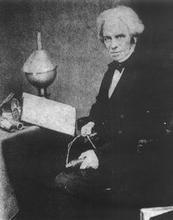
The first person to isolate benzene was the famous Faraday, although he did not understand its structure at the time. Perhaps he was also the first to discover that benzene tastes sweet; he was indeed a brave man.
02
✦ Truly Addictive Gases
✦
The reason for specifically mentioning the volatile substances in gasoline is that these substances not only psychologically induce pleasure but also physiologically activate the limbic system, leading to feelings of pleasure, making one naturally think, “Ah, that feels good, let’s have more.” The limbic system is closely related to addictive behaviors; smelling gasoline and paint can also be addictive, and these gases can be harmful to the body. For example, benzene is a well-known carcinogen, so do not intentionally inhale it.
Volatile gases are very common in daily life, and several can be addictive. Besides the well-known nitrous oxide and halothane, there are also some halogenated hydrocarbons or alkenes and aliphatic hydrocarbons that pose risks, such as trichloroethylene (TCE) in correction fluid and perchloroethylene (PERC) in dry cleaning agents. Most of them initially cause excitement, followed by hallucinations, and excessive inhalation leads to sedative effects, making one feel drowsy.

Do those who love this smell also love the smell of gasoline?
Recently, butane, which has frequently appeared in the news, is also among them. Originally used only for industrial purposes, butane stimulates the central nervous system, causing temporary euphoria and excitement, and long-term inhalation can lead to addiction. Moreover, butane can affect the electrophysiological activity of myocardial cells; excessive inhalation can cause arrhythmias, and in severe cases, death. Because butane is the main fuel for lighters, its flammability can easily lead to respiratory burns.

Volatile gas addiction is a concern for teenagers worldwide. In the United States, although the number of people inhaling gases has been declining over the past twenty years, still about 4% of teenagers around 14 years old reported having inhaled gas in the past year. Among all those who inhaled gas, many continue to crave it after stopping; some experience withdrawal symptoms such as irritability, anxiety, and substance abuse. In the UK, about 3.5% to 10% of teenagers aged 11 to 15 have experience with inhaling volatile gases.
Friends who are addicted to the smell of underground garages should also be cautious. Poor ventilation in underground garages and basements, especially if construction materials containing uranium, granite, or concrete are used, can continuously release radon gas and accumulate. Radon is a colorless, odorless radioactive gas, and long-term inhalation increases the risk of lung cancer. So don’t indulge in the garage smell!
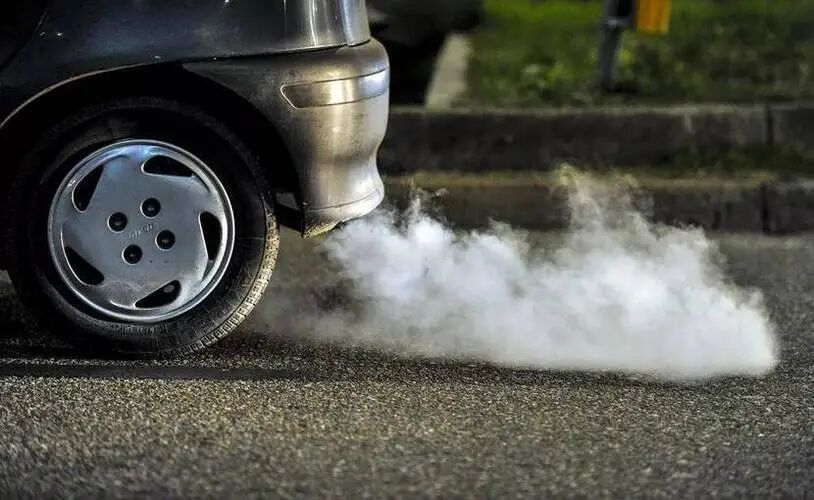
Of course, underground garages also have a lot of carbon monoxide from car exhaust; I should also cut back on this smell…
In conclusion, it is not advisable to intentionally smell overly strange scents out of curiosity, as these new substances have only been invented in the last couple of hundred years, and our ancestors did not encounter them, so there is no genetic predisposition to avoid them. It is recommended to smell stinky tofu and durian instead; these have been carefully selected, and as long as you don’t eat them, there’s no harm in just smelling them. As long as you don’t gain weight, the downsides are not visible.

References
[1]. Yanardag Acik D. Recognizing the unusual findings: Cases of desiderosmia. Clin Case Rep. 2019 Apr 2;7(5):953-954. doi: 10.1002/ccr3.2126. PMID: 31110722; PMCID: PMC6509666.
[2]. Harris K, Mo A, Atmuri K. Desiderosmia: a manifestation of iron deficiency in pregnancy. BMJ Case Rep. 2022 Mar 8;15(3):e248220. doi: 10.1136/bcr-2021-248220. PMID: 35260407; PMCID: PMC8905916.
[3]. Sullivan RM, Wilson DA, Ravel N, Mouly AM. Olfactory memory networks: from emotional learning to social behaviors. Front Behav Neurosci. 2015 Feb 17;9:36. doi: 10.3389/fnbeh.2015.00036. PMID: 25741259; PMCID: PMC4330889.
[4]. Bartolomei F, Lagarde S, Médina Villalon S, McGonigal A, Benar CG. The “Proust phenomenon”: Odor-evoked autobiographical memories triggered by direct amygdala stimulation in humans. Cortex. 2017 May;90:173-175. doi: 10.1016/j.cortex.2016.12.005. Epub 2016 Dec 18. PMID: 28065428.
[5]. Concas, Maria Pina & Morgan, Anna & Pelliccione, Giulia & Gasparini, Paolo & Giorgia, Girotto. (2021). Genetics, odor perception and food liking: The intriguing role of cinnamon. Food Quality and Preference. 93. 104277. 10.1016/j.foodqual.2021.104277.
[6]. https://drugs-forum.com/wiki/Butane#Different_Uses_for_Butane
[7]. NIDA. 2024, September 18. Inhalants. Retrieved from https://nida.nih.gov/research-topics/inhalants on 2025, July 6
[8]. Awais Tahir, Petr Pokorny, Naveed Malek; Butane Toxicity: The Curse of Volatile Solvent Abuse. Dubai Med J 17 December 2021; 4 (4): 344–347. https://doi.org/10.1159/000519161
[9]. Beckley, J., Woodward, J. Volatile Solvents as Drugs of Abuse: Focus on the Cortico-Mesolimbic Circuitry. Neuropsychopharmacol 38, 2555–2567 (2013). https://doi.org/10.1038/npp.2013.206
Written by | Xiao Xu
Some images | Tuchong Creative
WeChat Editor | Zhao Zhiyu