Introduction
Is mass production really a challenge?
A thunderous announcement has come from the humanoid robot sector! The star startup K-Scale Labs (KSL) has suddenly announced its dissolution. Founded just last year with $6.25 million in funding and an order from the head of OpenAI’s robotics division, this rising star has fallen on the eve of mass production. CEO Benjamin candidly stated in a letter to users that the company has only $400,000 left in its accounts, forcing it to issue full refunds and open-source all its technology.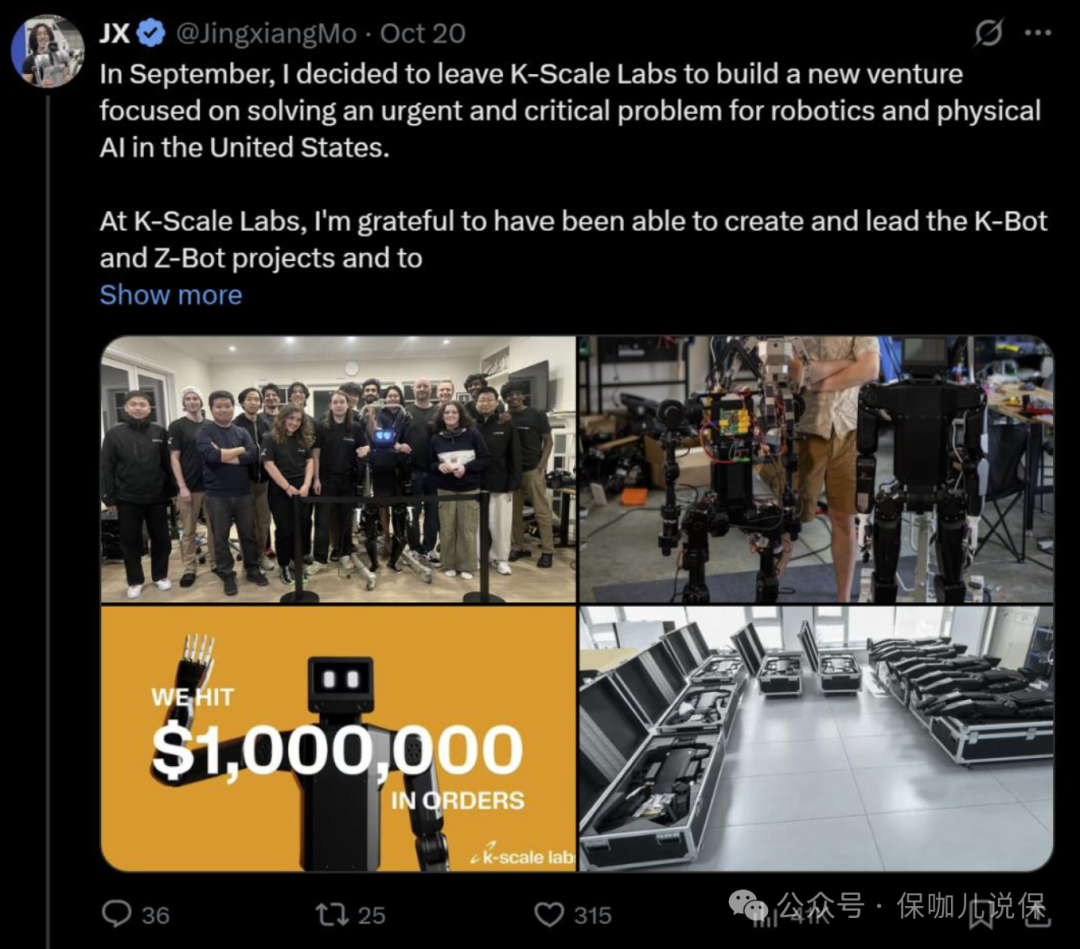 KSL’s death notice is clear: in February 2025, it received a $50 million valuation funding, in April it attracted follow-up investments from industry giants like Nat Friedman, and in June it secured a $2 million strategic investment from China’s Taotao Automotive. However, the total of $6.25 million from three rounds of financing was merely a drop in the bucket for the humanoid robot field, which requires substantial investment for mass production. After failing to secure a $10 million financing in the third quarter, the company’s funding chain was completely severed.01From Hundred-Dollar Toys to Hundred-Thousand-Dollar BeastsKSL originally had two product lines: the low-cost Z-Bot and the high-end K-Bot. Logically, low-cost products are easier to validate in the market, but a mysterious VC’s promise of “200 units ordered in exchange for $20 million in funding” led the team to gamble everything on the high-end route. This became a fatal turning point—each K-Bot costs over $100,000, with only 10 prototypes produced in a year, while the investment needed for mass production molds and supply chains is astronomical.
 Even with a “save where possible” strategy, such as using LX16 actuators purchased from Amazon to quickly prototype, the reliability of cheap components is concerning: “A robot with 30 actuators could break one in just two weeks.” More critically, the 10-person team was forced to handle full-stack R&D across mechanical, electrical control, and joint modules, with engineering challenges far exceeding expectations. Ultimately, the technical lead Jingxiang Mo left to start his own venture, signaling the team’s impending collapse.02The Manufacturing Gap Between China and the U.S. Has Become a ChasmKSL’s failure highlights the brutal contrast in the robotics supply chain between China and the U.S. Benjamin candidly stated in his farewell letter that competitors like Yushun and Zhongqing have secured mass production funding, while Western companies have hardly achieved any real deliveries.Data reveals the root of the gap: in 2024, China installed 295,000 industrial robots, accounting for 54% of the global total, while the U.S. only installed 34,000. In terms of core components like harmonic reducers, Japanese products have a transmission error of ±20 arc seconds, while China’s Green harmonic reducers have improved to within ±30 arc seconds, with prices dropping from 8,000 yuan to 3,500 yuan, driving down joint module costs by 25%. Yushun’s self-developed motors cost only one-tenth of Boston Dynamics’ hydraulic systems, and UBTECH has pushed bipedal robots into the 100,000 yuan price range.
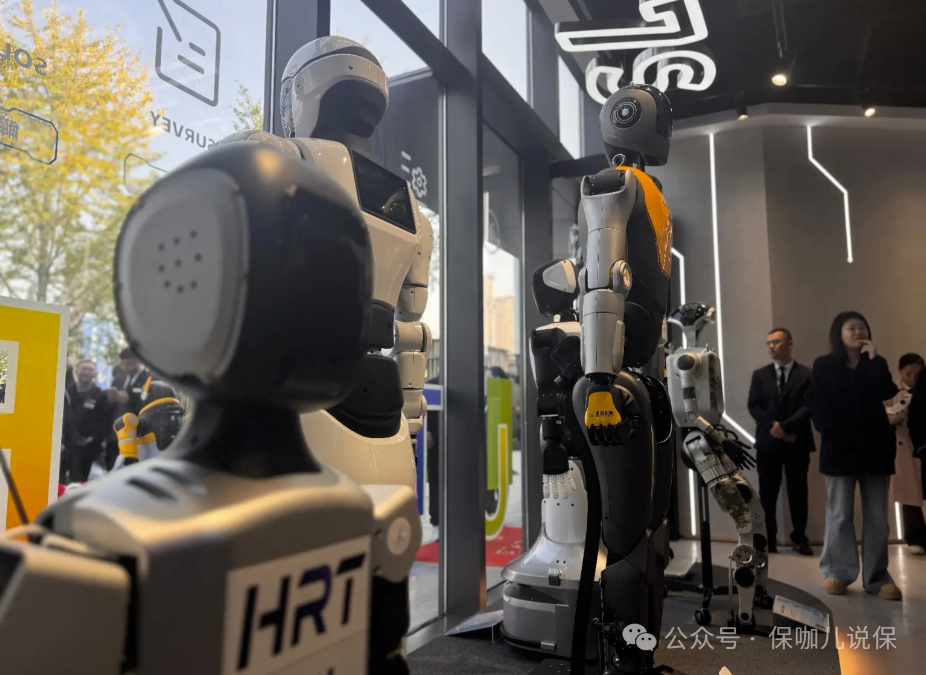 The cost gap is directly reflected in the end prices: K-Bot is pre-sold for $8,999 (approximately 64,000 yuan), while China’s Songyan Power robots are priced at less than 10,000 yuan, and Yushun’s R1 starts at 39,900 yuan. A Bank of America report indicates that the BOM cost of humanoid robots using Chinese components is only $35,000, which is 30% lower than overseas solutions. This gap arises from the flexibility of the Chinese supply chain—supporting trial production lines with a minimum order of 300 units and partners willing to share risks by providing upfront capital, resources that are the most scarce for American startups.03The Pain of Mass Production: The Lifeline of Hardware StartupsKSL’s case reflects the harsh laws of hardware startups: prototypes are merely tickets to entry; mass production is the real life-and-death test. Transitioning from 3D printing to die-casting molds, every step burns cash. More challenging is that humanoid robots require multi-dimensional collaboration among mechanical structures, power systems, and motion control; any shortcoming will amplify costs.Ironically, there was strong market demand for KSL’s products—over 100 units ordered, totaling more than $2 million, including orders from the head of OpenAI’s robotics division. However, the lack of mass production capability prevented marginal costs from decreasing, ultimately forcing the company to choose refunds and dissolution.Here we insert a benefit,Baokafei uses digital humans and other AI technologies to solvecore pain points such as long video shooting times and difficult topic selection. If you also want to experience it, you can send “688” in the background to receive a discount.KSL’s downfall is a landmark event: it proves that in the field of embodied intelligence, innovation without supply chain support is unlikely to survive. As the localization rate of core components like harmonic reducers and servo motors exceeds 80%, the Chinese supply chain has moved from catching up to running alongside.China’s iteration speed is also impressive; Green harmonic reducers have dropped in price by 56% over five years, and Yushun’s motor costs have fallen to one-tenth of the industry average. This manufacturing dividend is transforming into market advantages: by 2025, China’s humanoid robot sales are expected to exceed 10,000 units, while most European and American companies remain stuck in the prototype stage.
 Scan to Follow UsFocusing on AI + Industry Insight Analysis