The effect of cognitive load on Detection-Response Task (DRT) performance during day- and night-time driving: A driving simulator study with young and older drivers
The effect of cognitive load on detection—response task (DRT) performance during day and night driving: A driving simulator study with young and older drivers
Author:Öztürk, İ., Merat, N., Rowe, R., & Fotios, S.
Knowledge Carrier (Translator):Guan Haoxue
Review:Gao Ya
1.Introduction
In driving, safe driving performance involves a combination of factors related to the driver, such as information processing speed and capacity, effective perception-motor coordination, and timely and effective responses to hazardous events.Previous studies have shown that compared to daytime conditions, night driving reduces hazard perception and decreases attention to safety-critical areas, but there is little research on how distraction during night driving affects driving performance. Therefore, it is significant to explore the impact of cognitive load on drivers’ detection—response tasks (DRT) under different lighting conditions.
2.Research Content
This study aims to investigate the effects of different levels of cognitive load (using the n-back task) on driving performance and DRT performance, and proposes the following two questions:
(1)Does the effect of the n-back task on DRT and driving performance differ between day and night driving?
(2)Is there a difference in the effect of the n-back task on DRT and driving performance between young and older drivers during day and night driving?
3.Research Method
Participants:37 participants, including young drivers (21 to 25 years old) 20, and older drivers (63 to 70 years old) 17, all holding valid driving licenses for more than three years. Specific information about the participants is shown in Table 1.
Table 1 Demographic characteristics of participants 
Experimental Equipment:The University of Leeds Driving Simulator (UoLDS), which consists of a Jaguar S-type cabin wrapped in a 4-meter spherical projection dome, with a 300° projection angle and an 8-degree of freedom motion system.The driving simulator is shown in Figure 1.
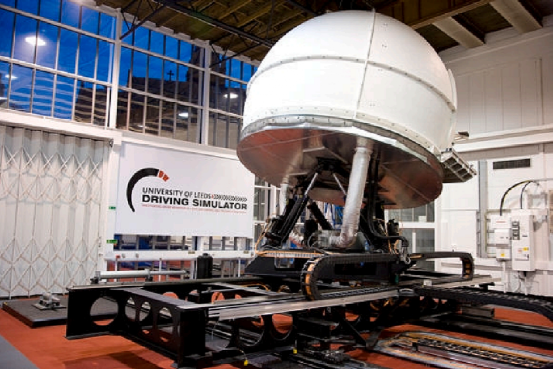
Figure 1The University of Leeds Driving Simulator
Experimental Scene:The experimental scenes of this study include rural and urban roads during day and night, with no other vehicles on the experimental lane, but with oncoming vehicles on the opposite lane, approximately 6 vehicles per kilometer.
(1)A two-way rural road with a speed limit of 60 miles/hour, including straight and curved sections.
(2)A two-way urban road with a speed limit of 40 miles/hour.
Experimental Design:This study employed a mixed design method, including within-subject lighting factors (day, night), cognitive tasks (baseline without n-back, 1-back, 2-back), and DRT (absent, present), as well as between-subject age factors (young, older).
Non-driving Related Task (NDRT):Participants heard 10 digits played from the driving simulator speakers every 2.25 seconds, and after playback, participants repeated the last digit (1-back) or the second to last digit (2-back).Before each NDRT begins, participants will be informed that they need to complete 1-back or 2-back.
DRT:A red circle appears on the driving simulator screen (positioned 2° to 4° above the horizon, within the area of 11° to 23° left and right of the participant’s forward gaze), and participants immediately press a micro-switch button on the steering wheel when they detect the target. The DRT response micro-switch button is shown in Figure 3.
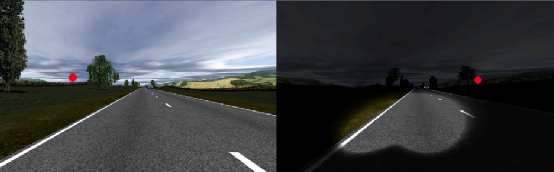
Figure 2Experimental scenes during the day (left) and night (right), showing the red circle of DRT in the experimental scene
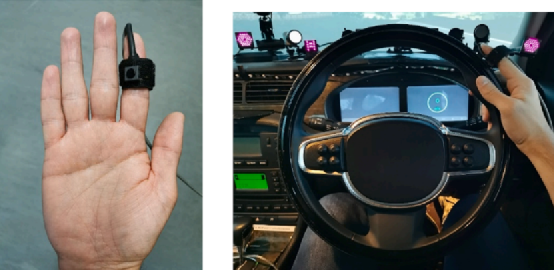
Figure 3Response DRT micro-switch button (left) and response method (right)
Experimental Procedure:
(1)Before the formal experiment, participants were informed about the experimental instructions and signed the informed consent form, then participants practiced NDRT and DRT individually, and conducted test drives on the driving simulator, taking about 15 minutes;
(2)In the formal experiment, half of the participants completed the day scene experiment first, then the night scene experiment, while the other half had the reverse order. Participants drove the experimental vehicle in the day or night experimental scene, completing NDRT and DRT as prompted, with each experiment lasting about 20 minutes;
(3)After the experiment, participants needed to complete a questionnaire about perceived driving skills and difficulties in night driving, and received £20 as compensation.
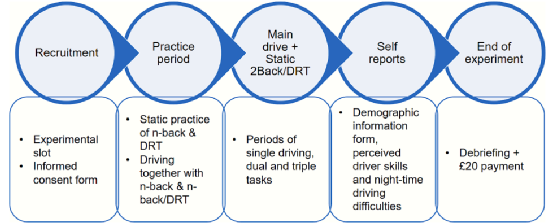
Figure 4Experimental Steps
Dependent Variables:NDRT error rate, DRT response time, miss rate, average vehicle speed, and standard deviation of lane position (SDLP).
Data Analysis:Analysis of variance, Greenhouse-Geisser correction, Bonferroni correction.
4.Research Results
(1)Effects of DRT, lighting, and age on NDRT
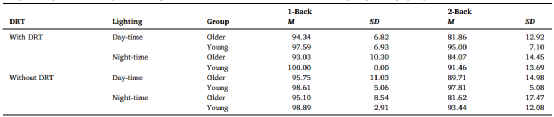
Age had a significant effect on the NDRT error rate, with younger participants having a lower NDRT error rate compared to older participants.The presence or absence of DRT did not significantly affect the NDRT error rate with lighting. The error rates of participants under different DRT, lighting, age, and NDRT conditions are shown in Table 2.
Table 2Error rates of participants under different DRT, lighting, and NDRT conditions
(2)DRT performance of participants under different conditions
①Effects of lighting, age, and NDRT on DRT miss rate
Lighting, age, and NDRT all had significant effects on the DRT miss rate. Participants had a higher DRT miss rate in daytime compared to nighttime; older participants had a higher DRT miss rate compared to younger participants; and participants had a higher DRT miss rate under 2-back compared to 1-back. The DRT miss rates of participants under different lighting, age, and NDRT conditions are shown in Figure 5.
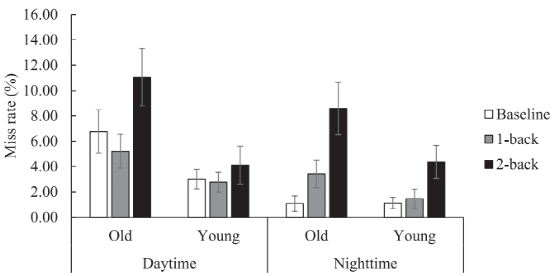
Figure 5DRT miss rates of participants under different lighting, age, and NDRT conditions
②Effects of lighting, age, and NDRT on DRT average response time
Lighting, age, and NDRT all significantly affected the average response time of DRT. Participants had a longer average response time for DRT at night compared to during the day; older participants had a longer average response time for DRT compared to younger participants; and participants had a longer average response time for DRT with NDRT compared to without NDRT.The average response times of participants under different lighting, age, and NDRT conditions are shown in Figure 6.
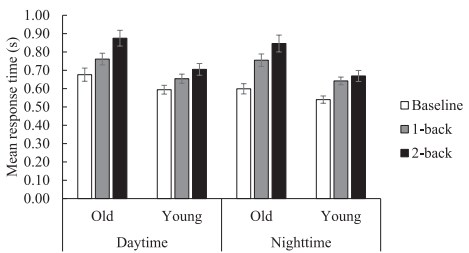
Figure 6Average response times of DRT participants under different lighting, age, and NDRT conditions
(3)Driving performance of participants under different conditions
①Effects of DRT, lighting, NDRT, and age on average vehicle speed
Age had a significant effect on average speed, with younger participants driving at a higher average speed compared to older participants. The average speeds of participants driving under different DRT, lighting, NDRT, and age conditions are shown in Figure 7.
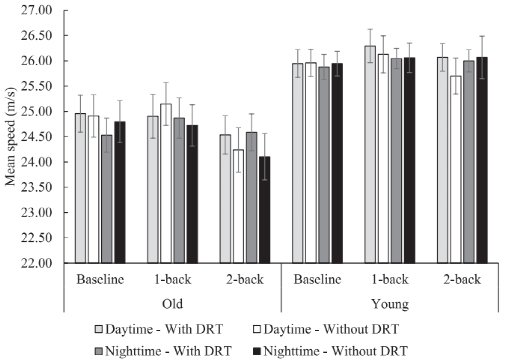
Figure 7Average speeds of participants driving under different DRT, lighting, NDRT, and age conditions
②Effects of DRT, lighting, NDRT, and age on SDLP
DRT, lighting, NDRT, and age all had significant effects on SDLP. Older participants had significantly higher SDLP with DRT compared to without DRT, and the SDLP of participants was significantly higher at night compared to during the day; SDLP was significantly lower with NDRT compared to without NDRT.The SDLP of participants under different DRT and age conditions is shown in Figure 8.
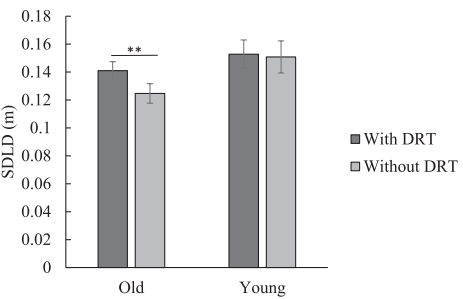
Figure 8SDLP of participants under different DRT and age conditions
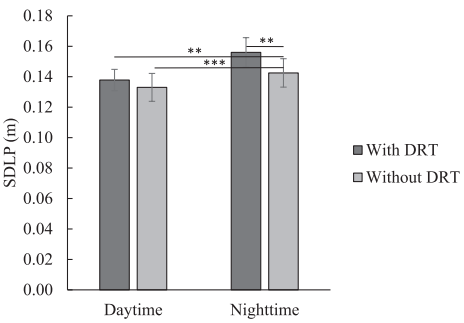
Figure 9SDLP of participants under different DRT and lighting conditions
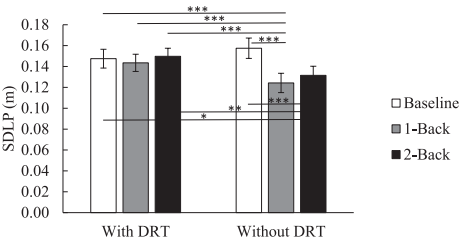
Figure 10 SDLP of participants under different DRT and NDRT conditions
5.Conclusion
The study shows that, overall, cognitive load increases participants’ response time to the DRT task. Compared to older drivers, younger drivers perform better in DRT during the night than during the day; younger drivers also perform better in the n-back task.
6.References
Öztürk, İ., Merat, N., Rowe, R., & Fotios, S. (2023). The effect of cognitive load on Detection-Response Task (DRT) performance during day-and night-time driving: A driving simulator study with young and older drivers. Transportation Research Part F: Traffic Psychology and Behaviour, 97, 155-169.
7.Comments
This study explores the impact of different levels of cognitive load on driving performance and DRT performance through driving simulator experiments. The results provide new insights into how drivers detect surrounding stimuli under different lighting conditions, but the night driving experiments in this study were conducted during the day, simulating nighttime conditions, which differs from actual nighttime driving. Future research could be conducted at night and further investigate factors such as driver fatigue and drowsiness to validate the research results.
Note: Due to limited proficiency, there may be inaccuracies or errors in the translation; please refer to the original text, and corrections are welcome.