
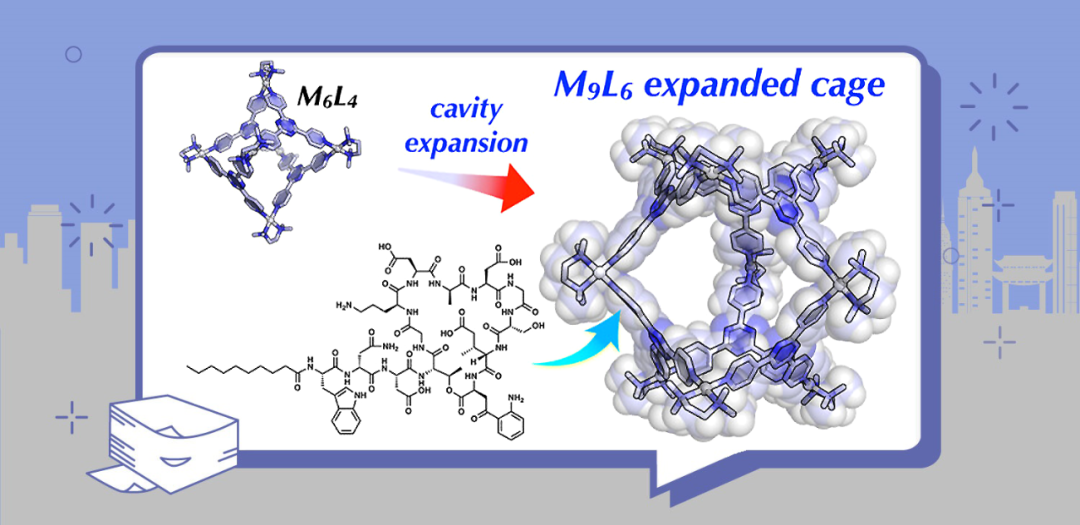
In the mid-1990s, through molecular self-assembly techniques, larger three-dimensional closed cavities were effectively constructed. The M6L4 cage is one of the most efficient self-assembling hosts, formed by the self-assembly of six Pd(II) or Pt(II) 90-degree blocks and four triazine-core triangular ligands, featuring an effective hydrophobic cavity of approximately 450 Å3 capable of encapsulating one or more small molecules. Here, the research group of Hiroki Takezawa and Makoto Fujita at the University of Tokyo used pillar[5]arene as a template to successfully construct an M9L6 cage with an internal volume expanded to 1540 Å3. This cage retains the high molecular recognition capability of the M6L4 cage while recognizing medium-sized guest molecules with molecular weights up to 1600.
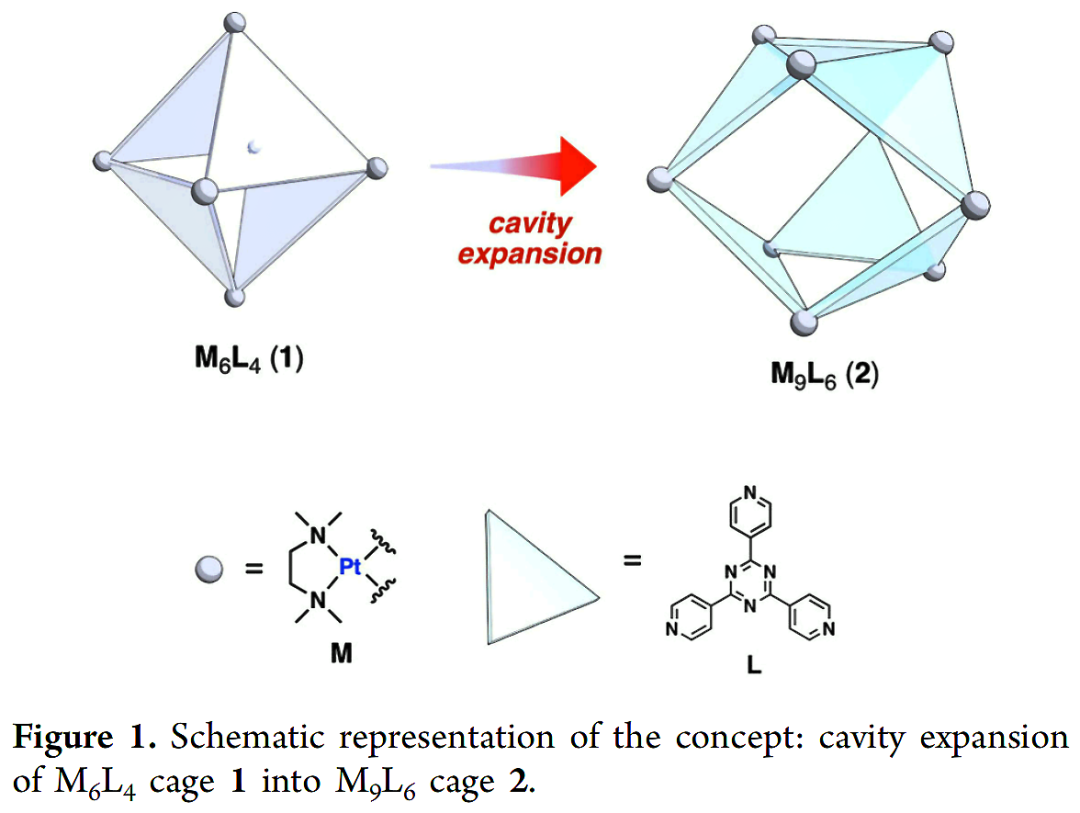
Figure 1. Conceptual diagram (Image source: J. Am. Chem. Soc.)
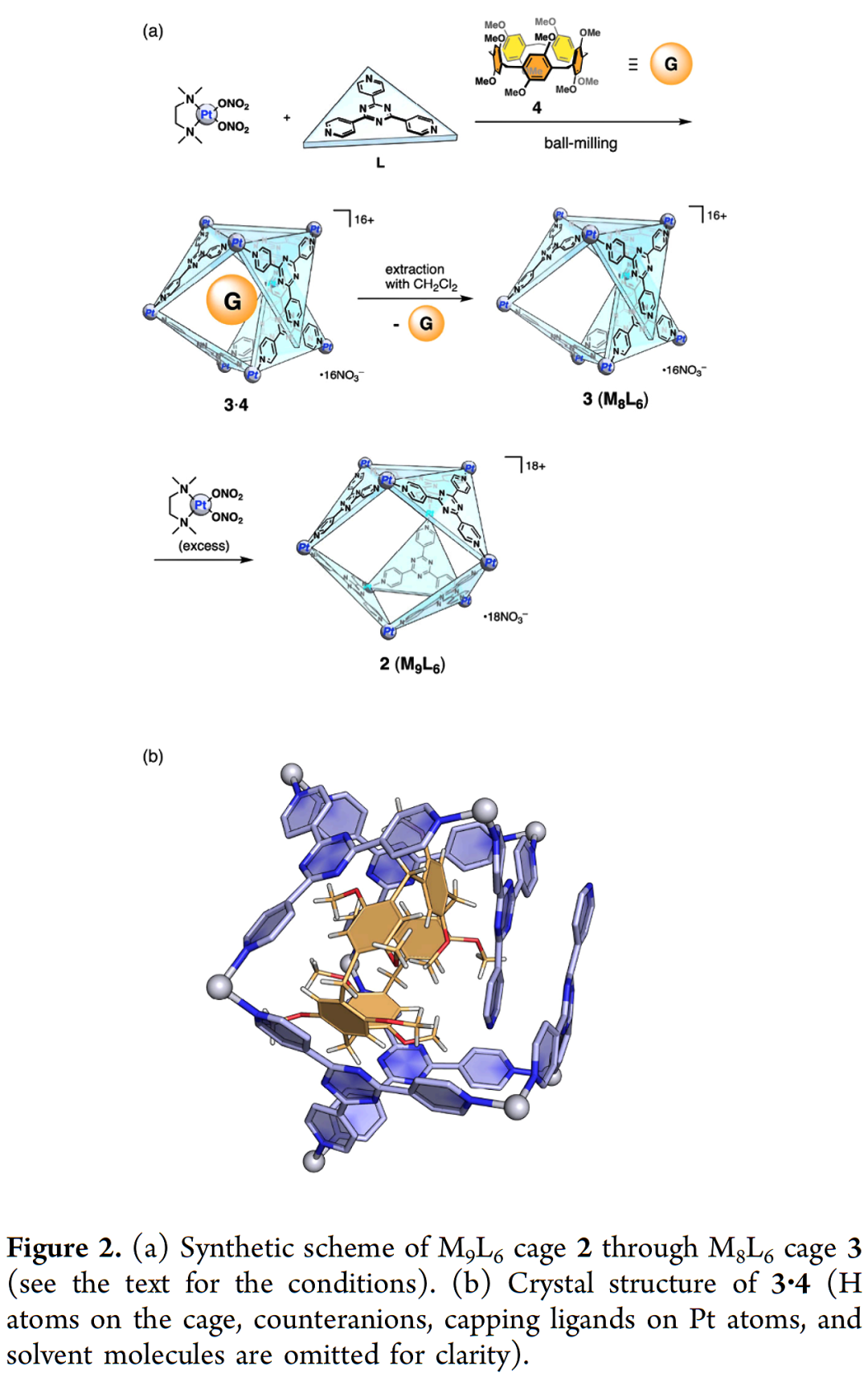
Figure 2. Synthesis scheme and crystal structure (Image source: J. Am. Chem. Soc.)
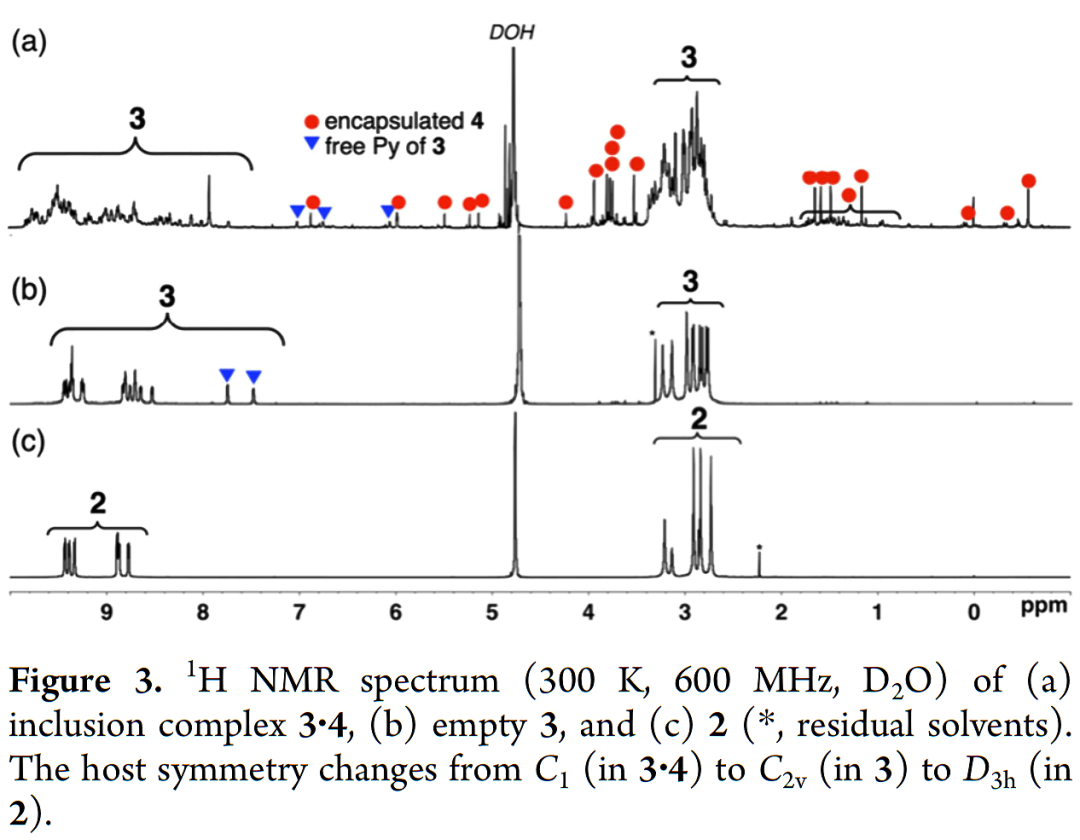
Figure 3. Nuclear magnetic resonance spectrum (Image source: J. Am. Chem. Soc.)
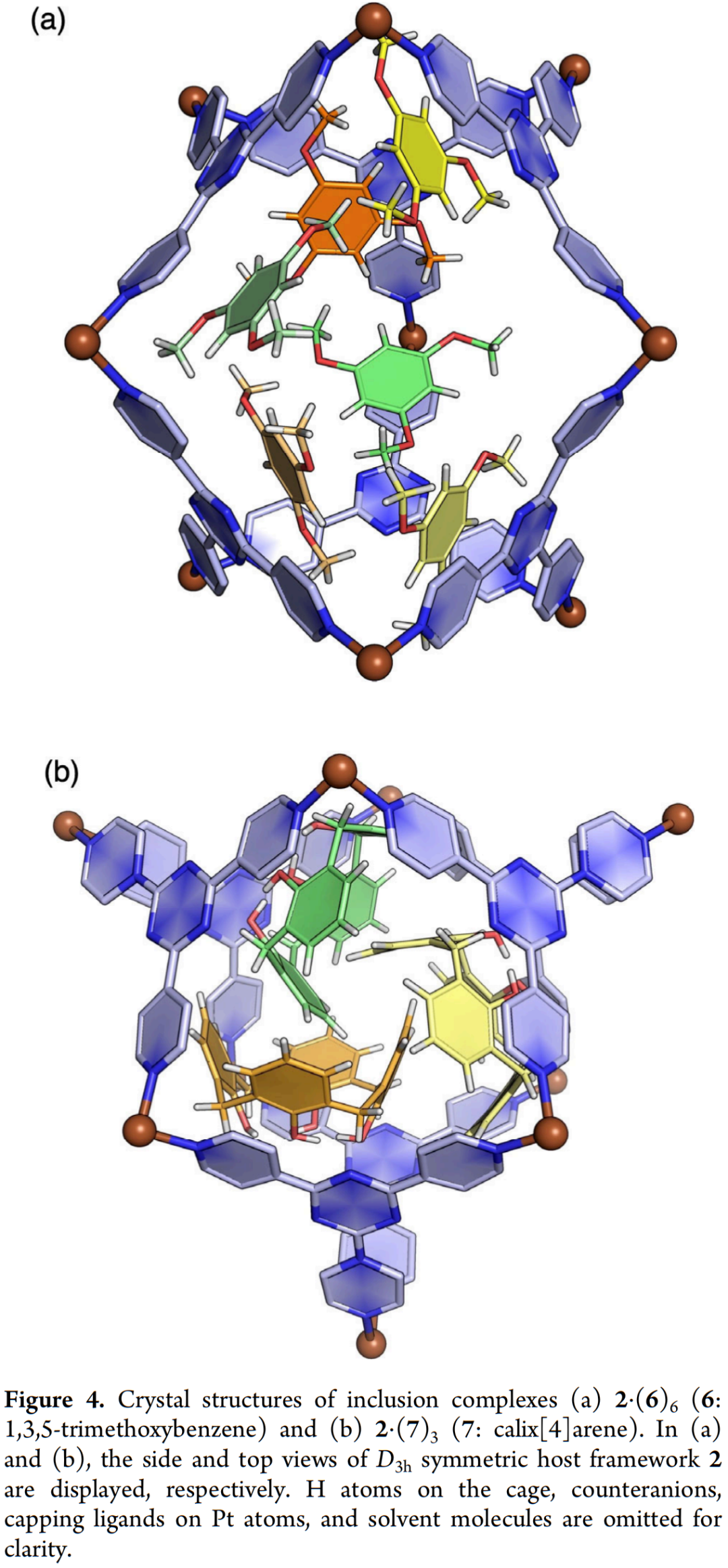
Figure 4. Crystal structure (Image source: J. Am. Chem. Soc.)
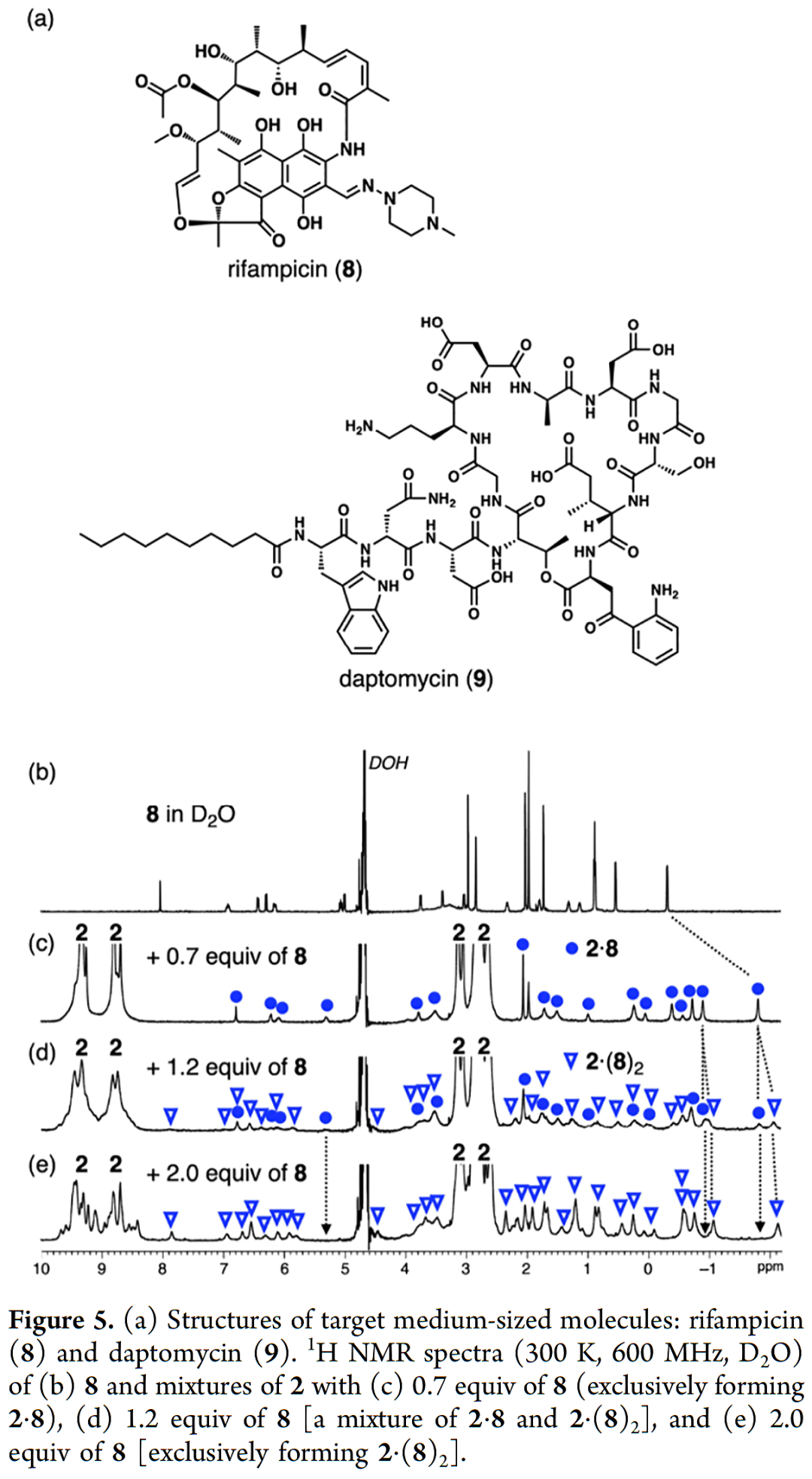
Figure 5. Molecular structure and nuclear magnetic resonance spectrum (Image source: J. Am. Chem. Soc.)
Long press to identify and read the original text

Paper Information
Kenta Iizuka, Hiroki Takezawa*, Makoto Fujita*. Template and Solid-State-Assisted Assembly of an M9L6 Expanded Coordination Cage for Medium-Sized Molecule Encapsulation. J. Am. Chem. Soc., 2024, https://doi.org/10.1021/jacs.4c14509.

Red envelope activities, submissions, reprints, cooperation, etc.
Add WeChat: ChemBeanGo101