 Intelligent IoT Perception and Testing
Affiliated College: School of Mechanical and Electrical Engineering
01
Project Overview
(1) Project Background
The new generation of information technology is the main battlefield for major countries at this stage. It is imperative to accelerate the integration of new generation information technology with manufacturing and strengthen the penetration of new generation information technology into the service industry. The Internet of Things (IoT) is a typical representative of the new generation of information technology, characterized by the “Internet of everything.” Currently, the demand for complex testing in various extreme environments, extreme values, and extreme reliability is becoming increasingly widespread. Traditional testing technologies face challenges such as “poor functional adaptability” and “low data flow efficiency” when addressing these challenges, necessitating new theoretical support and technical means to overcome the current predicament. Testing technology based on IoT combines the dual advantages of traditional testing technology’s “functional diversity” and IoT’s “high-efficiency transmission,” representing the development direction of new generation testing technology. Therefore, breaking through the key technologies of IoT testing and further enriching new testing and detection methods has significant theoretical and practical significance.
(2) Project Introduction
This project focuses on the characteristics of current IoT testing scenarios, which are numerous, fast, and long-distance. It studies the optimal architecture of IoT structures, integrates protocol analysis, and achieves multi-source node access and data optimization. Guided by “modular functionality” and “distributed computing resource optimization of perception nodes,” it designs and develops modules for IoT device access and networking nodes. By introducing adaptive multipath communication and collaborative computing of intelligent perception nodes, it enhances the interoperability, compatibility, data transmission rate, and reliability of intelligent detection IoT systems. The project researches common technologies for new IoT testing, including multi-source access, optimized computing, and miniaturized nodes, providing key technical support for the development of industrial detection intelligent IoT towards high capacity, high speed, and resource balance in various scenarios.
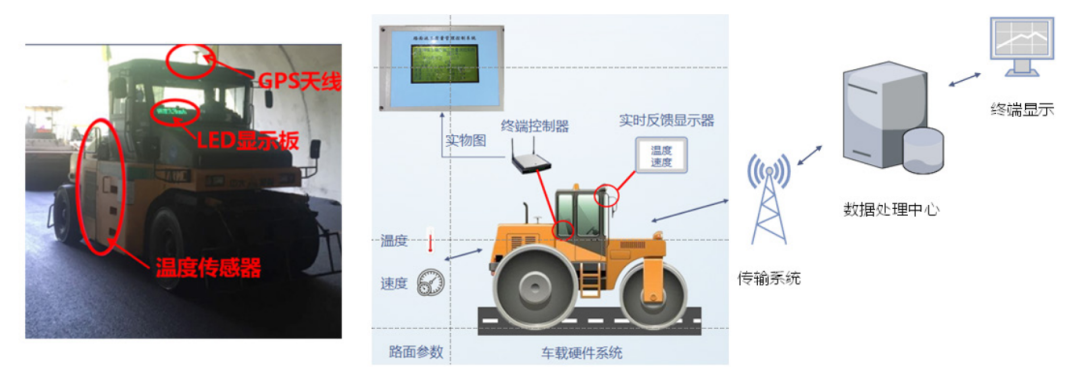
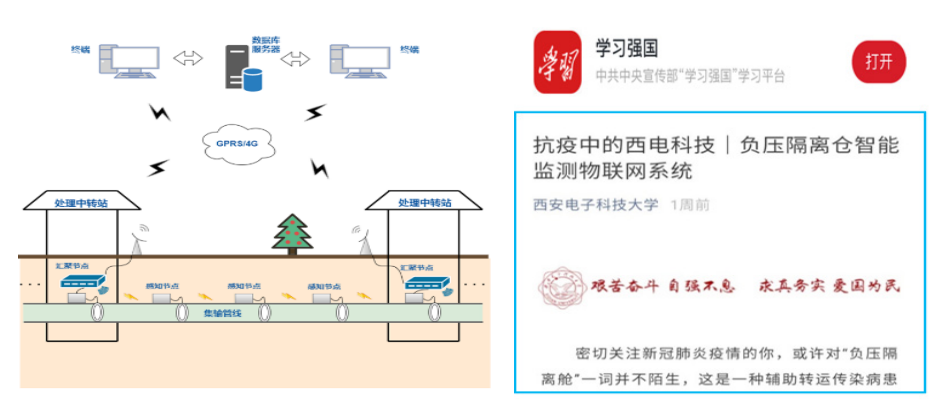
The IoT testing technology developed by the project has been successfully applied in industries such as construction, logistics, oil storage and transportation, and medical device intelligence, solving specific engineering problems such as “monitoring the quality of asphalt pavement construction,” “monitoring the status of cold chain transportation,” “monitoring the status of gathering pipelines,” and “intelligent upgrading of negative pressure chambers.” The related technology has been widely applied in multiple specific scenarios. The research results have played a positive role in combating the COVID-19 pandemic, leading to coverage by Xi’an Television and reprints on platforms like Xuexi Qiangguo, receiving positive social feedback and evaluations.
(3) Key Technologies
1. Multi-source heterogeneous perception node parsing and compatibility technology. To meet the diverse testing functionality, it is necessary to coordinate various perception nodes and testing requirements. The project developed a multi-device heterogeneous protocol parsing and integration solution, breaking down the barriers to information exchange between heterogeneous protocol nodes, achieving testing and evaluation of the consistency and interoperability of various heterogeneous protocols. 2. Integrated computing and optimized transmission technology. To reduce the amount of upstream data transmission and alleviate the server’s data processing load, it is essential to comprehensively optimize computing resources and reduce IoT energy consumption. The project combines optimization and adaptive theories to solve the challenges of autonomous path selection and planning, establishing a distributed computing strategy that enhances the computational capacity of nodes and significantly reduces network load through optimized data distribution and transmission. 3. Miniaturized and low-power node technology. To maximize the overall throughput of the system, it is necessary to meet the overall service quality requirements through topology control. The project addresses the high-speed mesh challenges based on topology control, proposes a conflict load balancing method, and constructs an efficient communication interconnection topology, achieving adaptive dynamic balance and optimization of low power consumption and reliability of nodes.
02
Technology Maturity
□ Concept Verification □ Prototype ☑ Engineering Prototype □ Pilot Test □ Industrialization
03
Cooperation Methods
□ Joint R&D ☑ Technology Equity □ Transfer □ Licensing □ Negotiable
-END-
