 Abstract: This article focuses on intervertebral disc degeneration, proposing the use of 3D bioprinting technology to construct biomimetic scaffolds due to the limitations of traditional treatment methods in restoring function. It first outlines the applications of this technology in tissue engineering, such as stereolithography and extrusion printing, then analyzes the properties of biomaterials like GelMA, dECM, and natural/synthetic polymers, and further discusses cell sources and microenvironment regulation. The mechanical compatibility and biocompatibility of the printed scaffolds are validated through animal models, and the current limitations in material standardization and vascularization are highlighted, emphasizing the need to optimize printing precision and biological function to promote clinical translation. The conclusion states that 3D bioprinting holds great potential for intervertebral disc regeneration, but technical bottlenecks must be overcome for practical application.Research Background
Intervertebral disc degeneration leads to chronic low back pain, and existing treatments such as discectomy cannot restore its function. Tissue engineering and 3D bioprinting provide new pathways for regeneration, with the construction of scaffolds that possess both mechanical strength and biological activity being key.
Research Results
Scaffolds constructed from various biomaterials such as GelMA and dECM can support cell survival and differentiation, improving intervertebral disc structure and function in animal models, but printing precision and long-term in vivo effects need enhancement.
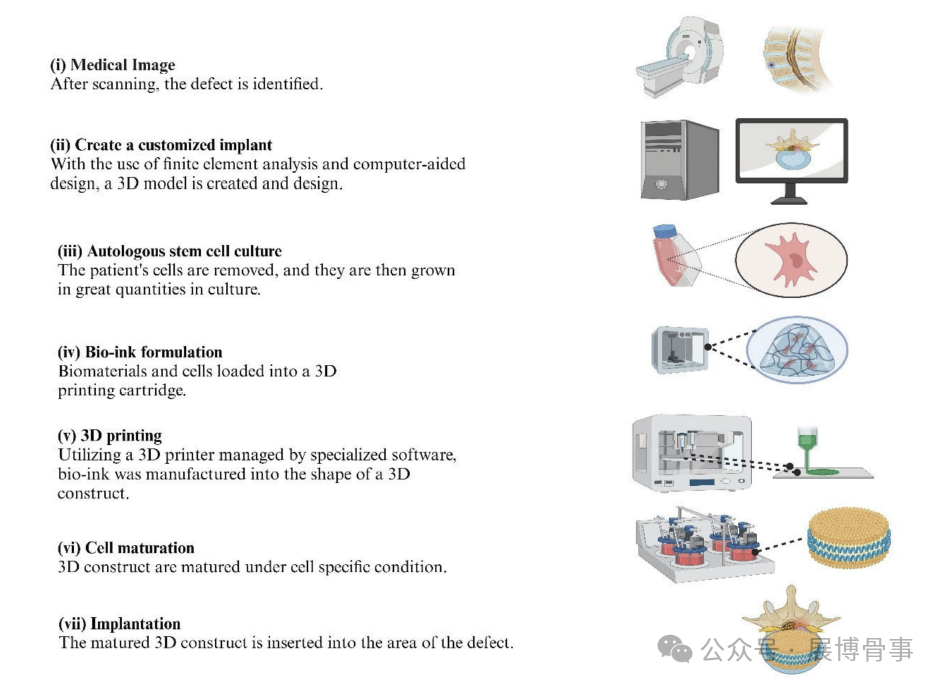
Figure 1: Illustrates the entire process of 3D bioprinting in regenerative medicine, from medical imaging to identify defects, designing customized implants, to cell culture, bioink preparation, printing, cell maturation, and implantation, reflecting its customization and precision characteristics.
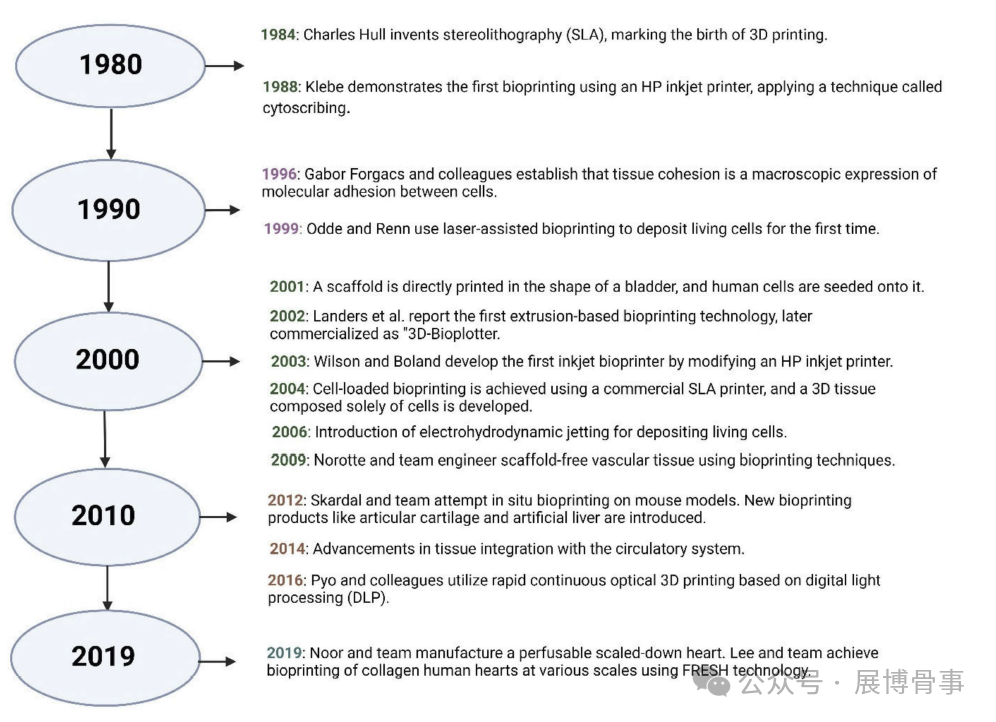
Figure 2: Displays a timeline of milestones in the development of 3D bioprinting, from the invention of stereolithography in 1984 to the printing of functional human tissues in 2019, showcasing the evolution of the technology.
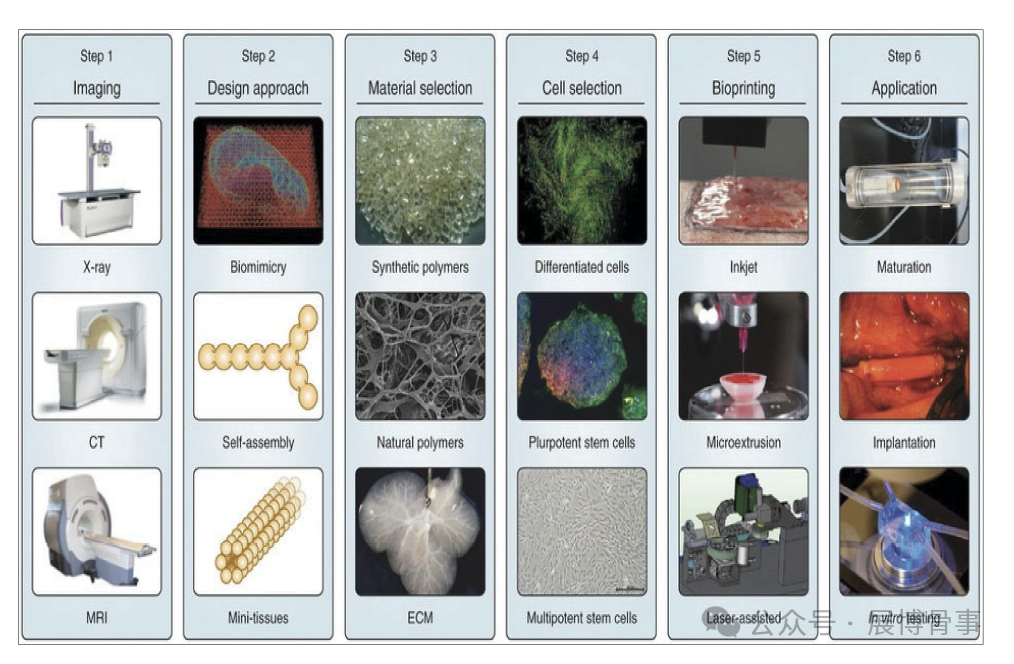
Figure 3: Describes the methods for constructing 3D tissues through bioprinting, including imaging, design, material and cell selection, printing, maturation, and application, emphasizing the need for multi-step collaboration.
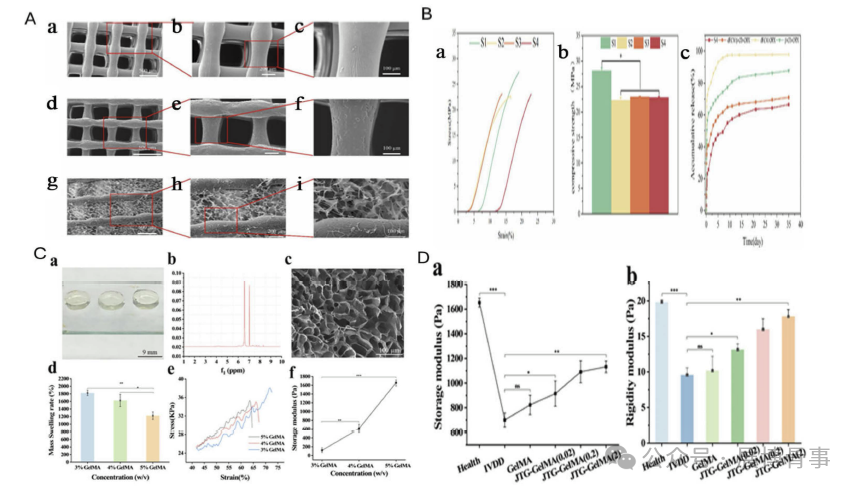
Figure 4: Compares different 3D bioprinting technologies, such as extrusion, inkjet, laser-assisted, and microfluidic printing, highlighting the principles and characteristics of each technology.
Figure 5: Displays different scaffold structures, mechanical properties, and material characterization through scanning electron microscopy and mechanical testing, illustrating the impact of materials on cell behavior and tissue regeneration.
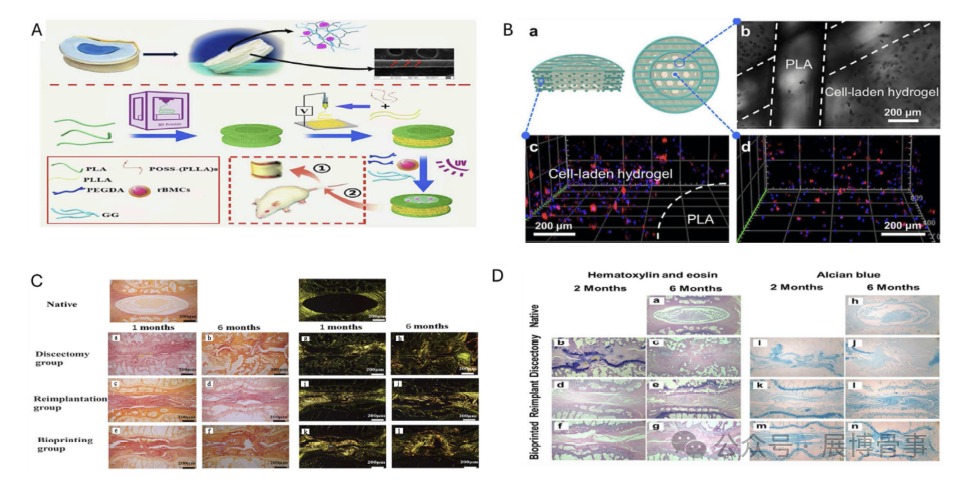
Figure 6: Shows the design and evaluation of biomimetic artificial intervertebral disc scaffolds, including the combination of 3D printing and electrospinning to construct structures, as well as cell distribution and tissue repair effects.
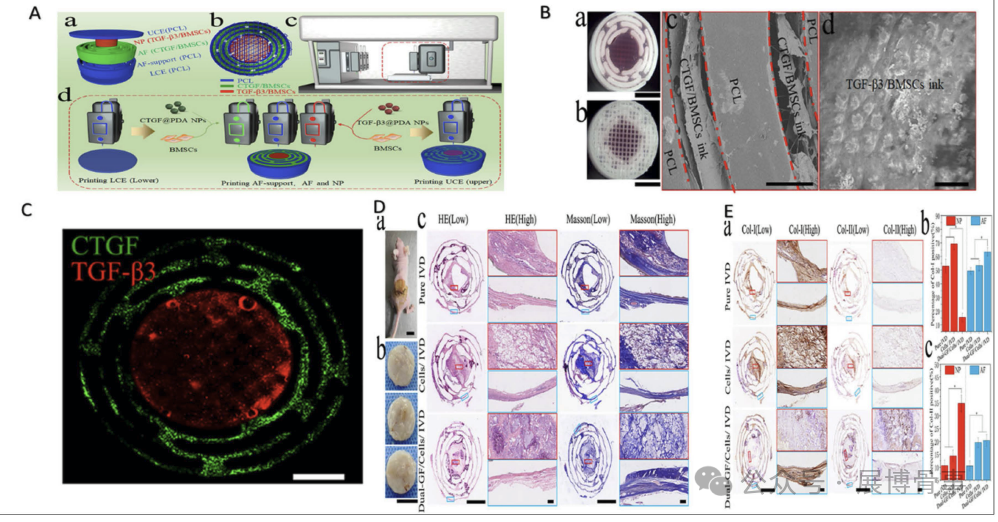
Figure 7: Presents the structure of a 3D printed dual growth factor releasing scaffold and its effects on promoting intervertebral disc tissue regeneration and improving mechanical properties in vivo.
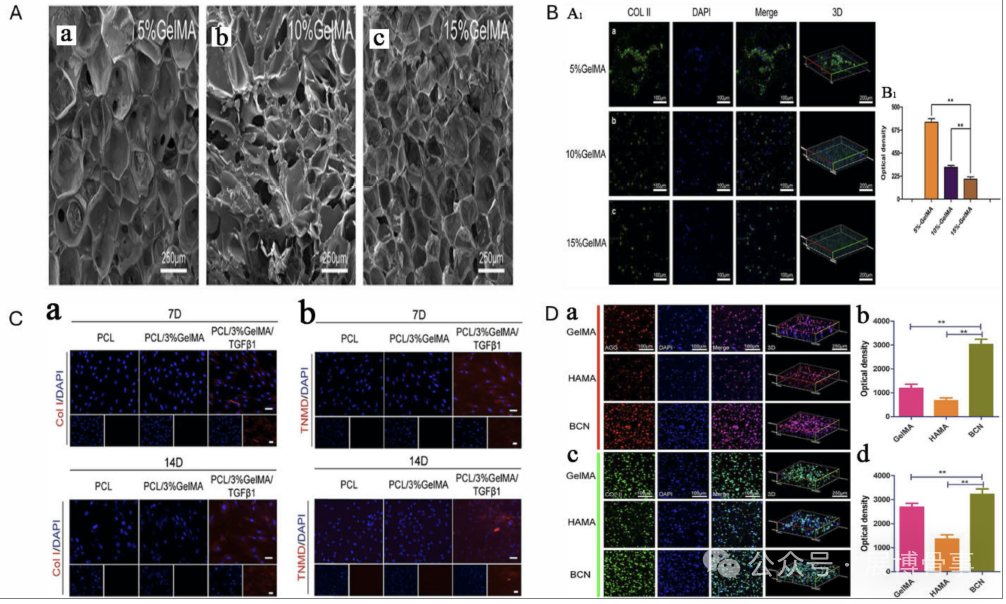
Figure 8: Displays the structure of GelMA hydrogels at different concentrations, cell behavior, and anti-inflammatory drug loading effects, demonstrating their application potential in intervertebral disc regeneration.
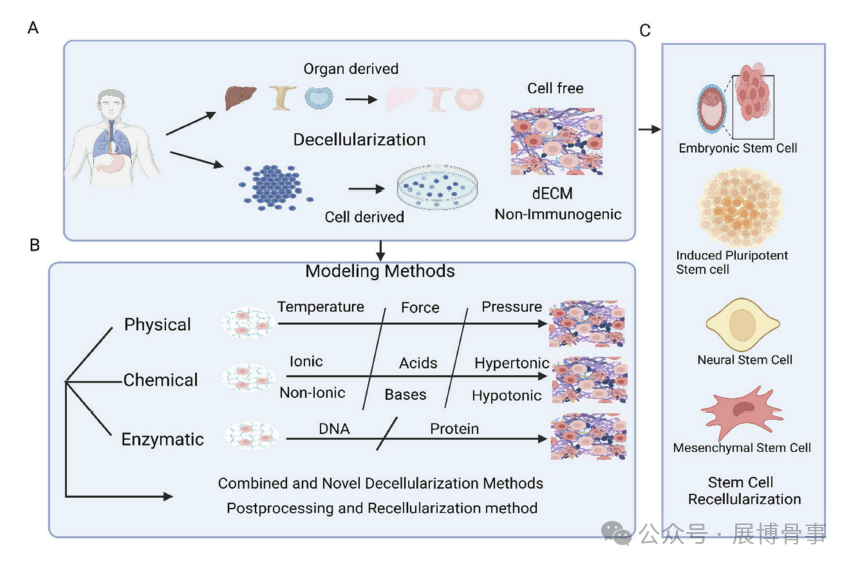
Figure 9: Classifies decellularized extracellular matrix (dECM) scaffolds, introducing preparation, modeling, and recellularization methods, emphasizing their ability to construct biomimetic microenvironments.
Research Conclusion
3D bioprinting provides a new method for intervertebral disc regeneration, but issues such as material standardization and vascularization need to be addressed, combining gene editing and intelligent technologies to promote clinical applications.
#3DBioprinting#IntervertebralDiscRegeneration#Biomaterials#DecellularizedExtracellularMatrix#dECM#GelMAHydrogel#CellSource#MechanicalProperties#TissueEngineering#SouthKorea3DBioprintingResearchProgress
The images used in this article are sourced from Pubmed, and due to objective reasons, we were unable to contact the rights holders. This platform cites them for academic exchange purposes and does not intend to infringe on the original authors’ rights. If the rights holders find this inappropriate, please contact the public account backend, and we will delete or negotiate a solution immediately.National Natural Science Foundation, Provincial Natural Science Foundation, PhD project design, medical experiment outsourcing, medical SCI, experimental program design,Free online one-on-one communication with doctoral supervisors, confirming strength before discussing cooperation, research collaboration can add WeChat: SCI971SCI
National Outstanding Youth One-on-One Q&A Video
PhD project design expert Q&A, how to select a more suitable direction from sub-specialties
National Natural Science Foundation project expert Q&A live, solving any issues during the application process
Provincial Natural Science Foundation application Q&A, what are the key conditions for project establishment? From which directions can one break through
National Key Technology R&D Program, expert one-on-one guidance on program design
How should clinical PhDs prepare for the National Youth Fund application? What to do without preliminary experiments? Expert one-on-one planning answers
Research Information CollectionNational Natural Science Foundation Proposal SharingNational Natural Science Foundation Project EstablishmentExhibition of Project ApplicationMedical Master’s and Doctoral Thesis AnalysisCardiology Research SharingEmergency and Critical Care Research SharingOral Research SharingOphthalmology Research Sharing
Traditional Chinese Medicine Research