1 nautical mile = 1852 meters. The response time for emergency rescue within 100 nautical miles from shore should not exceed 90 minutes, meaning the rescue speed from the shore to 185 km offshore must meet 123.5 km/h.
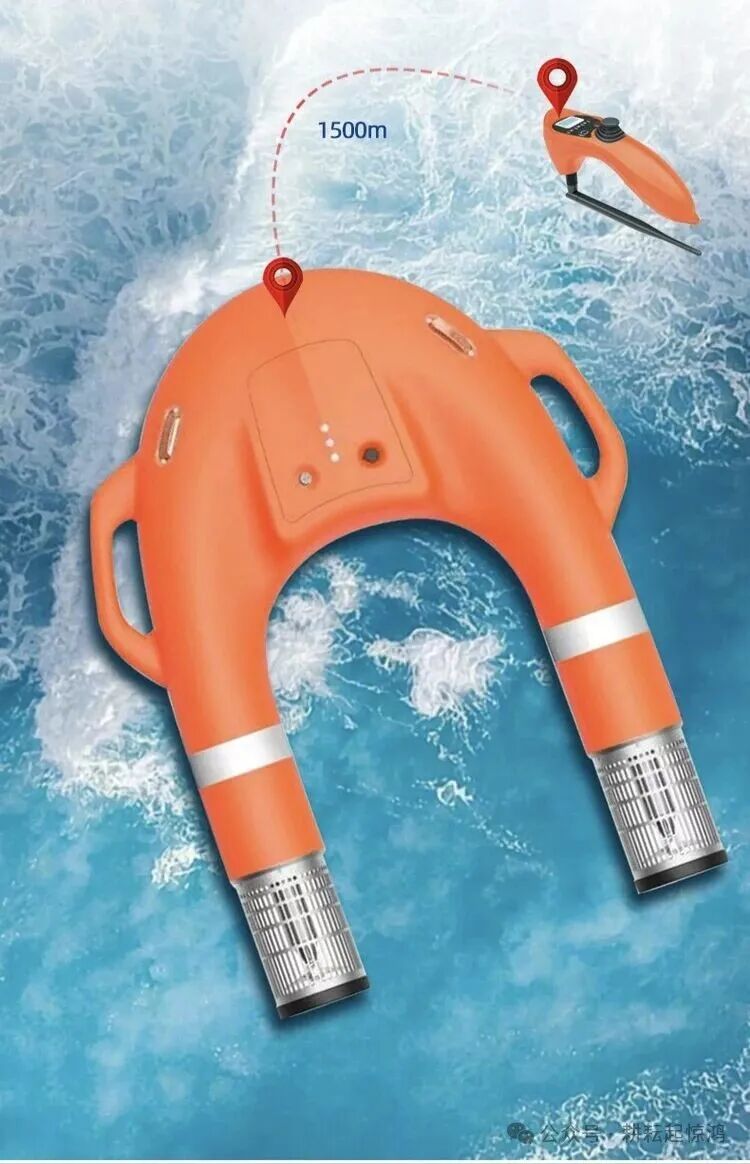
Traditional rescue operations require vessels to navigate to the target point, where rescuers manually throw life rings and life rafts to perform the rescue. With advancements in technology, intelligent robots are gradually being deployed in many dangerous situations and areas that are beyond human reach. Typically, under level 4 sea conditions, personnel will cease operations on the deck, and rescue actions cannot be conducted without visual contact; therefore, the use of robots and automatic sensing technology becomes crucial.
Robots can operate in sea conditions up to level 5, whereby they can be deployed simply by executing a program within the cabin and remotely controlling the release of the robot to locate the person in the water. Sea conditions are classified into 10 levels, based on surface conditions, wave height, crest shape, breaking wave degree, and foam conditions, ranging from 0 to 9. Level 5 sea conditions are characterized by large waves, with heights between 2.5 to 4 meters, where the crests are high and foam occupies most of the crests.
By collaborating with universities and enterprises, the demand side can effectively enhance existing rescue capabilities by simply specifying product requirements, particularly through customized designs tailored to different rescue scenarios and vessels, followed by testing and inspection of the developed products.