“Tianjin Robot”is the official subscription account of the Tianjin Robot Industry Association. Follow us to learn about robot industry news both domestically and internationally.
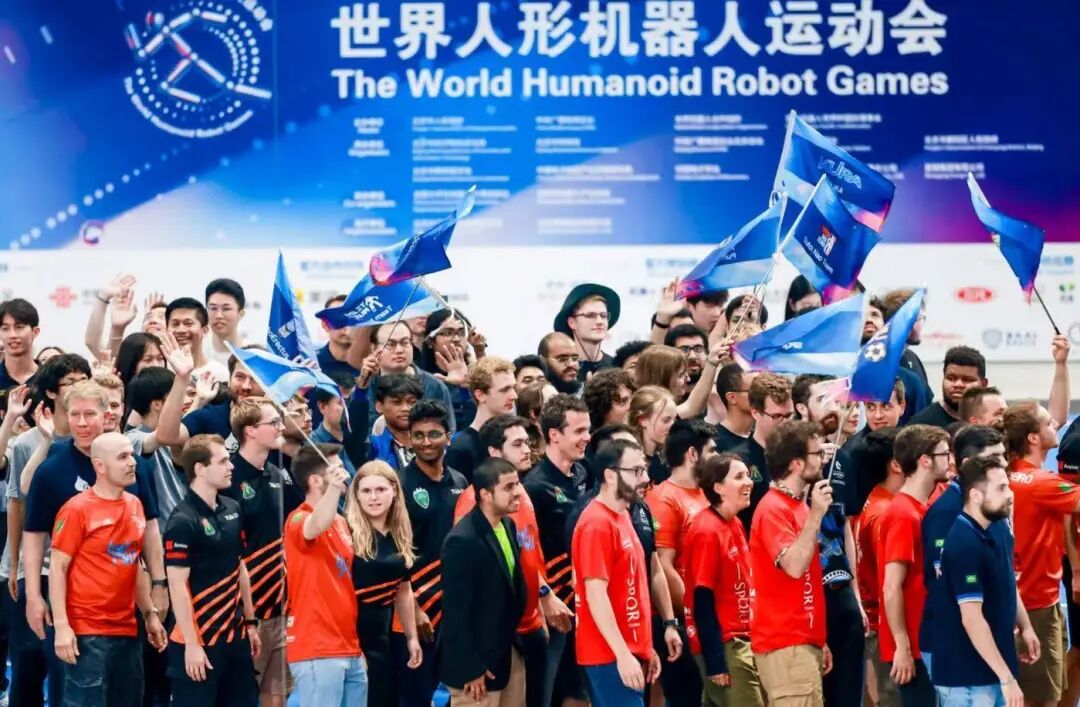
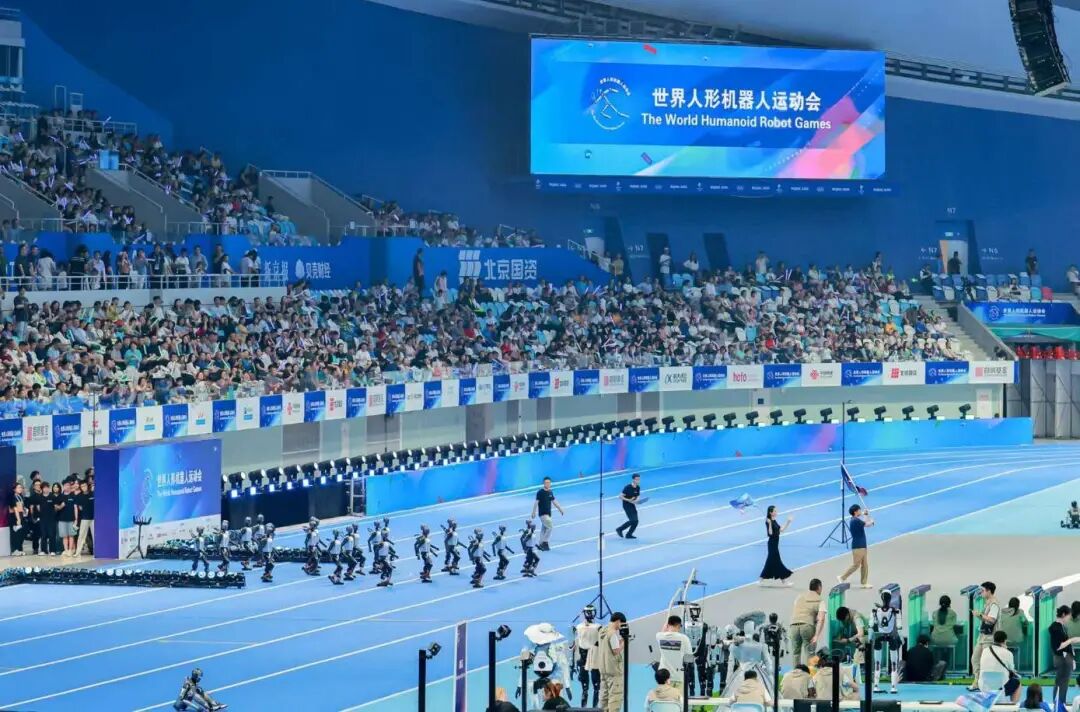
[Dahe Finance Cube Reporter Wang Yu]On August 14, the 2025 World Humanoid Robot Sports Games opened at the National Speed Skating Hall “Ice Ribbon” in Beijing. According to Dahe Finance Cube reporters, this is the world’s first comprehensive sports event centered around humanoid robots, which will last until August 17, attracting 280 teams and over 500 humanoid robots from 16 countries across five continents, competing in 26 events and 538 competition items.
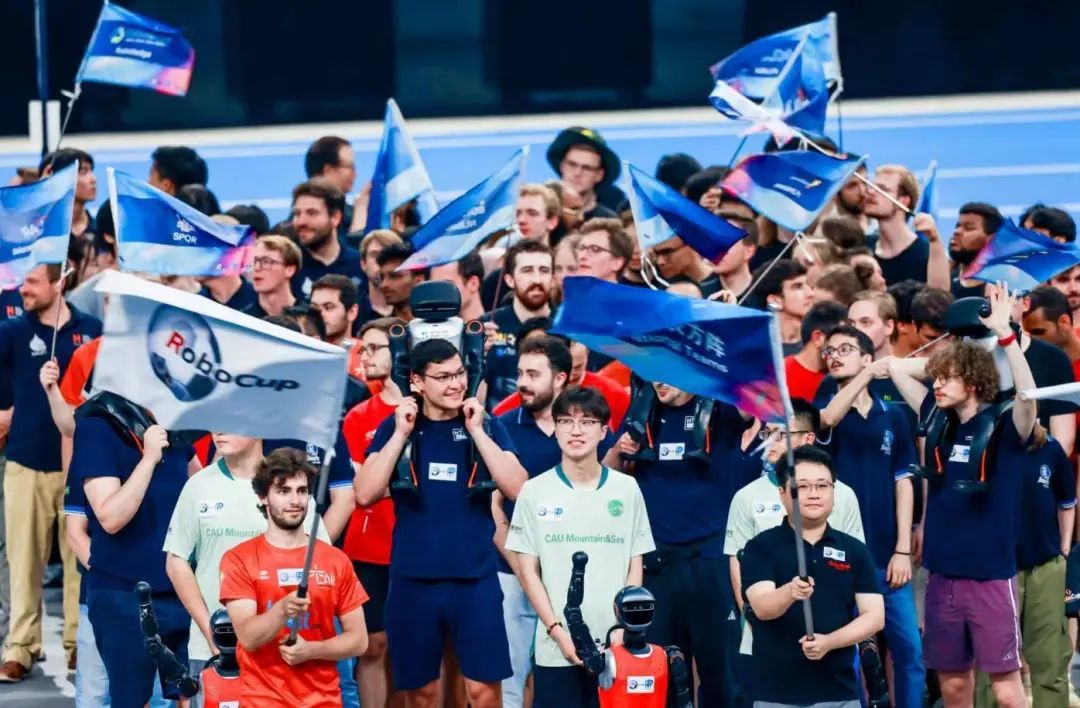
At the opening ceremony, 15 humanoid robots, BoosterT1 and K1, performed the opening dance, taking center stage as core performers. Subsequently, 25 BoosterT1 robots, which recently helped the Chinese team win the 2025 RoboCup World Cup in Brazil, appeared in a 5×5 formation, instantly becoming the focus of the audience.
Inside and Outside the Arena: From “Technical Performers” to “Ecosystem Builders”
It is reported that this is the first time in human history that AI humanoid robots have walked in formation. There is no remote control, and no operator is needed to protect them from behind; instead, the AI robots walk in formation autonomously. This requires the robots to possess high-precision comprehensive capabilities in positioning and synchronization, real-time communication, formation control, and action execution. Especially in terms of error control and delay compensation, the difficulty of AI robots walking in formation autonomously is an order of magnitude higher than that of a single robot walking autonomously.
It is worth mentioning that as an important participant in this competitive platform showcasing the cutting-edge achievements and development trends of humanoid robots globally, Accelerated Evolution provides hardware support and technical services for over 40 participating teams, demonstrating China’s hard-core strength in the field of humanoid robots to the world.
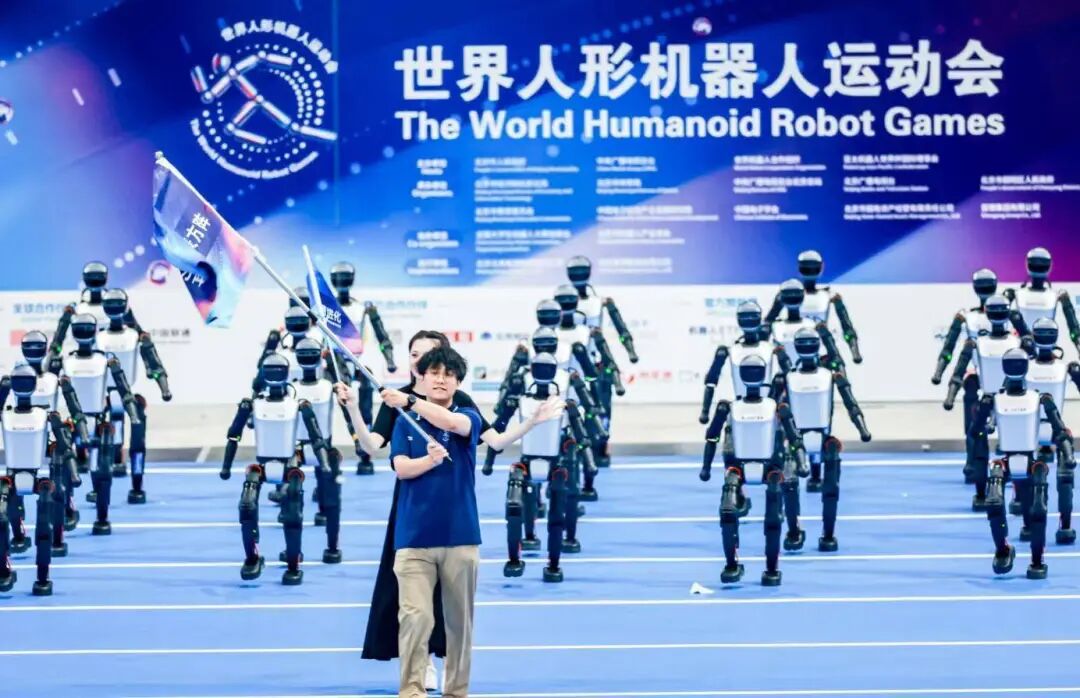
Entering the sports arena, the mark of Accelerated Evolution is everywhere. In the football event unit, robots equipped with its core perception, control, navigation, and decision-making algorithms will perform coherent actions such as tackling, passing, and shooting on the green field—among these robots are the same models that helped the Chinese team win the 2025 RoboCup World Cup in Brazil—research-oriented Booster T1 and the more suitable Booster K1 for educational and home scenarios.
“We are not just a hardware platform, but also ‘ecosystem builders’ for developers,” said Zhao Weichen, Vice President of Accelerated Evolution, in an interview with Dahe Finance Cube reporters. The company has open-sourced the 3v3 brain decision-making algorithm for the event, providing one-stop development tools and training courses, even helping teams of high school students with no prior experience complete competitive program development within two weeks.
In his view, the technological breakthroughs in humanoid robots require “real-world scenario validation”: the capabilities involved in the football event, such as real-time perception, multi-agent collaboration, and collision-resistant motion control, are highly relevant to the core needs of “obstacle avoidance walking” and “safe interaction” in everyday scenarios.
“Technology + Implementation” Dual Engine: Aiming to Compete with Apple and Microsoft in Personal Robotics
Accelerated Evolution was founded in 2023, with founder Cheng Hao being the third captain of the Tsinghua Huoshen team that won the 2025 RoboCup World Cup. He previously served as Vice President of Product Development at ByteDance; Chief Scientist Zhao Mingguo is the founder of the Huoshen team and the director of the Robot Control Laboratory at Tsinghua University’s Department of Automation, with his team focusing on humanoid robot research for 20 years; and Commercialization Head Zhao Weichen has a background in commercialization at major internet companies like Xiaohongshu.
Data shows that Accelerated Evolution achieved mass production in its first year, having delivered hundreds of humanoid robots, with over 50% sold overseas, covering universities and research institutions in more than 20 countries.
Outside the arena, Accelerated Evolution’s commercial landscape is rapidly expanding. In terms of financing, this startup has received significant capital support: in 2024, Accelerated Evolution successively obtained angel round, Pre-A round, and Pre-A+ round financing from sources such as Source Code Capital, Inno Angel Fund, Shumuk Venture Capital, and Zhongguancun Science City; by June of this year, Accelerated Evolution completed Series A financing led by Shenzhen Capital Group; in July, it completed Series A+ financing, led by the Beijing Robotics Industry Development Investment Fund managed by Shoucheng Holdings, with participation from the Beijing Artificial Intelligence Industry Fund and Bohua Capital.
It is understood that Accelerated Evolution’s commercialization path focuses on events, research, and education as short-term leverage (a market worth hundreds of billions), mid-term entry into family companionship and logistics scenarios (a market worth trillions), with the long-term goal of becoming “a personal robot comparable to Apple and Microsoft” (a market worth trillions).
In addition to Accelerated Evolution, other companies appearing at the sports games include Tiangong, Yushu Technology, Songyan Power, Zhuoyide, Fourier, and Xinghai Map, covering leading humanoid robot manufacturers in China.
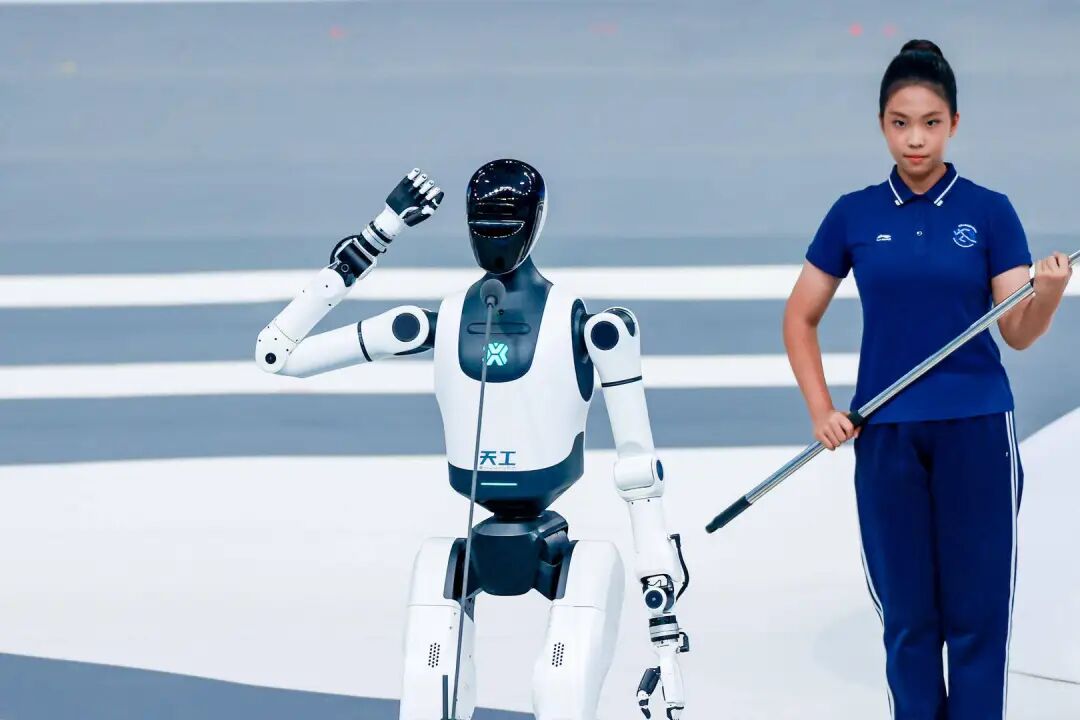
▲ Robot representatives taking the oath
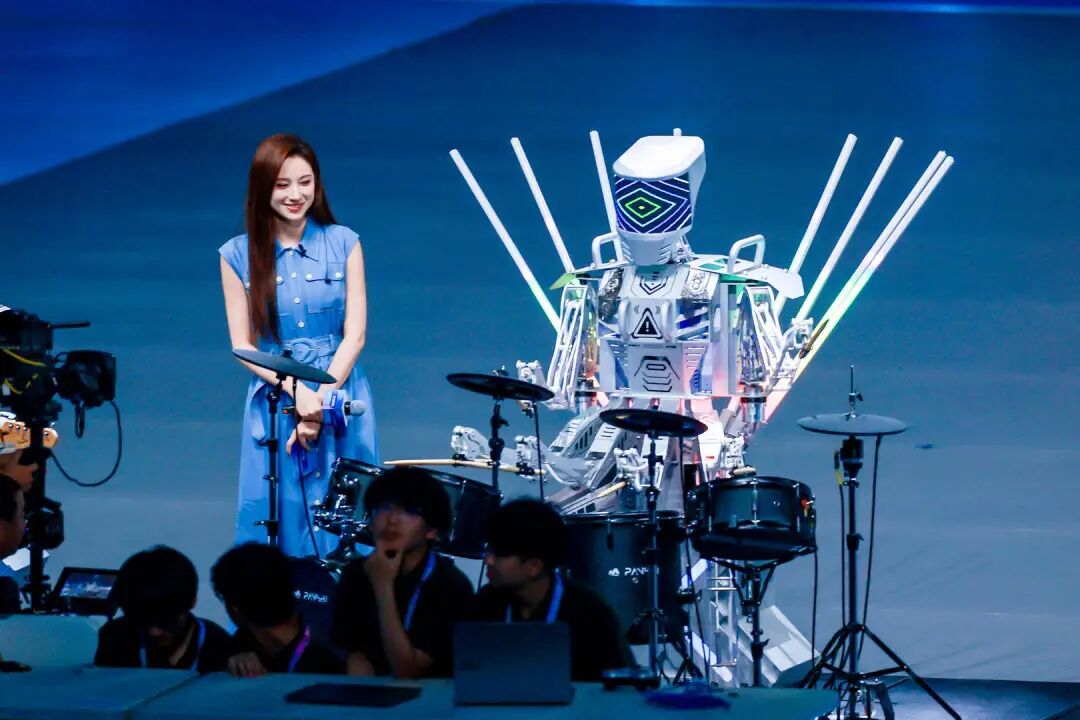
▲ Robot drummer with six hands
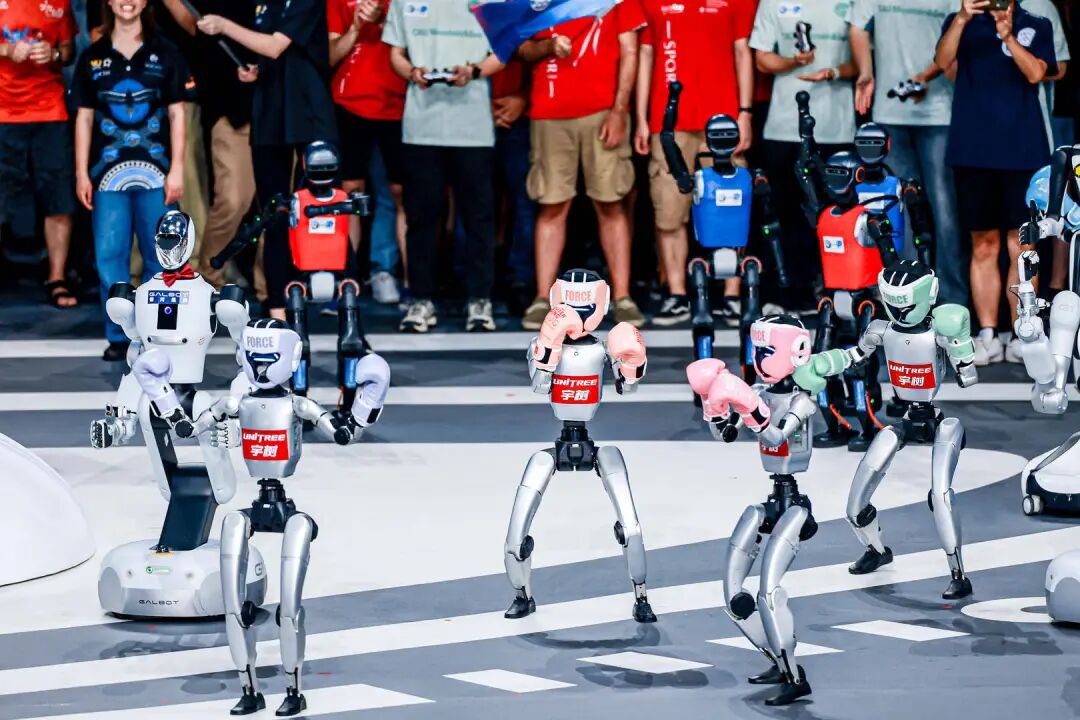
▲ Robot performing boxing
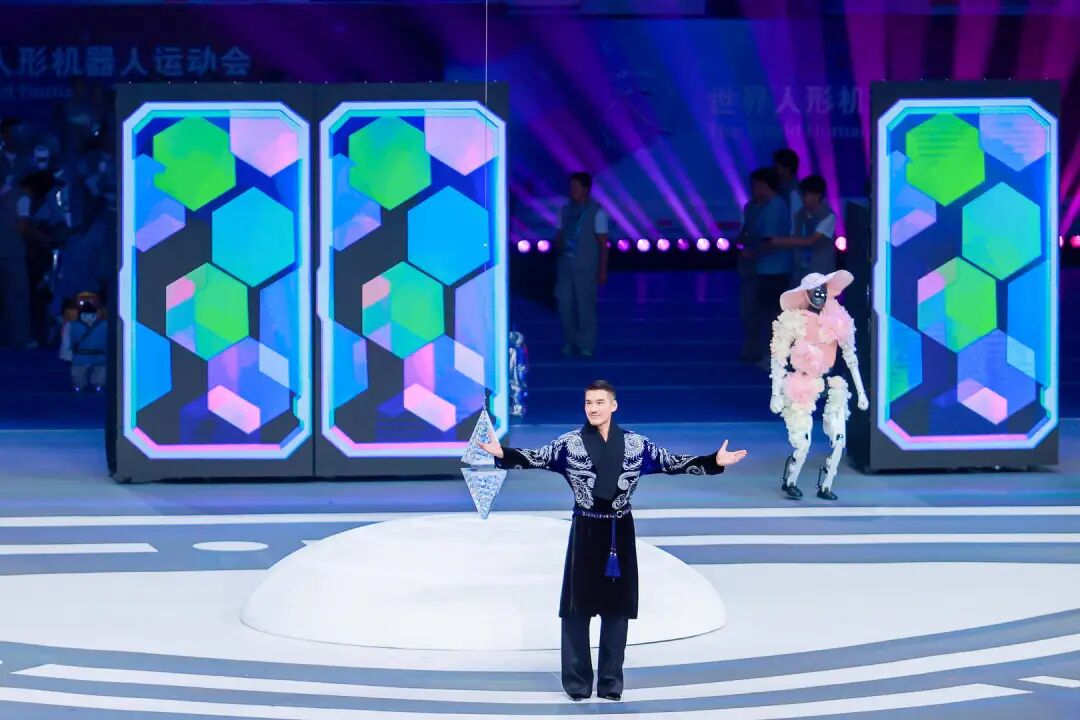
▲ Hu Bing walking the runway with a robot
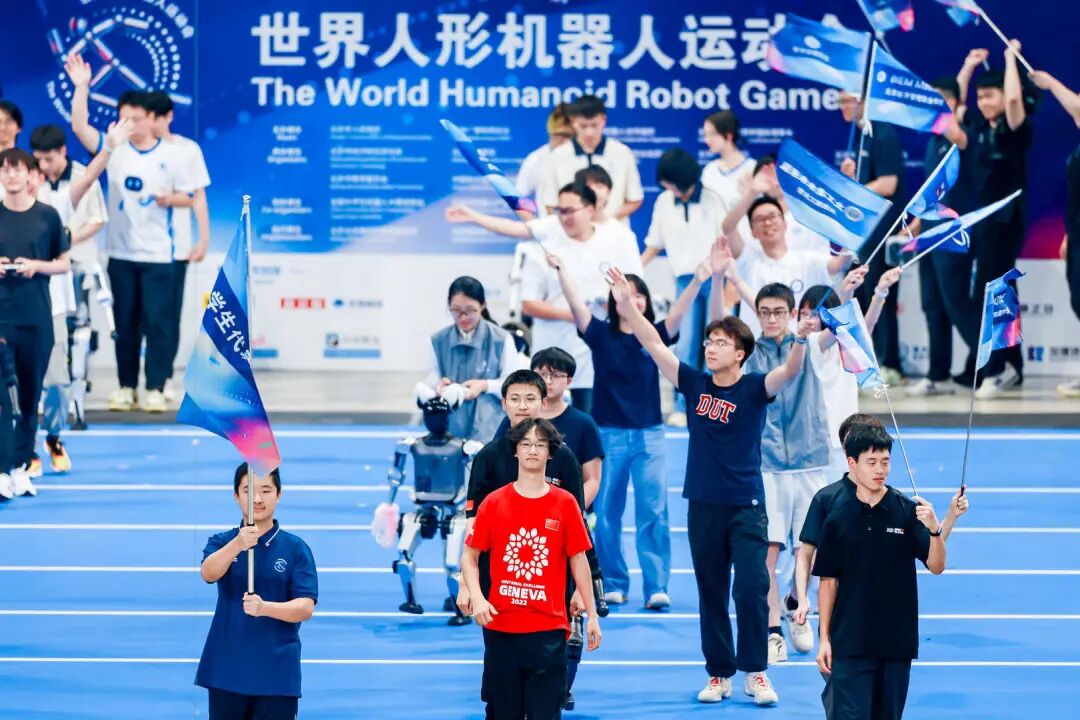
▲ Student formation

Some content is sourced from the internet, and the copyright belongs to the original author. If there is any infringement, please contact us, and we will handle it promptly.