
With the increasing application of large language models (LLMs) and generative artificial intelligence (GenAI) in the design field, their roles in inspiring creativity, generating content, and evaluating design concepts have become increasingly significant. Against this backdrop, Wuhan University has launched a course titled “Design Thinking and Concept Design” to attempt to integrate LLMs and GenAI to cultivate students’ innovative skills and their ability to effectively utilize AI-assisted design tools. Meanwhile, existing research has shown that AI has great potential for application at various stages of design.
Research Paper
Based on this, Associate Professor Jun Deng from Wuhan University and others published a paper titled Exploring the Cultivation of Digital Intelligence Design Talents: A Case Study of Human–AI Co-Creation in Forward-Looking Robotic Application Scenarios (《探索数智设计人才培养——以前瞻机器人应用场景下人智共创为例》) in the journal Frontiers of Digital Education(《数字教育前沿(英文)》), which explores the application of AI in design education through two robotic design cases from Wuhan University, analyzing its potential and limitations in enhancing efficiency and inspiring creativity, providing direction for cultivating digital intelligence design talents.
The research employs case studies, self-directed learning strategies, and reflective analysis, using the “Design Thinking and Concept Design” course at Wuhan University as a practical setting to conduct human-AI co-creation teaching experiments. The course is aimed at third-year students majoring in product design, lasting for 32 hours, integrating human-AI co-creation into the concept design practice and design implementation stages. The experiment is divided into three phases: the divergent thinking phase of collective intelligence innovation, the combined phase of divergent and convergent thinking in human-AI co-creation, and the refinement phase utilizing AI image generation tools to accelerate the development of design solutions.
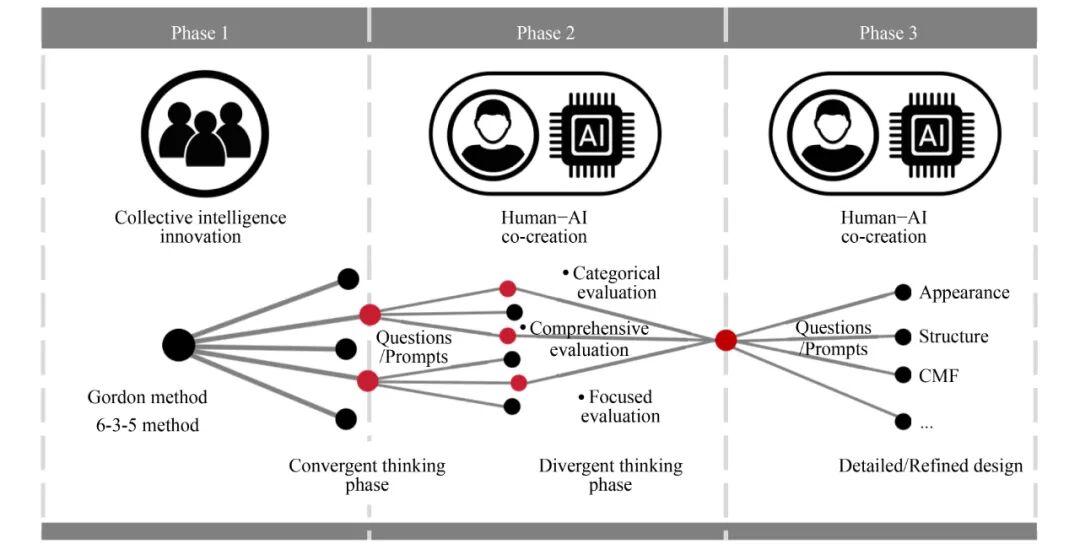
Figure 1: Divergent and convergent thinking based on human-AI co-creation
The case study presents two typical projects. The first one is the concept design of an endangered orchid in-situ conservation robot system. In the divergent thinking phase, students generated and evaluated design solutions through group discussions combined with AI tools, determining to focus on the direction of micro-folding robots, using AI to obtain data on endangered plants, clarifying the purpose of the robot for orchid seed collection and in-situ conservation; in the product form development phase, integrating AI suggestions, visual images were generated through multi-tool collaboration, ultimately designing a micro-insect robot and nest system. The second project is the design of a ghost fishing gear cleaning robot system in coral reef areas, starting from a rotating structure, expanding ideas through AI, setting multiple objectives to address the ghost fishing gear problem, and through AI assisted research, designing a robot with a streamlined body, flexible mechanical arms, and a bionic propulsion system using a mother-child collaborative structure.
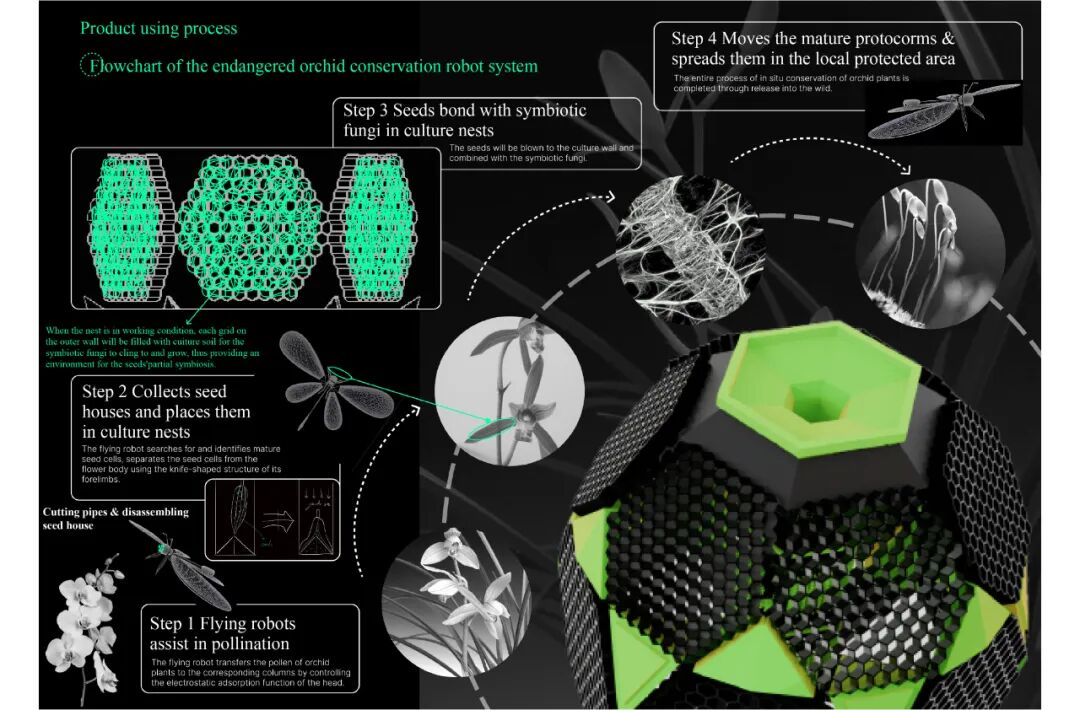
Figure 2: Concept design of the endangered orchid in-situ conservation robot system
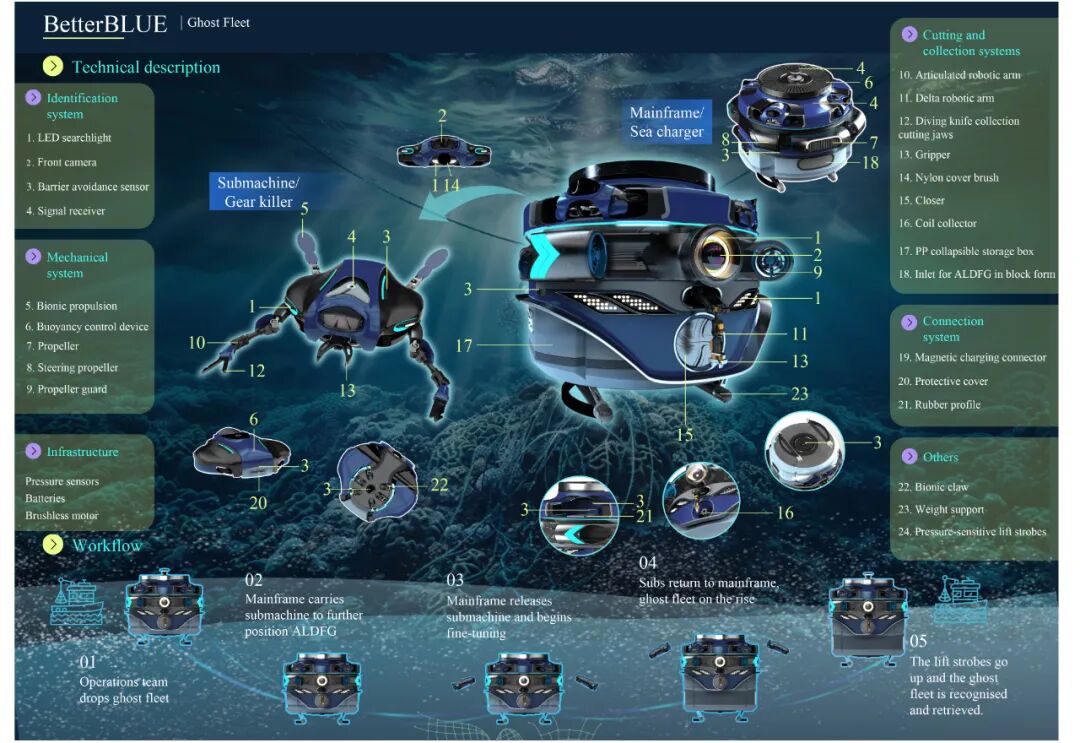
Figure 3: Design scheme of the ghost fishing gear removal robot system in coral reef areas
The research indicates that the experimental steps and methods are effective, with all 26 students completing the tasks and improving the quality of their work; the combination of collective intelligence and human-AI co-creation improved design efficiency, and AI played a significant role in data processing and creative generation, providing references for design optimization, and promoting interdisciplinary integration. However, there are also shortcomings, as AI has limitations in disruptive innovation, and the generated design details and logical consistency are lacking, requiring designers to manually filter and deepen the designs. Therefore, designers need to clarify the boundaries of human-machine capabilities and leverage their unique advantages.
Human-AI co-creation has become a pillar of innovation for enterprises, but faces many challenges, such as the impact of limited teaching resources and time on students’ understanding of interdisciplinary knowledge. In the future, it is necessary to address challenges such as uneven resource allocation and creative limitations, following the UNESCO framework, emphasizing a human-centered approach and lifelong learning, and integrating AI reasonably into the education system.
Article Information
Jun Deng, Yimeng Zhang, Tin-Man Lau, Shuhan Huang. Exploring the Cultivation of Digital Intelligence Design Talents: A Case Study of Human–AI Co-Creation in Forward-Looking Robotic Application Scenarios. Frontiers of Digital Education, 2025, 2(1): 9
https://doi.org/10.1007/s44366-025-0045-z

Scan the QR code to access the original text for free
Author Information
Jun Deng, Associate Professor and Head of the Design Department at the School of Urban Design, Wuhan University, a member of the “351 Talent Program” of Wuhan University, and a member of the Digital Intelligence Education Research Center at Wuhan University. Actively exploring the cultivation of “digital intelligence design talents” around the theme of “digital intelligence education,” promoting interdisciplinary collaboration and innovation, and has won the China “Good Design” Award, the German IF Design Award, and the German Red Dot Award. Committed to human-AI interaction and digital intelligence design, and the design of robots that integrate emotional intelligence, leading projects funded by the Ministry of Education’s Humanities and Social Sciences Research Project, the China Postdoctoral Fund Project, and core participation in major projects of the National Social Science Fund and the National Natural Science Foundation.

Yimeng Zhang, General Manager of the Education Division of Langjian Group. Concurrently serves as an external mentor at Wuhan University, Hubei University, Harbin Institute of Technology Shenzhen, Shenzhen Polytechnic, and other universities. Responsible for the D+M full industry chain design innovation training program, has organized professional investigations and practices for design majors from more than thirty universities. Based on the talent demands of the design industry, actively practicing school-enterprise cooperation, promoting a full industry chain design innovation service ecosystem, and exploring training programs for composite design talents in the new era.

Tianmin Liu, Professor of Industrial Design at Auburn University, recognized as one of the Design Educators of the Year by Design Intelligence magazine, has twice received the Ulm Professorship awarded by CADC, a member of the PlayCore Scholar Network, and has served as the chair of the Master of Industrial Design program since 2013. His research and teaching areas include furniture design, design semantics, cultural aesthetics, game design, design methods, new product development, 3D computer modeling, and rapid prototyping technology.

Shuhan Huang, an undergraduate student majoring in product design at Wuhan University, class of 2021, has been recommended for graduate studies at Wuhan University with first place in both comprehensive assessment and interview rankings. She has excellent grades in core courses, has received multiple scholarships, and has been recognized as an outstanding student and outstanding member of the youth league, winning the national first prize in the Challenge Cup, the national first prize in NCDA, and the provincial gold medal in Internet +.
Click on the intelligent agent to explore the forefront of digital education
Recommended Reading
Paper Interpretation | Psychology Teaching in the Era of Digital Intelligence
Paper Interpretation | Digital Intelligence Education Reform Leading the Digital Transformation of Higher Education
Paper Interpretation | Digital Intelligence Education: Practice and Innovation
Journal Introduction
Journal Features
1. International submission and review platform Editorial Manager for convenience.
2. Strict peer review.
3. Free language polishing, ensuring publication quality.
4. No fees charged to authors.
5. No limit on article length.
6. Review cycle: average 30 days for the first round, average 60 days from submission to acceptance.
7. Online first publication (CAP).
8. Promoted globally through the SpringerLink platform.
Online Browsing
https://journal.hep.com.cn/fde
(Free download in mainland China)
https://link.springer.com/journal/44366
Online Submission
https://www.editorialmanager.com/fode/
Postal Issue Number
80-164
Contact Us
010-58582344, 010-58581581

HEP

Springer

FDE
Supervised by: Ministry of Education of the People’s Republic of China
Sponsored by: Higher Education Press
Editor-in-Chief: Tan Fangzheng
Co-Editors: Yang Zongkai, Li Yongzhi
Executive Deputy Editors: Long Jie, Wu Di
Editor-in-Chief: Jiang Wenbo
Deputy Editor-in-Chief: Guo Tingting
Editors: Wang Jin, Li Runjie
CN 10-1952/G4
p-ISSN 2097-3918e-ISSN 2097-3926
Postal Issue Number:80-164
This journal address: No. 4 Huixin East Street, Chaoyang District, Beijing
Editorial Office of Frontiers of Digital Education (English)
Email: [email protected]
Phone: 010-58582344, 010-58581581