According to a report from Electronic Enthusiasts (by Liang Haobin), the commonly used 12V systems in data centers, communications, and now automotive applications are facing increasing pressure from higher power loads. As a result, the 48V system has gained widespread attention in the market in recent years.Especially in the automotive sector, with the advancement of vehicle intelligence and electrification, the 48V low-voltage system is gradually enhancing the R&D schedules of major automotive manufacturers and the automotive supply chain.Paul Laval, Director of Automotive System Solutions at Mailex, believes that the main driving forces behind the transition of automotive low-voltage system architecture from 12V to 48V come from four aspects:1. Increased power demand from emerging functions: Modern vehicles integrate many power-hungry systems, including Advanced Driver Assistance Systems (ADAS), infotainment systems, connectivity modules, and chassis control electronics (such as steer-by-wire, brake-by-wire, and fully active suspension). The power required for these new functions far exceeds the efficient range that the traditional 12V architecture can provide.2. Weight and efficiency optimization: Transmitting high power through a 12V system requires thicker and heavier wiring harnesses, which not only increases costs and vehicle weight but also negatively impacts efficiency and range. In contrast, a 48V system requires only a quarter of the current of a 12V system to transmit the same power, thereby reducing the size and weight of the wiring harness while minimizing energy loss due to resistance.3. Evolution of vehicle architecture: Automotive manufacturers are currently moving towards regional architectures, which organize electrical components based on their physical locations within the vehicle, further reducing wiring complexity. The introduction of 48V aligns well with this architectural change.4. Industry standardization and safety: 48V is seen as an ideal choice because it is below the 60V electric shock hazard threshold, ensuring operational convenience and safety while providing sufficient headroom for the increasing power demands of future vehicles.Under the trend of 48V, some technologies in the E/E architecture are also changing, such as the integration of regional controllers and the application of intelligent distribution technologies.The traditional distributed ECU architecture is being replaced by centralized domain controllers, and the 48V system achieves refined energy management through the integration of Intelligent Power Distribution Units (IPD). Paul Laval stated that in the future, the 48V system will be deeply integrated with Ethernet communication, supporting dynamic power distribution and OTA upgrades, such as a 12V/48V level intelligent power distribution test board that achieves real-time current monitoring and overcurrent protection through eFuse and intelligent high-side switches.Additionally, the introduction of 48V has brought revolutionary optimizations to semiconductor devices and wiring harnesses. The 48V system reduces current (to only 1/4 of 12V), which not only shrinks the wire diameter of the harness and reduces copper usage but also supports the replacement of copper with aluminum wires, further lowering weight and costs. The application of wide bandgap semiconductors such as Silicon Carbide (SiC) and Gallium Nitride (GaN) will significantly enhance converter efficiency and reduce device size.However, Paul Laval also believes that in the short term, the coexistence of 12V and 48V dual systems will remain mainstream, with some manufacturers adopting 48V for brake and steering control while retaining a 12V backup line. But in the long run, 48V will gradually replace 12V as the core low-voltage platform.Currently, the automotive industry is accelerating its focus and development of 48V electrical systems, especially in the fields of Battery Electric Vehicles (BEV) and Plug-in Hybrid Electric Vehicles (PHEV), particularly in high-performance models. Some automotive manufacturers have already adopted 48V systems in certain platforms, primarily to support high-power loads and advanced functions (such as steer-by-wire, brake-by-wire, and active suspension).It is reported that most automotive manufacturers are cautiously planning the transition to 48V systems, starting with high-end models and gradually expanding as the supply chain and technical knowledge mature. The speed of transformation largely depends on the timelines of leading automotive manufacturers and the willingness of the entire industry to invest.For the supply chain, the 48V system also presents new challenges. The component supply chain for 48V systems is not yet fully mature, and many power loads (pumps, motors, electronic control units, etc.) must be redesigned and validated to accommodate 48V operation. The migration process requires rigorous testing for safety (such as creepage distance and electrical clearance), reliability, and compatibility with existing systems, especially since the initial deployment involves a mixed 12V/48V “regional” architecture.According to Paul Laval’s observations, there are several types of chips in the 48V system that require significant upgrades, including power management chips, voltage regulators, DC-DC converters, motor driver chips, and high-power load drivers, as well as enhanced protection and diagnostic chips.Due to the higher input voltage of the 48V system, chips for motor drives, DC-DC, etc., need to withstand higher voltages, have stronger anti-interference capabilities, and better heat dissipation. The higher voltage brings greater risks of arcing and damage, so chips require more comprehensive protection measures, diagnostic functions, and communication interfaces to ensure their reliability.In response to the application of the 48V system, Mailex has taken the lead in launching a complete 48V pre-driver System-on-Chip (SoC) to the market. The MLX81346 is an advanced chip designed for 48V motor applications in the automotive mechatronics field, equipped with a 16-bit MCU, 64KB Flash, LIN software protocol stack, and LIN interface, as well as 12 GPIOs, including 3 high-voltage I/Os, 2 UARTs, SPI, and I2C, meeting in-vehicle communication needs.This innovative chip can efficiently power motors with up to 2000 watts, suitable for pumps (oil pumps, water pumps, etc.), cooling fans, and BLDC positioning actuators in 48V systems. It is reported that the MLX81346 has already achieved mass production application in certain vehicle models, and Mailex will continue to launch numerous new products targeting 48V applications in the future.

Disclaimer: This article is original from Electronic Enthusiasts, please indicate the source above when reprinting. For group discussions, please add WeChat elecfans999, for submission of interview requests, please send an email to [email protected].
More hot articles to read
-
AI Year, Sensor Carnival! Three major sensor companies H1: Highest revenue exceeds 3.7 billion, one achieves profitability for the first time
-
Huawei Cloud Architecture Major Adjustment, Affecting Thousands of Employees, Can All in AI Turn Losses into Profits?
-
From GPU to ASIC, AI server power chips explode!
-
Global humanoid robot’s first 10,000-unit large order! Surprisingly, it is not UBTECH or Yushun?
-
DeepSeek V3.1 Released! Embracing domestic computing power chips
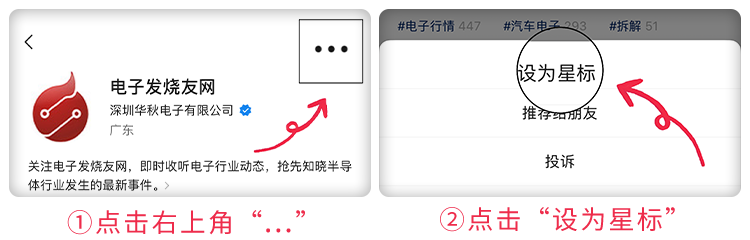
Click to follow and star us
Set us as a star to not miss any updates!