
Cite This Article: Wang Bo-ru, Fan Jing, Shan Ze, et al. Overview of Key Technologies in 5G Mobile Communication Networking [J]. Communications Technology, 2019, 52 (05): 1031-1040. doi:10.3969/j.issn.l002-0802.2019.05.001
Abstract
Today, mobile communication technology is developing rapidly, and 5G communication technology has become a focus of mobile communication research. The fifth generation communication system has made technological breakthroughs compared to the fourth generation communication system in terms of increasing capacity and transmission speed, enhancing reliability, and reducing transmission delay. This article focuses on the key technologies of 5G mobile communication networking, elaborating on critical technologies such as beamforming, ultra-dense networking, massive MIMO, SDN/NFV, and network slicing. By comparing various key technologies in 5G communication networking, we identify the intrinsic connections between these key technologies, highlighting their advantages and the challenges they currently face, providing references for researchers in the field of 5G.
0
Introduction
In 2008, the 4G communication system entered our lives, and LTE-Advanced also began commercial operation. With the popularity of 4G, our lives have become increasingly convenient. However, the 4G era still faces unresolved issues such as severe wireless spectrum resource shortages, unlimited increases in the number of users, and explosive growth in data traffic, prompting researchers to consider the “5G mobile communication system.” Today, the demand for high-quality communication systems is driving the development and maturation of 5G key technologies. The 5G communication system is designed to meet the needs of global communication and is a truly integrated network. This network enables faster, safer, and freer connections between people, between people and things, and between things.
1
Current Status of 5G Development at Home and Abroad
Currently, telecom-developed countries such as South Korea, the United States, Japan, and Europe are actively increasing strategic investments in the 5G field, implementing important measures in spectrum planning and special funding support, and conducting 5G trials to accelerate the development and maturity of the 5G industry, aiming to achieve commercial deployment of 5G by the target date. At the same time, countries are actively participating in 5G research and development and submitting 5G standard proposals to relevant international standard organizations. Countries have expressed their commitment to comply with unified standards for 5G technology. In the era of information technology, only by staying at the forefront of information technology development can one occupy a place in the communication industry and enhance the country’s international influence.The Ministry of Industry and Information Technology announced at a press conference held by the State Council Information Office in February 2016 that China officially launched 5G research and development trials at the beginning of 2016. In 2018, China’s 5G technology research and development trials entered the third phase. The fifth generation (5G) wireless network technology is expected to be standardized by 2020, with the main goals of improving capacity, reliability, and energy efficiency while reducing latency and significantly increasing connection density.
2
Key Technologies for Structure-Based Networking
The key technologies for structure-based networking discuss the key technologies for 5G networking from an infrastructure perspective. From the perspective of the key technologies used in infrastructure, massive MIMO (Massive MIMO) technology can improve spectrum utilization. Beamforming technology ensures reliable and stable signal transmission. Ultra-dense networking technology, used in densely populated and high-capacity areas, enables high information transmission rates. The key technologies of 5G can be discussed from both centralized and distributed aspects.2.1 Centralized – Beamforming TechnologyToday, the spectrum resources in mobile communication are difficult to adapt to the rapidly growing data traffic, and the use of millimeter waves allows the utilization of spectrum resources above 30 GHz. Due to significant path loss during the spatial propagation of millimeter waves, beamforming technology is required to compensate for this loss.Beamforming technology concentrates energy into a small area and achieves high gains, addressing the issue of significant free-space propagation loss. The model framework for beamforming processing in the system is shown in Figure 1.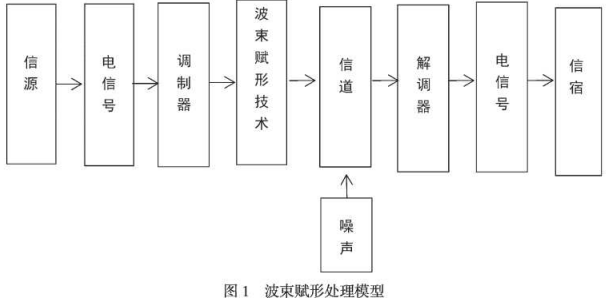 Beamforming technology is the last step before data is sent via antennas (massive MIMO); the sender can consider it part of the channel effects. Although the actual channel cannot be changed, the beamforming matrix can be artificially designed based on the actual channel state, allowing for changes in the equivalent channel matrix through the design of the beamforming weighting vector, thus achieving the desired system performance and facilitating communication. Beamforming will adaptively adjust the radiation pattern of the antenna array according to specific scenarios.2.1.1 Advantages of Beamforming TechnologyBeamforming technology is crucial for massive MIMO technology and has the following advantages:(1) Beamforming technology is a key technology that ensures reliable and stable signal transmission. As more wireless applications are developed, the reliability brought by beamforming technology becomes increasingly important.(2) Beamforming technology has significant advantages in expanding coverage and suppressing interference. By processing transmitted and received signals, beamforming technology significantly increases the signal-to-noise ratio, thereby enhancing system capacity and suppressing interference.2.1.2 Challenges of Beamforming TechnologyWhile beamforming technology effectively improves the stability of signal transmission, it also faces the following challenges:(1) The suitability of the beamformer is crucial. In digital beamformers, each antenna element has its corresponding baseband port, providing maximum flexibility; however, digital-to-analog converters consume a lot of power. In contrast, analog beamformers only support simple beam shapes and cannot accommodate flexible beam shapes, leading to significant interference between beams.Hybrid beamforming is a compromise between digital and analog beamforming schemes; it can reduce complexity while offering great flexibility, so it is expected that early communication systems will use analog or hybrid beamforming architectures. In 5G hybrid beamforming systems, a large number of antenna arrays can achieve extremely narrow beams to focus energy and mitigate interference.(2) The directions of the transmitting and receiving beams of the transmitter and receiver must be aligned. Due to the narrow beam, even slight misalignment can lead to a sharp decline in signal-to-noise ratio. Effective beam discovery mechanisms for aligning the directions of the transmitting and receiving beams are crucial in millimeter-wave communication, such as linear beam scanning, tree scanning, and random excitation.2.2 Centralized – Ultra-Dense NetworkingUltra-dense networking achieves a hundredfold increase in system capacity in localized hotspot areas, making it one of the main technologies for future 5G communication systems. To handle mobile network data traffic in 2020 and beyond, network densification is an unavoidable process, in addition to increasing spectrum bandwidth and improving spectrum utilization. Due to the short wavelength of millimeter waves, it is possible to deploy a large number of small base stations.Ultra-dense networking involves networking by reducing cell radius and increasing the number of low-power nodes. It meets the explosive data rate requirements of 5G and enables dense deployment of small cell base stations. In ultra-dense networking, control and bearer separation and clustered centralized control are implemented.2.2.1 Advantages of Ultra-Dense NetworkingThe use of ultra-dense networking technology allows high-speed internet access in densely populated areas, such as shopping centers, dense residential areas, and transportation hubs. The advantages of ultra-dense technology are as follows:(1) Compared to large base stations in 4G networks, 5G networks utilize a large number of small base stations, reducing the distance between the transmitter and receiver, thus enabling more efficient use of wireless resources and significantly increasing system capacity.(2) The adoption of numerous small base stations reduces reliance on large base stations, making networking more flexible and improving network density and coverage.(3) Ultra-dense networking employs spatial reuse of spectrum resources to significantly enhance spectrum efficiency.2.2.2 Challenges of Ultra-Dense Networking TechnologyThe goal of ultra-dense networking technology is to enhance user experience in densely populated areas and improve connectivity for all. If user experience is poor, the use of ultra-dense networking becomes meaningless. Currently, ultra-dense networking technology faces the following challenges:(1) In ultra-dense networking, as cells are densely deployed, inter-cell interference issues become increasingly prominent. Only by controlling channel interference can the entire system’s transmission be reliable. To address interference issues, inter-cell interference coordination techniques can be employed. As cell density increases, relying solely on base stations within cells to address inter-cell interference becomes increasingly difficult. Multi-cell coordination techniques can be used to coordinate multiple base stations, effectively reducing inter-cell interference.(2) The use of numerous small base stations, each with a smaller coverage area, leads to frequent handovers as users move, reducing network capacity and impacting user experience in cells. To address the frequent handover issues arising from 5G user mobility, the 5G network can adopt user-centric virtualization technologies, essentially allocating resources based on user needs. Regardless of the user’s location, reliable communication services can be provided based on service quality. Moreover, users can be assured of stable service experiences, regardless of their mobility. User mobility poses a significant challenge. Fortunately, machine learning and big data are maturing, allowing for tracking user mobility and predicting future locations.2.3 Distributed – Centralized Massive MIMO TechnologyThe short wavelength of millimeter waves allows for the placement of a large number of antennas in a very limited space, and large antenna arrays can provide sufficient array gain to compensate for severe signal attenuation caused by path loss, penetration loss, rain effects, and atmospheric absorption. Therefore, massive multiple input multiple output (MIMO) technology is a very promising technology for future millimeter-wave wireless communication systems.A massive MIMO system refers to a system that uses a large number of individually controllable antenna elements on one side of the wireless communication link. Massive MIMO networks leverage antennas to provide spatial freedom, allowing multiple users to multiplex messages over the same time-frequency resources. Massive MIMO technology breaks away from the previous point-to-point communication model, transforming a single point-to-point channel into multiple parallel channels for processing.Massive MIMO technology can be divided into centralized MIMO technology and distributed MIMO technology. Centralized MIMO technology involves multiple base station antennas arranged in an array, while distributed MIMO involves multiple antennas of base stations dispersed to cover cells. Centralized MIMO technology’s advantage lies in not requiring multiple geographical locations as in distributed MIMO technology, avoiding synchronization issues during fiber data aggregation. In contrast, distributed MIMO technology can form multiple independent transmission channels, avoiding excessive correlation of channels due to tightly configured antennas.2.3.1 Advantages of Massive MIMO TechnologyMassive MIMO technology is an optimization and extension of MIMO technology. Compared to traditional MIMO technology, massive MIMO offers the following advantages:(1) The use of massive MIMO technology can increase system capacity. Instead of increasing system capacity by reducing cell size, massive MIMO systems can directly increase system capacity by increasing the number of base station antennas, reducing implementation complexity and significantly enhancing system capacity.(2) It reduces transmitter power consumption and product costs. The use of a large number of antennas greatly increases array gain, effectively reducing power consumption at the transmitter end. The system can be built using low-cost amplifying components with milliwatt-level output power, lowering both power consumption and product costs.(3) The system exhibits excellent robustness. Massive MIMO can concentrate waveforms within a very narrow range, greatly improving spatial resolution. Theoretically, when the number of antennas is sufficiently large, noise and uncorrelated interference become negligible, and the simplest linear precoding and decoding algorithms approach optimality. Additionally, having more antennas provides greater selectivity and flexibility, enhancing the system’s capability to handle burst issues.(4) The use of massive MIMO technology can effectively improve spectral efficiency. Massive MIMO technology deeply exploits spatial dimensions, allowing for improved spectral efficiency without increasing base station density and bandwidth. Spectral efficiency fundamentally depends on the number of parallel channels.(5) The use of massive MIMO technology can further improve signal coverage. As millimeter waves are a frequency band expansion technology for 5G, their operational areas are at higher frequency bands. Generally, if the same number of antennas is used, higher frequencies result in smaller coverage areas. To achieve the same coverage distance, the number of antennas can be increased. The combination of high-frequency millimeter-wave technology and massive MIMO antenna technology can further enhance signal coverage.(6) MIMO systems can increase data rates within limited power and bandwidth ranges.2.3.2 Challenges of Massive MIMO TechnologyMassive MIMO significantly increases spectral efficiency, especially when capacity demands are high and coverage areas are broad, making it better suited to meet network growth demands. However, it also faces the following challenges:(1) The transmitter side requires accurate channel state information. Spectrum and energy efficiency largely depend on channel state information, particularly in orthogonal frequency division multiplexing (OFDM) and massive multi-antenna systems, making channel estimation particularly critical. Thus, accurate channel state information is required on the transmitter side.(2) Using pilot reuse techniques to estimate channels often leads to pilot contamination. When the number of base station antennas increases indefinitely, pilot contamination causes the signal-to-interference-plus-noise ratio (SINR) to saturate. In the absence of pilot contamination, SINR increases linearly with the number of base station (BS) antennas, making pilot contamination a significant technical challenge.(3) Coupling in mobile terminals. Due to the limited size of mobile terminal devices, strong coupling between antenna elements is inevitable, affecting antenna efficiency and correlation. Thus, applying decoupling techniques is crucial.2.4 Comparison of Key Technologies Based on Structural NetworkingThe key technologies based on structural networking all aim to improve the infrastructure of 4G, focusing on expanding the capacity of mobile communication systems, increasing signal coverage, and enhancing the spectrum utilization of mobile communication systems. Furthermore, the use of these technologies is related to millimeter waves to some extent.Both ultra-dense networking technology and massive MIMO technology improve spectrum utilization to a certain degree by increasing the number of infrastructures (such as base stations and transceiver antennas) to expand signal coverage. Ultra-dense networking technology increases the number of base stations, while massive MIMO technology increases the number of large transceiver antennas. The difference between the two technologies is that ultra-dense networking technology increases system capacity by reducing cell radius, while massive MIMO technology increases system capacity by increasing the number of antennas.The use of beamforming technology and massive MIMO technology is in part due to the signal attenuation of millimeter waves in space; using these two technologies can expand signal coverage, reduce interference, and improve the reliability and stability of signal transmission. The comparison of key technologies based on structural networking is shown in Table 1.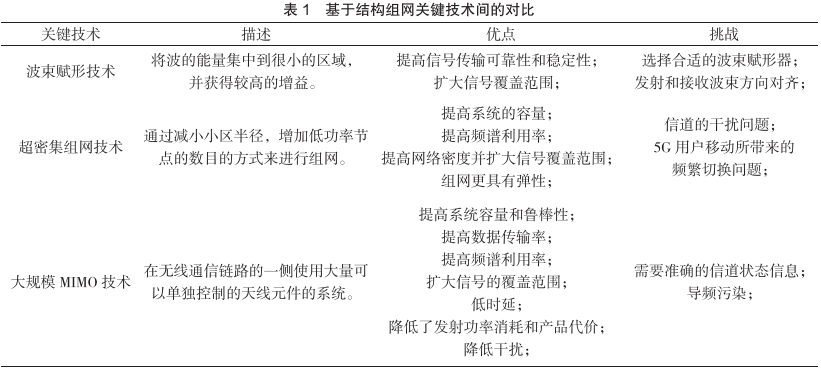
3
Key Technologies Based on Functional Networking
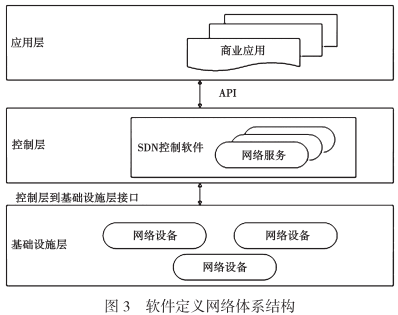
Key technologies based on functional networking explore the critical technologies adopted in 5G from the perspective of network virtualization. The increasingly complex network makes the task of managing and controlling information from a growing number of connected devices more complex and specialized. Key technologies based on functional networking make networks more flexible, allow various user needs to be met, and standardize infrastructure construction.Faced with varying performance requirements of applications, network virtualization can effectively address the hardware resource issues needed for connecting everything to the internet. In this model, physical resources can be centrally managed. The network slicing technology used after virtualization dynamically allocates and migrates virtual resources according to corresponding resource allocation algorithms, isolating network resources. Network slicing technology can cut corresponding virtual sub-networks based on specific application scenarios, greatly benefiting the development of various applications, with matching between access networks and core networks accomplished via SDN/NFV orchestrators.3.1 Network Function Virtualization (NFV) and Software Defined Networking (SDN)Traditional network services heavily rely on physical topologies and specific vendor hardware. Software Defined Networking (SDN) and Network Function Virtualization (NFV) are increasingly adopted to create, manage, and scale network services on demand, optimizing resources.NFV has been widely recognized as a major direction for next-generation networks and is a foundational key technology for the development of communication networks, meeting operators’ demands for low costs, flexibility, and openness. The goal of NFV is to consolidate dedicated network devices onto industrial standard mass servers, effectively migrating network functions from dedicated devices to virtual machines or containers running on general-purpose servers. The core of NFV is virtual network functions, which utilize virtualization technologies to provide a new network design approach for future networks. The NFV architecture is shown in Figure 2. NFV decouples logical networks from physical hardware devices to achieve lower network construction and operational costs. NFV relies on traditional server virtualization but differs in that virtual network functions (VNF) may consist of one or more virtual instances. Typically, multiple VNFs need to be used sequentially to provide useful services to users. To replace dedicated hardware devices, virtual machines need to run different software and processes.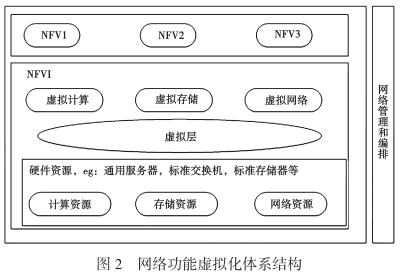 Software Defined Networking is another key technology addressing the rigidity of traditional networks. SDN enhances network programmability through centralized controllers, making it a hot topic in the networking field in recent years. The SDN architecture is shown in Figure 3. Essentially, SDN is a centralized network model where the control plane is centralized in one or a group of controlling entities, while the data forwarding plane is simplified and abstracted as applications and network services requested through the SDN controller. The main goal of SDN is to separate the control plane from the data center. SDN is divided into three parts: the application layer, which is primarily a collection of business and applications; the control layer, mainly composed of a logically centralized and programmable controller that possesses global network information, facilitating network configuration and new protocol deployment; and the infrastructure layer of SDN, consisting mainly of switches that only provide data forwarding and can quickly process and match data packets.
 SDN/NFV share the same goals, both aiming to make networks more flexible. While SDN and NFV are not mutually dependent, they can complement each other. Their complementarity is reflected in that SDN enhances the compatibility and operability of NFV, whereas NFV improves the flexibility of SDN through virtualization and orchestration technologies. SDN/NFV has become a key technology for network virtualization and cloudification.3.1.1 Advantages of SDN/NFV TechnologiesSDN/NFV represents a new direction in network evolution, a new technology worth exploring continuously in academia and industry. The advantages of SDN/NFV technology include:(1) It will effectively promote the enhancement of future network deployment capabilities, reduce network deployment costs, and strengthen operational capabilities.(2) In terms of network hardware, standardizing hardware allows for the decoupling of logical networks from physical hardware devices, thus lowering the costs associated with introducing dedicated hardware facilities.(3) In terms of network function realization, programmable software platforms can implement virtualized network functions. By separating the control plane and data forwarding plane, comprehensive network management can be achieved. When nodes fail, the controller can quickly locate and repair nodes.3.1.2 Challenges of SDN/NFV TechnologiesAlthough SDN/NFV technology enhances the flexibility of 5G networks, it still faces the following challenges:(1) Although the possibilities of SDN/NFV technology are well-known, specific controls and orchestration are still in design, with few prototype validations available.(2) Efficient, fast, and scalable resource allocation to meet network requirements is a significant challenge for NFV deployment. The orchestration in the NFV architecture involves three stages: constructing virtual network function chains, mapping virtual network forwarding graphs, and scheduling resource allocations for virtual network functions. Coordination between these three stages, dynamic resource allocation, virtual network security, robust fault tolerance, and load balancing must consider relevant strategies for implementation. A series of resource allocation issues involved in 5G technology includes: time-frequency resource allocation, orthogonal pilot resource allocation, beam allocation, massive MIMO multi-user clustering, and wireless network virtualization resource pool allocation, etc. AI (Artificial Intelligence) technologies offer a possibility for 5G system design and optimization that goes beyond traditional performance. For instance, in network function virtualization, its core decision-making algorithms must automatically match current wireless, user, and traffic conditions to enable dynamic allocation of computing resources. In this regard, artificial intelligence is the best candidate technology, providing more agile and robust complex decision-making capabilities for current systems.(3) The core controller of the SDN network, as part of the centralized control implementation, poses security issues that make the network vulnerable to attacks. To address the security issues of centralized control, measures such as protection, backup, and isolation must be established to ensure the secure operation of the network system. AI technologies also provide possibilities for automatic detection and localization of faults.(4) Aspects related to software, interfaces, and control architecture in SDN/NFV have not been standardized, making related deployments challenging. In practice, transitioning from legacy networks to SDN networks is not a straightforward process. The transition requires substantial deployment costs, and SDN has its limitations; the OpenFlow protocol is not mature enough, and commercial SDN switches and controllers are not entirely reliable, which slows down the deployment steps of SDN.3.2 Network Slicing TechnologyAnother technology that comes alongside SDN/NFV is network slicing. In the face of complex 5G application scenarios, network slicing has become central to 5G. Network slicing divides the network into multiple end-to-end parallel virtual sub-networks to address various application scenarios, with each network slice achieving logical isolation in terms of devices, access networks, transmission networks, and core networks, adapting to various types of services and meeting different user needs. This means a multi-purpose, flexible, and programmable transport network capable of dynamically orchestrating resources end-to-end.SDN/NFV technologies are prerequisites for slicing technology, allowing for flexible construction of slices using SDN and NFV technologies. Network slicing technology must be accommodated within a virtualized management system. Compared to traditional communication networks, using network slicing technology enables the cutting of corresponding virtual sub-networks for different scenarios. The differences between 4G and 5G network slicing are shown in Figure 4.
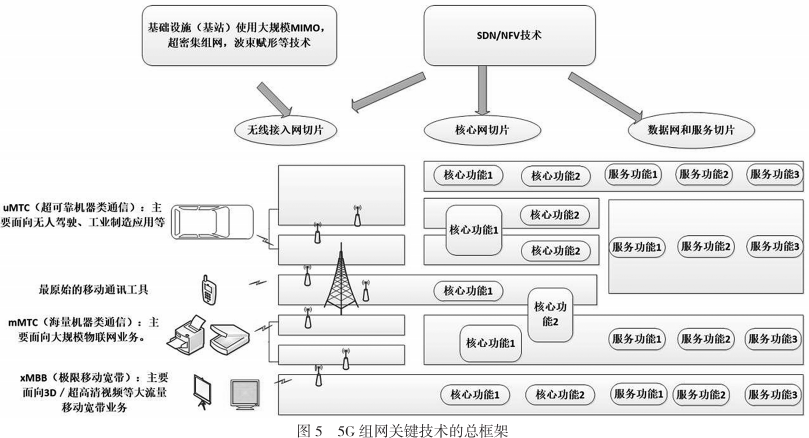
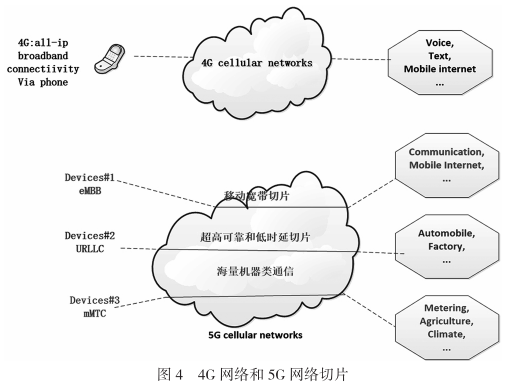 3.2.1 Advantages of Network SlicingNetwork slicing technology is used to meet various application scenarios in 5G. The advantages of network slicing technology include:(1) By using network slicing technology, multiple logical networks can be cut from an independent physical network, reducing the construction of many infrastructures.(2) Each network slice based on NFV/SDN achieves logical isolation in the control plane, forwarding plane, and management plane. The slices are isolated from each other, so if one slice network encounters an error, it will not affect other slice networks.(3) For each network slice, dedicated resources such as network bandwidth, service quality, and security can be fully guaranteed.(4) Providing dedicated network control functions and performance guarantees for different application scenarios, the network can be restructured according to business needs.(5) Sliced networks possess the same nature as virtual networks, providing network resources to upper-layer services while virtualizing the physical network and masking differences between slices and the physical network. Additionally, the use of SDN technology can simplify service deployment, facilitating network management.3.2.2 Challenges of Network SlicingWhile network slicing technology better connects various applications to the network, its technology is still immature and poses the following challenges:(1) Establishing standardized 5G slicing plans. Currently, the standards for network slicing are still being formulated and improved, and research on network slicing is in the testing phase. The standards for network slicing must consider appropriate granularity for slicing; both excessively large and small slicing granularity are unsuitable for the network system.(2) Backward compatibility issues of slices; transitioning from 4G networks to 5G networks requires a process, and whether 4G networks will be managed as one of the 5G network slices.(3) The implementation issues of end-to-end slicing. Current slicing technologies mainly focus on slicing the user plane and control plane of the core network, while wireless-side slicing has not been well implemented, meaning that only core network slicing without achieving end-to-end slicing cannot meet the differentiated needs of application scenarios, failing to reflect the value and advantages of slicing.(4) Resource allocation issues for each slice. The biggest challenge is obtaining a mechanism for slice isolation.3.3 Comparison of Key Technologies in Functional NetworkingBoth NFV/SDN and network slicing technologies address the rigidity of traditional networks, enhancing and improving network functions logically, making the interconnection of everything in 5G possible.The design philosophies of SDN and NFV are similar in that both aim to enhance system flexibility through decoupling, making systems smarter. The most apparent distinction between SDN and NFV is that SDN decouples the control plane from the data plane, while NFV primarily focuses on decoupling software from hardware. In data center implementations, SDN and NFV technologies can coexist, each playing its role.NFV/SDN and network slicing technologies both reduce resource requirements. NFV/SDN reduces the number of network layers and pooled resources, while network slicing technology cuts multiple logical networks from an independent physical network, thus reducing the construction of many infrastructures. If NFV/SDN reduces the number of network resources from a vertical perspective, network slicing technology reduces the number of network resources from a horizontal perspective.NFV/SDN is the foundation for network slicing, and network slicing technology is the result of considering and researching the complex application scenarios of 5G after network virtualization. The overall framework of key technologies for 5G networking is shown in Figure 5.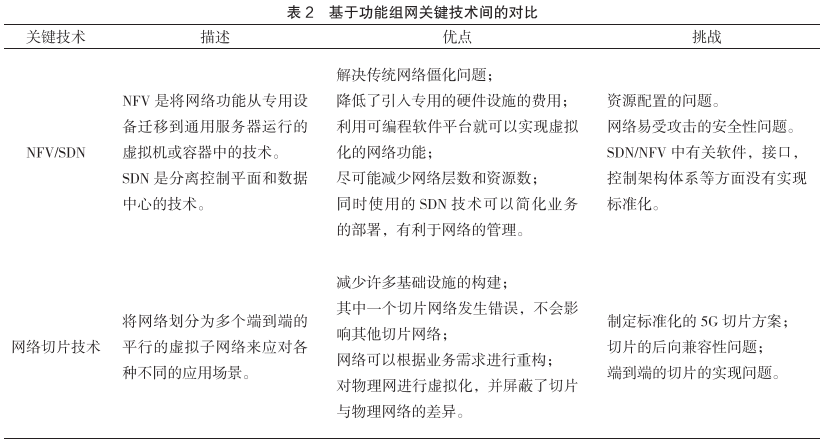
4
Conclusion
This article studies key technologies for 5G networking from both structure-based and function-based perspectives. Technologies such as massive MIMO, beamforming, ultra-dense networking, SDN/NFV, and network slicing collectively promote the development of 5G mobile communication.In the key technologies based on structural networking, massive MIMO technology represents a significant technological breakthrough in the wireless communication field in recent years. Accurate channel state information and pilot contamination are currently key issues to be resolved in massive MIMO technology. The use of massive MIMO technology requires support from beamforming technology to a certain extent, and the beamformer and effective beam discovery mechanisms are crucial in millimeter-wave communication. Ultra-dense networking technology addresses capacity limitations, enhancing communication experiences in various application scenarios. Key challenges in ultra-dense networking technology include controlling inter-cell channel interference and frequent user handovers due to the use of numerous small base stations.In the key technologies based on functional networking, NFV technology enables hardware virtualization, reducing the high costs of traditional network equipment, making network device functions no longer dependent on dedicated hardware. Resource allocation issues are currently urgent challenges for NFV technology. SDN technology separates the control layer from the data layer, enhancing network flexibility, while security issues in the network core controller and SDN deployment issues are critical problems that need to be addressed.Network slicing technology was proposed to meet various application scenarios, and the standardization of slicing and related deployment and backward compatibility issues are currently challenges that need to be resolved.Author Profile >>>Wang Bo-ru (1994—), female, master’s degree, main research direction in 5G and machine learning;Fan Jing (1976—), female, PhD, professor, main research direction in computer networks, wireless sensors, intelligent computing, and environmental monitoring;Shan Ze (1995-), male, master’s degree, main research direction in smart grids;Zhu Zexian (1992-), male, master’s degree, main research direction in distributed power sources and time-of-use pricing.Selected from Communications Technology, 2019, Issue 5 (Original references have been omitted for ease of formatting)