This article was originally published on May 16, 2023.
In 2010, at the request of the German government, the gun manufacturer C.G. Haenel, based in Suhl, developed the RS8 precision rifle.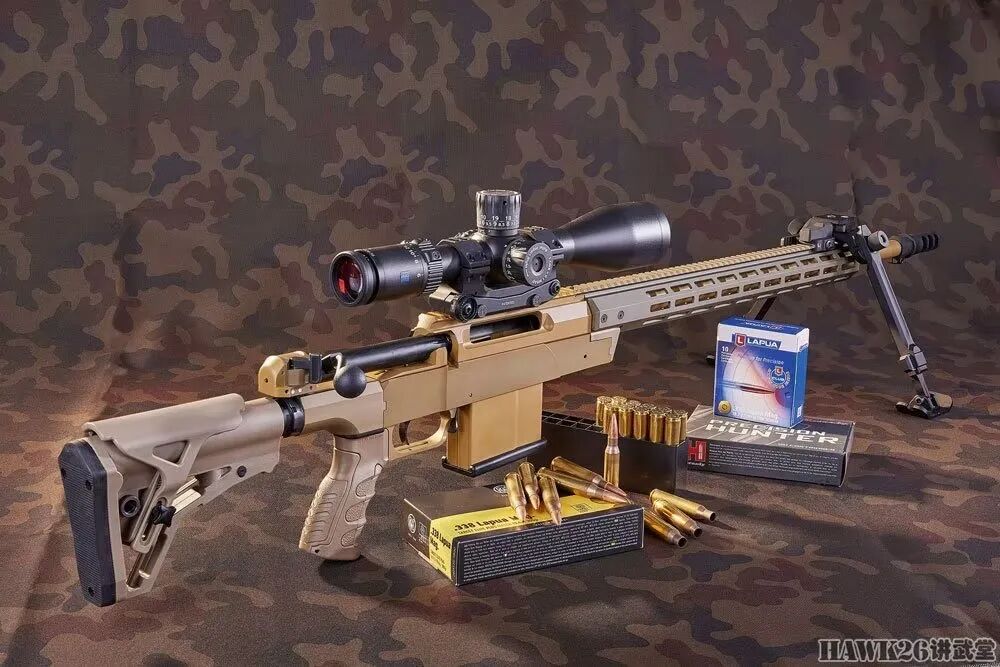 “RS” stands for Rifle System, and the RS8 series currently has three models: Basic, Compact, and Subsonic. The Basic model is available in two calibers: 6.5 Creedmoor and .308 Winchester, both equipped with a 600mm long barrel, with a twist rate of 1:8 and 1:12 respectively. The Compact model is only available in .308 Winchester caliber, with a barrel length of 510mm and a twist rate of 1:12. The Subsonic model features an integrated suppressor, with a barrel length of 387mm and a twist rate of 1:8, specifically designed for subsonic ammunition. The original .300 Winchester Magnum caliber of the RS8 has been discontinued, and due to the increasing demand for .338 Lapua Magnum, the RS9 was finally launched at IWA 2011. Over time, both the RS8 and RS9 have undergone continuous improvements to meet the needs of government users.This article is a review published on the all4shooters website by author Christopher Hocke, translated and edited for sharing.
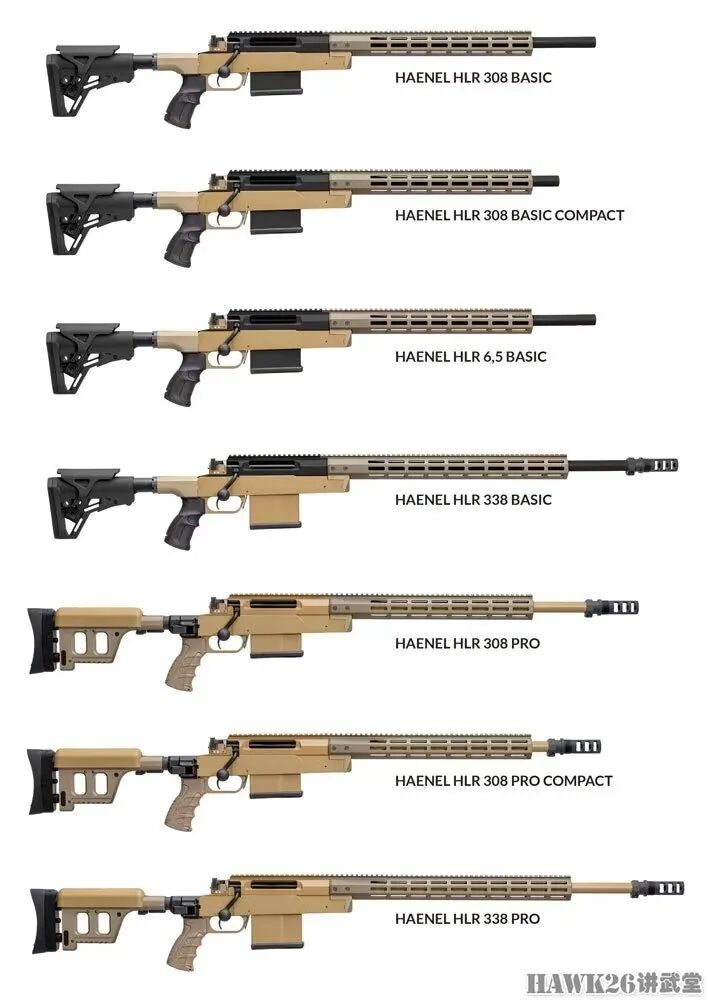 The Haenel HLR series consists of seven models, each of which can be equipped with different lengths of handguards according to user preferences, and the overall coating color can also be selected.The HLR series currently being launched by Haenel is a further development of the RS series; however, the barrel, receiver, and bolt are the same as those in the RS series. This is why the production serial number of the test rifle is prefixed with RS9. The main changes in the HLR series focus on the handguard and stock, making the rifle lighter, more ergonomic, and more modular, while maintaining shooting accuracy and durability consistent with the RS models.The HLR Basic model is available in two calibers: 6.5 Creedmoor (twist rate 1:8) and .308 Winchester (twist rate 1:12), both with a barrel length of 600mm, while the .338 Lapua Magnum (twist rate 1:10) has a barrel length of 690mm. The HLR Pro model, equipped with a folding stock, is available in .308 Winchester and .338 Lapua Magnum calibers, with barrel length and twist rate identical to the HLR Basic model. Finally, based on the HLR Basic and HLR Pro, the HLR Compact model has been introduced, available only in .308 Winchester caliber, with a barrel length of 510mm and a twist rate of 1:12.
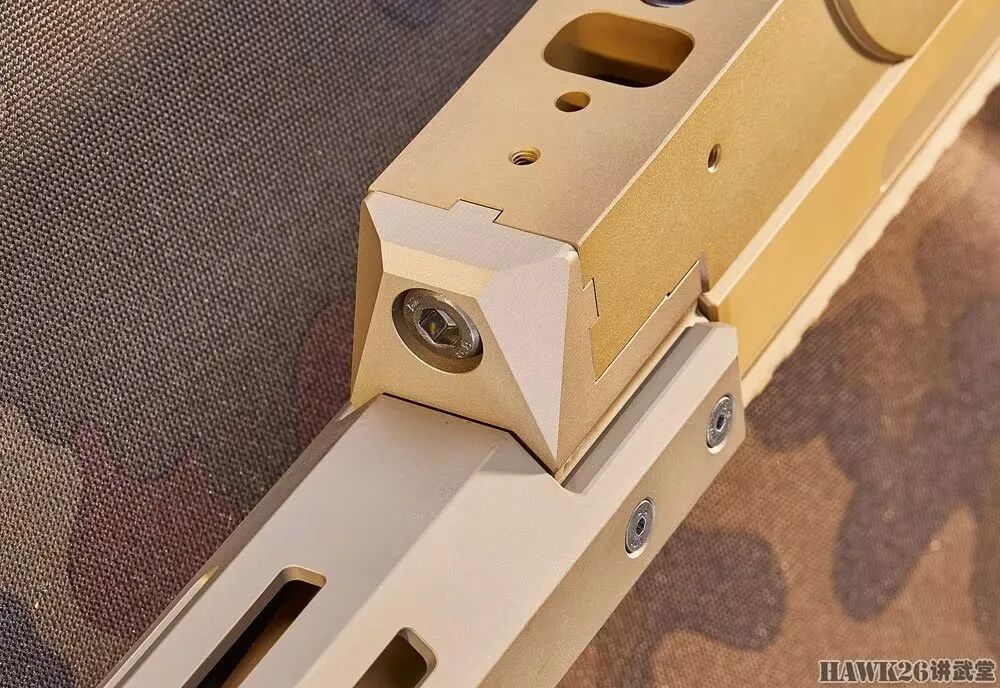 The HLR 338 features a mortise structure on the installation block connecting the receiver and handguard, with five screws securing the installation block, which are glued in place. This is to maintain shooting accuracy, a necessary procedure during factory assembly.All barrels in the RS and HLR series are manufactured using cold forging technology. During the cold forging process, the hardening of the steel structure makes the chamber surface harder and more wear-resistant. The forged chamber surface is not only very hard but also smoother, reducing friction with the projectile’s jacket.In addition to using the same manufacturing process, all models have a front barrel diameter of 22mm with M18×1.5 threads, allowing for the installation of a three-chamber muzzle brake that deflects propellant gases 90° to the sides, reducing felt recoil during shooting. Although this design is less efficient than those with a larger angle, the muzzle shock wave and dust raised do not blow towards the shooter. The rear of the muzzle brake also has M28×1 threads for attaching a suppressor. Compared to earlier RS series models, the current RS and HLR series rifles manufactured by Haenel do not come equipped with barrels featuring surface grooves. All models’ receivers are coated with black or sand-colored Ilaflon for corrosion protection. The barrel is connected to the receiver via threads.
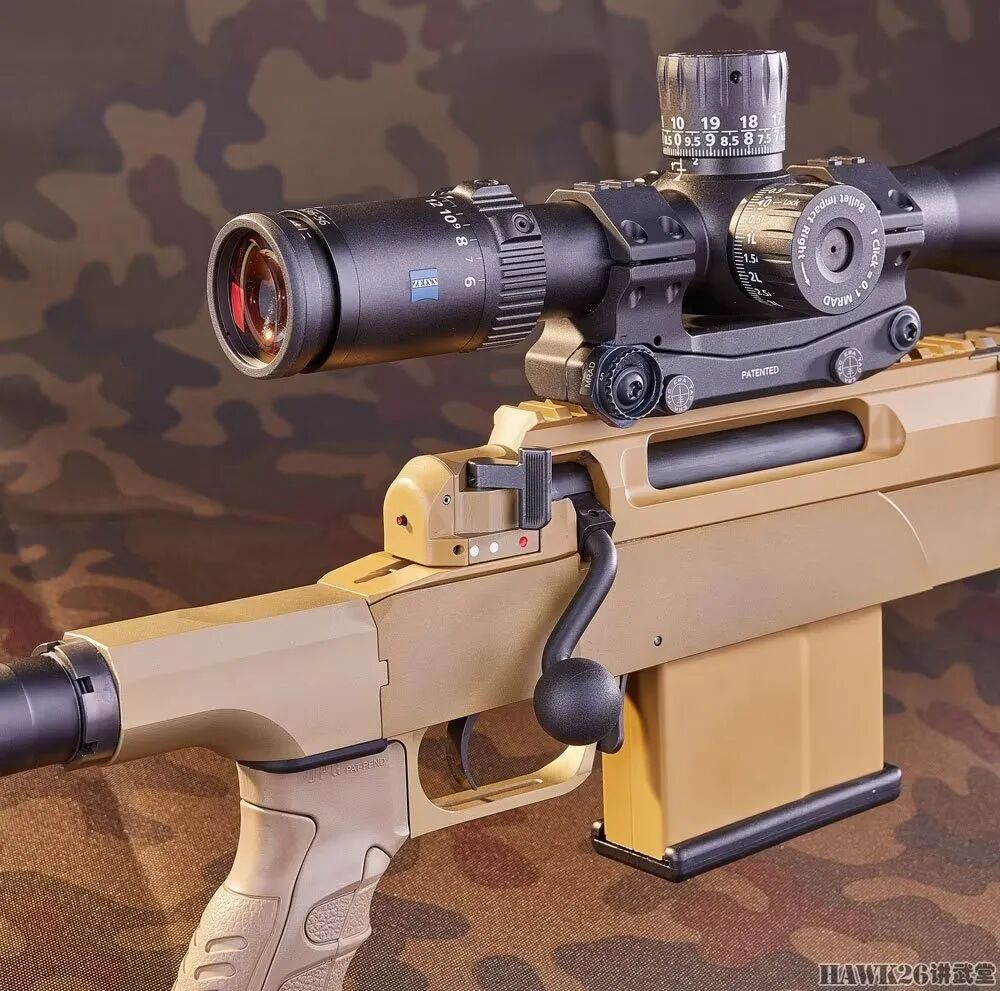 The top rail of the HLR 338 receiver is an integral structure with the steel receiver, and users cannot separate the bolt and chassis.The receiver of the HLR 338 Basic model is made of tool steel, and like the barrel of the test rifle, it is covered with a sand-colored Ilaflon coating. The grooves that engage with the bolt locking lugs are machined inside the receiver, and the top of the receiver features an integrated Picatinny rail measuring 182mm long, with no cant. The 463g bolt head has two rows of six locking lugs, resulting in a bolt locking angle of 60°. The extractor hook is located inside one of the front locking lugs, and unlike common spring-controlled structures, it is secured with a spring steel wire, with the end of the wire wrapped around the base of the bolt head.
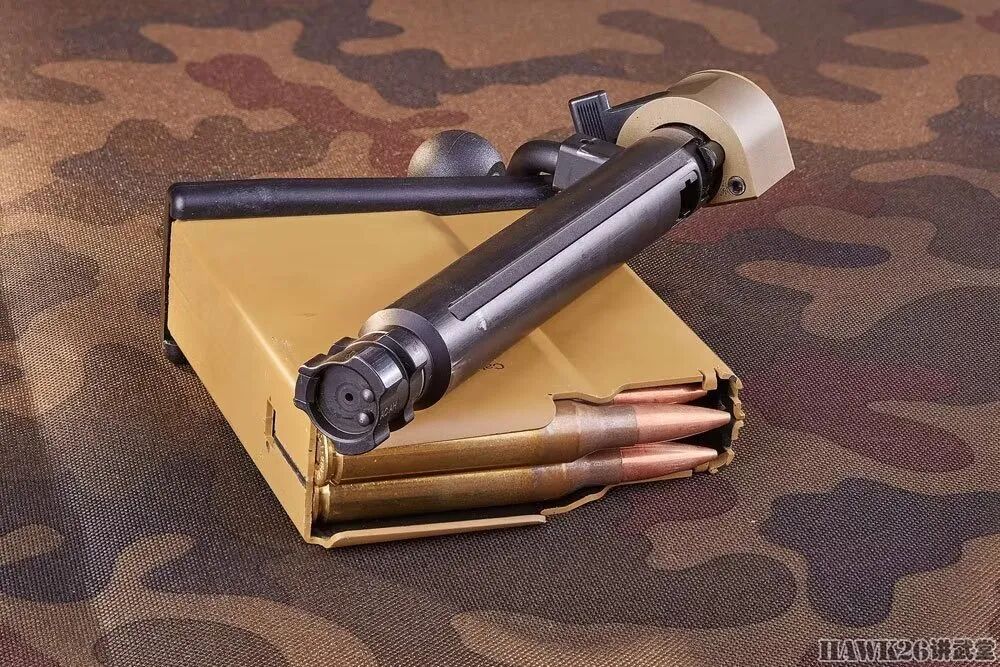 The manufacturing process of the HLR 338 is outstanding, with very small and uniform gaps between each component, demonstrating high precision maintained during manufacturing. An indicator at the rear of the bolt shows whether ammunition is loaded in the chamber, and the manual safety is located on the right side of the rear of the bolt.The bolt head contains two elastic ejectors, and the detachable charging handle of the HLR 338 Basic model has two bends, fitting very tightly against the receiver when locked. The handle head is a large polymer ball. The bolt features a three-position manual safety; when the safety lever is in the forward position, it is in the safe position, allowing for design. The safety lever in the middle locks the firing pin but allows operation of the bolt, while the safety lever in the rear position locks both the firing pin and the bolt.
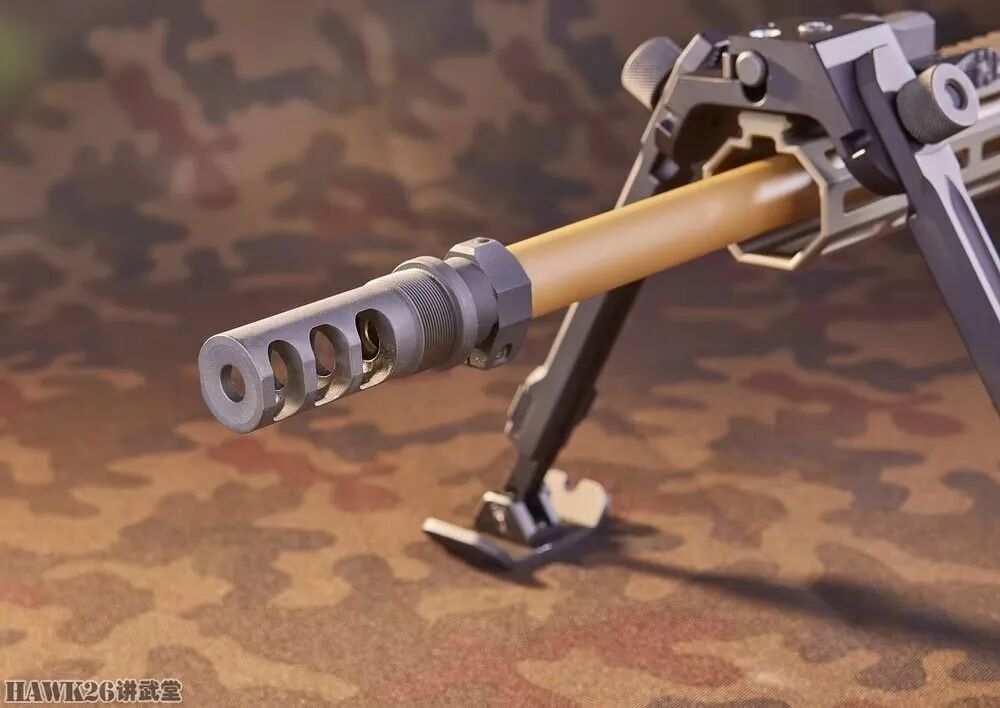 The HLR 338 steel magazine features an Ilaflon coating, available in black and sand colors.The chassis, made of high-strength aluminum alloy, uses a so-called pad support for the receiver. Although the two bolts securing the receiver can be loosened, users cannot separate the receiver from the chassis. The steel double-stack magazine has a capacity of 10 rounds, and according to military specifications, the magazine must drop freely when the magazine catch is pressed. Therefore, there is a slight gap between the magazine and the magazine well, which causes a slight rattling sound when the rifle is shaken left and right. The internal dimensions of the magazine are slightly larger, allowing for the loading of full-length 96.5mm reloads. When there is no ammunition in the magazine and the bolt is in the rear position, the follower will block the bolt’s forward movement, creating a bolt hold-open condition.The widely used AR-style grip can be replaced by users according to their preferences. The factory grip can be adjusted in size by replacing two parts, better fitting the hand shape. The two-stage trigger group deserves an “excellent” rating, with a crisp and clean trigger pull, adjustable to 10 N and 20 N settings.
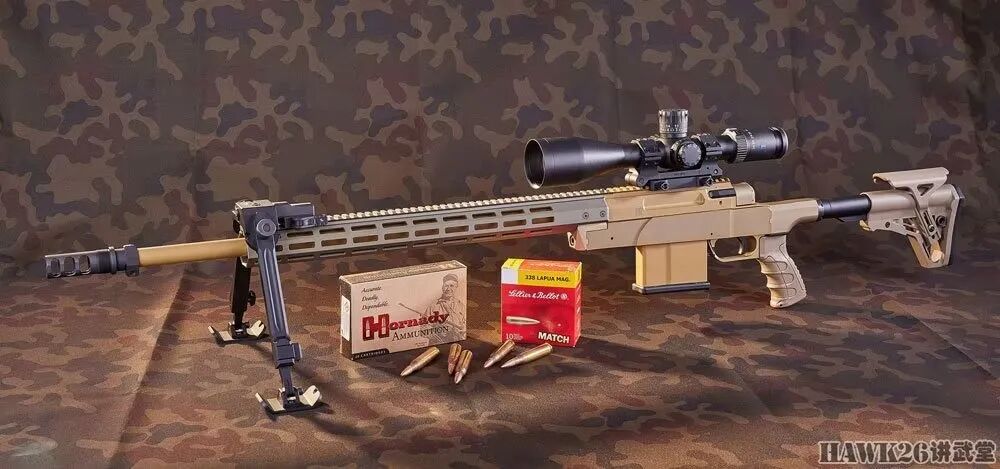 The HLR 338 three-chamber muzzle brake is threaded onto the muzzle and secured with bolts to ensure that the openings on both sides are level. The rear of the muzzle brake has threads and a support ring for attaching a suppressor.The HLR series offers two handguard lengths depending on the model. The HLR 338 Basic model tested is equipped with a long handguard measuring 483mm, with an octagonal cross-section and a diameter of 49mm. The top features a 496mm long Picatinny rail, integrated with the top rail of the receiver. The other seven sides of the handguard each have a row of ten M-LOK universal interfaces. The short handguard has the same structure but only eight M-LOK universal interfaces per row.The handguard is connected to the receiver via a sturdy aluminum block and five bolts, which are glued in place, making it possible to be opened only by the manufacturer or a professional gunsmith. The rear of the receiver is fitted with an AR-15 buffer tube, equipped with a six-position telescoping stock, with a maximum adjustment range of 75mm. The cheek riser height is adjustable by 21mm. The HLR Pro model also features a folding stock from the RS8/9, allowing for tool-free adjustment of stock length and cheek riser height.
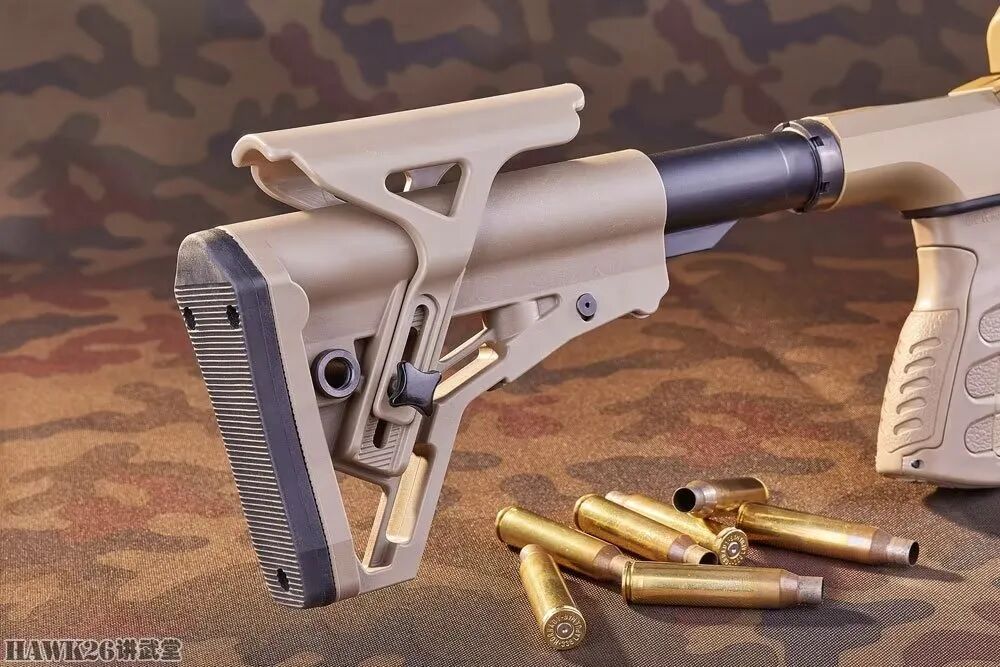 The HLR 338 Basic model features an AR-style telescoping stock, allowing for adjustment of stock length and cheek riser height.Due to ammunition shortages, the author used four types of reloads in addition to nine types of factory ammunition. The reloads used Sierra 250 grain Match King bullets and Lapua OTM Scenar bullets, both of which are HPBT designs. The Reload Swiss RS 76 and Vihtavuori N565 double-base propellants were used, with cases from Norma.
During testing, the new Zeiss LRP S3 636-56 scope (standard notation is 6-36×56, meaning 6-36× variable magnification, with a 56mm objective diameter) was used, featuring an MRI reticle in mrad units. The Zeiss LRP S3 636-56 is an excellent scope for medium to long-range shooting, with a vertical adjustment range of 32 mrad or 110 MOA. Utilizing the proven Zeiss ballistic turret allows for precise zeroing. The manually locking windage adjustment turret allows for quick corrections. To effectively aim and shoot under various lighting conditions, the reticle can switch between green and red illumination, with five brightness settings for each color. The reticle is located in the first focal plane (FFP), changing size with magnification, and only the center of the reticle is illuminated, providing a particularly precise aiming point.As a side note, as an alternative to the aforementioned MRI reticle, the LRP S3 636-56 can also provide a reticle based on MOA units. This scope is currently being shipped to retailers, with a suggested retail price of 2700 euros, approximately 20433 RMB.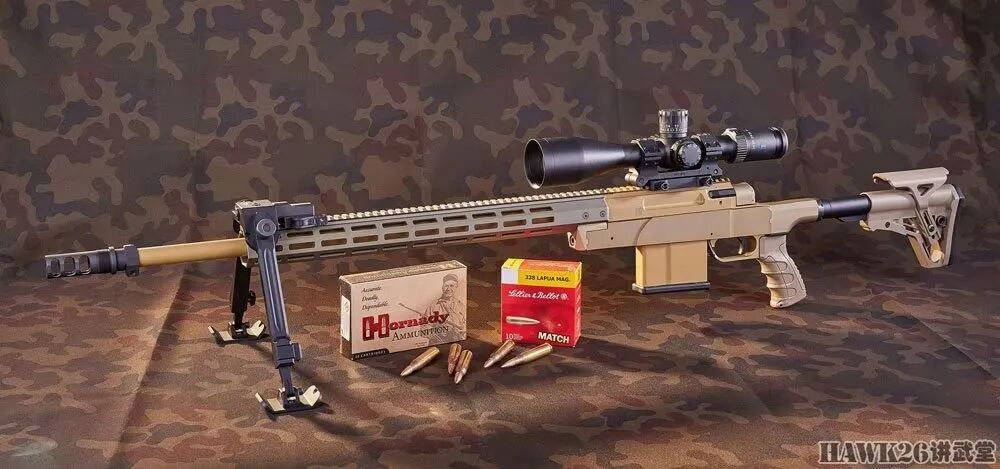 The HLR 338 Basic model features seven rows of M-LOK universal interfaces for mounting various accessories.Although the muzzle brake deflects propellant gases 90° to the sides, it still effectively reduces felt recoil. The bolt operates smoothly, with no jamming issues. The trigger pull is very smooth, and the firing action is crisp and clean. The stock adjustment range is sufficient to meet needs and remained stable in the locked position during testing.The shooting accuracy of the test rifle can be described as very good, maintaining C.G. Haenel’s consistently high standards. Using factory Hornady 285 grain ELD Match ammunition at a distance of 100 meters, a group of five shots had a spread diameter of approximately 15mm, equivalent to 0.51 MOA. Using the aforementioned reloads, the spread diameter was 13mm, equivalent to 0.45 MOA. At a distance of 300 meters, the best accuracy was achieved with reloads using Sierra 250 grain Match King bullets, with a spread diameter of 42mm, equivalent to 0.48 MOA.
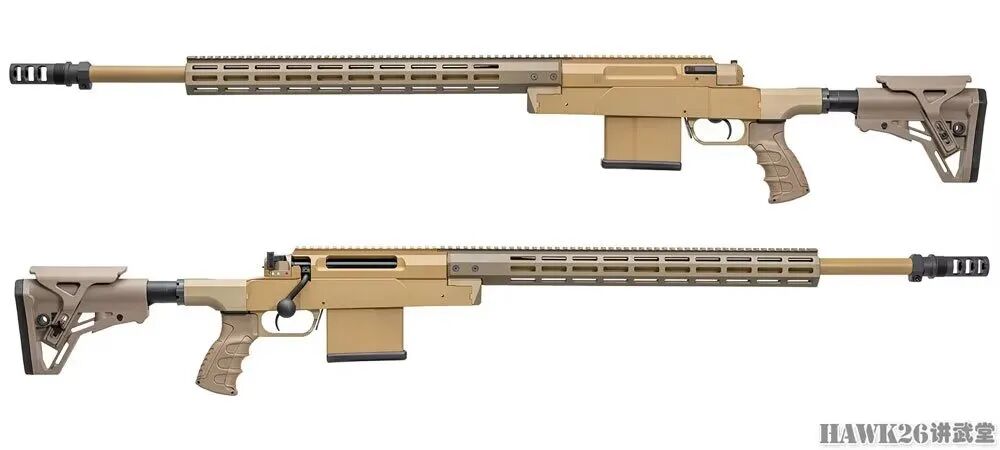 HLR 338 Basic model rifle.
Performance Parameters of the C.G. Haenel HLR 338 Basic Model Rifle:
Caliber: .338 Lapua MagnumOverall Length: 1237–1313mmBarrel Length: 680mmNumber of Lands: 6Twist Rate: 1:10Trigger Pull: 13.6 NMagazine Capacity: 10+1 roundsEmpty Weight: 6.63 kgSuggested Retail Price: 5606 euros, approximately 42438 RMB
Note:Due to WeChat public account changes in delivery rules, it is recommended to set a star mark or interact to avoid missing updates on content.
To ensure the main account is not banned during the prohibition period you can receive content, please pay attention to the following avoidance points.