
Recently, the “Special Optical Fiber Devices and Sensing Research Group” at Harbin Engineering University achieved new results. The research on “Intelligent Non-destructive Micro-strain Response Near-infrared Force-induced Luminescence Technology” led by Professor Ren Jing from the School of Physics and Optoelectronic Engineering was published in the international top journal in materials and physics, Advanced Materials (latest impact factor: 26.8). Professor Zhang Jianzhong, the head of the research group, is a co-corresponding author, and Li Wenhao is the first author, with Harbin Engineering University as the first institution.
Traditional sensors rely on monitoring changes in electrical signals such as resistance and capacitance to detect mechanical stress. In complex three-dimensional sensing scenarios, redundant interconnections and external devices complicate the in-situ stress monitoring process and severely limit practical application scenarios. Force-induced luminescence is a phenomenon where solid materials emit light under mechanical forces such as tension, compression, bending, friction, and impact. Functional devices based on this characteristic have shown great application potential in fields such as self-powered sensors, underwater communication, information security, engineering structure diagnosis, and biomedicine. Sensors can achieve precise quantitative measurement of stress and strain by utilizing the linear relationship between force-induced luminescence intensity and applied stress. With unique luminescence mechanisms, stable physicochemical properties, and excellent biocompatibility, they exhibit outstanding reproducibility, durability, miniaturization, and non-toxicity, enabling real-time visualization of stress information.
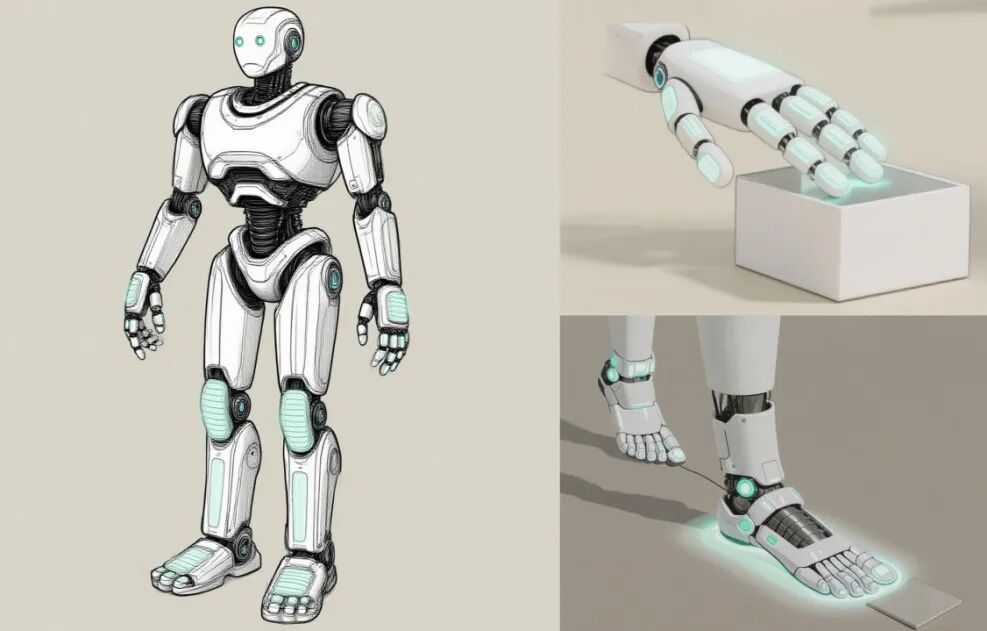
Despite significant progress in the development of high-performance force-induced materials, achieving high-performance force-induced luminescence still faces multiple challenges, including weak luminescence intensity, reliance on ultraviolet wavelength for charging, inability to detect low strain signals, and lack of a complete theoretical mechanism for force-induced luminescence. To address these challenges, this research developed a new type of broadband near-infrared force-induced luminescent film that can detect clear force-induced luminescence signals at 50 micro-strains, demonstrating excellent force-light sensing performance and providing a new perspective for the development of novel intelligent mechanical sensors.
Advanced Materials is a top international academic journal in the field of materials and physical sciences, included in the Nature Index, with its impact factor consistently ranking among the top in the field. The publication of this achievement highlights our university’s research strength in the field of force-induced luminescence sensing technology.
❖
Paper link: https://advanced.onlinelibrary.wiley.com/doi/epdf/10.1002/adma.202505360






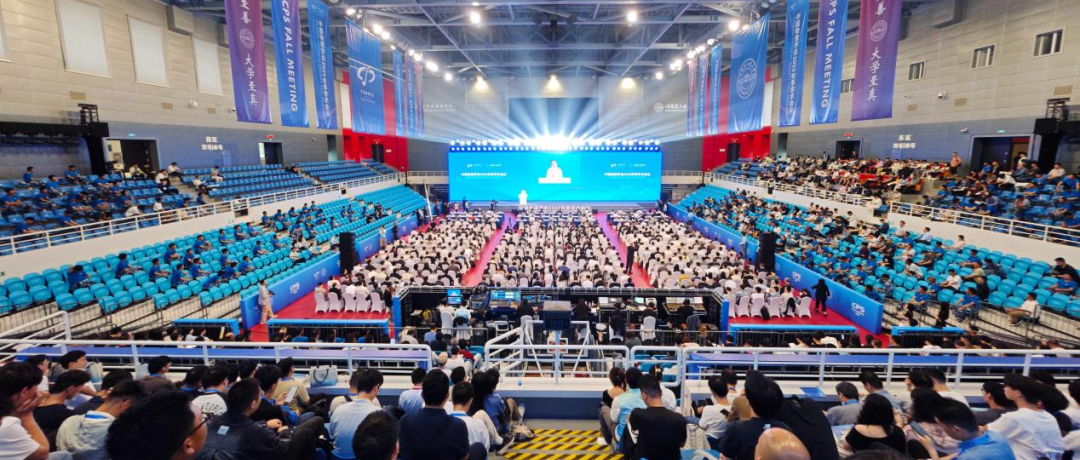
Top scholars from home and abroad gather at Harbin Engineering University
To discuss the forefront of physical development

Bravely undertake the mission of strengthening the country and the military
Harbin Engineering University remembers the entrustment and makes new contributions


Selected for the fourth consecutive time!
Harbin Engineering University’s “National College Huang Danian-style Teacher Team” +1!

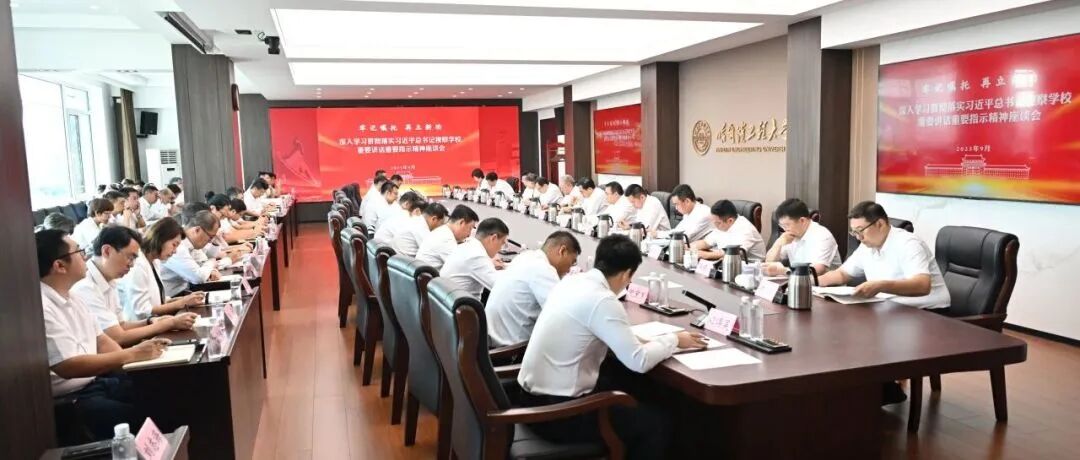
Remember the entrustment and make new contributions
Harbin Engineering University strives for excellence in reform and innovation!


Harbin Engineering University
— heu19530901 —
Written by | Li Wenhao
Source | School of Physics and Optoelectronic Engineering
Layout | Ye Zihan
Edited by | Wang Yiyong, Li Yingchao
Reviewed by | Wu Dandan