The dynamic changes in the field of bioprinting are gradually becoming a focus. As it continues to grow, different trends are emerging. These “niche markets” in bioprinting are crucial for understanding the development direction of the industry. Antarctic Bear has noticed that five directions are particularly noteworthy.Biomaterials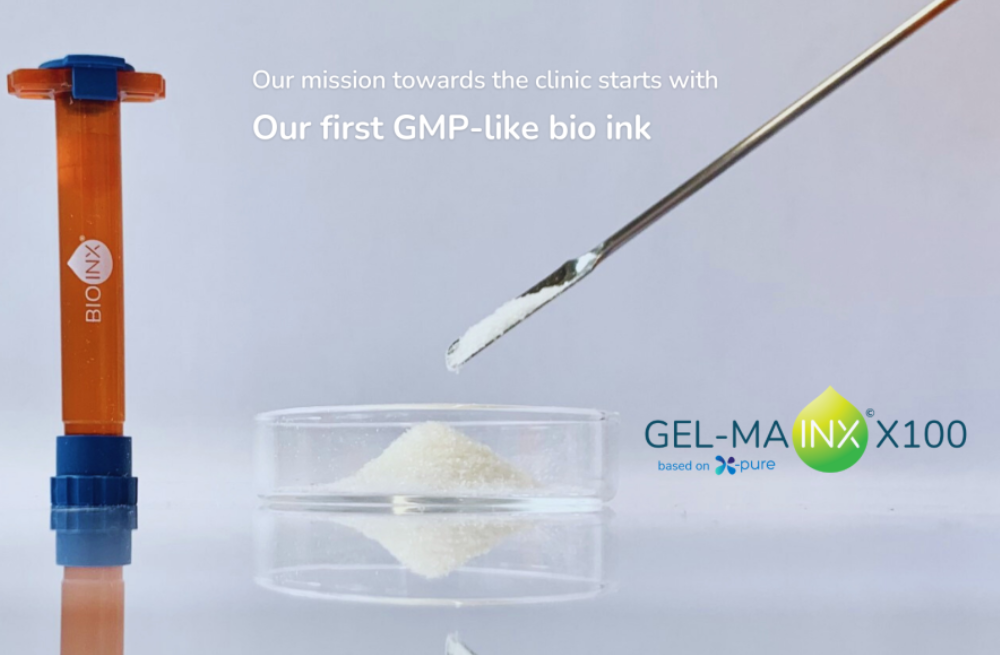 △ GEL-MA INX bioprinting ink launched by Rousselot and BIO INXThe success of bioprinting largely depends on the materials used, which determine the ability to replicate the structure and function of human tissues. Therefore, advancements in biomaterials open up new possibilities for bioprinting, enabling the creation of tissues that closely resemble the real thing. These biomaterials must be biocompatible so as not to harm human cells, and they need to have sufficient flexibility to form complex structures such as blood vessels and skin.In recent years, the research and development of synthetic and natural biomaterials have been in full swing, allowing researchers to customize materials according to specific needs, whether for cardiac tissue, cartilage, or skin. For example, GelMA is a popular biomaterial derived from gelatin, whose performance can be enhanced through modification, making it suitable for various tissue types.Companies like Xylyx Bio specialize in developing biomaterials for replicating human tissue environments. Their products are designed to support cell growth and tissue formation, which is crucial for developing viable long-term tissue solutions. Other leading companies include BIO INX, Bifrost Biotechnologies, 4D Biomaterials, MorphoMed, and FoldInk.Microfluidic Chips
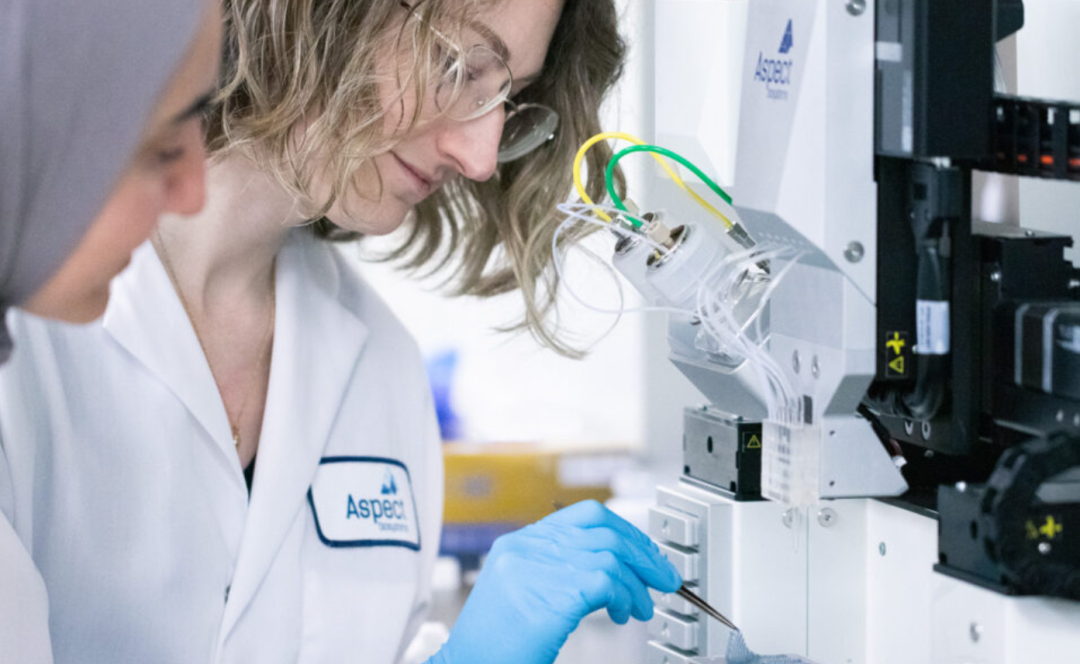 Microfluidic technology is transforming bioprinting, as microfluidic chips can create smaller and finer structures, which are essential for developing accurate organ or tissue models. This level of detail is indispensable for creating realistic models for various applications, from drug testing to disease research.One significant advantage of microfluidics in bioprinting is the ability to create fine features within tissues, such as capillaries, which are crucial for transporting nutrients and oxygen in vivo. By integrating microfluidic technology, researchers can bioprint tissues that function more closely to real tissues, increasing their potential uses in medical applications.Companies like Aspect Biosystems are at the forefront of this field, developing advanced microfluidic devices that allow for the creation of highly structured multicellular tissues. Their platform enables researchers to precisely place different cell types within a single tissue, which is ideal for replicating the complexity of human organs.Bioprinting Software
As bioprinting becomes increasingly complex, the software used to design and control the printing process is becoming more important. However, one of the challenges faced by the industry is that many available software solutions are tied to specific bioprinting devices. While proprietary software offers seamless integration, it also limits the possibility of smooth usage across different systems.nScrypt’s software enhances the precision and capabilities of bioprinting devices and has the advantage of adapting to various platforms. Scispot and Advanced Solutions provide flexible software solutions that can be used across different bioprinting systems, making them very useful tools for researchers looking to integrate multiple technologies.Software developed by companies like RegenHU and Allevi by 3D Systems is closely tied to their bioprinters, ensuring good performance but also making it challenging to be compatible with other systems. Will the future of bioprinting software shift towards more adaptable and accessible solutions, simplifying operations across various systems? These developments could play a key role in advancing research and widely popularizing bioprinting technology.In Vitro Models △ Microscopic image of lymph node organoids used to recapture human immune responses in vitroDrug testing and disease research are beginning to shift towards in vitro models created through bioprinting. These models provide a more accurate representation of human tissues, reducing the need for animal testing and accelerating the development of new drugs. CTI Biotech is a leader in this field, using bioprinting technology to create three-dimensional models that can replicate human tissues very realistically. These models can be tested in a more realistic environment for the effectiveness of cancer treatments.In addition to CTI Biotech, companies like Rokit Healthcare and Prellis Biologics have also made progress in bioprinting in vitro models. Rokit Healthcare focuses on creating tissue models for drug testing and regenerative medicine, providing valuable tools for wound healing research. Meanwhile, Prellis Biologics develops highly detailed vascular tissue structures using laser-based bioprinting technology.Light-Based Hybrid Bioprinting
Light-based hybrid bioprinting technology is one of the latest advancements in the field of bioprinting. Light-based bioprinting technology uses light, typically lasers, to rapidly and accurately cure bioprinting inks, creating detailed structures such as blood vessels, which are crucial for building functional tissues. Companies like Prellis Biologics and Readily3D are making strides in this area, using light to create complex tissue models.Additionally, some companies are pushing bioprinting forward through what is known as hybrid bioprinting, which combines different technologies. This approach allows for the use of multiple materials and cell types within the same printing process, creating tissues that closely resemble human tissues. MocBiotechnologies is a key player in this field, using 4D hybrid bioprinting technology to accelerate drug discovery, especially in cancer research.These new bioprinting technologies will play a key role in developing more complex and functional bioprinted tissues, bringing us closer to the goal of printing fully functional organs.
Editor: Zhao Ziyi
Proofreader: Yun HaiyanReview: Zhang Qiang
 Introduction to JME Academy
JME Academy was established in 2018 by the editorial department of the Journal of Mechanical Engineering, with the purpose of focusing on and accompanying the growth of young scholars, striving to explore new models of academic communication and service.
Teachers are welcome to scan the QR code to add assistant Nuan Nuan as a friend, who will pull you into the official group of JME Academy!

More Exciting Videos
Welcome to follow JME Academy’s video account~
Looking for Partners
There is a kind of cooperation called sincerity, a kind of development that can be infinite, and a kind of partnership that can benefit both sides. May we enjoy our cooperation and look forward to a promising development. For paper recommendations, team introductions, book publishing, academic live broadcasts, recruitment information, conference promotion, etc., please contact us.
Thank you for following us! Our editorial department of the Journal of Mechanical Engineering will strive to create anacademic mediathat isattitudinal, profound, and warm!

Recommended Reading
 Highly Cited Paper Recommendation | Federated Transfer Learning Method for Intelligent Fault Diagnosis of Equipment with Data Privacy Protection
Highly Cited Review Recommendation | Research Progress and Industrial Development Trends of Service Robot Technology in China
Highly Cited Review Recommendation | Development and Challenges of Manufacturing Technologies for Large Thin-Walled Rotational Surface Components in Aerospace
Highly Cited Review Recommendation | Research Status and Development Trends of Abrasive Tools
Highly Cited Review Recommendation | Research Progress on Green Intelligent Rolling of High-Performance Ring Parts
Highly Cited Paper Recommendation | Structural and Control Multidisciplinary Integrated Optimization Design Method for Intelligent Equipment
Highly Cited Paper Recommendation | Review of Shared Control Research in Intelligent Automotive Systems
Highly Cited Review Recommendation | Human-Centric Intelligent Manufacturing: Evolution and Outlook
Highly Cited Paper Recommendation | Biological Stability of Water-Based Cutting Fluids: Progress and Applications
Highly Cited Review Recommendation | Identification of Internal Short Circuits in Lithium Batteries Based on Recursive Least Squares Method Throughout the Entire Life Cycle
Copyright Statement:
Source: Antarctic Bear 3D Printing.
Special Statement: This WeChat reprint article is for non-commercial educational and research purposes. If the reprint involves copyright issues, please contact us immediately, and we will make changes or delete related articles to ensure your rights.
WeChat submissions, reprints, etc.:Contact Person: Nuan Nuan
Phone: 010-88379909
E-mail: jme@cmes.org
Website: http://www.cjmenet.com.cn
Official WeChat ID: jmewechat