Overview
Recently, the environmental analytical chemistry team at the University of the Balearic Islands led by Edwin Palacio conducted a systematic study on the potential metal contamination issues caused by 3D printing devices in analytical chemistry. The team systematically evaluated the metal leaching behavior of six common 3D printing materials (PLA, PP, NY, Clear, Elastic, and Rigid 10K resins) under different concentrations of nitric acid. Through ICP-MS analysis of 29 metal elements, the study revealed the contamination and interference issues that various materials may cause under strong acid conditions, and established a visual color-coded table to help researchers select suitable printing materials to avoid metal interference. The conclusion pointed out that polypropylene (PP) leached the least under neutral conditions but performed the worst in strong acid, with copper leaching being particularly severe; PLA had the lowest total metal release but the highest variety of elements; nylon (NY) leached extensively in acid and suffered structural damage; while in SLA resins, Rigid 10K performed the best, and Elastic resin had a significant leaching of tin. The research ultimately provides a database and guidance for material selection in the use of 3D printing devices in analytical chemistry.
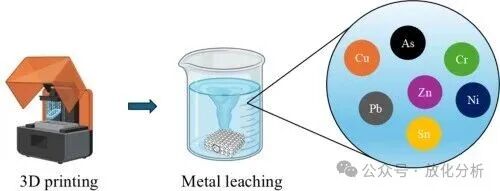
Background
3D printing, as an additive manufacturing technology, has shown broad application prospects in analytical chemistry in recent years. With advantages such as low cost, rapid prototyping, and high customizability, it has been widely used in microfluidic chips, separation and enrichment devices, detection units, and sample pretreatment platforms, greatly promoting the development of environmental monitoring, trace metal analysis, and radioactive nuclide detection. Previous studies have shown that devices made with 3D printing can achieve selective enrichment and quantitative analysis of heavy metals such as lead, cadmium, and mercury, and even apply to the detection of radioactive nuclides like uranium and iodine, demonstrating the potential of 3D printing technology in high sensitivity and complex sample processing. However, the awareness of the potential risks of 3D printing materials has lagged behind the rapid expansion of these applications. Among them, the most critical and long-ignored issue is metal leaching. In analytical chemistry, experiments often need to be conducted under extreme conditions, such as high concentrations of nitric acid solutions, strong acid digestion, high temperatures, or ultrasonic treatment. These conditions significantly increase the risk of leaching metals from the surface or internal doping of materials, leading to unexpected background interference in trace or ultra-trace analysis, which can distort data. For example, in environmental or food sample analysis, such metal leaching may be misjudged as real contamination; in radioactive nuclide detection, it may even mask the target nuclide signal, severely affecting the reliability of experimental results. Previous studies on metal release from plastics and composites have mostly focused on natural environments, such as the leaching effects of microplastics and nanoplastics in seawater. However, there are few systematic reports on the leaching patterns of different 3D printing materials under the highly acidic experimental conditions relied upon in analytical chemistry. In particular, there is a lack of comprehensive comparisons and evaluations of the stability and applicability of common materials used in the two mainstream 3D printing technologies: fused deposition modeling (FDM) and stereolithography (SLA) under strong acid environments. Against this backdrop, it is particularly urgent to conduct research on the metal leaching characteristics of different 3D printing materials under nitric acid conditions. On one hand, it helps reveal the contamination risks that 3D printing devices may introduce under extreme analytical conditions; on the other hand, it provides scientific data support for researchers to avoid potential analytical interference when designing experimental devices and selecting printing materials, thereby enhancing the accuracy and reliability of experiments. Therefore, the significance of this research lies not only in filling the research gap but also in laying the foundation for the future broader and more reliable use of 3D printing technology in the field of analytical chemistry.
Key Points of the Article
1. Systematic evaluation of the metal leaching behavior of six common 3D printing materials under nitric acid conditions
This study designed a systematic experimental method around the potential metal contamination issues caused by 3D printing materials in analytical chemistry. The subjects of the study included three common materials from two mainstream 3D printing technologies: fused deposition modeling (FDM) – PLA (polylactic acid), PP (polypropylene), and NY (nylon), as well as three representative resins from stereolithography (SLA) – Clear, Elastic, and Rigid 10K. By preparing standardized 3D printing devices and conducting soaking experiments in different concentrations (0–20%) of nitric acid, combined with ICP-MS detection of 29 metal elements, detailed metal release data was obtained. The experimental results indicated that as the concentration of nitric acid increased, the total amount and variety of metal leaching from various 3D printing materials significantly increased. This finding highlights the strong impact of acidic environments on the stability of 3D printing materials and reveals potential interference risks in high-sensitivity analysis. The study not only quantitatively compared the performance of various materials in acidic environments but also provided reliable experimental evidence for subsequent database establishment and material selection guidance.
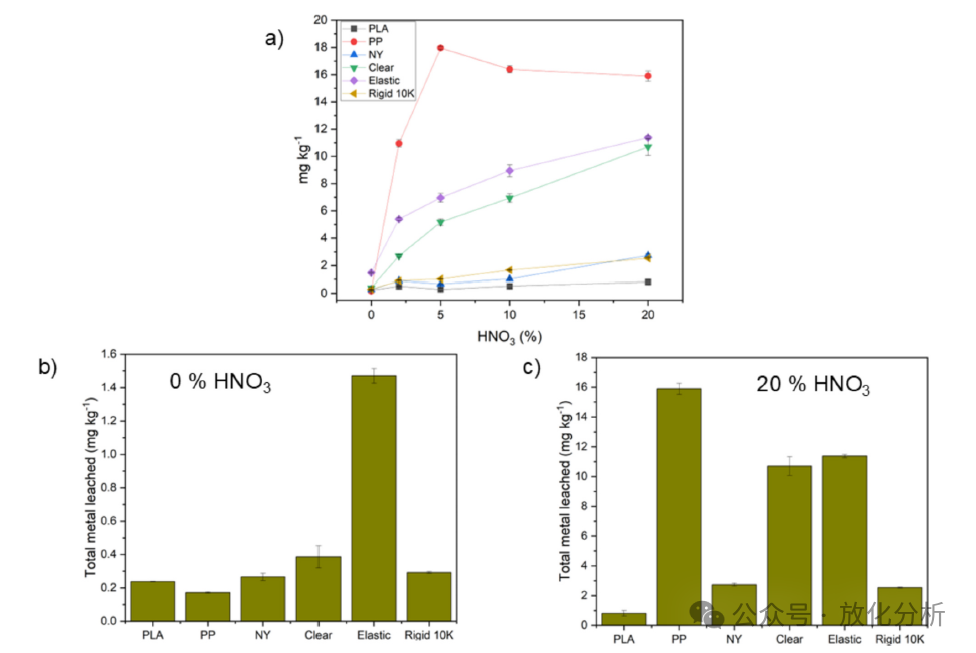
Figure 1 Total metal leaching amounts of different 3D printing materials under nitric acid conditions
(a) Trends of metal leaching amounts of each material at different nitric acid concentrations; (b) Comparison of total metal release under neutral conditions; (c) Comparison of total metal release under 20% HNO₃ conditions. The results show that increasing acid concentration significantly increases metal leaching, with the overall trend being that PP has the highest release while PLA has the lowest.
2. Significant differences in leaching characteristics and applicability of different materials
Among the six materials, the performance differences are very pronounced. PLA has the lowest overall metal release (below 239 μg/kg), but the highest variety of leached elements, with up to 17 elements detectable under 20% HNO₃ conditions, indicating that although its total amount is low, it may introduce complex background interference. PP performs best in neutral environments, releasing only a small amount of metal, but under acidic conditions, the release amount increases sharply (over 15,000 μg/kg), especially with copper release being particularly significant, which is speculated to be related to the brass components in the FDM printer nozzle. Nylon (NY) performs the worst under acidic conditions, releasing a large amount of toxic elements (such as As, Cd, Pb), and experiencing structural damage or even dissolution in high concentrations of nitric acid, making it completely unsuitable for use in strong acid environments. The performance of SLA resins also shows significant differences. Clear resin can already detect multiple metals in neutral environments, which further exacerbates under acidic conditions. The most notable feature of Elastic resin is the strong leaching of tin (Sn), which can reach up to 1500 μg/kg, speculated to originate from the printing platform, severely limiting its application. In contrast, Rigid 10K resin has relatively low metal release in acidic environments, making it the best-performing material in the SLA system. Therefore, the applicability of different materials is highly dependent on the experimental environment and target nuclides, and improper selection can severely affect the accuracy of experimental results.
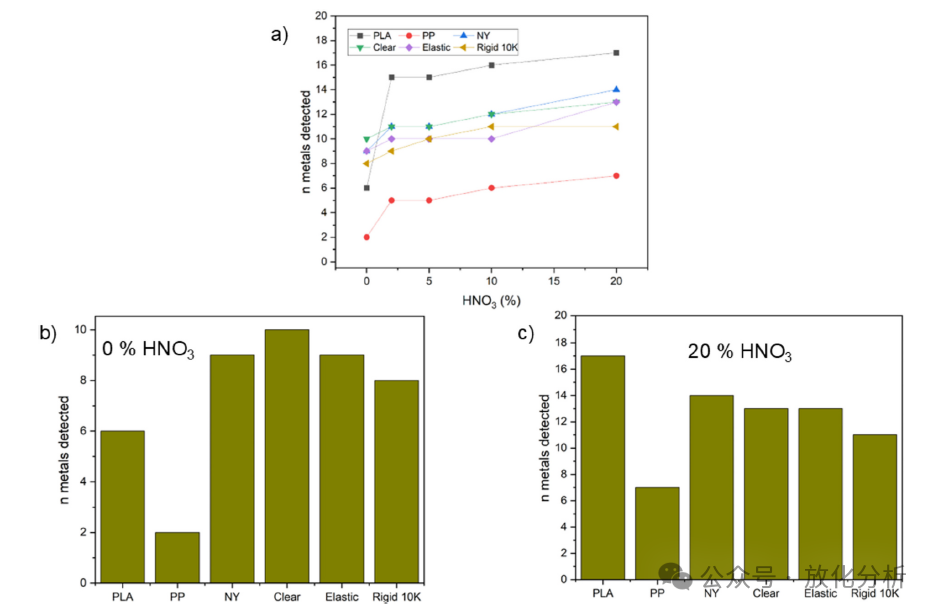
Figure 2 Number of leached metal species from different 3D printing materials under nitric acid conditions
(a) Number of leached elements of each material at different nitric acid concentrations; (b) Leached metal species under neutral conditions; (c) Leached metal species under 20% HNO₃ conditions. The results indicate that PLA releases the most metal species while PP releases the least, with increasing acid concentration significantly increasing the number of leached elements.
3. Establishment of a database and material selection guidance
To facilitate researchers in quickly assessing the applicability of different materials, the research team established a color-coded database based on experimental data. This database visually displays the metal release situation of the six materials under different conditions, as well as the risk levels associated with toxic elements (such as As, Cd, Cr, Pb). Through this visual approach, researchers can more efficiently select the most suitable printing materials based on experimental needs, thereby minimizing potential metal interference. More importantly, this research fills the gap in the field of analytical chemistry regarding the metal leaching of 3D printing materials. Although there have been reports on the metal leaching of microplastics and composites in natural environments, there has been no systematic comparison of different printing materials under strong acid conditions. This achievement not only provides practical guidance for analytical chemistry but also lays the foundation for the reliable promotion of future 3D printing technology in high-precision applications such as trace metal detection and radioactive nuclide analysis.
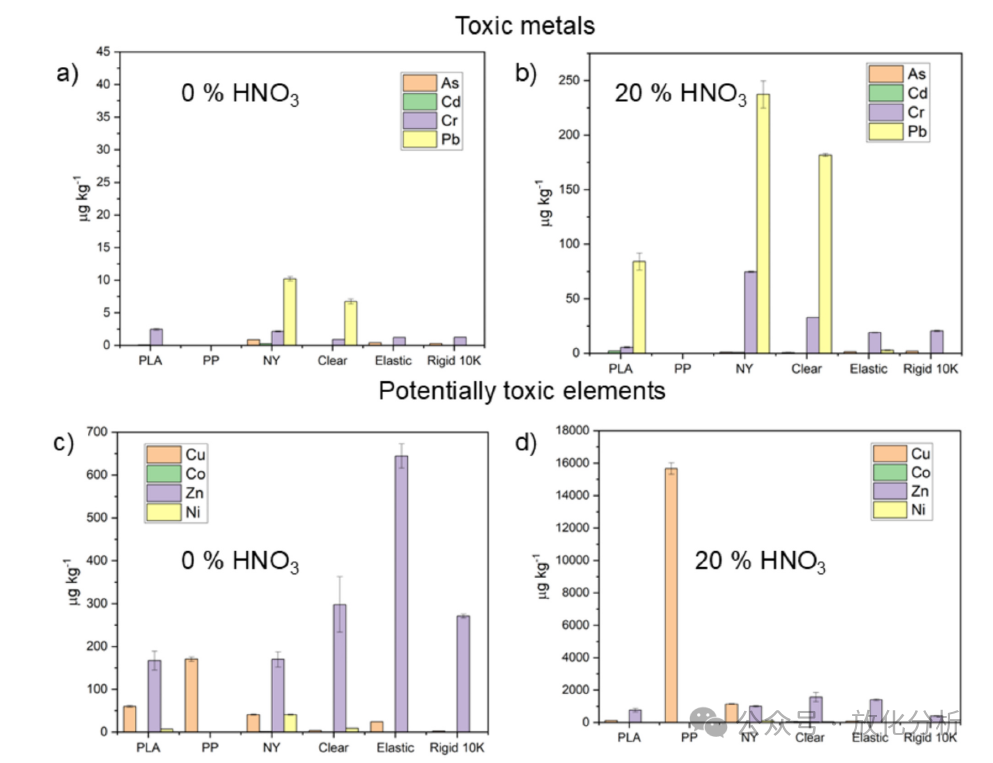
Figure 3 Leaching of toxic and potentially harmful metals from six 3D printing materials under acidic conditions
(a)(b) Concentrations of highly toxic metals (As, Cd, Cr, Pb) under neutral and 20% HNO₃ conditions; (c)(d) Concentrations of potentially harmful metals (Cu, Ni, Co, Zn) under the same conditions. The results show that PP is the only material that did not release highly toxic metals, while NY released almost all toxic elements under all conditions.