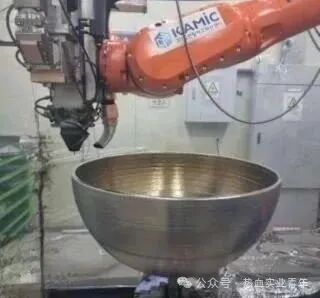
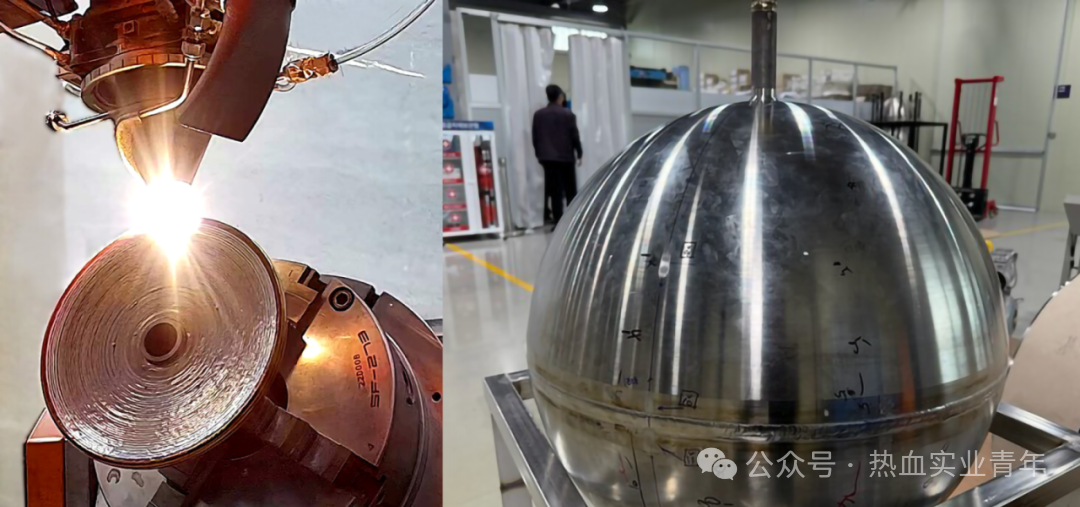
Recently, a research team led by the Korea Institute of Industrial Technology (KITECH), in collaboration with the Korea Aerospace Research Institute (KARI), KPAeroIndustries, AMSolutions, and Hanyang University, has successfully manufactured the world’s first titanium alloy space fuel tank using 3D printing technology. This marks a new era of digitalization and efficiency in aerospace hardware manufacturing, indicating that future aerospace equipment will be lighter and smarter. The consortium utilized Ti-6Al4V titanium alloy to print a spherical fuel tank with a capacity of 130 liters using Directed Energy Deposition (DED) technology, achieving a diameter of 640 millimeters and manufacturing precision that meets the stringent tolerance standards of the aerospace industry. The DED technology melts titanium wire layer by layer using a high-power beam, enabling the additive manufacturing of complex structures, significantly reducing reliance on traditional forging molds and machining, while also shortening production cycles and minimizing material waste. Additionally, real-time sensing and optimized tool path algorithms ensured uniform tank wall thickness, minimizing deformation; non-destructive testing after welding confirmed the absence of welding defects, greatly enhancing structural reliability.
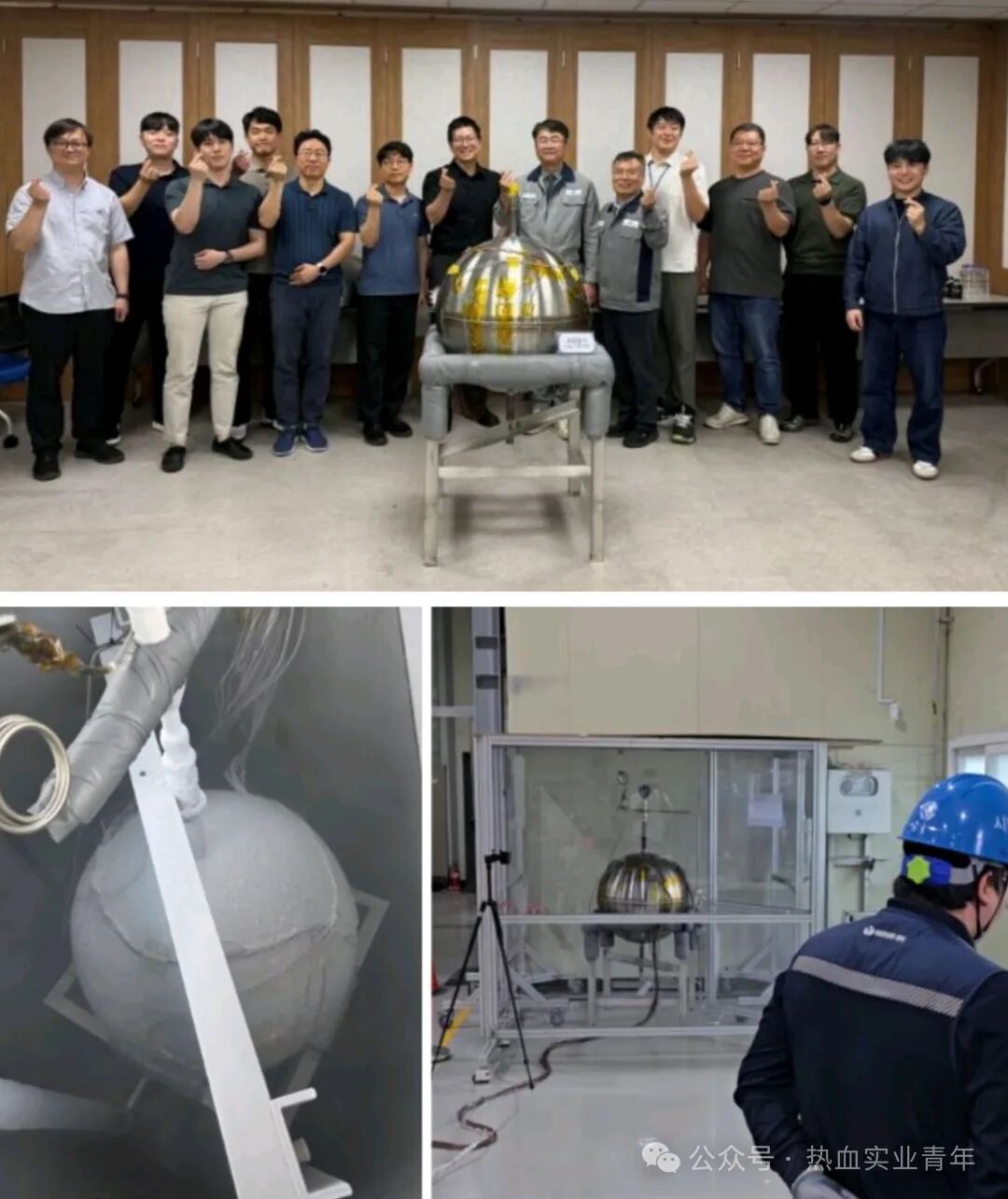
This 3D-printed titanium alloy fuel tank successfully withstood a pressure test of up to 330 bar in an extremely cold environment of -196°C, which is significantly higher than the actual working pressure requirement of approximately 220 bar by 50%. This demonstrates its capability to endure the harsh conditions of flight missions and dispels concerns regarding the risk of low-temperature embrittlement in metal additive manufacturing materials. Experts generally believe that this achievement in Korea not only signifies the maturity of 3D printing technology in the aerospace field but will also drive the digital manufacturing transformation of domestic aerospace equipment. It is reported that the consortium needs further testing to verify whether the fuel tank can repeatedly withstand the harsh conditions of space flight. They will continue to collaborate on cyclic pressure tests under working pressure, and if subsequent tests are successful and receive aerospace flight certification, 3D printing technology is expected to see broader applications in the aerospace field, promoting the industry towards greater efficiency and flexibility. High-pressure vessels are critical components in the aerospace sector, storing liquid propellants and accommodating gases used for spacecraft attitude and altitude control. Titanium alloys are particularly suitable due to their high strength, lightweight, and good low-temperature stability, but manufacturing has been challenging until now. This project proves that 3D-printed components can meet these requirements.
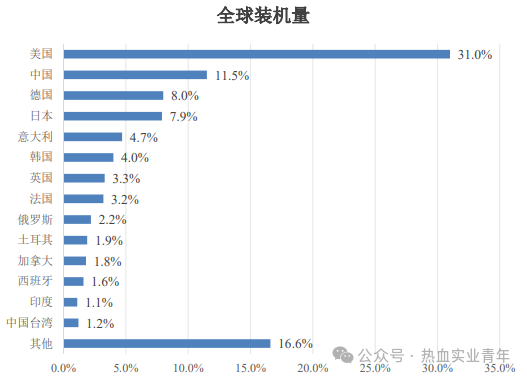 In recent years, Korea’s 3D printing industry has developed rapidly, becoming an important player in the global field. The government has strongly supported this through policies such as “Manufacturing Innovation 3.0,” focusing on applications in aerospace, medical, and automotive fields, and several 3D printing industry clusters have formed in regions like Seoul and Daejeon. According to data released by Wohlers Associates, Korea accounts for 4.0% of the global total installed base of industrial-grade additive manufacturing equipment, ranking sixth in the world, following the United States, China, Germany, Japan, and Italy. In the second half of 2023, the Ministry of Science and ICT of Korea raised its R&D investment target for 2023 to $70 million to encourage the development of 3D printing. Currently, Korea has about 400 3D printing companies. In the industrial sector, aerospace companies like INNOSPACE have established an integrated production chain covering design, simulation printing, and post-processing, with some key components of rocket engines successfully 3D printed and certified. INNOSPACE is a private launch vehicle company in Korea with proprietary rocket engine technology, and it has established localized R&D and manufacturing bases while expanding its global launch network, including collaborations with Brazil’s Alcântara Launch Center and Australia’s Equatorial Launch Australia (ELA). INNOSPACE aims to break into the stagnant and costly small satellite launch service market by providing simple, fast, affordable, and reliable access to space. Additionally, in the military sector, the Korean Marine Corps utilizes the Meltio industrial-grade 3D printing system for rapid manufacturing of hard-to-source components, while LIG Nexon has been applying metal additive manufacturing technology in the defense sector and has established an internal metal 3D printing center.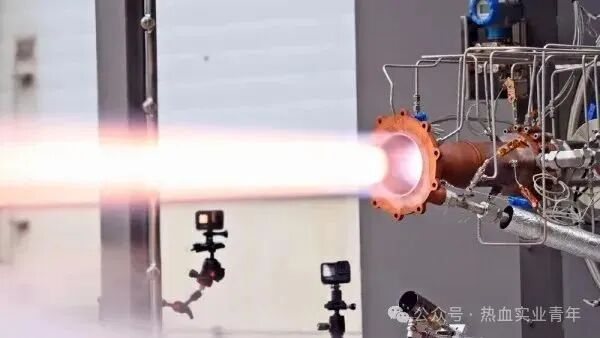
 In the maritime sector, in 2022, major Korean entities including Hyundai Heavy Industries, KITECH, the Electronics and Telecommunications Research Institute (ETRI), the Ulsan Information Industry Promotion Agency (UIPA), DNV, GL, SY Metal, and K-AMUG signed a business agreement to develop and certify ship propellers based on additive manufacturing technology. Korea’s leading construction company Bando Construction has partnered with 3D printing expert Hisys to launch the first robotic 3D printing technology in the Korean construction sector. In the transportation sector, 3D Solution, as one of the well-known companies in the automotive field, became an official supplier to Hyundai Motor in 2020, providing 3D printed fixtures for its production line. As one of Hyundai Motor’s main partners, Ajin Industrial has adopted EOS equipment and is actively researching metal additive manufacturing technology. In the energy sector, Doosan Enerbility has developed over 1,600 additive manufacturing parts, including 400 products for small-scale production. Their independent “gas turbine combustion chamber nozzle” produced using additive manufacturing technology is a significant achievement.Hanwha Aerospace’s national project launched in 2022, “Development of Nickel-Based Superalloy Composite Shape Materials and Parts Manufacturing Technology,” aims to develop nickel-based superalloy additive manufacturing materials and domestic parts manufacturing technology for gas turbine equipment used in power generation and aerospace propulsion engines by this year. Korea Western Power is committed to localizing the production and maintenance engineering technology of high-temperature components of gas turbines imported into Korea. In 2020, they successfully demonstrated the on-site application of 10 out of 15 parts manufactured by 3D printing, including gas turbine components and nuclear cooling pump components, during a three-month operation period, with no performance issues such as vibration or leakage.