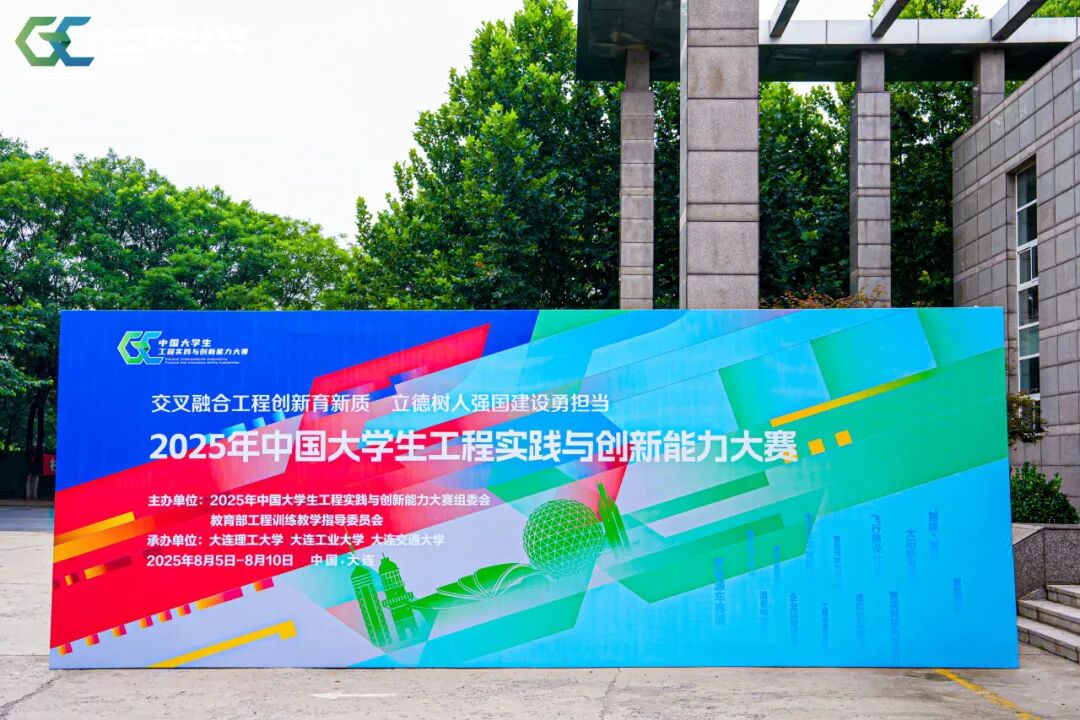
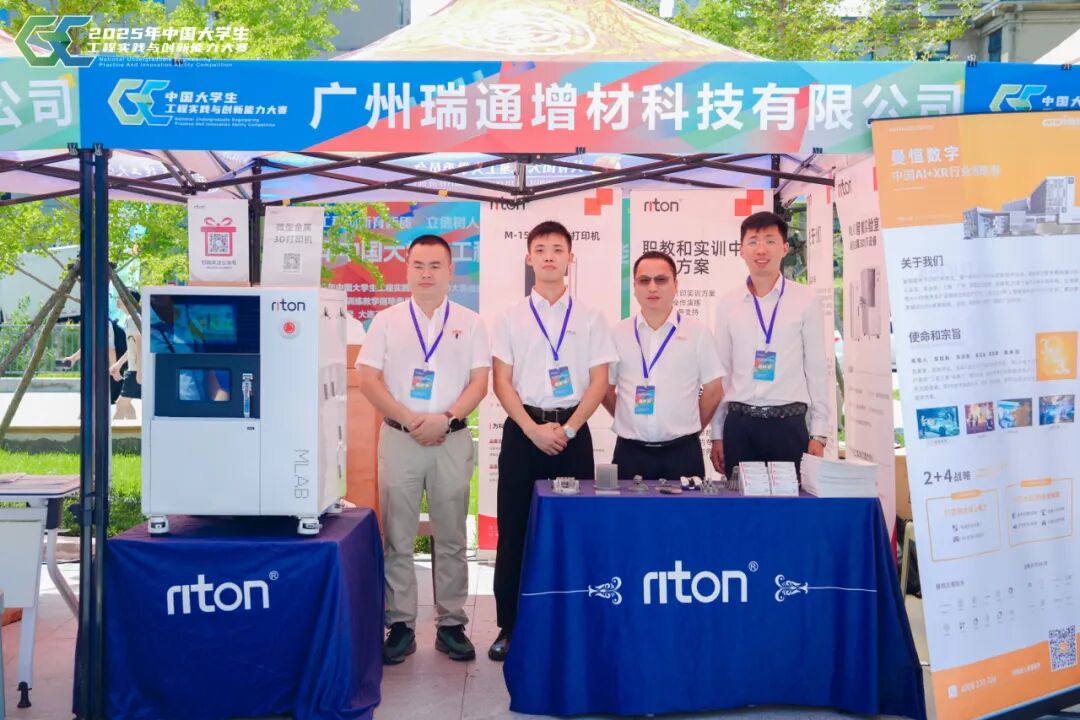
From August 5 to 9, 2025, the 2025 China College Students’ Engineering Practice and Innovation Ability Competition, organized by the Committee of the Competition and the Engineering Training Teaching Guidance Committee of the Ministry of Education, and co-hosted by Dalian University of Technology and other universities, successfully concluded at Dalian University of Technology. This event not only marked the end of a competition but also served as a window to observe the transformation of engineering education. As teachers and students from universities across the country gathered at Dalian University of Technology to compete in events such as intelligent logistics handling and solar electric vehicles, a hidden trend gradually became clear: engineering education is shifting from “simulation” to “real manufacturing,” and the popularization of metal 3D printing technology will become a key driving force for this transformation.
Breaking Technical Barriers: Three Educational Advantages of Desktop Devices
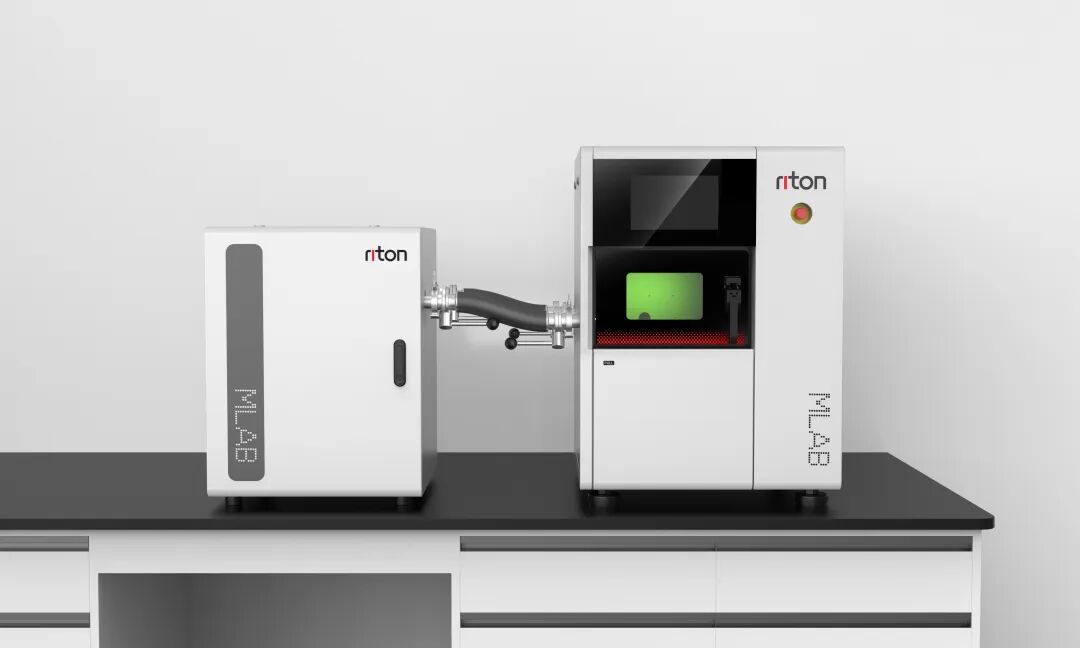
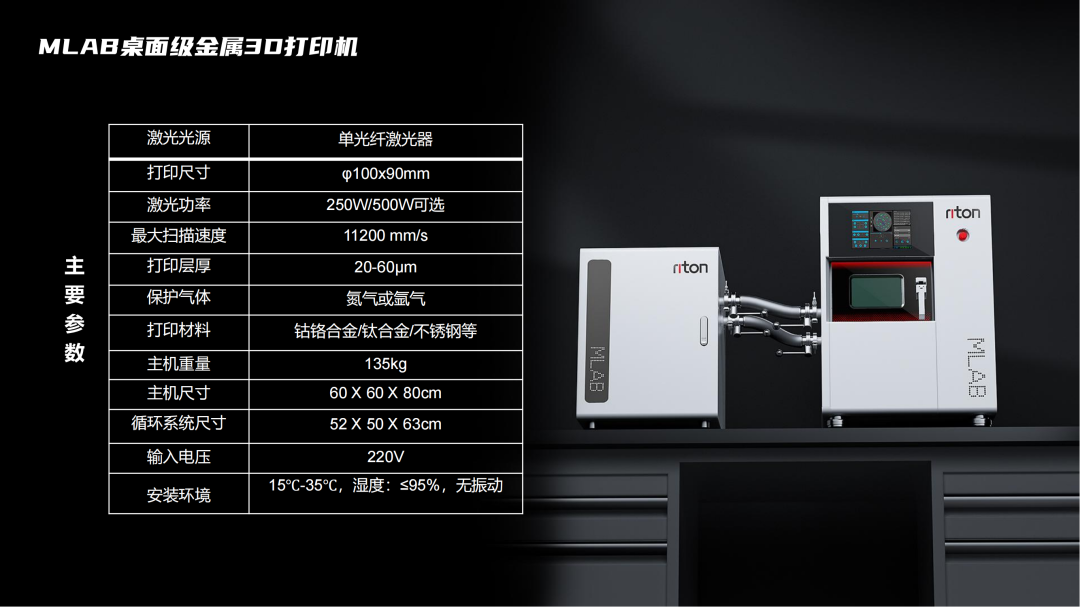
The appearance of desktop metal 3D printing devices at this competition revealed how technology popularization reshapes educational scenarios. In this trend, metal 3D printing devices designed for teaching optimization have become important tools for driving classroom transformation. Taking the Ruitong Additive MLAB desktop metal 3D printer as an example, it breaks through educational dilemmas through three major innovations:
01
Decoupling Space and Cost
By breaking the dependence of industrial equipment on dedicated spaces, the desktop design transforms the classroom podium into a “mini-factory”; the micro-powder startup technology reduces the cost of a single experiment to a fraction of the traditional model, significantly improving resource utilization efficiency.
02
Balancing Safety and Precision for Educational Purposes
Multi-level user permission restrictions on key parameter modifications allow teachers to lock core indicators such as laser power, while students can independently operate basic functions; power can be finely adjusted to a ±1W error range, ensuring safety while meeting research variable planning needs.
03
Data-Driven Capability Incubation
Open databases and full-process printing data recording functions create a “design-manufacture-verify” closed loop, providing foundational support for teaching evaluation, research traceability, and project review.
Classroom Revolution: A Paradigm Shift from Cognition to Creation
The popularization of metal 3D printing is catalyzing a qualitative change in teaching scenarios:
Basic Classroom: A New Path for Theoretical Visualization
Students can real-time adjust power parameters to print metal samples, intuitively observing structural changes—phase change dynamics transition from abstract formulas to perceivable physical processes.
Research Experiments: An Accelerator for Agile Innovation
Material research teams can quickly print new alloy gradient structures by utilizing open databases to call process parameter packages, significantly compressing the research and development cycle.
Disciplinary Competitions: A Fast Track for Ideas to Materialize
Participating teams can achieve 48 hours of continuous iteration through intelligent continuation printing functions, automatically resuming printing after unexpected interruptions, allowing teams to refocus on design optimization.
Winning the Competition: Three Competitive Advantages in the Competition Scene
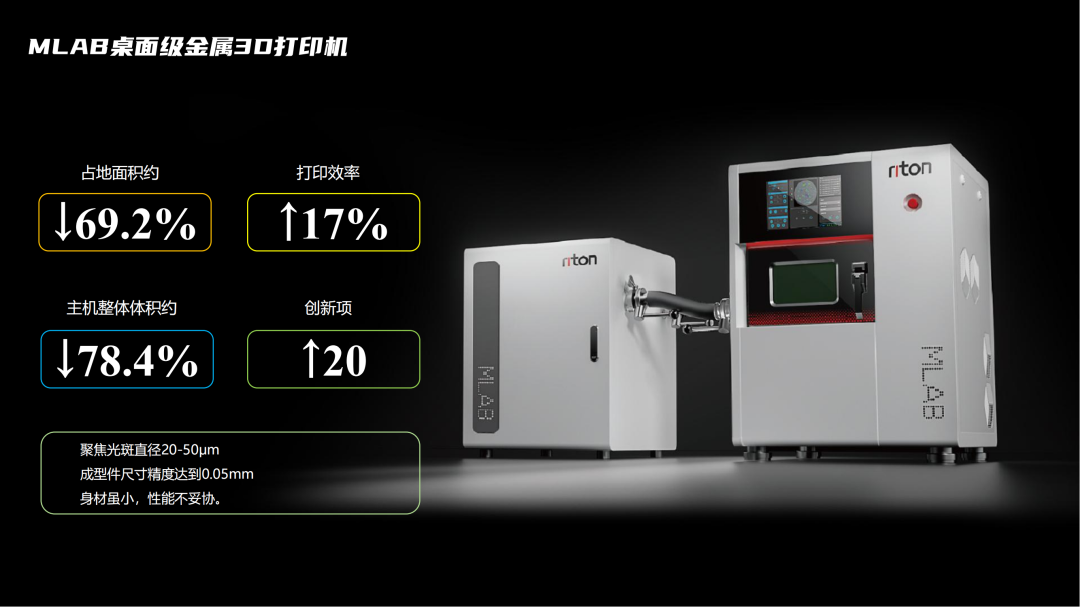
If practical training is the cultivation of abilities, then competitions are the verification of those abilities. In the tense competition environment, the performance of classroom equipment is equally crucial. The Ruitong Additive MLAB desktop metal 3D printer demonstrated strong competitiveness in the competition with the following three advantages:
01
Long-term Stable Operation, Ensuring Results
Competition tasks often require dozens of hours of continuous printing, and any fluctuation can lead to the failure of the work. The MLAB desktop metal 3D printer uses industrial-grade hardware and external filtration system design to ensure stable and reliable high-intensity output over long periods, allowing teams to focus on design and debugging.
02
Industry Experience Support, Reducing Adaptation Costs
The design philosophy and functional configuration of the MLAB desktop metal 3D printer highly align with engineering education scenarios, drawing on years of accumulated application experience in the industry. The familiar operating interface and process flow allow participants to quickly get into the state, reducing trial and error and mistakes caused by unfamiliar equipment.
03
Strong Adaptability to Competition, Meeting Multi-Event Challenges
Whether printing complex structural parts or functional test pieces, the MLAB desktop metal 3D printer can quickly complete task transitions through modular process parameter libraries, precise power adjustments, and quick material switching mechanisms, flexibly adapting to different events and on-site requirements.
A Manufacturing Power Starts from the “First Time” in the Classroom
The glory of the competition will fade over time, but the power of educational reform has quietly taken root. When metal 3D printing technology moves from professional laboratories into ordinary classrooms, and when “design-manufacture-verify” becomes the daily learning method for students, engineering education has completed a leap from knowledge impartation to capability shaping.
The Ruitong Additive desktop metal 3D printer, with its technology innovation closely aligned with teaching needs, injects new momentum into talent cultivation. The future of a manufacturing power does not lie in the brilliance of individual heroes, but in the accumulation of “first times” created by thousands of students in the classroom.
When practice becomes the core of learning and innovation becomes the norm in education, we are one step closer to the dream of becoming a manufacturing power.
Previous Recommendations

+
Empowering Education with Technology | Guangzhou Ruitong Additive at the 22nd Mechanical Engineering Presidents’ Joint Conference
+
Ruitong Additive’s “Three Musketeers” at the 2025 Materials Conference: Promoting Additive Technology Implementation with “Small and Precise” Equipment
+
Guangzhou Ruitong Additive Showcases MLAB Desktop Metal 3D Printer at the 2nd Intelligent Additive Manufacturing Technology Exchange Conference
+
Ruitong Additive Presents Two Educational Devices at the High-Tech Expo Leading the Wave of Metal 3D Printing Laboratory Equipment Iteration