With sales exceeding hundreds of thousands annually and discounts often reaching 70,000 to 80,000, it was initially thought that this generation of the Mercedes-Benz C-Class had settled into a role as a “commuting tool with a big logo.” However, with the recent reveal of the new C-Class, this notion may need to be reconsidered—retaining the 2.0T + 9AT combination, while enhancing the exterior, interior, and smart features, Mercedes clearly does not intend to completely hand over the banner of “sporty handling” to the BMW 3 Series. The question is posed to the market: as electric vehicles and new forces take off around 2025, how much unique advantage does the 3 Series still hold?The position of the Mercedes-Benz C-Class in the Chinese market has always been quite nuanced. It serves as an emotional symbol for many as their “first luxury brand car,” while also being humorously referred to by netizens as “buying an engine and getting a car for free.” The earlier W204/W205 models built a solid reputation with their stable appearance, high-quality materials, and rear-wheel-drive platform. The last generation’s mid-cycle facelift further enhanced its appeal with a large central touchscreen, ambient lighting, and dual-segment daytime running lights, temporarily stealing the “lighting factory” title from Audi. In recent years, however, the C-Class has faced challenges from the triple pressures of new energy vehicles, price wars, and domestic high-end cars—while sales remain, the “halo effect” has weakened, especially among young male users, who increasingly associate “sporty mid-size cars” with the 3 Series.The recent reveal of the new C-Class, based on spy photos and application information, shows that Mercedes has a clear strategy: keeping the underlying mechanics largely unchanged, continuing with the 2.0T + 9AT combination, and focusing on refined design, technological upgrades, and configuration adjustments. The goal is not to turn the C-Class into a 3 Series-style driving machine, but rather to further differentiate in terms of “luxury, quality, and intelligence”—to make those users who are already drawn to the brand’s character feel that “waiting for the new model is worthwhile.”
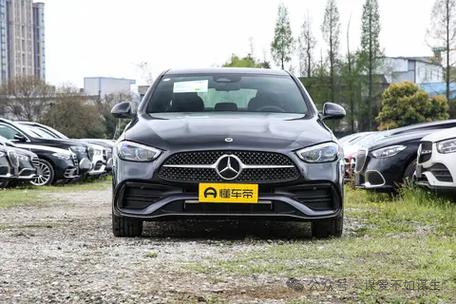
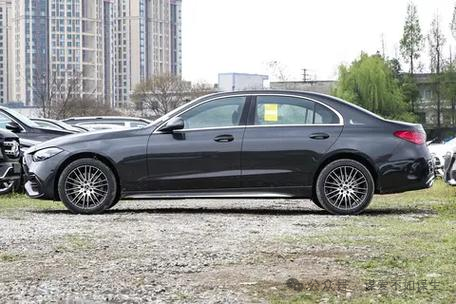
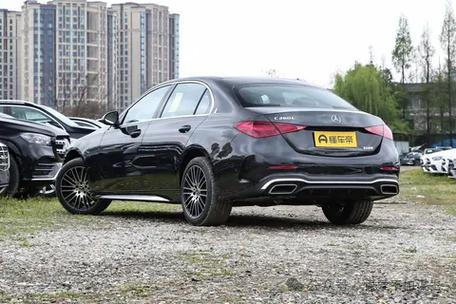
In terms of appearance, the new C-Class follows a path of “minor adjustments rather than a complete overhaul.” The front still features a large shield-shaped grille with a central logo, while the starry matrix structure inside is more three-dimensional. The differences between the sport and luxury versions are more pronounced in the grille trim and lower bumper design: the sport version uses more black accents and openings, while the luxury version incorporates more chrome and horizontal trim. The headlight contours are slightly narrowed, and the daytime running lights have transformed into a “small C-shape” light strip, combined with a multi-segment light chamber structure, ensuring high recognition at night. Compared to the current model, the new version is less “round and cute” and more sharp and low-slung, making it friendlier to younger users.The side profile remains unchanged, with a long hood, short front overhang, and relatively rearward cabin, clearly showcasing the traditional rear-wheel-drive platform. The domestic long-wheelbase version has a slightly larger rear door proportion after extending the wheelbase, but overall it remains harmonious. The character line extends from the front fender to the taillight, slightly rising, combined with 17/18-inch wheels and a slightly lowered ride height, giving it a more grounded appearance than the current model. When compared to the 3 Series, the contrast is stark: the 3 Series has sharper, more defined lines and a more muscular body, while the C-Class features softer lines and smooth transitions, embodying the typical “elegance vs. gym” character difference.The changes at the rear are also more detail-oriented. The internal light source structure of the taillights has been adjusted to resemble the triangular light points and light strip combination of the new S-Class and E-Class, enhancing visual layering; the rear bumper on the sport version will feature a more exaggerated diffuser design and dual exhaust decorations, while the luxury version maintains simplicity with added chrome trim for an upscale feel. Overall, the changes in the new C-Class’s appearance will not overturn public perception but represent a “timely youthful adjustment,” ensuring it does not appear outdated when placed alongside a plethora of domestic new energy vehicles and the refreshed 3 Series.In terms of space and dimensions, the domestic long-wheelbase C-Class has always had its advantages. The new model is expected to have dimensions similar to the current version, with a length close to 4.9 meters and a wheelbase exceeding 2.9 meters, making it significantly more spacious compared to the standard 3 Series, and it does not fall short against the long-wheelbase 3 Series. The front seating position remains comfortable, with a long seat cushion and thick backrest, providing a non-aggressive feel for the driver; the rear knee space is quite generous, allowing for comfortable seating for both elderly passengers and children, and the seat back angle is suitable for long-distance travel, making it noticeably more comfortable than the 3 Series, which has a more upright and firmer setup. This is the fundamental reason why many female drivers and family users prefer the C-Class: it has never aimed to compete with the 3 Series on the racetrack, but rather seeks to harmonize with both “family and business” scenarios.
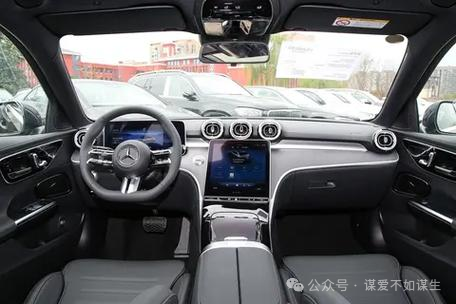
The interior of the new C-Class is the visual highlight of this facelift. Continuing the current “mini S-Class” concept, the center console features a vertically oriented large screen combined with a fully digital instrument cluster, but with narrower bezels, higher resolution, and updated UI, along with more ambient lighting areas that support a wider range of colors and dynamic effects. The dashboard is covered in soft materials, paired with wood grain or brushed metal trim, and the air vents continue to use the “aircraft turbine design,” creating a strong visual memory point. While the 3 Series also features a dual-screen setup and the latest iDrive system, it leans more towards a “technical” feel in terms of ambiance and material layering, lacking the inherent luxury that Mercedes offers.Material quality and comfort remain areas where Mercedes is unwilling to compromise. The new model’s seats are expected to upgrade filling materials and stitching techniques, with diamond patterns, contrasting stitching, and high-quality leather available on mid to high trims; the front seats support multiple electric adjustments, memory, and heating, with high trims even offering optional massage functions. In terms of NVH, the current C-Class performs well in controlling wind and road noise, and the new model will enhance sound insulation in the glass and chassis, combined with the inherently quiet characteristics of the 2.0T + 9AT, making daily commutes comfortable enough that conversations at 120 km/h do not require raised voices.In terms of technology, the new C-Class will focus on the vehicle’s system and driver assistance features. The MBUX system enters a new generation, with improved voice assistant response speed, dialect recognition, and continuous dialogue capabilities, bringing it closer to the natural language interaction experience of domestic brands. Features like CarPlay, CarLife, online navigation, vehicle networking, and OTA upgrades are all basic functionalities, while high trims are expected to add AR navigation and in-car scene modes (such as one-click switching to “nap/cinema”), continuing to push the strategy of “technology serving luxury experience.” The 3 Series is not lacking in system fluidity and connectivity capabilities, but it is more conservative in voice and localized application ecosystems, making it more suitable for users accustomed to traditional logic.Regarding safety and driving assistance, the new C-Class has always been generous with airbags, steel, and collision structure optimizations. This facelift will see upgrades in active safety systems: the AEB automatic braking system will recognize a wider range of scenarios (pedestrians, bicycles, vehicles crossing at intersections), lane keeping will be more refined, and the logic for full-speed adaptive cruise control will be more user-friendly. High trims are likely to continue offering a high-speed L2 system with steering assistance, achieving stable “following + centering” on elevated roads and roundabouts, providing real relief for those who frequently travel long distances or commute in traffic.
In terms of power, the new C-Class does not introduce any flashy hybrid or plug-in hybrid changes, but continues to rely on the 2.0T + 9AT combination. The data for low and high power calibrations has been slightly adjusted to meet emission regulations and fuel consumption targets, but overall performance remains above the normal level for luxury mid-size sedans. The 9AT’s gear ratios are closely spaced, allowing for smooth low-speed starts and mid-range acceleration, with a comfort-oriented shifting logic and responsive downshifts during rapid acceleration. For most consumers, it is a powertrain that requires no technical understanding—just knowing it is easy to drive, smooth, and reliable. The 3 Series, with its B48 + ZF 8AT combination, offers faster shifting and a more engaging driving experience, especially in mountain roads and high-speed lane changes, providing more confidence; the C-Class’s tuning encourages a more relaxed and smooth driving style.Compared to its main competitors, the landscape is quite interesting. The BMW 3 Series continues to hold onto the banner of “handling + driving pleasure,” with steering feel, chassis support, and body posture control remaining strong points of this generation, and the discounted prices are very appealing; the Audi A4L takes an extreme cost-performance route with space, technology cabin, and end-user discounts, making it a very “rational choice”; if the new C-Class does not continue to “confidently increase” its pricing but maintains its current guidance price range along with significant real-world discounts, it can package “luxury quality + space + brand halo” into a compelling offer—especially for female drivers, urban white-collar workers, and young families balancing both family and commuting needs, making it easy to persuade them, “since I don’t plan to push the limits of handling every day, why force myself to choose the 3 Series?”The industry backdrop, however, is urging everyone to make choices quickly. The penetration rate of new energy vehicles continues to rise, with a plethora of pure electric and plug-in hybrids in the 200,000 to 300,000 price range aggressively competing on screens, intelligent driving, and acceleration; domestic high-end brands are continuously enhancing cabin experiences and local services, meaning that the actual “threat” faced by joint venture luxury mid-size cars is not just competition among themselves, but the entire fuel vehicle segment’s market share is being re-divided. Mercedes’s willingness to seriously update and refine the mechanical quality of the C-Class at this time indicates one thing: the fuel 3C (3 Series, C-Class, A4L) segment is far from being in a “lying flat and taking hits” phase; at least in the next 3-5 years, there will still be a group of consumers willing to pay for a “traditional luxury mid-size car.”
In summary, the new C-Class has concentrated advantages: a younger appearance, continued luxury feel in the interior, the 2.0T + 9AT combination maintaining its smooth and reliable reputation, family-friendly space, and a brand tone that remains “character-driven”; the shortcomings are also clear: it is difficult to shake the 3 Series’s position in terms of driving pleasure and engagement, the intelligent cabin features are not as explosive compared to new forces, and maintenance costs remain higher than ordinary joint ventures, while significant end-user discounts may weaken the psychological balance of some existing owners.Looking ahead to the next year or two, the dynamics between the C-Class and 3 Series are likely to shift from “3 Series strong, C-Class weak” back to “more distinct fan bases”: those who love driving and care about corners and steering will still rush to the 3 Series; those who value brand, presence, ambiance, and ride comfort will once again place the C-Class at the top of their candidate list. The A4L will continue to cater to those “rational consumers,” harvesting those who do not want to struggle with choices through space, price, and practicality.The real tough question lies with you: if your budget is around 300,000, hoping to buy a luxury mid-size car that balances commuting, occasional long trips, and can handle some business scenarios, will you continue to stick with the “rear-wheel drive spirit” of the BMW 3 Series, enjoying that little bit of cornering pleasure, or choose the new Mercedes-Benz C-Class, which has a more refined character, a more luxurious interior, and a more relaxed driving experience? At a time when new energy is rapidly approaching from behind, which side will you bet on? What do you think, what would your choice be?