ABAQUS
I can help you solve
#ABAQUS Q&A, modeling simulation, remote guidance, error resolution, debugging results, case reproduction.
Areas of expertise: #Seismic analysis, viscoelastic boundaries, pile penetration, ground stress balance, slope stability, static probing, stamping, high-speed impact, milling, friction welding, ultrasonic vibration, bolt tightening, crack propagation, foundation excavation support, etc.
#ABAQUS finite element simulation, static, dynamic, #Fluid-structure interaction, and temperature simulation can all be performed.
Composite material damage can be analyzed, modal analysis,buckling analysis, post-buckling analysis, drop simulation, #COHESIVE cohesive elements,COHESIVE contact, and more.
I am working independently, no intermediaries, quality guaranteed, please contact me if needed!!!
Application Cases of Abaqus in 3D Printing, Welding, and Laser Cladding Simulation Analysis
ABAQUS
1. Introduction
Abaqus, as a powerful finite element analysis software, demonstrates exceptional capabilities in the field of material processing simulation. This article discusses three typical processes: 3D printing, welding, and laser cladding, illustrating the simulation analysis process and value of Abaqus through case studies, aiding in the understanding of the evolution of thermal and mechanical fields during the processes.
2. 3D Printing Simulation Analysis Case
(1) Process Background and Model Construction
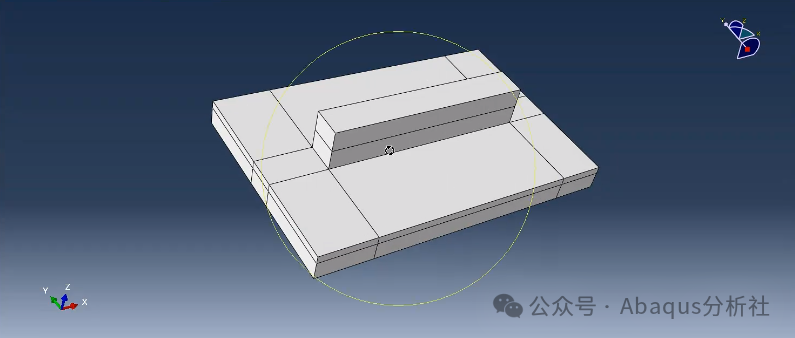
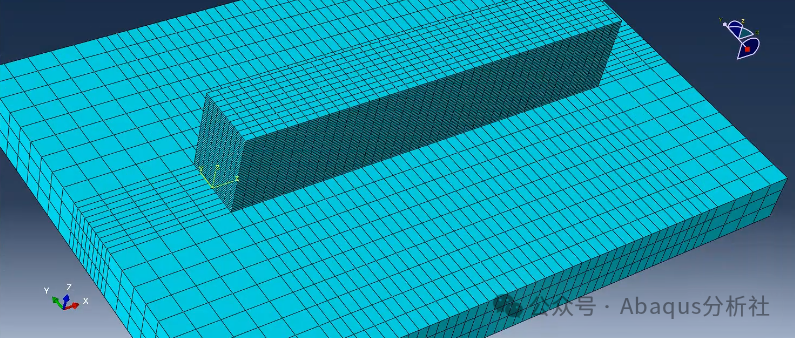
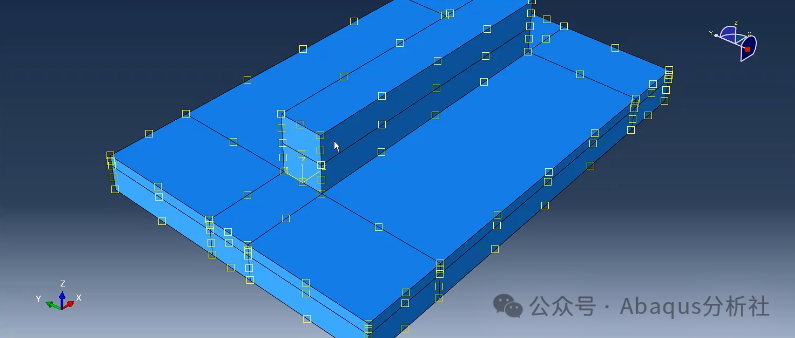
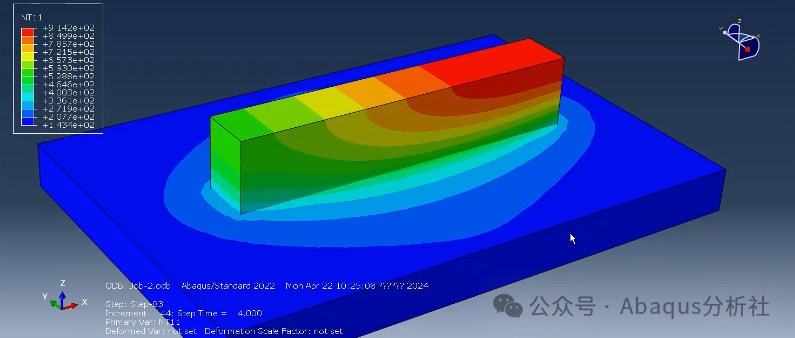
Taking metal wire 3D printing as an example, the printed part is a rectangular structure (as shown in the basic model above). A 3D geometric model of the printing substrate and deposited body is established using Abaqus, with the substrate size set according to the actual printing platform and the deposited body size corresponding to the printing path planning. During mesh division, the mesh is refined in the contact area between the deposited body and the substrate to capture temperature and stress concentration, while areas further away are appropriately coarsened to balance computational accuracy and efficiency.
 |
 |
 |
(2) Simulation Process and Key Analysis
Define the thermal properties (thermal conductivity, specific heat, etc.) and mechanical properties (elastic modulus, yield strength, etc.) of the material as they change with temperature. Set boundary conditions, with fixed constraints at the bottom of the substrate and convection and radiation heat transfer at the environment and model surface. The simulation adopts sequential coupling, first performing thermal conduction analysis to calculate the temperature field of the moving laser heat source (or equivalent electric arc heat source) during the printing process. The heat source can be simulated using the “birth and death element” technique to model the point-by-point deposition of material, i.e., activating elements to simulate material addition.
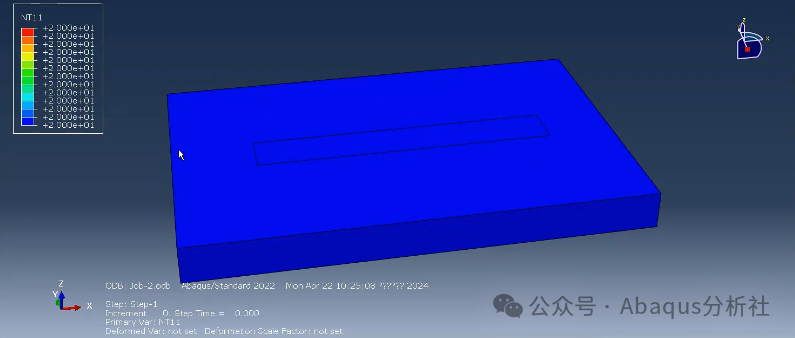
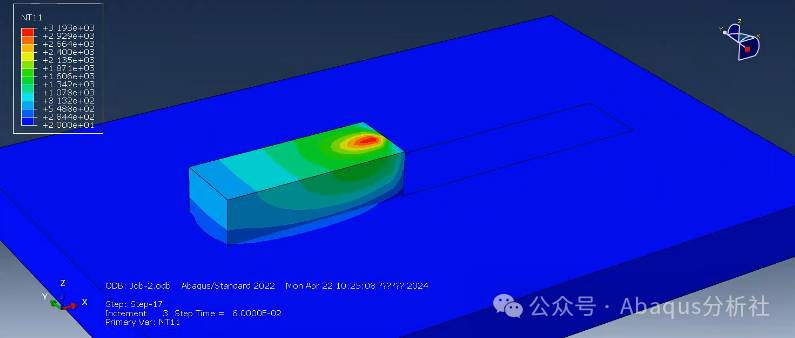
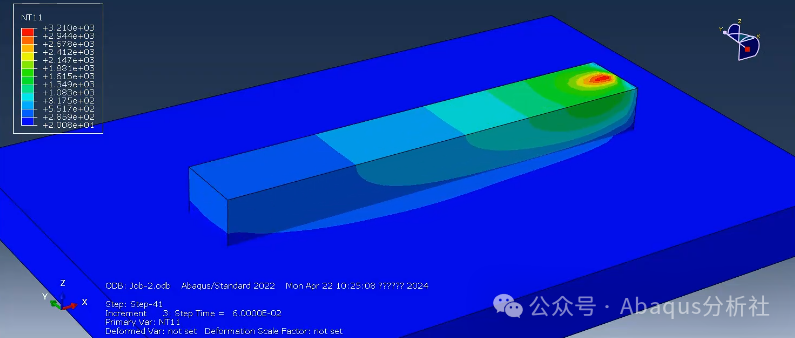
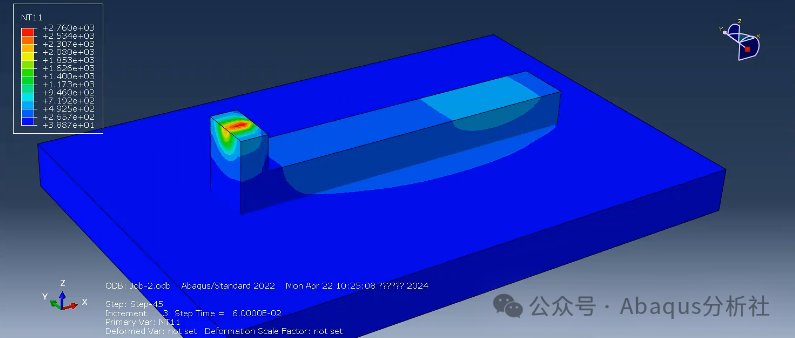
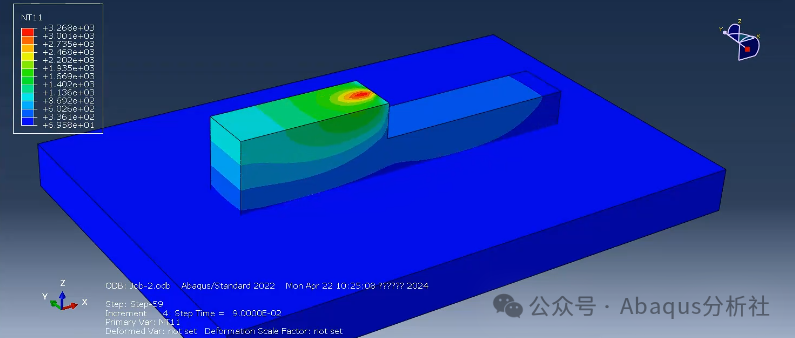
From the temperature field cloud diagram (similar to the previous colored cloud diagrams), it can be observed that there is a large temperature gradient along the printing path, with the top of the deposited body being heated continuously and thus having a high temperature, while the temperature of the substrate gradually conducts and diffuses. In the subsequent stress analysis, due to uneven thermal expansion, residual stress is likely to occur at the junction between the deposited body and the substrate, affecting the deformation and cracking risk of the printed part. Abaqus can quantitatively analyze the stress distribution, optimize printing process parameters (such as scanning speed and power), and reduce residual stress.
 |
 |
 |
3. Welding Simulation Analysis Case
(1) Model and Process Adaptation
For butt welding of plates, a 3D model consistent with the actual welded part (such as the plate and weld seam structure) is constructed. The mesh division focuses on the weld seam and heat-affected zone, as the welding thermal cycle is intense, and these areas experience significant changes in mechanical properties, requiring a fine mesh. Material parameters consider the changes in thermal-mechanical properties at high temperatures, using the Abaqus material library or custom curves that vary with temperature.
(2) Core of Simulation and Result Interpretation
The welding heat source is modeled using a double ellipsoidal model to simulate the input of arc heat. In thermal analysis, the temperature in the weld zone rises sharply in a short time, forming a high-temperature molten pool, and the temperature gradient in the heat-affected zone is significant (similar to the welding temperature field cloud diagram). In mechanical analysis, during the cooling process of welding, due to inconsistent shrinkage, tensile stress is generated in the weld zone, which may lead to welding deformation (such as plate bending) and cracking.
 |
 |
 |
Through Abaqus simulation, the amount of welding deformation can be predicted, and the welding sequence can be optimized (such as symmetric welding to reduce overall deformation); analyze the impact of microstructural changes in the heat-affected zone on stress, assess the strength of the weld joint, provide a basis for welding process evaluation, and compare the thermal-mechanical responses under different welding specifications (such as current, voltage, welding speed) to select the optimal parameters.
4. Laser Cladding Simulation Analysis Case
(1) Characteristics of Process Simulation
Laser cladding involves rapidly cladding alloy materials on the surface of the substrate, with the model including the geometric structure of the substrate and the cladding layer (similar to a model with cladding tracks). Due to the high energy density and short action time of the laser, precise control of heat source loading and material addition is required. Using Abaqus “birth and death elements” combined with a moving heat source, the simulation of laser beam scanning and simultaneous deposition of cladding material is performed, with cladding layer elements gradually activated and the heat source moving along the scanning path.
(2) Value and Application of Simulation
In the temperature field, a narrow and high temperature peak forms at the laser scanning point, and there is a large thermal gradient at the interface between the cladding layer and the substrate, which is prone to metallurgical bonding defects (such as poor bonding). Stress analysis shows that the cladding layer, due to rapid solidification shrinkage, generates shear and tensile stresses with the substrate, which may lead to coating delamination. With the help of Abaqus, laser parameters (power, scanning speed) and cladding material composition can be optimized to improve bonding quality, while analyzing inter-layer temperature accumulation and stress superposition during multi-layer cladding, guiding actual production in cladding path planning (such as reciprocating scanning, zoned cladding), enhancing the performance of the cladding layer.
5. Conclusion
Abaqus, through precise model construction and simulation of thermal-mechanical multiphysics coupling, clearly presents the distribution evolution of temperature, stress, and other factors during the processes of 3D printing, welding, and laser cladding simulation. Whether optimizing residual stress in 3D printed parts, controlling welding deformation, or improving the quality of laser cladding layers, Abaqus provides quantitative analysis tools for process design and improvement, aiding in the advancement of material processing technology towards high precision and high quality, and is a powerful tool for understanding the physical essence of complex processes and solving practical engineering problems.
——Stop struggling! Leave the professional tasks to experienced individuals, focus on writing your papers/speeding up your progress, and leave the rest to me.