
MSModeling and Obstacle Avoidance of a 3-DOF Robotic Arm Based on MATLAB
Project Category: Engineering Technology | Computer Science | Mathematics
Project Background01Project Background
With the continuous advancement of automation technology, the application of robotic arms in industries such as manufacturing and healthcare is becoming increasingly widespread. To meet the operational demands in complex environments, this project aims to model a three-degree-of-freedom (3-DOF) robotic arm based on MATLAB, and to construct the forward and inverse kinematics models of the robotic arm through mathematical derivation. Students will learn how to combine polynomial interpolation algorithms with artificial potential field algorithms for path planning of the robotic arm and implement obstacle avoidance functionality.Ultimately, the project will complete precise trajectory planning of the robotic arm in a simulated obstacle environment.
The application scenarios of this project include smart manufacturing, automated production lines, and robotic operation control.
The project is characterized by the study of kinematics and trajectory planning algorithms for the robotic arm, integrating polynomial interpolation algorithms with artificial potential field algorithms to construct an obstacle-avoiding robotic arm motion model.Students will master the complete process and related skills from establishing the robotic arm model to planning obstacle-avoiding trajectories through learning MATLAB programming, kinematic modeling, and algorithm integration techniques.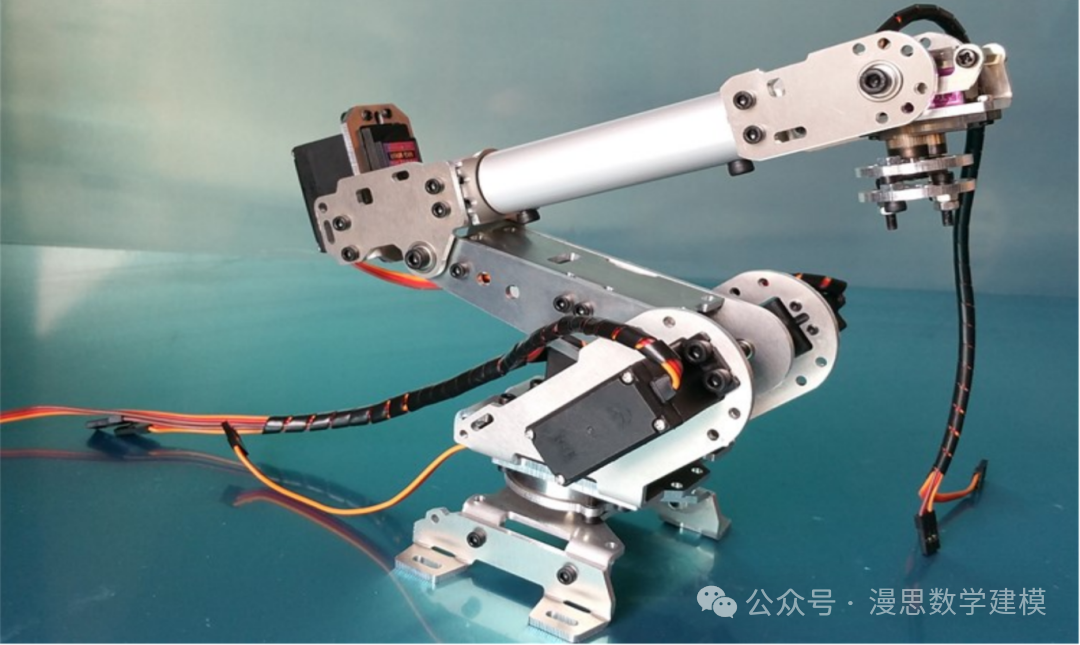
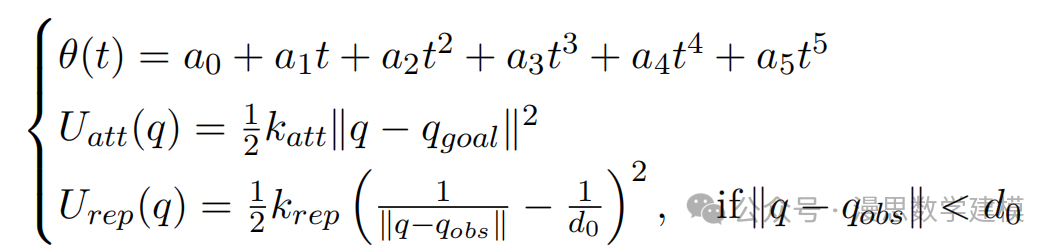
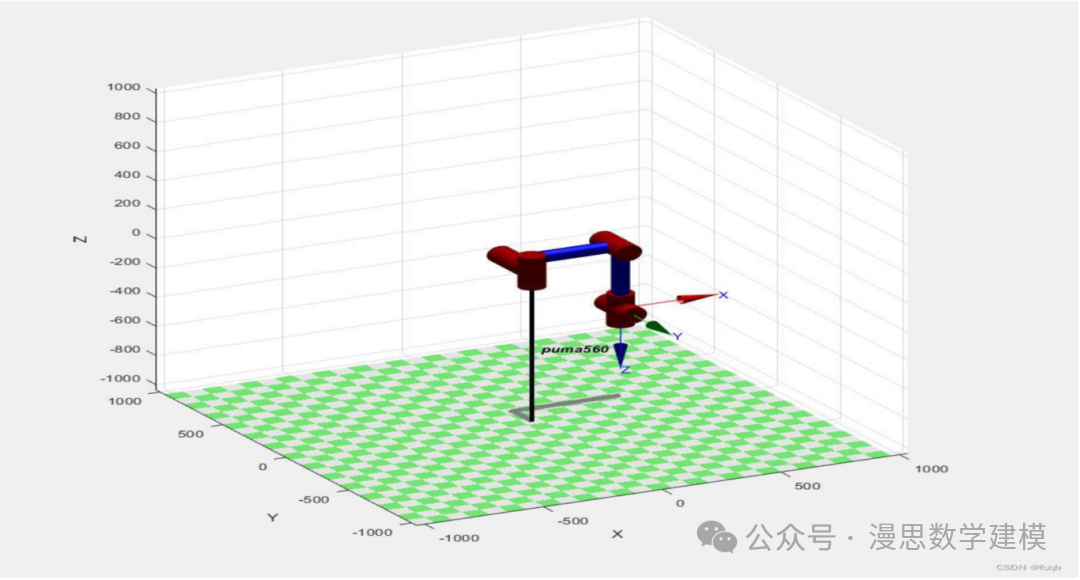
In the MATLAB-based 3-DOF robotic arm modeling and obstacle avoidance project, various technologies will be employed to achieve different functionalities. For example, kinematic models will be used to derive the forward and inverse kinematics of the robotic arm, polynomial interpolation algorithms will be used to plan smooth motion trajectories, and artificial potential field algorithms will be used to implement obstacle avoidance functionality. The specific implementation methods and processes are as follows:
 Project Objectives02Project Objectives
(1) Design and develop a MATLAB-based simulation model of the robotic arm,integrating polynomial interpolation and artificial potential field algorithms to achieve the kinematic behavior and obstacle avoidance trajectory planning of the robotic arm.
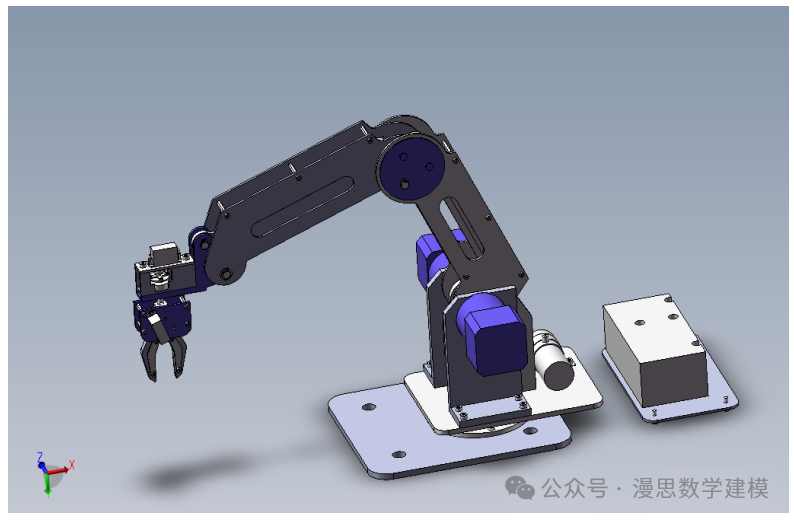
(2) Write systematic MATLAB code to generate an animation of the robotic arm’s motion trajectory. This animation will vividly demonstrate the entire motion process of the robotic arm moving from the initial position to the target position.
Project Outcomes03Project Outcomes
This project provides multiple skill enhancements in mathematics, programming, module design, and professional writing.
-
Consolidate Subject Knowledge:Linear Algebra – Calculus – Linear Programming
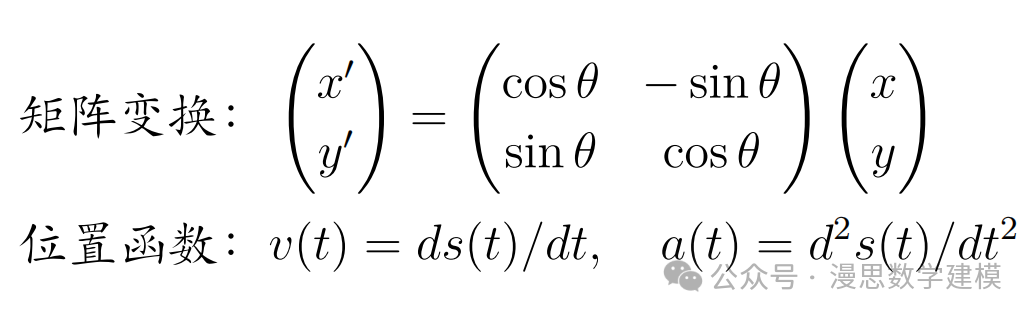
In the robotic arm modeling and obstacle avoidance project, mastering foundational knowledge such as linear algebra, calculus, and linear programming is crucial for modeling the robotic arm, calculating motion trajectories, and implementing obstacle avoidance functionality.
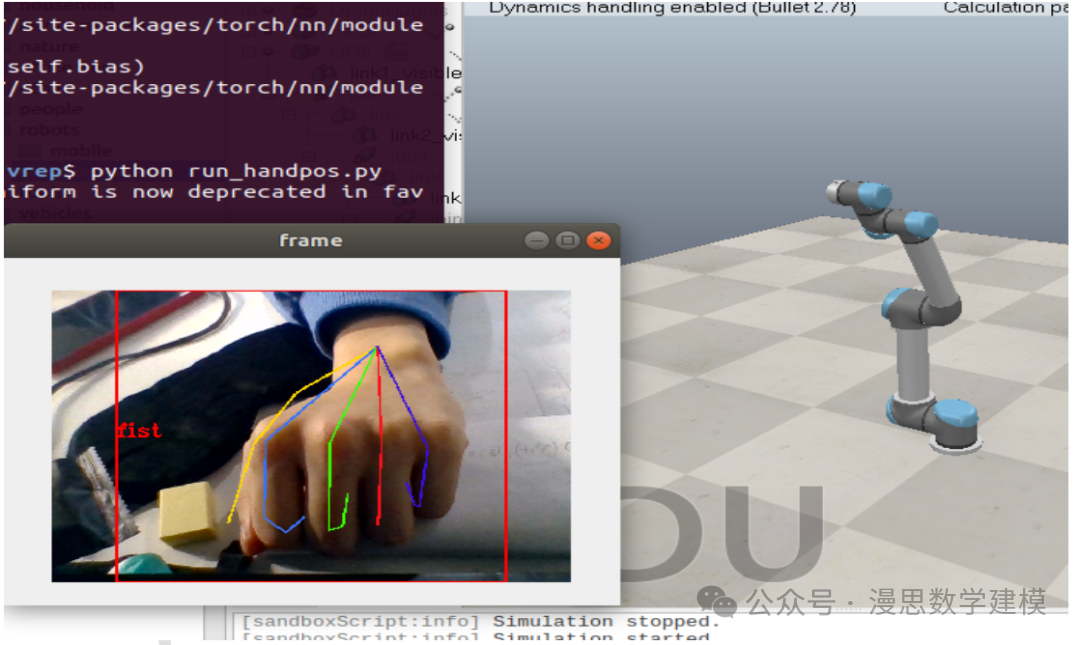
During the development phase, design and implement a MATLAB-based simulation model of a 3-DOF robotic arm, derive the forward and inverse kinematics of the robotic arm. Ensure that the model can perform accurate path planning and implement obstacle avoidance functionality using polynomial interpolation and artificial potential field algorithms, providing efficient motion control and real-time response.
-
Deeply Engage in Programming Practice:Master programming languages – Control software development – Simulation and modeling
-
Master LaTeX Writing:Learn to master the internationally recognized scientific writing software LaTeX
Project Achievements04Project Achievements
The project outcomes are rich, including physical models, data, papers, patents, etc. These not only help to explore interests and strengths but also enhance applications to prestigious international universities.
□ Project Summary □ Technical Report
□ Simulation Code □ Short Paper
□ Solver □ Physical Model
□ Assist in publishing related papers and applying for software patents
Historical Student Cases05ExamplesStudent F
Chengdu International Department | University of Oxford Mechanical Engineering Major
Due to my experience in participating in robotics competitions in elementary school, and my plan to study mechanical engineering later, I decided to undertake a research project on underwater robots after discussing with my teacher. This experience not only allowed me to gain a more intuitive understanding of engineering-related knowledge but also directly contributed to my acceptance at Oxford.
Student X
Chengdu International Department | Texas A&M University
I engaged in research projects not only because the physics department requires students to conduct independent experiments but also because I have a great interest in my project (aerodynamics).
I had long wanted to conduct simple research on flying vehicles but lacked opportunities, and the physics department provided me with a perfect opportunity.During my research, learning new physics knowledge was inevitable, but I believe the more important aspect is the hands-on ability.
Since I plan to continue developing in engineering, the research project gave me the chance to design, create, assemble, and operate my project.
For more research project content, please scan the code to consult the research project customer service teacher. We specialize in guiding research projects and competitions, providing parents withprofessional, cutting-edge, and personalized research project guidance.
 Add ‘Research Project Customer Service’tel:13408063981Scan to get more research project content