★ Course Introduction ★
Functional near-infrared spectroscopy (fNIRS) utilizes the excellent scattering properties of blood’s main components for near-infrared light in the range of 600-900nm, allowing for the observation of changes in oxygenated and deoxygenated hemoglobin during brain activity. This technology offers a certain tissue penetration depth and can perform non-destructive testing of tissue parameters (including optical parameters, blood oxygen parameters, and hemodynamics). Compared to fMRI/PET, it has a higher temporal resolution, and compared to EEG/ERP, it has relatively higher spatial resolution, as well as stronger resistance to motion artifacts compared to fMRI/PET/EEG/ERP. This indicates the broad research and application prospects of fNIRS in the field of brain science.
The signal processing methods of fNIRS have similarities and unique approaches when compared to fMRI and EEG/ERP. Mastering the fNIRS signal data processing methods is crucial for fNIRS experiment design and data analysis. Due to the specialized nature of fNIRS technology, systematic training is required to master it. Therefore, we plan to hold a training course on fNIRS signal data processing and analysis to help those who are new to fNIRS technology, such as graduate students in psychology, sports science, biomedical engineering, and doctors or clinical researchers in psychiatry, neurology, rehabilitation, and pediatrics, quickly understand this field and master relevant methods of fNIRS experiment design, programming, data processing, and analysis.
★ Target Audience ★
This course is aimed at graduate students, clinical researchers, and other researchers who wish to use fNIRS technology for scientific research. Participants should have a certain foundation, and the training will focus on practical operation.
★ Course Content ★
Basic principles and experimental design of fNIRS, fundamentals of MATLAB and relevant codes for fNIRS data processing, operation of NIRS-SPM and batch processing workflow, data processing with Homer software, functional connectivity and complex brain networks and graph theory, analysis of inter-brain functional connectivity (hyperscanning), dynamic causal modeling (DCM), NBS-prediction, etc.
★ Course Features ★
1. The instructor has five years of data processing experience, teaching patiently and meticulously, with a teaching style suitable for beginners.
2. The course uses real data, progressing from principles, understanding data, preprocessing, to practical analysis, helping beginners learn to handle data through practical operations.
3. A dedicated course group will be established, where the instructor will answer questions online, and participants can ask questions at any time during the subsequent data processing.
4. A basic MATLAB course will be provided to lay a solid foundation for subsequent brain science data processing.
5. The course is valid for six months, allowing for repeated review.
6. Camp mode, unlocking one lesson per day, interspersed with live Q&A, with teaching assistants reminding participants before class to effectively supervise learning.
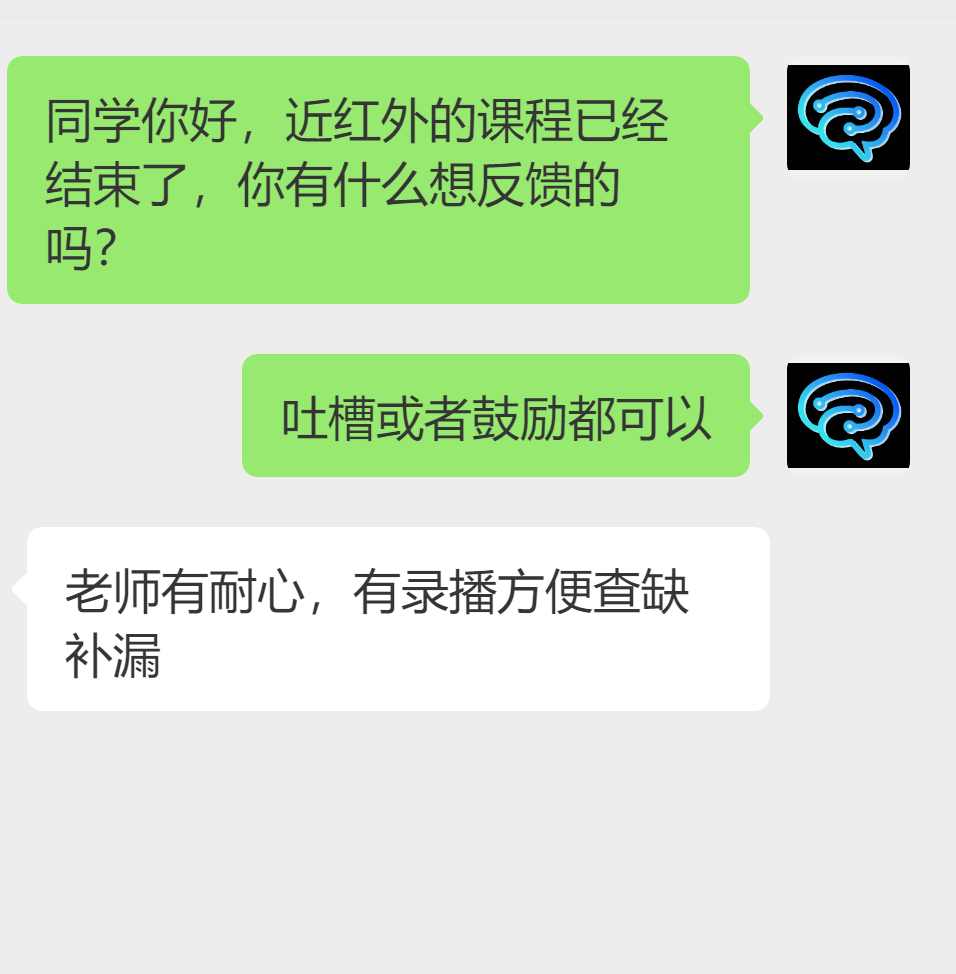
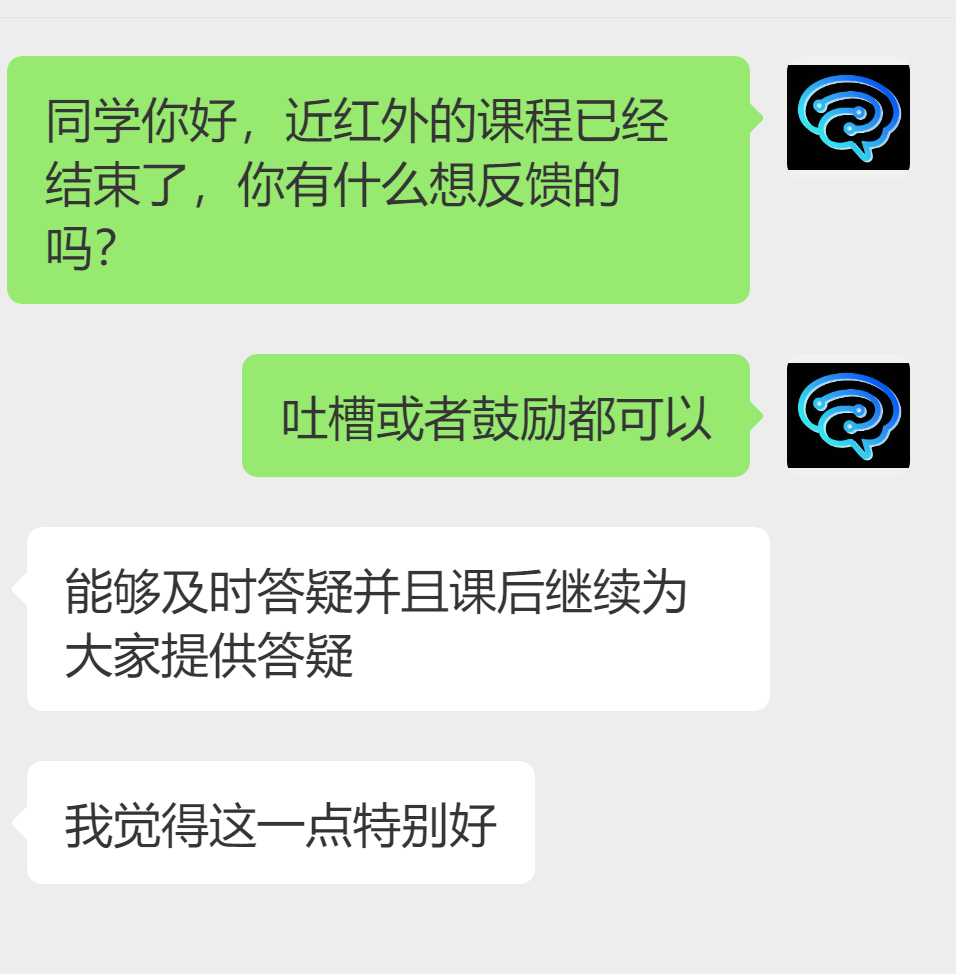
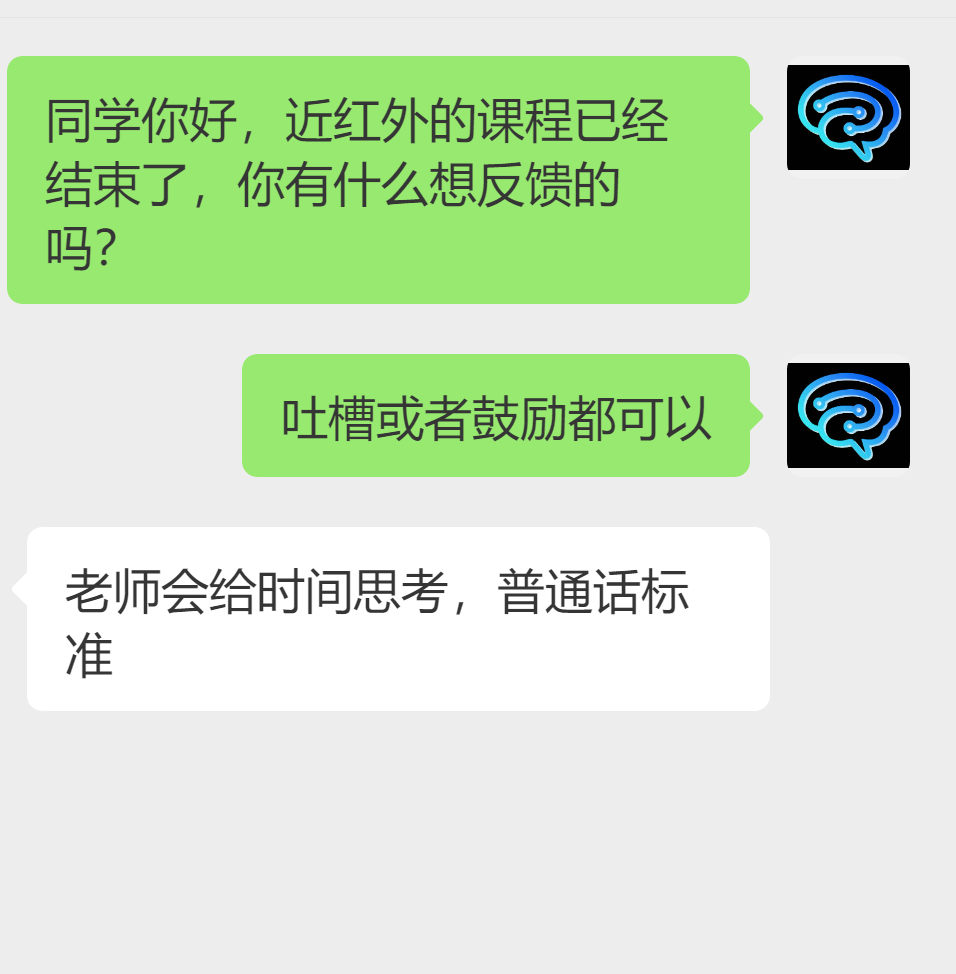
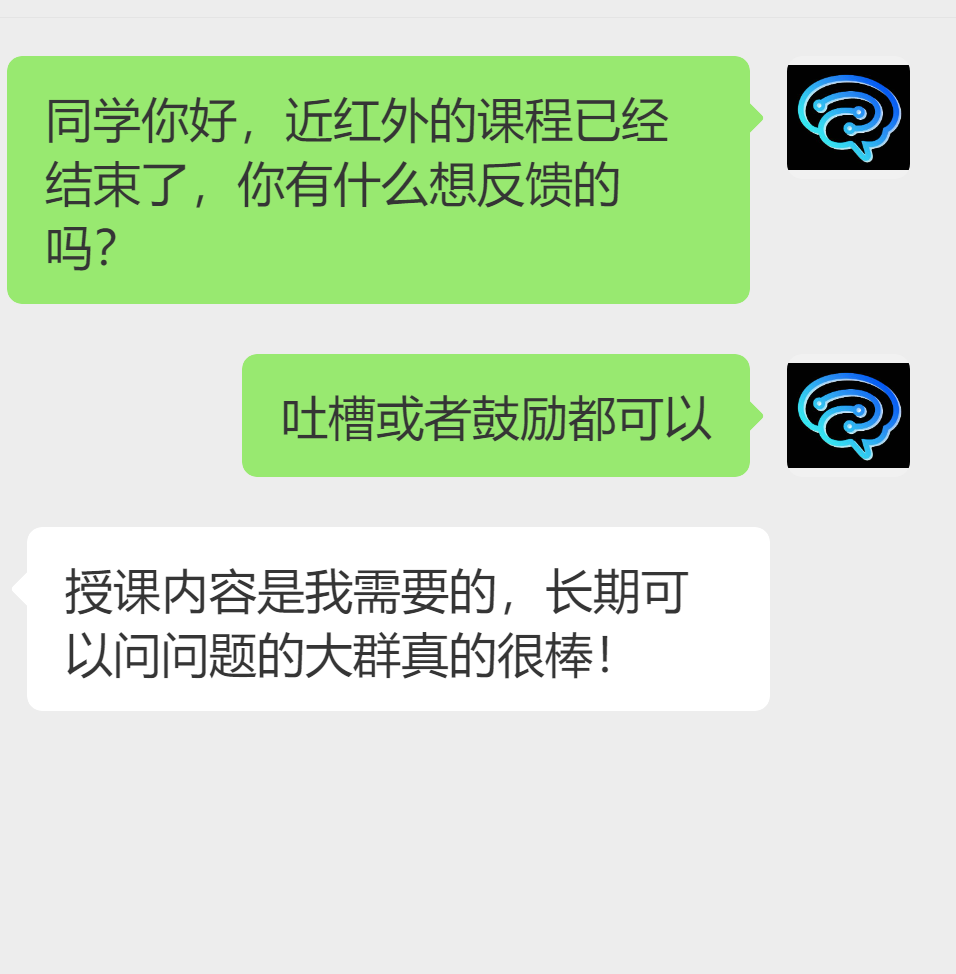
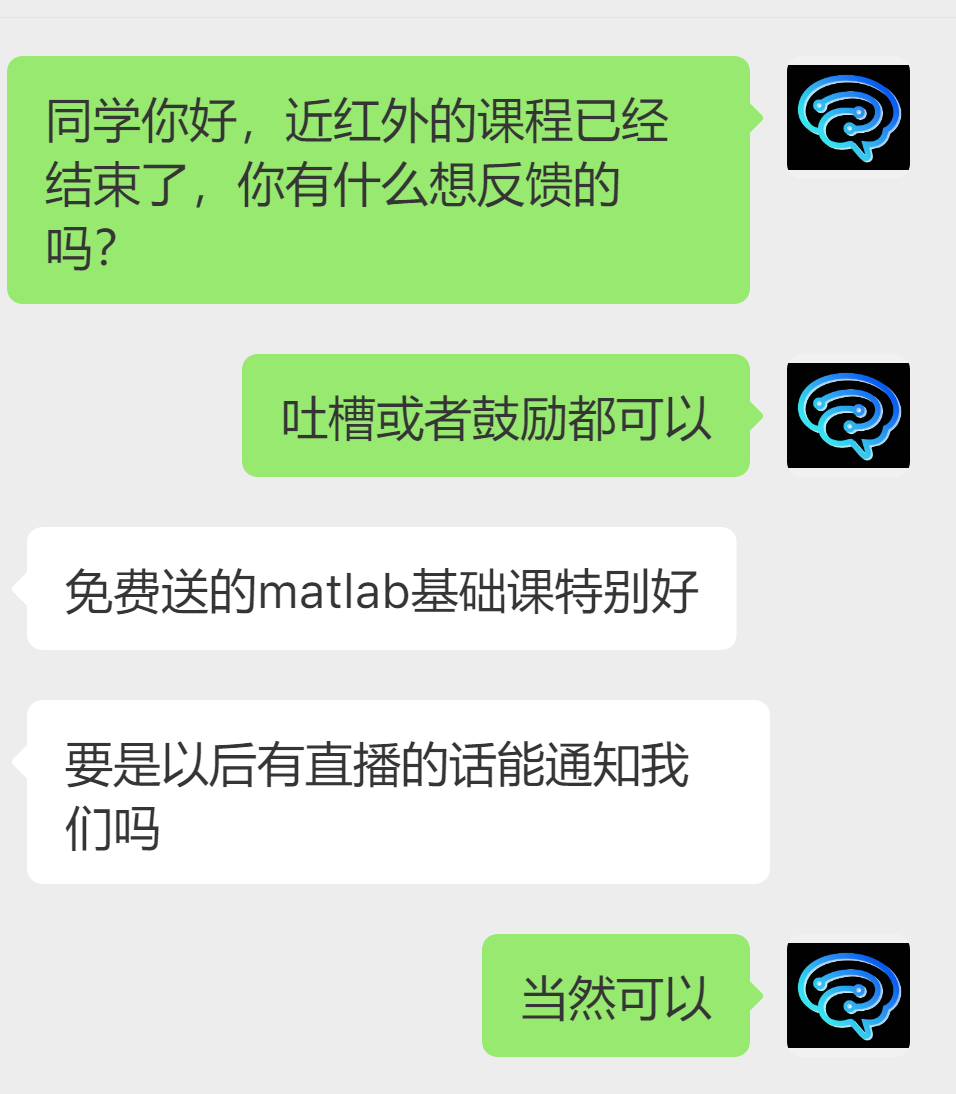
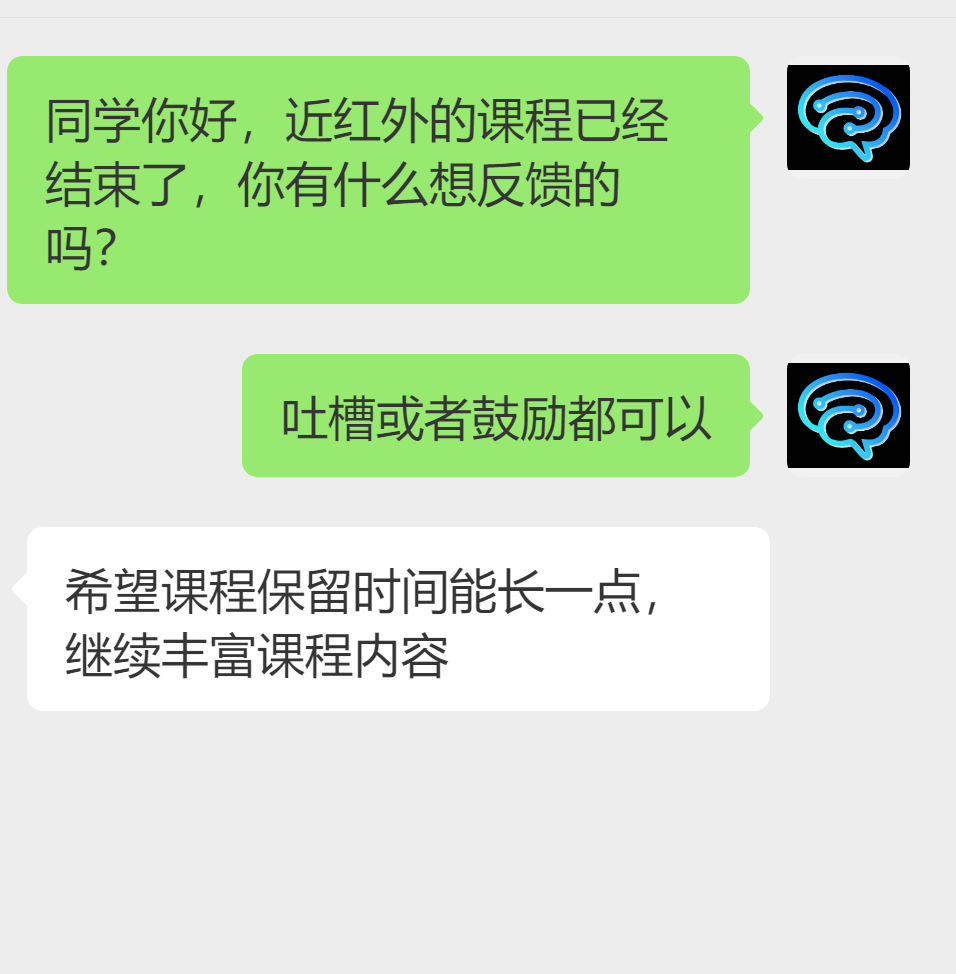
★ Past Reviews ★
Swipe left and right to see more





★ Detailed Course Schedule ★
|
Date |
Course Content |
Specific Content |
|
|
Ⅰ |
2.7 |
Basic principles and experimental design of fNIRS |
Introduction to fNIRS imaging principles and technical characteristics Block and Event experimental design and precautions |
|
2.8 |
Basics of MATLAB |
Introduction to MATLAB interface Introduction to MATLAB data structures Basic commands, commonly used functions, etc. MATLAB control flow: conditional statements, loops |
|
|
Ⅱ |
2.10 |
Introduction to near-infrared data formats and data analysis based on Homer |
Introduction to general data processing steps for NIRS Structure and meaning of Homer data Data processing through the GUI of Homer software Motion artifact correction methods (spline interpolation, PCA, CBSI) |
|
Extraction of blood oxygen response curves |
Extraction of blood oxygen response curves based on Homer Writing MATLAB scripts to extract blood oxygen response curves And performing statistical analysis based on blood oxygen concentration |
||
|
Ⅲ |
2.11 |
NIRS_SPM (Upper) |
Convert data to a format that NIRS_SPM can process Channel localization |
|
NIRS_SPM (Middle) |
Step-by-step processing through the GUI (including data conversion, selecting parameters needed for GLM, filtering, detrending, parameter estimation, etc.) Writing batch processing scripts through script files |
||
|
2.13 |
NIRS_SPM (Lower) |
Extraction of beta Data result presentation and interpretation |
|
|
Ⅳ |
2.14 |
Theory and indicators of functional connectivity |
Common indicators of functional connectivity (corr, coh, plv) Calculation of functional connectivity indicators |
|
2.15 |
Statistical analysis of functional connectivity and analysis of complex brain networks |
Parametric tests, non-parametric tests Analysis of complex brain networks based on near-infrared (indicator system and actual calculations) |
|
|
Ⅴ |
2.17 |
Graph theory analysis of functional connectivity and introduction to analysis of inter-brain functional connectivity data |
Calculation of brain network graph theory attributes: global attributes, local attributes Statistical analysis of brain network graph theory attributes Introduction to near-infrared hyperscanning technology 3D visualization of functional connectivity indicators |
|
Operations for analysis of inter-brain functional connectivity data |
Individual operation of wavelet coherence analysis Batch operation of wavelet coherence analysis Granger causality analysis operation |
||
|
VI |
2.18 |
fNIRS-EEG Principles of data analysis |
Characteristics and analytical ideas of fNIRS-EEG data |
|
fNIRS-EEG Data analysis practical operation |
Practical operation of fNIRS-EEG data analysis using MATLAB code |
||
|
2.20 |
Live Q&A |
Q&A, summary, article interpretation |
|
|
VII |
2.21 |
NBS principles/practical operation |
NBS (Cluster-level correction for multiple comparisons) principles: NBS, FWE, FDR NBS result statistics (one-sample t-test, two-sample t-test, method analysis) and operation |
|
2.22 |
NBS_predict |
Principles of brain network-based prediction, machine learning principles Model establishment: data normalization, cross-validation, parameter optimization, feature selection, algorithm selection, result indicators. Practical operation of NBS-predict |
|
|
Ⅷ |
2.24 |
Dynamic causal DCM model |
Introduction to the principles of dynamic causal modeling (DCM) Introduction to DCM analysis steps |
|
DCM practical operation |
DCM practical operation: model construction, effective connectivity calculation, etc. Individual-level and group-level DCM operations and statistical analysis |
||
|
2.25 |
Live Q&A |
Q&A, summary, article interpretation |
★ Number of Participants ★
This course has a limited number of participants; please register quickly.
★ Training Fees ★
The training course 2800/person.
The organizer can provide invoices and formal course notifications for unit reimbursement.
Invoice items: can issue invoices for conference expenses, registration fees, testing fees, statistical analysis service fees, etc.
Key Point!

Cash Rebate Secret
Group Registration Discount For three or more participants from the same unit or school, each person can enjoy an additional rebate of 200
Another Key Point!
All participants who register for the 20th near-infrared training camp, share this post to their Moments (visible to everyone), can contact the teaching assistant to receive a free copy of the book “Near-Infrared Spectroscopy Brain Function Imaging”. After providing complete mailing information, it will be sent immediately.

★ Registration Method ★
(1) Invoice in advance, then public transfer;
(2) Scan the QR code in the lower left corner for consultation and purchase, and if needed later, an invoice can be issued.
 Scan to consult and register
Common Questions You May Encounter
Q:How long is the learning period after registration?
A:The course is valid forsix months, and can be watched repeatedly; it is recommended to complete the course learning as soon as possible to gain early benefits!
Q:Can I get a refund after registration?
A:After registration, refunds or class changes are not accepted. If you need a refund due to personal reasons, please apply for a refund at least one week before the class starts (tax fees apply); 80% of the tuition will be refunded if applied within one week before the class starts; refunds requested after the class starts require negotiation with the teaching assistant.
★ Instructor Profile ★
Dr. Chen, PhD, Master’s supervisor, graduated from the Psychology Department of Southwest University, a joint training doctoral student in the National Scholarship Fund’s high-level university program (Harvard University Neuropsychology Lab). Research interests include: 1) Effects of stress on cognition; 2) Emotion processing and regulation; 3) Processing of faces and texts, exploring the cognitive neural mechanisms of face and text processing through behavior and brain imaging techniques including fMRI. He has published multiple papers as the first author or co-first author in SSCI and SCI journals.
Dr. Jia Huibin, graduated in 2020 from Southeast University with a degree in Neuroinformation Engineering, currently a teacher at Henan University. His research focuses on clinical neuropsychological disease diagnosis based on multimodal brain imaging technology (EEG, fNIRS, fMRI). He has published over 20 academic papers in related academic journals, including more than ten SCI-indexed papers as the first author.
Engineer Zhou Yi.
★ Online Support Services ★
Providing free, lasting Q&A services for participants in the training, supporting cooperation, ensuring that participants can master data processing methods proficiently.
★ Note ★
Please bring your own laptop with Windows 64-bit system (recommended win10), i5 or above, 8G memory, and 50G free storage space; please try to avoid using Apple computers and computers with AMD processors.
Online Course Recommendations
1. Do not be absent
The online course is set up to save everyone from traveling to Changsha; please ensure your time and try not to miss classes! Do not miss classes! Do not miss classes! It’s important to say it three times; once you miss a class, you may fall behind in the course progress.
2. Learning Suggestions
1. Online courses have network requirements, adjust the network in advance to ensure smooth connectivity; if using a desktop computer, please prepare a headset in advance and adjust it.
2. The course is an online training by Mingchuang Technology; it is recommended to prepare two screens (for example, a computer connected to an external display/iPad used with the computer), one screen for watching the platform live, and the other for following the course operations.
3. Pre-set the course material placement path for easy following along during the online course.
4. Be attentive in class and avoid using phones or computers for unrelated tasks; this is a good time to enhance your self-discipline.
5. Before class starts, make necessary preparations, such as using the restroom and getting water during breaks, to ensure full concentration during the class.
6. Enter the live room on time, strictly follow the course progress and operations, and complete learning tasks as required.
7. If there are issues like lagging, no sound, or no video during the class, do not panic; try exiting and restarting.
Advanced Class on Multimodal Brain Network Data Processing (Spring Festival Training Camp: 2024.2.5~2.15)
EEG Machine Learning Training Camp (during winter break)