Yesterday, I came across a piece of news that left me with mixed feelings—Trump officially announced a 100% tariff on semiconductors, while TSMC also announced a $200 billion investment in the United States. Seeing this news, I truly felt a whirlwind of emotions.
01 The Tariff Hammer Swings Again
What does a 100% tariff mean? It means that a chip that originally cost $100 will now cost $200. Trump’s move is indeed ruthless, directly doubling the price.
To be honest, this isn’t the first time we’ve seen such a tactic. Back in the day, when Trump targeted ZTE and Huawei, it was the same playbook. First, there was a technology blockade, then tariff sanctions, and finally, forcing you to build factories and invest in the U.S.
But this time, the target is much larger and the appetite is bigger—it directly aims at the entire semiconductor industry. We must understand that semiconductors are the ‘grain’ of modern industry; whether it’s smartphones, computers, or cars, which one can do without chips?
02 TSMC’s ‘Passive Choice’
At the same time the tariff news broke, TSMC also announced a significant piece of news—they will invest $200 billion to build a factory in the U.S. Do you think this timing is a coincidence? I don’t believe it.
TSMC is the world’s largest chip foundry, producing chips for major clients like Apple, NVIDIA, and AMD. The U.S. market is vital for TSMC; they cannot afford to lose it.
What does a $200 billion investment mean? It is more than three times TSMC’s annual revenue; they are essentially betting their entire fortune. To secure the U.S. market, TSMC is truly going all in.
03 America’s Calculated Move
Trump’s strategy can be described as killing two birds with one stone. It not only strikes at competitors but also attracts advanced manufacturing to the U.S. With the swing of the tariff hammer, TSMC obediently runs to build factories in the U.S.
More importantly, this way, the U.S. can control the world’s most advanced chip manufacturing technology. Whoever wants the most advanced chips will have to look to the U.S. This is more powerful than just collecting tariffs.
However, it must be said that while the U.S. has a beautiful vision, the actual implementation is not that simple. TSMC’s industrial chain in Taiwan has been built over decades, with skilled workers and supplier support; these cannot be replicated in a short time.
04 Where is China’s Opportunity?
At this point, some may ask, is this good or bad for China? I believe that crisis often contains opportunities.
With TSMC shifting its focus to the U.S., its business in mainland China will inevitably be affected. This just gives domestic manufacturers like SMIC and Huahong Semiconductor space to grow. Although there is still a technological gap, someone has to fill the market share, right?
More importantly, this incident once again proves a principle—core technology must be in our own hands; otherwise, we will always be at the mercy of others. China’s independent research and development in the semiconductor field has become even more urgent.
05 The Era of Industrial Chain Reconstruction
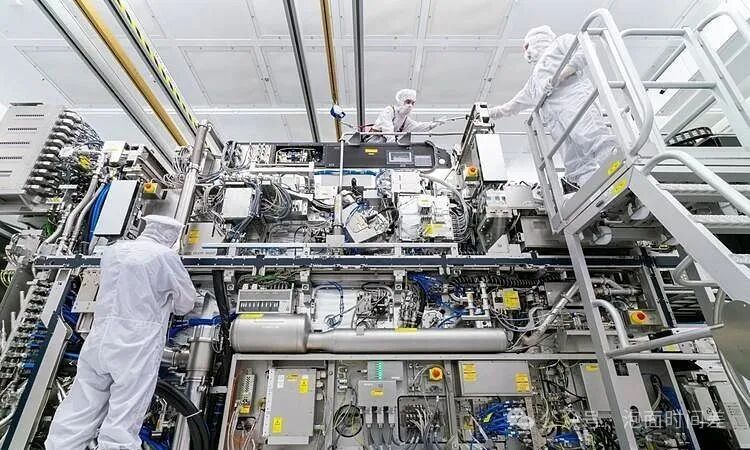
This large-scale investment by TSMC actually marks the reconstruction of the global semiconductor industrial chain. Previously, production was based on global division of labor, where production occurred where costs were low. Now, it has become politically driven, where production occurs where safety is prioritized.
This change will certainly increase costs for the entire industry. What used to be solved by a single industrial chain now has to be divided into two or even three chains; can efficiency not decline?
However, in the long run, this may also force countries to pay more attention to independent innovation. The U.S. will have its industrial chain, China will have its, and Europe will have its; competition may become more intense, and technological progress may accelerate.
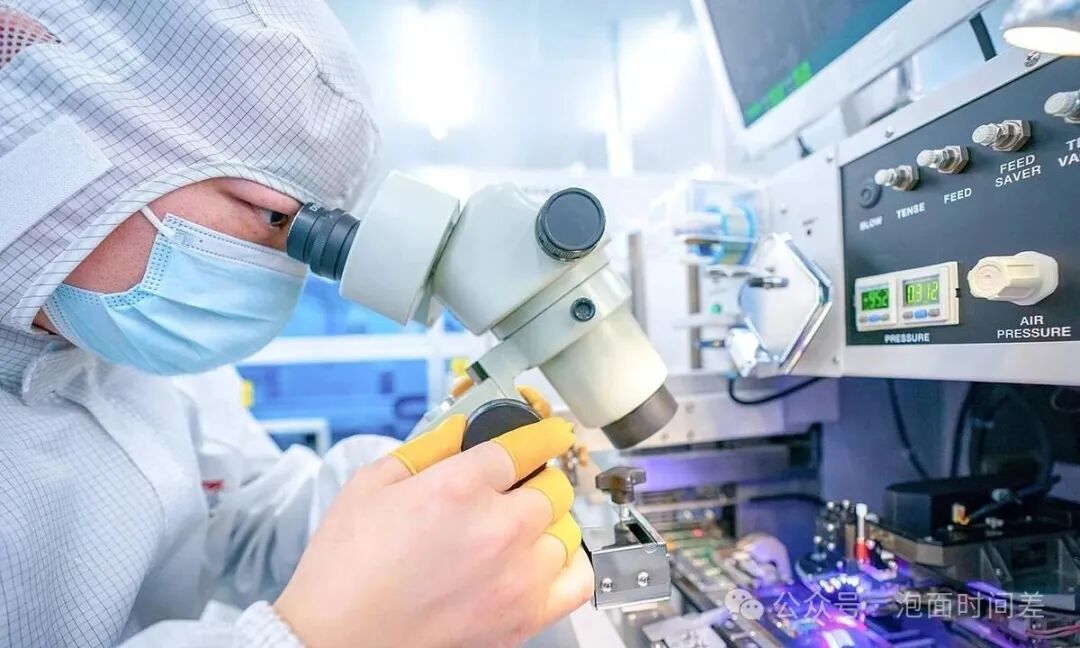
After seeing TSMC’s $200 billion investment, my biggest feeling is—the world has truly changed; technological competition is no longer purely market competition but a contest of national strength.
For ordinary people, the prices of smartphones and computers may rise in the short term, but in the long run, this competition will also drive technological progress, ultimately benefiting consumers.
That’s all for today’s topic. What do you think about TSMC’s move? Feel free to leave comments for discussion!