The humanoid robot PCB facilitates communication between sensors, actuators, and artificial intelligence processors, which is a key factor in building advanced robots. As robotics technology continues to evolve, high-density, flexible, and thermally efficient circuit boards play a crucial role.
This article will introduce the prerequisites for designing humanoid circuit boards and advanced manufacturing technologies.
Highlights:
When designing printed circuit boards for humanoid robots:
1. Choose high-frequency flexible materials, such as DuPont Pyralux TK and Panasonic FELIOS R-F775.
2. Use flexible printed circuits (FPC) to integrate cameras, sensors, and AI processors for facial recognition, environmental awareness, and real-time decision-making.
3. Employ rigid-flex PCBs to provide structural support and flexibility, aiding in smooth movement, balance maintenance, and terrain adaptation.
4. Integrate microcontrollers/microprocessors on the main circuit board to process sensor data, run AI algorithms, and control actuators in real-time.
Insights into the Humanoid Robot PCB Market
Driven by advancements in artificial intelligence, robotics, and microelectronics, the humanoid robot PCB market is rapidly growing. Here are key insights regarding major manufacturers, market size, and growth forecasts.
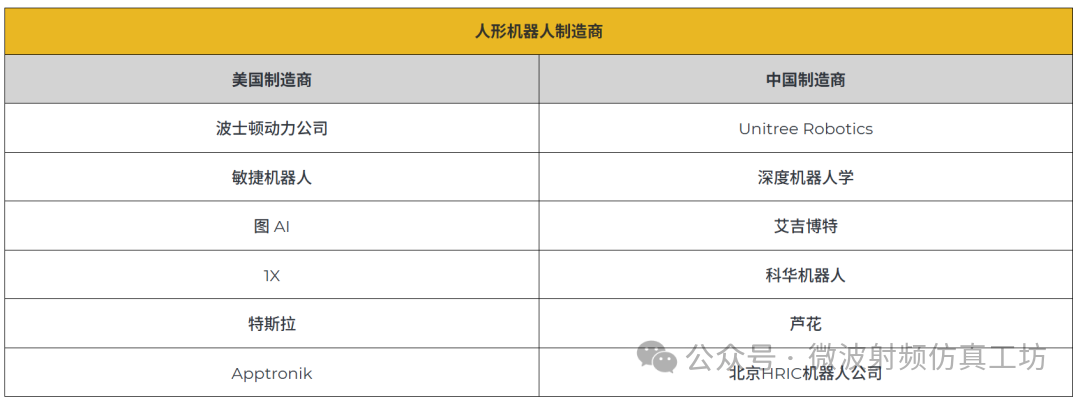
Humanoid Robot Manufacturers
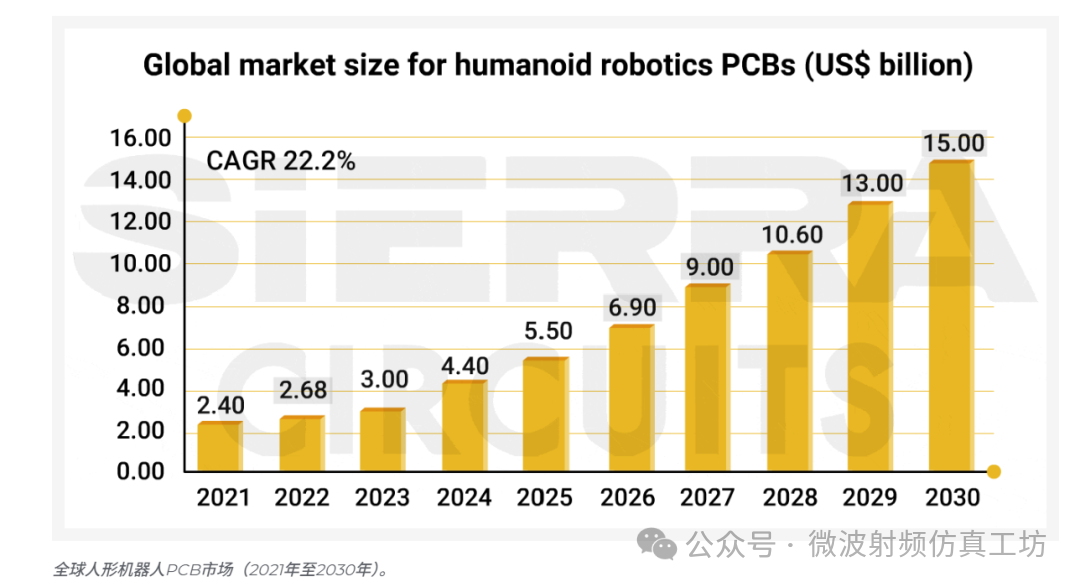
Global Humanoid Robot PCB Market Size
The global humanoid robot PCB market is valued at $4.4 billion in 2024 and is expected to reach $15 billion by 2030, with a compound annual growth rate (CAGR) of 22.2% from 2025 to 2030.
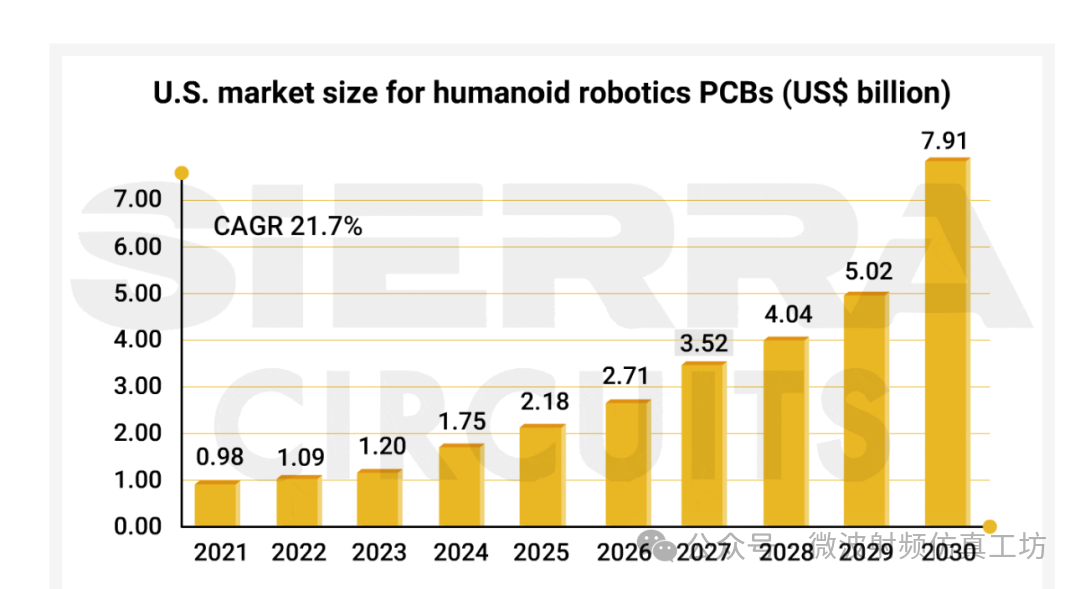
US Humanoid Robot PCB Market Size
The US humanoid robot PCB market is valued at $1.75 billion in 2024 and is expected to reach $7.91 billion by 2030. The market is projected to grow at a CAGR of 21.7% from 2024 to 2030.
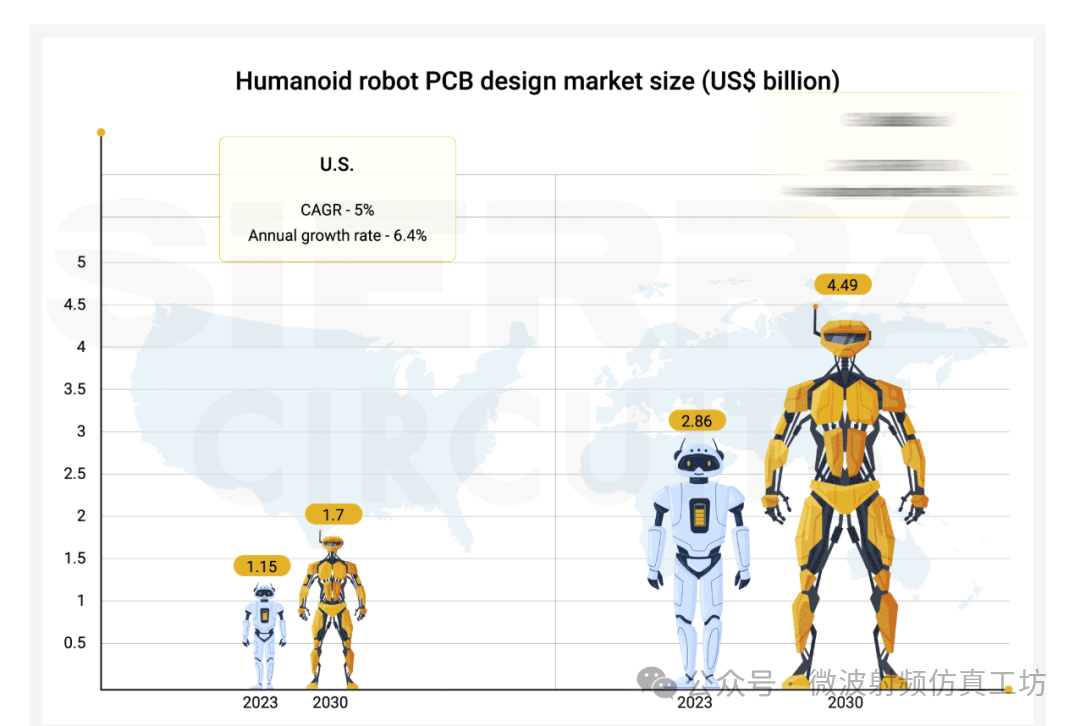
Humanoid Robot PCB Design Market Size
The US humanoid robot PCB design market size is $1.15 billion in 2023, expected to reach $1.7 billion by 2030, with a CAGR of 5%. The global market size in 2023 is $2.86 billion, projected to grow to $4.49 billion by 2030, with a CAGR of 5.8%.
The global humanoid robot PCB design market is expected to see significant growth, with Europe leading the market at a CAGR of 6.9% and an annual growth rate of 7.3%. Innovations in high-density interconnect (HDI) PCBs, flexible circuits, and embedded components are key factors driving this demand growth.
Source: Market research analysis report by Sierra Circuits.
Key Industries Utilizing Humanoid Robots
Driven by advancements in artificial intelligence, automation, and IoT technologies, the humanoid robot market is experiencing growth across multiple sectors.
1. Military and Defense: They enhance safety and efficiency by assisting in search and rescue missions and monitoring in hazardous areas.
2. Manufacturing and Logistics: They improve workforce flexibility by performing dangerous or repetitive tasks and ensure quality control through AI-driven defect detection.
3. Home Assistance and Personal Use: There is a growing demand from consumers for robots capable of handling household chores and providing security monitoring.
These advancements highlight the increasing integration of robotics technology into everyday life.
Disclaimer:
This account maintains neutrality regarding all statements and views in original and translated articles. The articles are provided solely for readers’ learning and communication. Copyright for articles, images, etc., belongs to the original authors. If there is any infringement, please contact for removal. For submissions/promotions, please add WeChat: 135 4592 2367.