Mr. Bai Mei’s investigation in Northern Henan traversed from plains to hills, ultimately reaching the deep, layered mountains of the Taihang range. Located at the northwestern tip of Henan Province, Shexian fully embodies the characteristics of a “mountain”. The records in the gazetteer describe Shexian as a typical mountainous county surrounded by mountains, with the Qingzhang River as its lifeblood. It does not rely on plain agriculture and is far from the clamor of industry and mining; its vitality stems entirely from mountain products and interprovincial trade, playing a silent yet resilient role as a “transporter” in the regional landscape of Northern Henan.
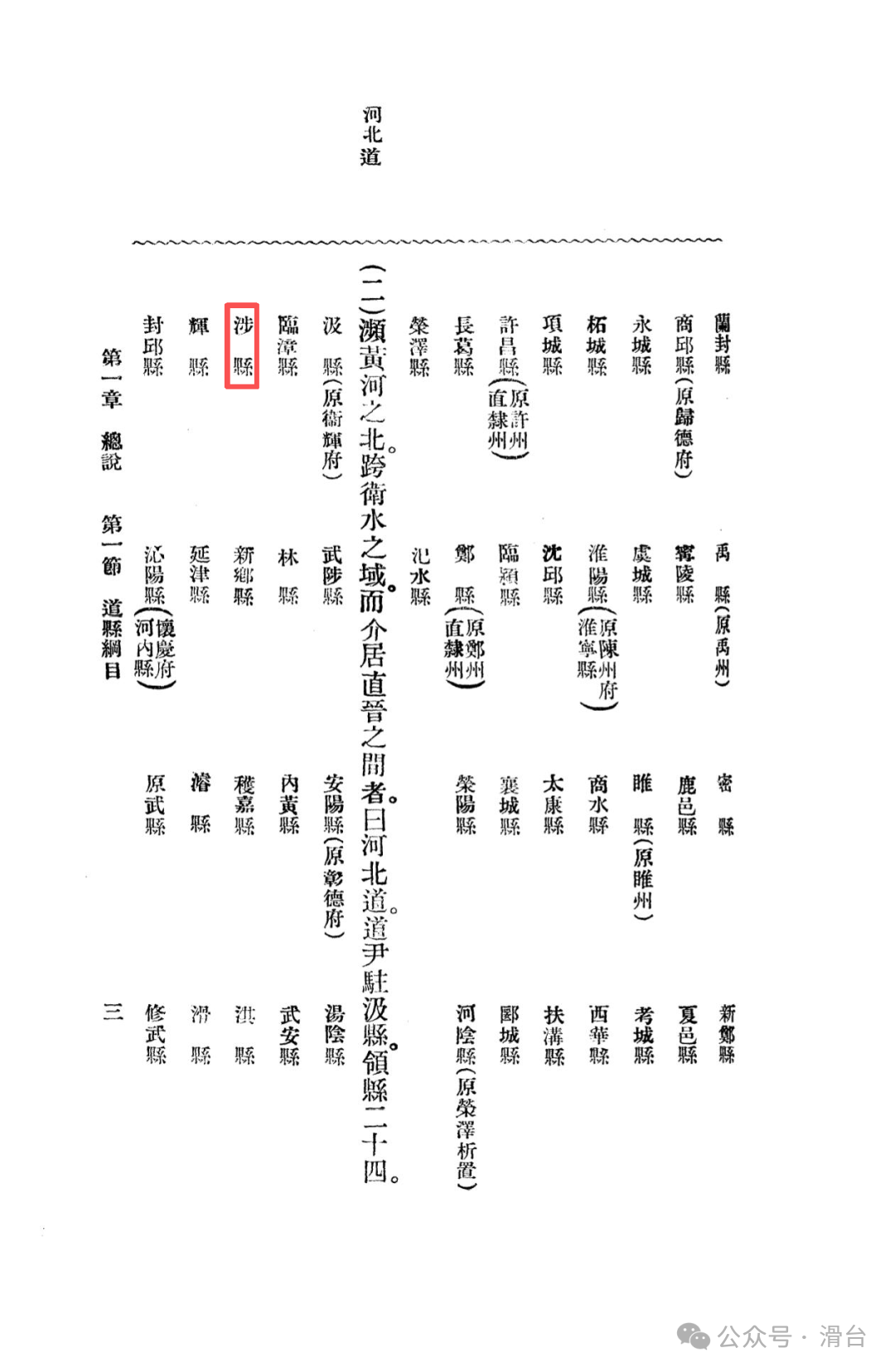
Administrative Evolution: Changes in Jurisdiction at the Intersection of Three Provinces
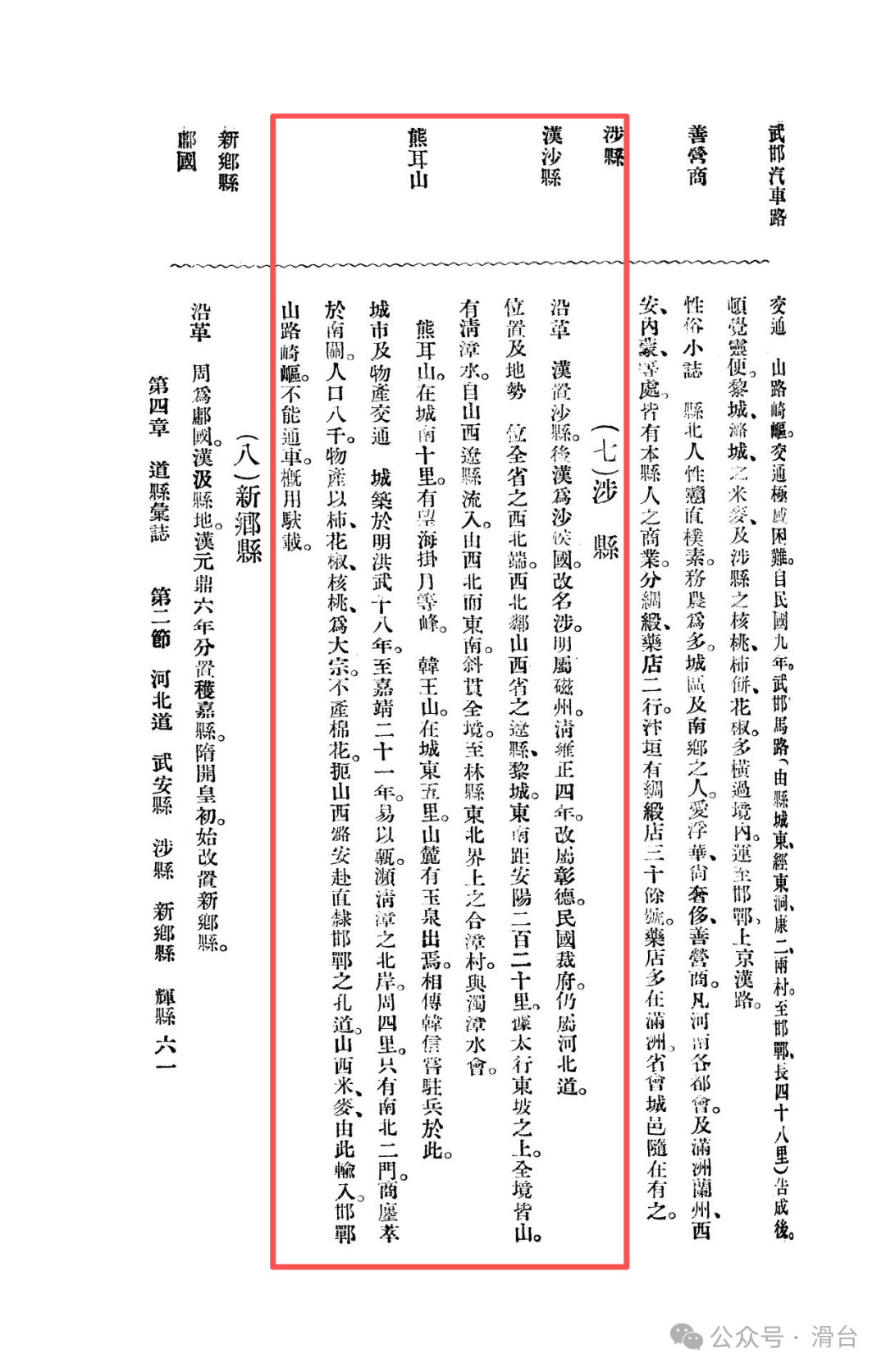
The establishment of Shexian can be traced back to the Han Dynasty, initially named Shaxian, later becoming the Shahou Kingdom during the Later Han, and then renamed to “She”. The changes in its administrative divisions also reflect the characteristics of its border area: during the Ming Dynasty, it was under the jurisdiction of Zhili Cizhou, and it was not until the fourth year of the Qing Yongzheng period (1726) that it was transferred to the Zhengde Prefecture of Henan. After the Republic of China abolished the prefecture, it still belonged to the Hebei Road. This jurisdictional line from Zhili to Henan outlines Shexian’s unique geographical position at the intersection of Henan, Shanxi, and Zhili provinces.
Location and Topography: The “Mountain Peak County” of Northern Henan
The gazetteer begins by stating its “location at the northwestern tip of the province, 220 miles southeast of Anyang”. This distance indicates its remoteness from the core area of Northern Henan. The topography is described as “situated on the eastern slope of the Taihang Mountains, with the entire territory being mountainous”; these eight words define the basic appearance of Shexian. The Xionge Mountain and Hanwang Mountain ranges form its geographical framework, with the Qingzhang River flowing in from Liao County in Shanxi, diagonally traversing the entire county, becoming the lifeline of this mountainous area, ultimately merging with the Zhuozhang River in Lin County.
Urban Layout and Local Products: A Simple Mountain City with Unique Products
In such a natural environment, the county seat of Shexian presents an extreme simplicity and pragmatism:
Mountain City Layout:The county seat was built in the early Ming Dynasty, adjacent to the northern bank of the Qingzhang River, with a circumference of only four miles, making it one of the smallest counties in Northern Henan. Notably, it has only two city gates, one in the north and one in the south, which is both a defensive necessity and reflects the highly simplified transportation routes. Commercial activities are concentrated in the southern gate, with a population of about eight thousand, and all layouts are built according to the mountain terrain, demonstrating a strong adaptability.
Unique Local Products:The structure of local products is completely different from that of the plains, dominated by persimmons, Sichuan pepper, and walnuts, all typical mountain economic crops. The gazetteer specifically notes that “cotton is not produced here”; this seemingly mundane record distinctly separates it from the main cotton-producing areas of Northern Henan, establishing its pure mountain economic attributes.
Transportation and Function: Rugged Paths and Interprovincial Trade
The value of Shexian lies not in its internal abundance of products, but in its unique position as a transportation hub:
Jin-Ji Kongdao:It “controls the passage from Shanxi’s Luan’an to Zhili’s Handan”; this ancient trade route that traverses the Taihang Mountains endows Shexian with an irreplaceable bridging role.
Pack Animal Trade:Due to the “rugged mountain roads, which cannot accommodate vehicles”, all goods are transported “by pack animals”. Mule and donkey teams have become the primary means of transportation here, forming a starkly different transportation landscape compared to the Wei River shipping and the Jinghan Railway.
Economic Role:Its core function is to transport “rice and wheat from Shanxi into Handan”. Shexian itself acts like a sturdy shoulder pole, one end connecting to Shanxi’s granaries and the other leading to the stations of the Jinghan Railway.
Shexian can be regarded as the “ridge” and “gateway” of Northern Henan. It is the natural extension and endpoint of the entire regional geographical unit to the west and north. Its value lies in its “passage” rather than “production”, reflected in its strategic position connecting the Shanxi Plateau and the North China Plain. Every Sichuan pepper and every walnut here carries the breath of the Taihang Mountains; every pack animal transporting Shanxi’s rice and wheat bears witness to the livelihood exchanges across provincial borders.
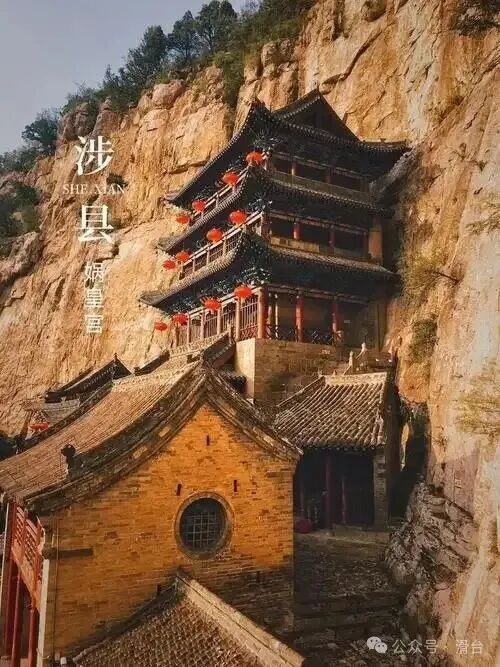
Shexian, with its typical mountainous landscape and simple transportation function, tells us that a complete geographical region requires not only a prosperous core area but also distinctive and functionally specific border nodes like itself.
Previous Readings:
Memories of Northern Henan in the Republic of China: The Case of Wuan County During the Beiyang Period
Memories of Northern Henan in the Republic of China: The Case of Neihuang County During the Beiyang Period
Memories of Northern Henan in the Republic of China: The Case of Lin County During the Beiyang Period
Memories of Northern Henan in the Republic of China: The Case of Wuzhi County (Qing Dynasty Hebei Road Station)
Memories of Northern Henan in the Republic of China: The Case of Hebei Road and Jixian (Former Weihu Prefecture)
Memories of Northern Henan in the Republic of China: The Case of Anyang County and Tangyin Historical Sites
Memories of Northern Henan in the Republic of China: The Case of Xinxiang County During the Beiyang Period
Memories of Northern Henan in the Republic of China: The Case of Yanjin County During the Beiyang Period
Memories of Northern Henan in the Republic of China: The Case of Junxian County in Henan
Memories of Northern Henan in the Republic of China: The Case of Huaxian and Daokou Town During the Beiyang Period
#Hebei Shexian #Handan Shexian #Northern Henan Memories #Hebei Tourism Culture #Wohuang Palace #Things You Didn’t Know About Shexian