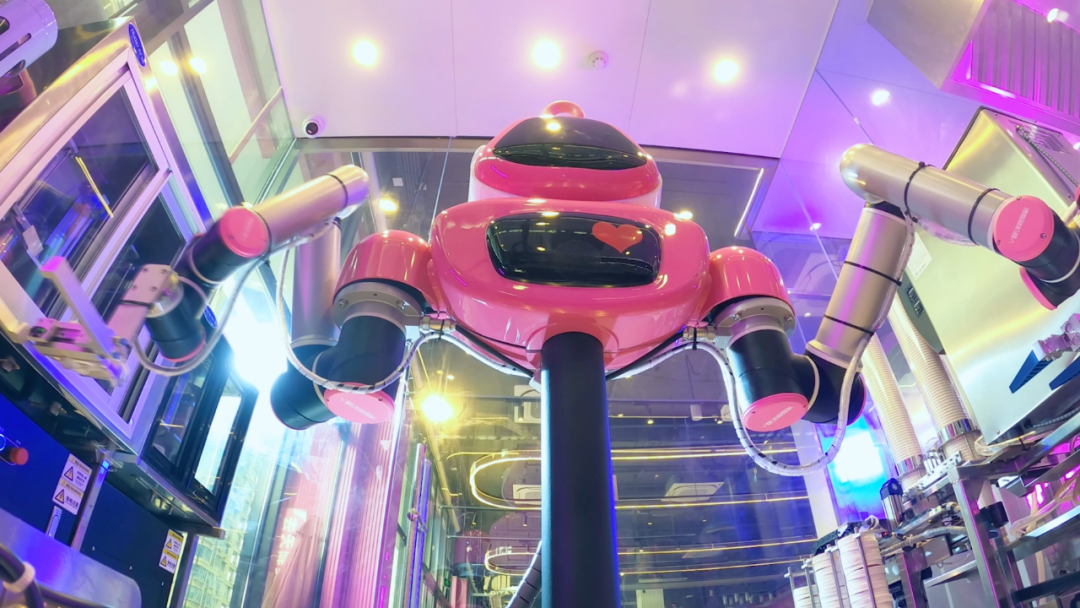
Today, Country Garden is no longer just a real estate company; it is rapidly evolving into a technology conglomerate, racing through an era of rapid growth.

From welcoming guests at the entrance, to cooking a delicious dish, and then delivering the meal… all of this can be accomplished by professional robots. Scenes that once appeared in science fiction movies are now becoming a reality.
On June 22, the FOODOM Kingdom of Culinary Delights, created by Country Garden’s Qianxi Catering Robot Group, officially opened. This is a restaurant complex that integrates Chinese cuisine, hot pot, and fast food.
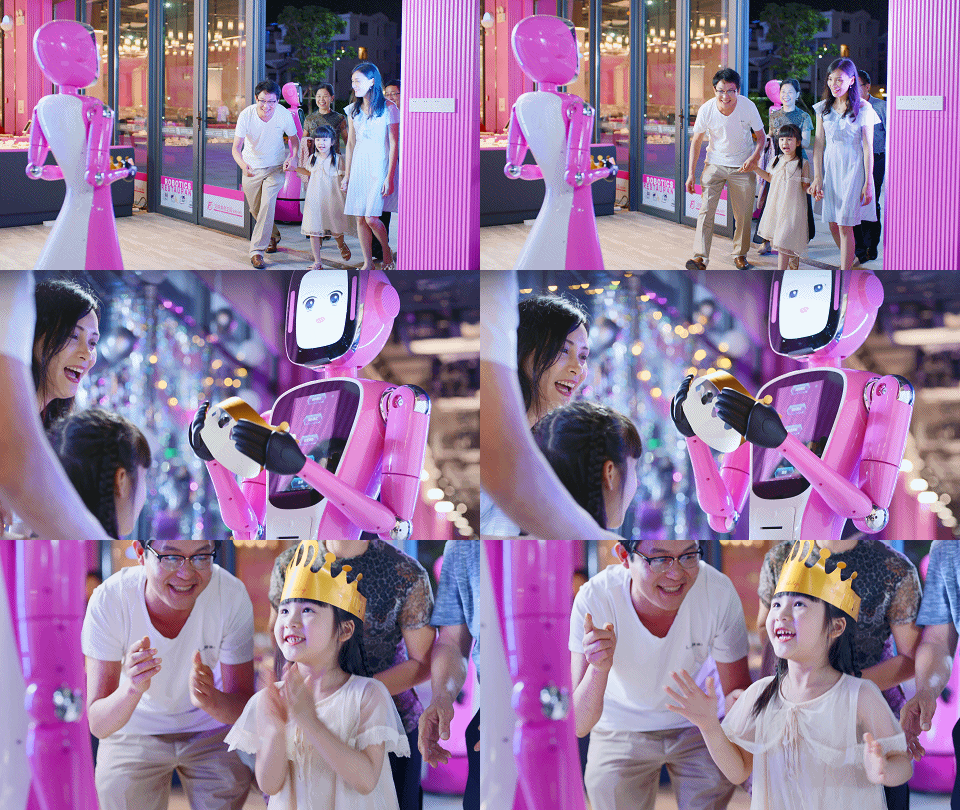
FOODOM Kingdom of Culinary Delights’ welcoming robot
The special feature of this restaurant is that most of the food is prepared by robot “chefs,” and services such as front desk reception and ground delivery are all handled by robots.
On-site, behind the large floor-to-ceiling glass curtain wall, 18 frying pan robots are lined up neatly. After guests scan a QR code to place an order, the robot’s mechanical arm quickly starts cooking, and then an AGV delivery cart smoothly travels along an overhead track, soon delivering the dishes to the guests’ tables.
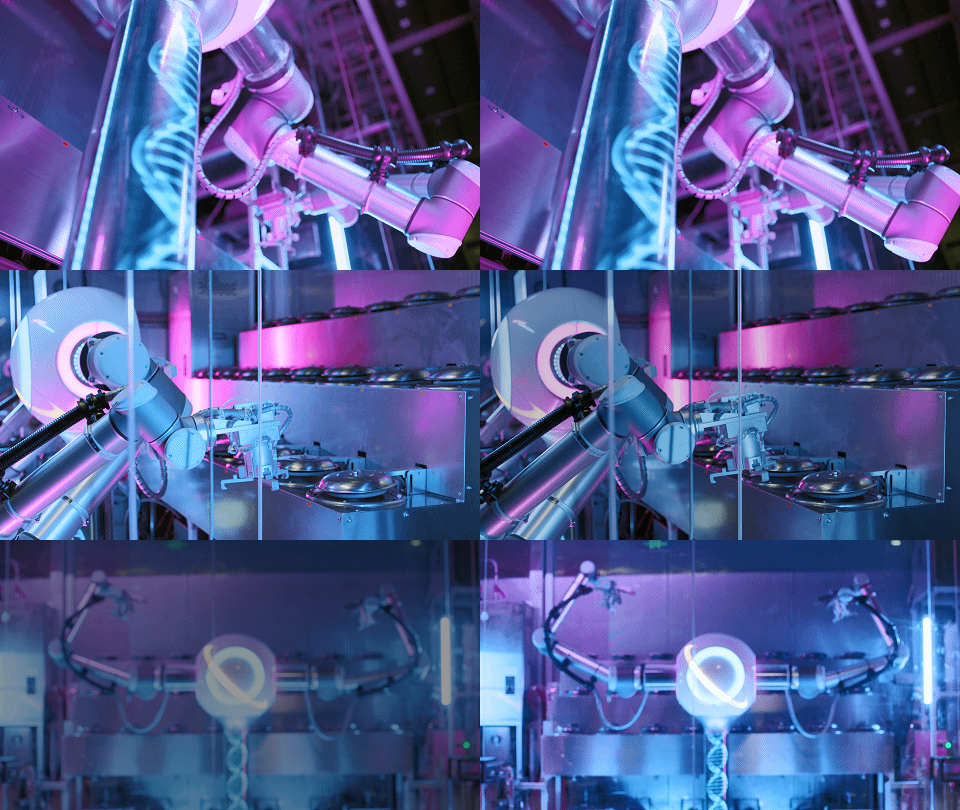
FOODOM Kingdom of Culinary Delights’ clay pot rice robot
Frying pan robots, clay pot rice robots, noodle robots, breakfast robots, coffee robots… over 20 types of core technology self-developed catering robot equipment are “on duty,” capable of serving nearly 200 different dishes to 600 people simultaneously, achieving meal service in as fast as 20 seconds.
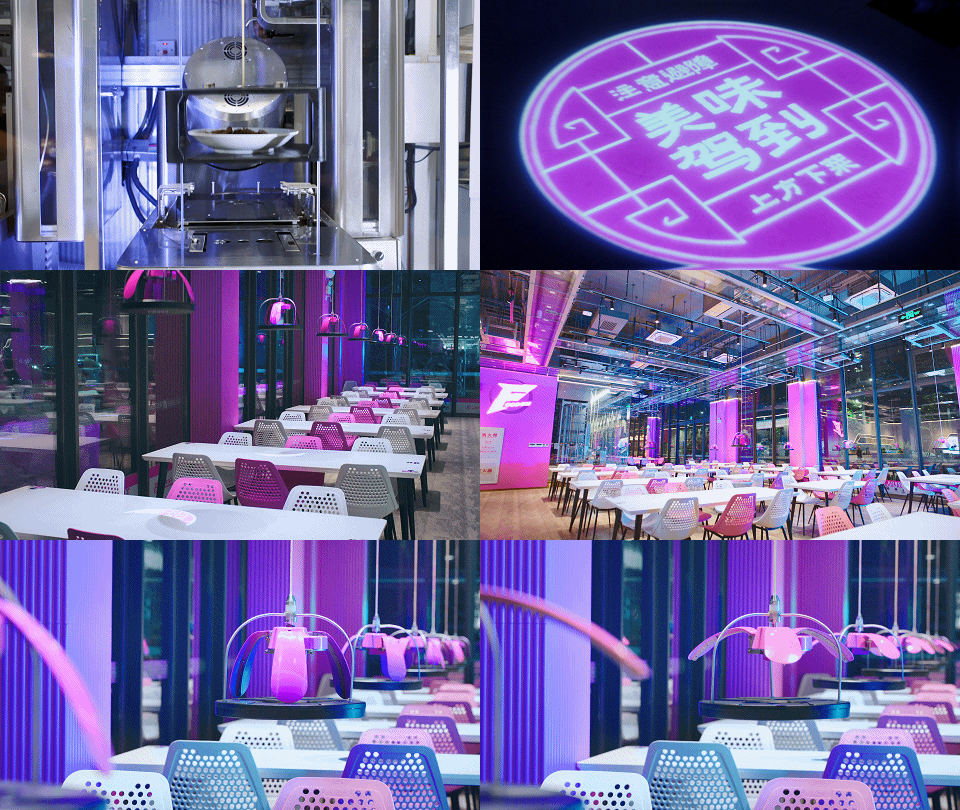
FOODOM Kingdom of Culinary Delights’ Chinese restaurant overhead track
FOODOM Kingdom of Culinary Delights offers a futuristic dining experience that is impressive. It is currently the most technologically advanced and complete robot restaurant complex in China and even globally.

Post-Pandemic Era
The Catering Robot Industry Welcomes a Golden Development Period
The development of robot hardware and artificial intelligence means that they will be able to perform more and more tasks that humans currently execute. In production and service sectors, robots will be more stable, efficient, and intelligent than humans, with increasingly obvious advantages.
Especially in the labor-intensive catering industry, as labor costs rise, management efficiency declines, and profit margins shrink, the future of the catering industry is bound to be automated, whether in the front or the kitchen.
Analysts also point out that catering robots will replace many workers, and the outbreak of COVID-19 is accelerating this process, bringing unprecedented changes to consumer preferences and creating new opportunities for automation in the catering industry.
“People prefer to go to places with fewer workers and more machines, as this reduces overall risk.” Noted technology writer Martin Ford believes that using robots also has some marketing advantages in the post-pandemic period.
According to data from the National Bureau of Statistics in 2019, China’s catering industry revenue reached 4.6721 trillion yuan, a 9.4% increase from the previous year, and it is expected that this year’s catering market size will exceed 5 trillion yuan.
The 5 trillion yuan+ catering market is undoubtedly an important force for domestic demand potential, and for the industry to achieve intelligent transformation and high-quality development, it cannot be separated from technological empowerment.
The emergence of FOODOM Kingdom of Culinary Delights points the way for the future of the catering industry. Its efficiency is higher, its output is more standardized, it operates around the clock, and the long-term cost dilution will be lower, effectively reducing human interaction, with obvious advantages.
However, compared to the high standardization of Western cuisine, the processes of Chinese cuisine are complex. Traditional Chinese dishes often suffer from quality instability and significant flavor differences due to variations in chefs’ skills. Achieving delicious and appealing dishes presents a significant challenge for robots.
Qianxi Group’s approach is to have culinary masters train robot “apprentices,” inputting data on cooking techniques, ingredients, stove actions, heat control, and cooking processes into the robot’s computer, conducting hundreds of experiments.
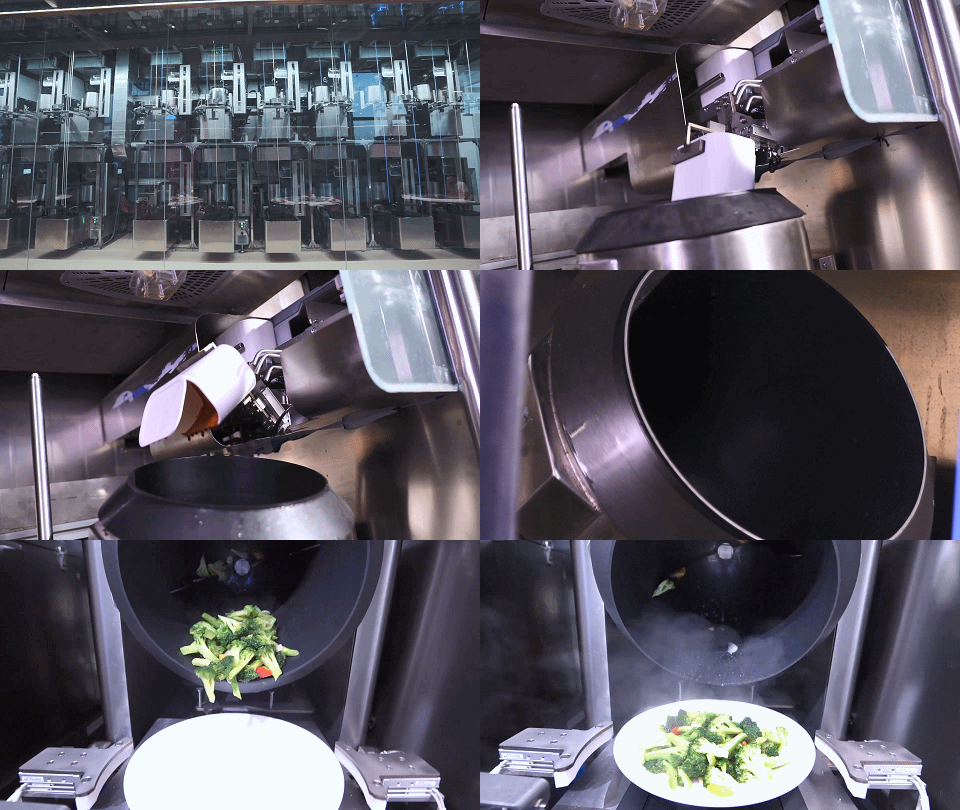
FOODOM Kingdom of Culinary Delights’ frying pan robot
When frying, the temperature, frying time, and the number of times the frying pan is flipped… these details require thousands of repeated attempts. Ultimately, chefs extract the best dishes from the hundreds of dishes made by the robots, allowing the robot “apprentices” to accurately memorize and consistently reproduce the authentic skills of the chefs, achieving automatic cooking of dishes.

FOODOM Kingdom of Culinary Delights’ robot chef’s delicious clay pot rice with pork neck
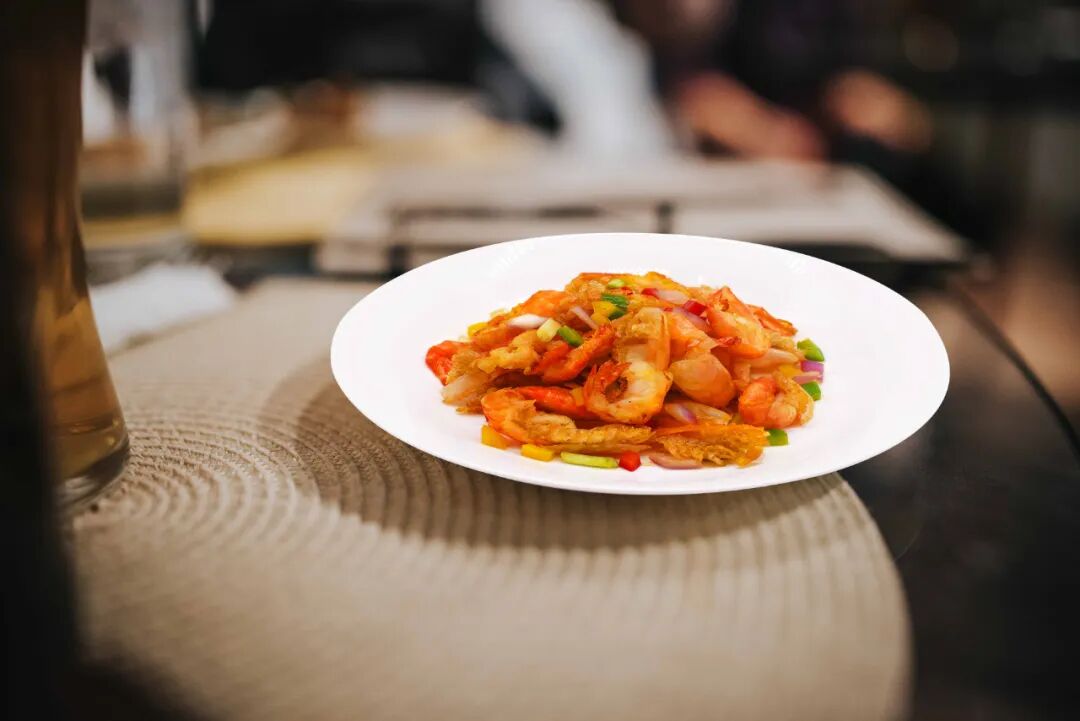
FOODOM Kingdom of Culinary Delights’ robot chef’s signature garlic shrimp
Lin Chao, a director of the World Chinese Cuisine Exchange Association and a Chinese culinary master, commented: “Through standardized computers, robots can control each flavor better than humans.”
Currently, Qianxi Group has completed the transformation of cooking processes for over 150 Chinese dishes, with 7 varieties of clay pot rice and over 30 different versions of cooking techniques.
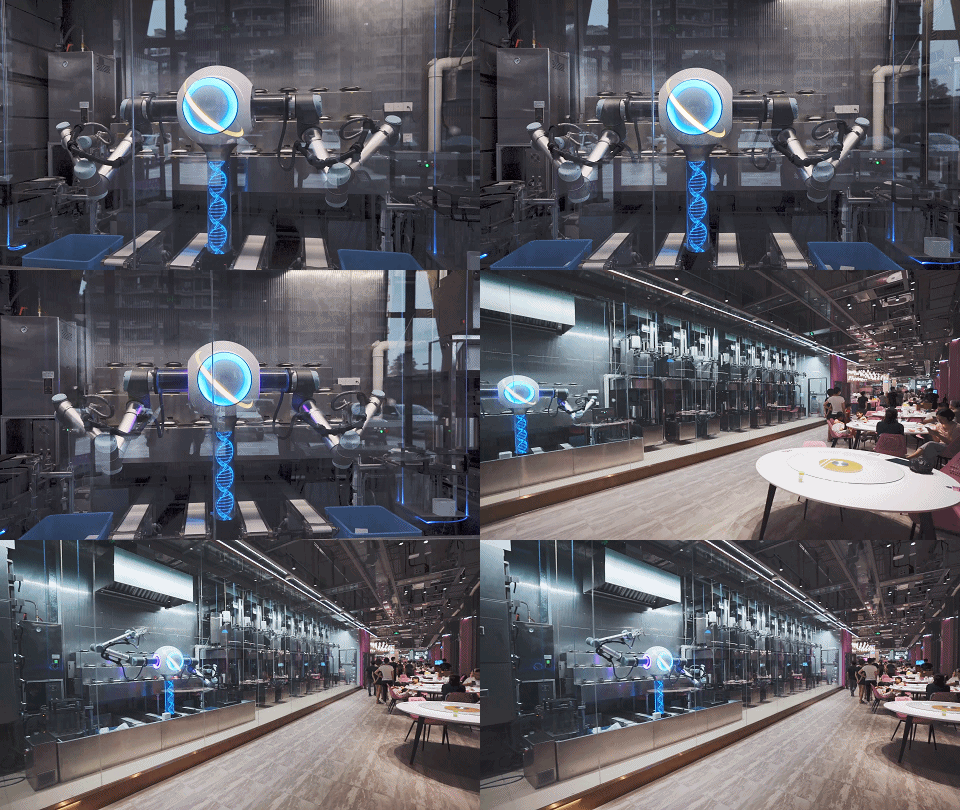
FOODOM Kingdom of Culinary Delights’ Chinese clay pot rice robot
Since the opening of the “world’s first robot restaurant” Spyce in the United States in 2018, to the opening of today’s globally advanced and complete robot restaurant complex, the technology iteration is remarkable, allowing for everything from salads to hot pot, Chinese cuisine, and fast food.
Academician Tan Jianrong of the Chinese Academy of Engineering believes that the widespread application and promotion of catering robots, including Qianxi robots, will greatly promote and inspire the development of China’s robot industry and set a good example for the application of robots in other industries.
Many catering enterprises have previously attempted to apply emerging technologies such as artificial intelligence to traditional catering scenarios. Robot restaurants, unmanned restaurants, and smart restaurants have become buzzwords in the catering industry in recent years, marking the onset of a technological wave in smart catering.
Restaurant robots are a product of the development of the times and the needs of the catering industry. In the post-pandemic period, robot restaurants reduce human contact in multiple aspects, aligning with current demands and representing future trends, potentially ushering in a golden development period for the industry.

From Real Estate to Catering Robots
Country Garden’s Technological Leap
The opening of this robot restaurant complex is seen as an important milestone for Country Garden’s entry into the high-tech field. Some may wonder why such a high-tech endeavor is being driven and executed by a real estate company.
Regarding this bold cross-industry move into high technology, Country Garden’s senior management has explained internally that technology is the original driving force behind human social progress, and Country Garden aims to become a high-tech enterprise, contributing to China’s intelligent manufacturing and creation.
To this end, as early as the beginning of 2019, Country Garden proposed a new positioning as a “high-tech comprehensive enterprise that creates beautiful life products for the world,” laying out three main businesses: real estate, modern agriculture, and robots, embarking on a new path of diversified layout and collaborative development.
In May of the same year, Country Garden established the Qianxi Robot Catering Group, and in just over a year, Qianxi Group has rapidly advanced from research and development, system construction to overall operation from 0 to 1.
Currently, Qianxi Group has a core R&D team of over 300 people, has submitted more than 500 patent applications, initiated over 80 R&D projects, completed the development of 61 prototypes, and established 6 robot restaurants, while also constructing a 60,000 square meter central kitchen in Machong Town, Dongguan City.
According to reports, Qianxi Group’s business has covered the entire industry chain, including back-end supply chain production (central kitchen), robot production, restaurant operation, and robot single equipment operation. In the future, it will rely on the central kitchen to further cover key economic areas such as the Greater Bay Area, while achieving mass production of robot single equipment, with an expected production of 5,000 single robots in 2020.
In fact, Qianxi Group’s entry into the catering robot sector is not an isolated development but relies on Country Garden Group’s diversified business resources to create a closed-loop of the entire industry chain.
At the front end of the industry chain, it can integrate Country Garden’s advantages accumulated in modern agriculture to build a supply chain system through direct sourcing from production areas. Currently, multiple raw material supply bases have been established around rice, poultry, and crayfish, promoting standardized production and procurement while helping farmers increase income, laying a solid foundation for sourcing ingredients for robot catering.
At the back end of the industry chain, Qianxi Group’s robot restaurants and single equipment can provide intelligent catering services to the entire society, including Country Garden communities, hotels, education, and commercial projects, thereby achieving collaborative enhancement and efficiency improvement with its main business.
Country Garden Group President Mo Bin once described this strategy by saying, if the main business is a tiger, then the new business is its wings. “When the tiger has wings,” the new business will bring greater value to the main business.
Behind this vivid description is that Country Garden has begun to take shape its high-tech industrial map, consisting of its continuously strengthening real estate main business, construction robots, modern agriculture, Bi-You-Xuan, and robot restaurants.
We find that today’s Country Garden is no longer just a real estate company; it is rapidly growing into a technology conglomerate, racing through an era of rapid growth.
Wang Hua from Innovation Works once stated that leapfrog growth is a blitzkrieg for enterprises, requiring one to find that piece of paper soaked in gasoline and be the first or among the first to ignite it.
In the era of Industry 4.0, technology is the source of future competitive strength, and behind Country Garden’s technological leap, it has become an important force in promoting and leading the development of the global catering robot industry.

The Elephant Dances, Leading the Intelligent Transformation of the Traditional Catering Industry
As the pandemic comes to an end, the commercial value of catering robots will become clearer. They will gradually transition from being a “gimmick” to an indispensable part of our lives.
Beyond robot restaurants, Qianxi Group is also striving to expand the extension of robot catering. Its latest development strategy released on the 22nd indicates that the group’s future business layout will focus on three areas:
1. Opening offline FOODOM robot restaurants, with Chinese cuisine, fast food, and hot pot as the three main business formats; 2. Supplying single robot equipment for catering, widely applied in hotels, scenic spots, hospitals, communities, schools, office buildings, and other public areas; 3. Providing overall solutions for the intelligent transformation of traditional catering spaces, such as large corporate cafeterias.
Currently, the group has officially opened 6 offline restaurants, and in the future, it will select locations in key economic areas to open more stores, covering more cities and regions.
Regarding single robots, Qianxi Group’s newly developed single robot equipment, such as ice cream robots, hamburger robots, and coffee robots, will soon be launched in the market, allowing people to experience and enjoy the 24-hour uninterrupted service provided by these catering robots in public areas such as scenic spots, schools, and train stations.
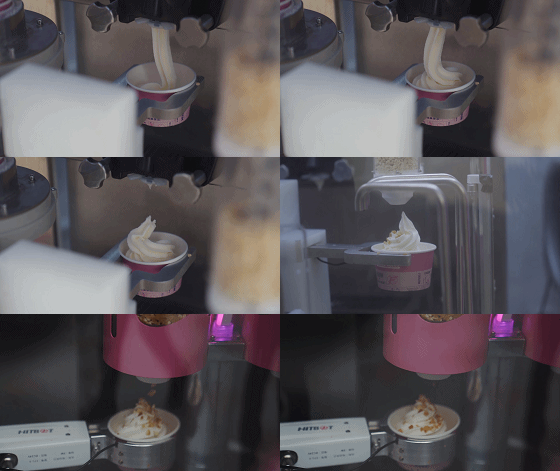
FOODOM Kingdom of Culinary Delights’ ice cream robot
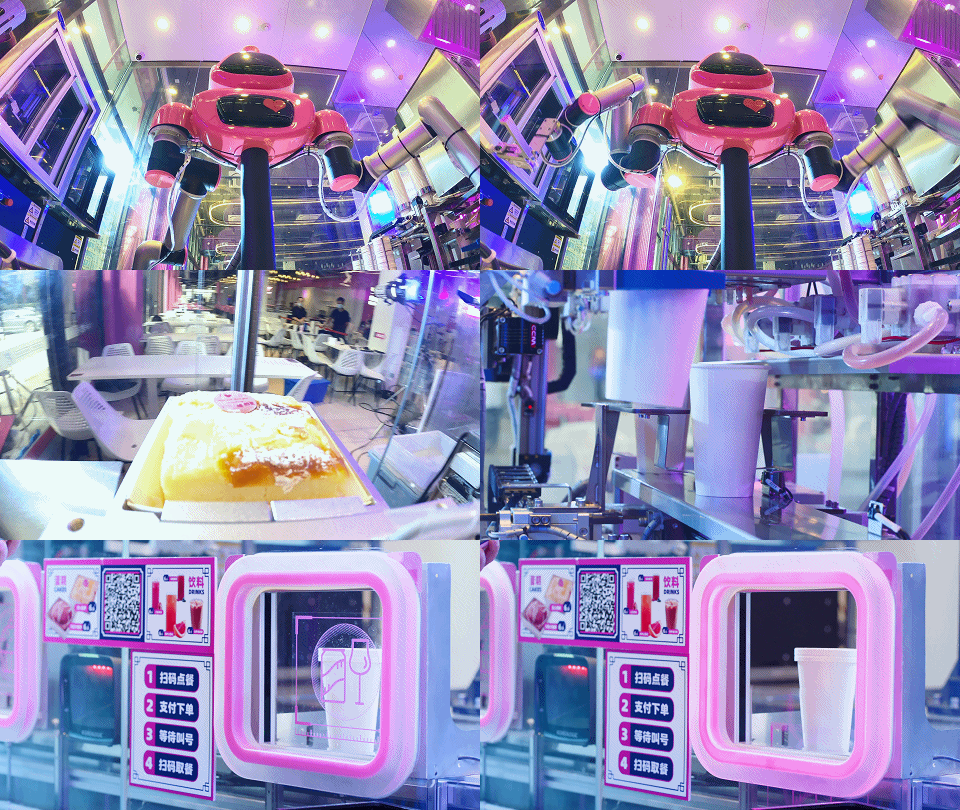
FOODOM Kingdom of Culinary Delights’ fast food area robot dessert station
In terms of the intelligent transformation of traditional catering spaces, Qianxi Group has reached an agreement with Beichen Group to engage in comprehensive strategic cooperation around smart catering supply for all exhibition centers under Beichen Group.
For instance, the second phase of the China National Conference Center built by Beichen Group will be put into use in 2022, and Qianxi Group will also enter at the same time, providing 24-hour smart catering services, showcasing the perfect integration and leading application of intelligent technology and Chinese culinary culture to the world.
This also indicates that the contactless efficiency, health, and standard stability of robots have received high recognition and affirmation from partners.
At the same time, Qianxi Group has also signed a strategic cooperation agreement with Siemens (China), establishing a long-term strategic partnership in the field of digital construction in the smart catering industry.
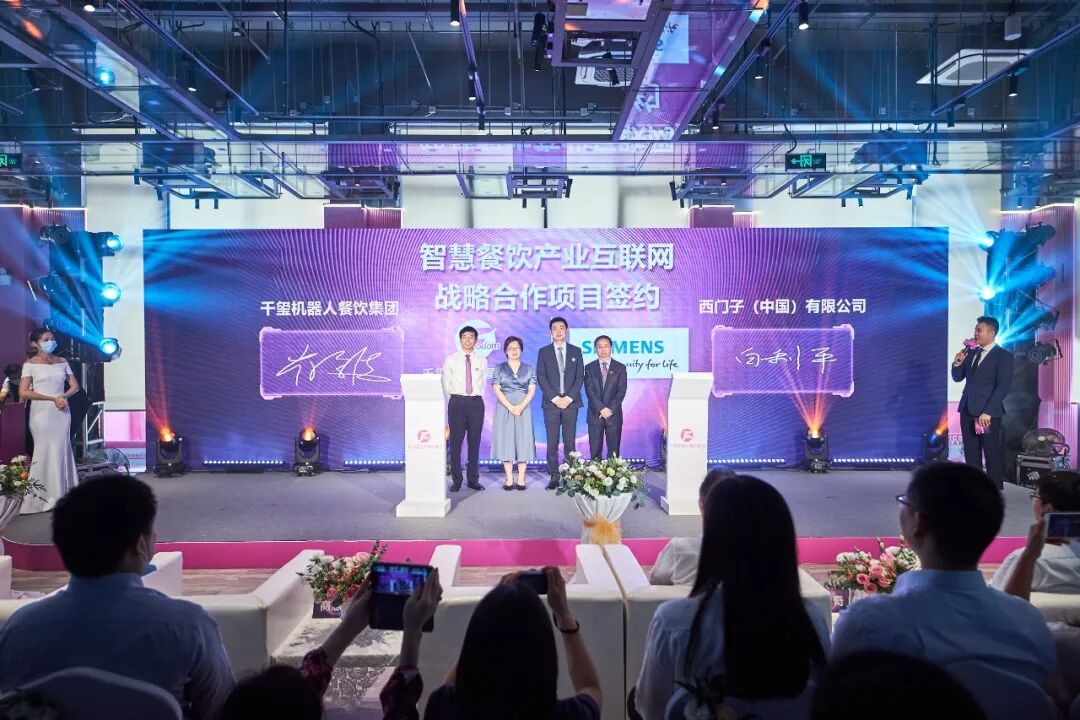
As a well-known enterprise in the field of digital industry worldwide, Siemens has rich innovative application experience in digital, automation technologies such as industrial cloud, edge computing, and artificial intelligence.
It is reported that this strategic cooperation will use the catering robot equipment and consumption ecosystem developed by Qianxi as a carrier, deeply integrating digital technology with diversified catering services, and jointly developing the first innovative smart catering industry IoT platform.
This strong alliance will innovate and reconstruct the production methods, operational models, and ecological chains of the traditional catering industry, contributing to the construction of a new ecology in the smart catering industry.
For any new business model, in addition to technological foresight and commercial leadership, gaining recognition from the government and industry upstream and downstream partners is also a more important assessment criterion.
In addition to winning the favor of partners, the second-generation clay pot rice robot and mini ice cream robot independently developed by Qianxi Group have also received the first system integration catering robot CR (China Robot Certification) certificate issued by the National Robot Testing and Evaluation Center.
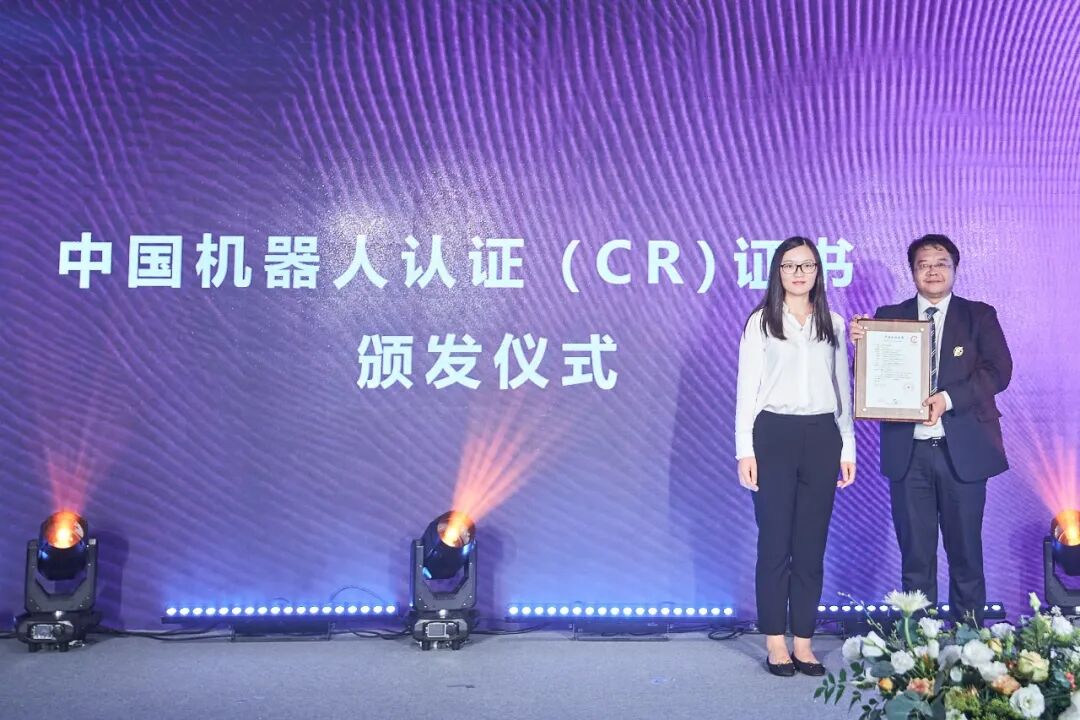
The issuance of the first system integration catering robot CR certificate nationwide proves the formal recognition of Qianxi catering robots by national authoritative institutions, and also reflects Qianxi Group’s advantages in the catering robot industry.
According to Zheng Junqi, director of the technical committee of the National Robot Testing and Evaluation Center (headquarters), the value of Qianxi Group obtaining the first system integration catering robot CR certificate lies in the fact that the products meet national certification requirements in terms of product specification design, basic safety requirements, and food safety requirements.
At the same time, it provides confidence for equipment purchasers, helping products gain domestic market recognition more effectively, and subsequently entering the international market. Additionally, it standardizes the domestic market, ensuring the safe use of robots in the food sector, allowing equipment users to feel more at ease and consumers to eat with greater peace of mind.
Meanwhile, Qianxi Group’s Zhiyuan Technology Company has also participated in formulating the first technical specification for safety certification of robot systems in the food sector in China (the “Technical Specification”).
This specification will effectively regulate and guide the application and development of robots in the food sector, and in the future, it will move towards industry standards and national standards, which is of great significance for promoting the intelligent transformation and high-quality development of China’s catering industry.