1. Introduction to Humanoid Robots
1. Humanoid Robots——Humanoid robots (English: Android), also known as bionic humans, are designed to mimic human appearance and behavior. They typically have a body structure similar to humans, including a head, neck, torso, arms, hands, legs, and feet, which allows them to move and manipulate objects in human environments more freely. Humanoid robots represent a type of robot with broad application prospects, capable of imitating human looks and behaviors, playing important roles in various scenarios.
2. Classification of Humanoid Robots:
Service Humanoid Robots: This type of robot is widely used in hotels, restaurants, and other places to provide services to guests, such as simple communication, food delivery, and cleaning. In recent years, the market growth rate for service humanoid robots has exceeded that of industrial robots, indicating significant market potential.
Industrial Humanoid Robots: These robots are typically used in industrial fields, such as operations, maintenance, and inspection on production lines. They can improve production efficiency, reduce labor costs, and operate in harsh environments.
Medical Humanoid Robots: These robots are mainly used in hospitals to assist doctors in surgical operations. They can perform complex surgeries requiring high technical standards, such as cranial surgeries. The use of medical humanoid robots can alleviate doctors’ concerns about surgical quality and improve success rates.
Educational Humanoid Robots: This type of robot primarily serves as a teaching aid, applied in programming education and robot competitions in schools. They help students understand programming logic more intuitively, increase practical programming experience, and enhance interest and innovation in technology.
In addition, there are various types of humanoid robots, including home assistant robots, educational companion robots, cartoon robots, hybrid robots, teleoperated robots, and collaborative robots, all playing significant roles in different fields.
3. Structure of Humanoid Robots:
The structure of humanoid robots is a complex and intricate system, mainly composed of several core components:
Torso and Head: The torso is the main structural component of the humanoid robot, supporting the entire weight and housing important parts such as batteries and controllers. The head typically contains cameras, microphones, and sensors for perceiving the external environment and interacting.
Joints and Motion System: Humanoid robots usually have multiple degrees of freedom (DOF) joints for flexible movement. Joints are generally composed of servo motors, reducers, and sensors, achieving various movements through precise control algorithms.
Arms and Hands: The arm section includes the upper arm, forearm, and wrist, connected by multiple joints to perform functions such as grasping and manipulation. The hand design is complex, possibly including multiple fingers and joints to simulate human hand flexibility.
Legs and Feet: The legs consist of thighs, calves, and feet, supporting the robot’s weight and enabling walking functions. The feet are designed to be non-slip and stable to ensure the robot walks steadily on different surfaces.
Perception System: This includes cameras, radar, tactile sensors, etc., for perceiving the surrounding environment, recognizing objects and obstacles. These sensors provide the robot with the ability to interact with the environment, ensuring safe and effective task execution.
Control System: Composed of a central processing unit (CPU) or microcontroller (MCU), responsible for processing perception data and controlling the robot’s actions. The control system also handles communication with other devices, enabling remote control or autonomous navigation.
Power System: This includes batteries and power management circuits, providing stable power supply to the robot. The choice of battery directly impacts the robot’s endurance and performance.
In summary, the structure of humanoid robots is a highly integrated, collaborative system, with each part working closely together to achieve the robot’s various functions. This design aims to simulate human form and behavior, making the robot more flexible and efficient in executing tasks.
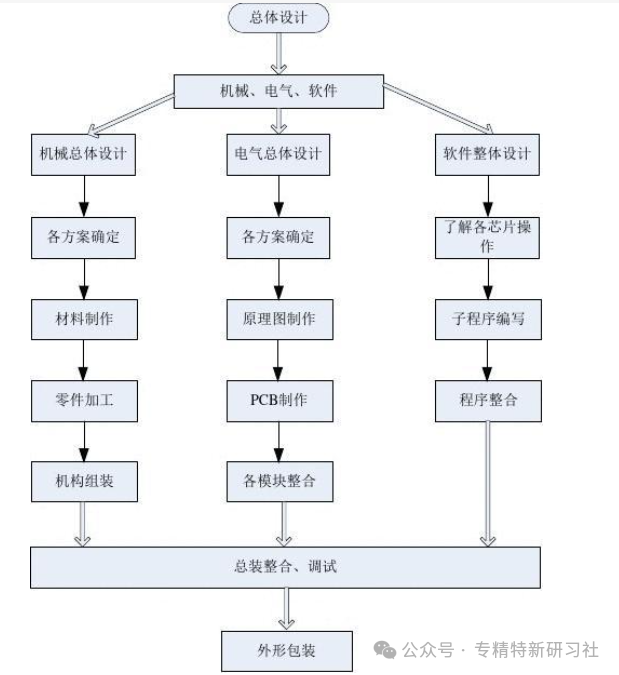
2. Production Process of Humanoid Robots
The production process of humanoid robots is a complex and systematic procedure involving several key steps. The main steps in the humanoid robot production process are as follows:
1. Demand Analysis: Clearly define the usage scenarios, functional requirements, and performance specifications for humanoid robots, providing a basis for subsequent hardware selection and software development.
2. Hardware Selection: Determine the hardware components of the humanoid robot based on demand analysis, such as mechanical structure, sensors, actuators, and control units, and select suitable hardware suppliers.
3. Software Development: Develop the humanoid robot’s software system based on demand analysis, including robot motion control, perception and recognition, and human-computer interaction functions. This involves programming, algorithm design, debugging, etc.
4. Mechanical Design: Based on appearance design and hardware selection, design and manufacture the mechanical structure. This includes material selection, design and assembly of components, etc. Designers must ensure that the mechanical structure can support the robot’s weight, achieve expected motion functions, and consider its stability and durability.
5. Electronic Design: Conduct circuit design and assembly based on hardware selection. This involves connecting and calibrating sensors and designing actuator control circuits. Electronic designers must ensure that the circuits can operate stably and reliably while meeting the robot’s functional requirements.
6. System Integration: Integrate mechanical, electronic, and software modules, performing system debugging and testing. This includes debugging hardware-software interfaces and function verification. System integration is a crucial step to ensure that all parts of the robot can work together coherently.
7. Testing and Optimization: Conduct functional testing and performance tuning of humanoid robots. This includes testing the robot’s mobility, perception, interaction capabilities, etc., and optimizing hardware and software based on test results. Testing and optimization are key to ensuring the robot’s performance is stable and reliable.
Production: Based on design and testing results, carry out mass production of humanoid robots. This includes raw material procurement, component processing, assembly, and debugging. Production must ensure the consistency and reliability of the robots.
8. Market Launch and Operation: Launch humanoid robots into the market for sales and operations. This includes marketing, building sales channels, after-sales service, and managing user feedback. Market launch and operation are essential for the successful commercialization of robots.
Additionally, the production process of humanoid robots may involve the application of new technologies and processes, such as cold forging technology. The application of these new technologies can enhance the robot’s performance and quality while reducing production costs.
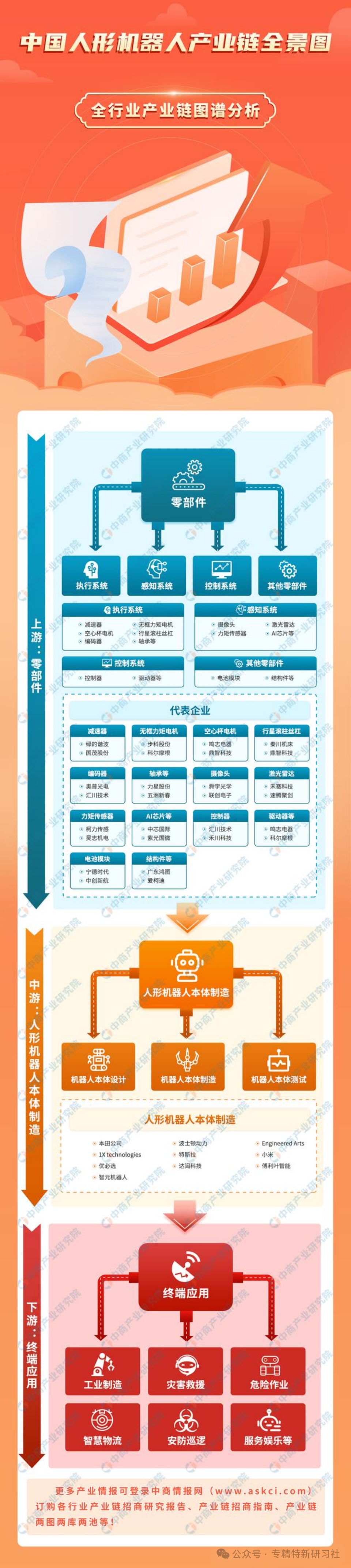
3. Industry Chain of Humanoid Robots
Upstream mainly includes parts and software system suppliers, such as motors, joints, sensors, controllers, and operating systems. The quality and technical level of these components and software systems directly affect the robot’s performance and stability. Midstream includes manufacturers of the humanoid robot body, responsible for assembling various components into complete robot products and conducting testing and quality inspection. Downstream is the end-user application market for humanoid robots, covering various fields such as medical, education, disaster rescue, public safety, manufacturing, and home care.
4. Policy Guidance for Humanoid Robots
The Ministry of Industry and Information Technology (MIIT) has issued a notice regarding the release of the “Guiding Opinions on the Innovative Development of Humanoid Robots” (hereinafter referred to as the “Guiding Opinions”).
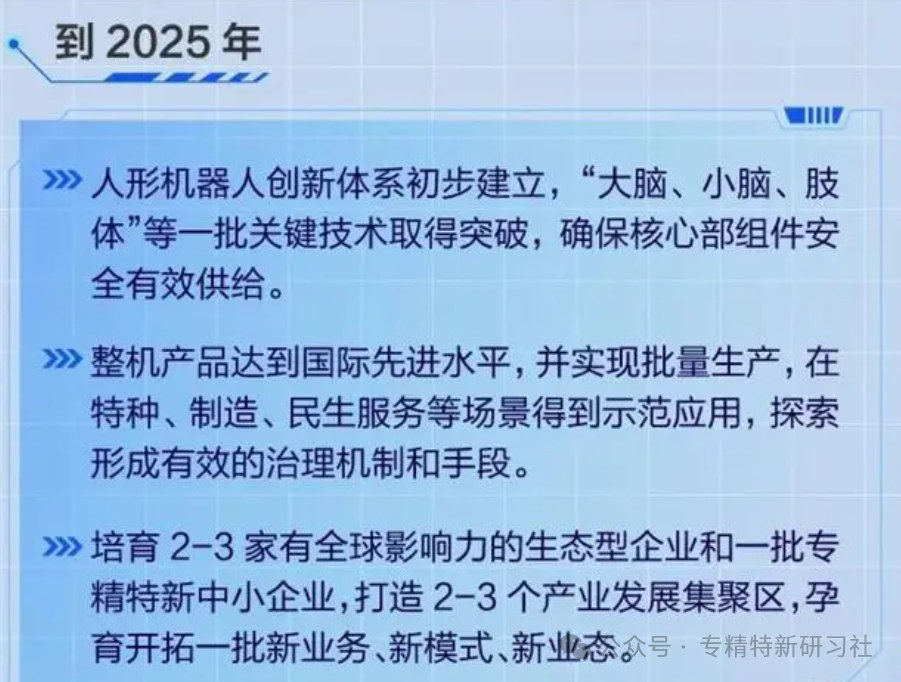
The Guiding Opinions propose that, led by breakthroughs in AI technologies such as large models, focus on key technologies of humanoid robots including the “brain,” “small brain,” and “limbs,” as well as breakthroughs in the technological innovation system.
Meanwhile, the Guiding Opinions also outline requirements for cultivating key products in the humanoid robot industry, expanding application scenarios, creating an industrial ecosystem, strengthening support capabilities, and ensuring measures.
The Guiding Opinions divide into three key areas of focus, namely key technology breakthroughs, key products and component breakthroughs, and expanded application scenarios. Specifically as follows:
Area 1: Key Technology Breakthroughs. Build key technology groups for the robot’s “brain,” “small brain,” and limbs.
Area 2: Key Products and Component Breakthroughs. Strengthen from six aspects: basic complete machines, functional complete machines, sensors, actuators, controllers, and power energy.
Area 3: Expanded Application Scenarios. Achieve expansion through pilot demonstrations, strengthening supply-demand connections, accelerating results transformation, and improving application mechanisms.
The Guiding Opinions establish development goals for 2025 and 2027, namely:
By 2025, an innovative system for humanoid robots will be preliminarily established, with breakthroughs in key technologies such as the “brain,” “small brain,” and “limbs,” ensuring a safe and effective supply of core components. Complete machine products will reach internationally advanced levels and achieve mass production, demonstrating applications in special, manufacturing, and civil service scenarios, exploring effective governance mechanisms and methods.
Additionally, cultivate 2-3 globally influential ecological enterprises and a batch of specialized small and medium enterprises, creating 2-3 industrial development clusters, nurturing and expanding a batch of new businesses, new models, and new formats.
5. Global Humanoid Robot Market1. Market Situation of Humanoid Robots
Humanoid robots are the culmination of technologies in information, manufacturing, materials, energy, and life, involving new fields and high technical content. Their innovative development contains enormous productive potential and is expected to continuously drive new economic growth points.
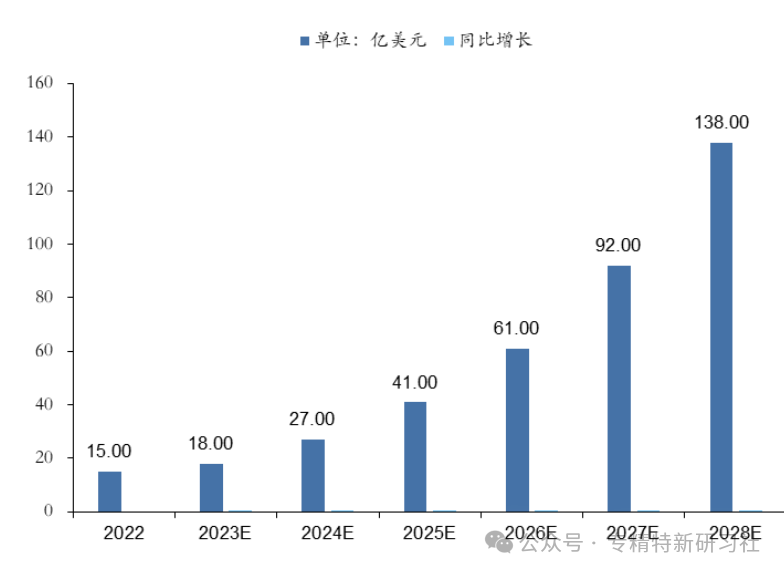
According to the “Global and China Humanoid Robot Market Outlook and Investment Opportunity Research Report” released by the China Business Industry Research Institute, the global humanoid robot market reached USD 1.5 billion in 2022, and it is expected to grow to USD 13.8 billion by 2028, with an average annual compound growth rate of 50.29% over five years.
Since the 14th Five-Year Plan, central and local governments have successively introduced policies supporting the development of the humanoid robot industry, such as the “Guiding Opinions on the Innovative Development of Humanoid Robots,” the “14th Five-Year Plan for Robot Industry Development,” and the “Robot Application Action Implementation Plan.” Various favorable policies are expected to accelerate the engineering and industrialization of humanoid robots.
ChatGPT can handle high emotional intelligence conversations, generate code, and conceive scripts and novels in various scenarios, demonstrating the influence of large models, possessing richer general knowledge, stronger learning and reasoning capabilities, and better reducing AI application costs, shortening R&D cycles, and improving recognition accuracy. The rapid development of AI can accelerate the development of the humanoid robot industry.
As the level of intelligence increases and the costs of corresponding mechanical equipment, material equipment, and other related instruments decrease while precision increases, robots are expected to experience explosive growth across various industries in the future, with increasingly broad application scenarios.
2. Global Distribution of Humanoid Robot Enterprises
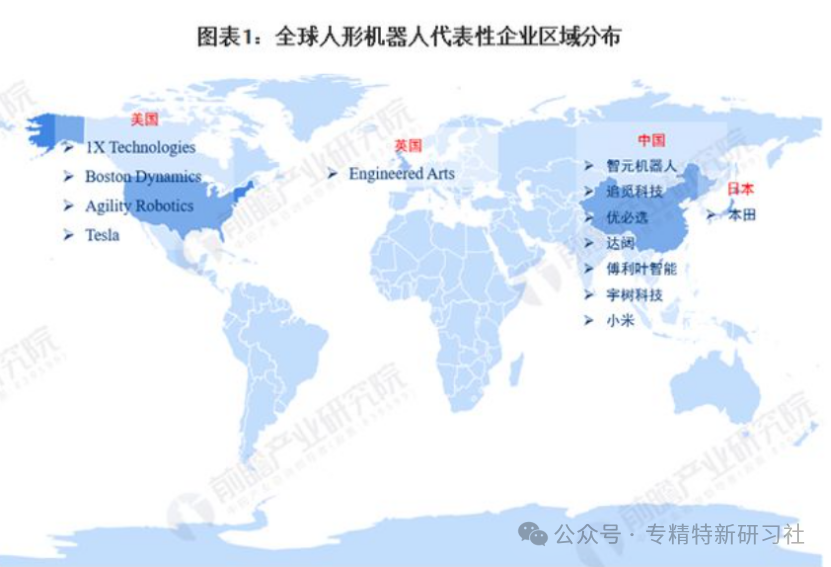
Global humanoid robot enterprises are mainly distributed in regions such as the United States, China, Japan, and the United Kingdom, including companies like 1X Technologies, Boston Dynamics, and Agility Robotics in the United States; Engineered Arts in the UK; Honda in Japan; and companies like Ubtech, Fourier Intelligence, Datar, and Xiaomi in China.
6. Overview of Global Humanoid Robots
Overseas:
1. Boston Dynamics
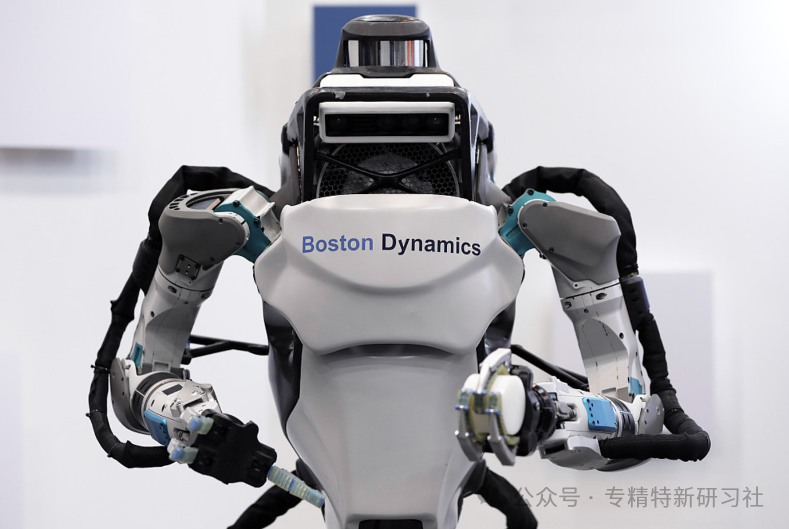
Boston Dynamics is a US robotics R&D company established in 1992, known for its quadrupedal and humanoid robot products. The humanoid robot HD Atlas uses a hydraulic scheme, capable of lifting, running, jumping, and performing simple equipment operations, with multiple videos showing its ability to move flexibly in complex environments. Its AI capabilities have immense potential, making it arguably the world’s best. However, the hydraulic version of ATLAS has been retired, and the company has shifted to pure electric drive, with its first pure electric ATLAS robot already released. From the currently released videos, it has reached world-class levels of pure electric humanoid robots, which is inseparable from its past accumulation in humanoid robotics.
2. Tesla Optimus Robot
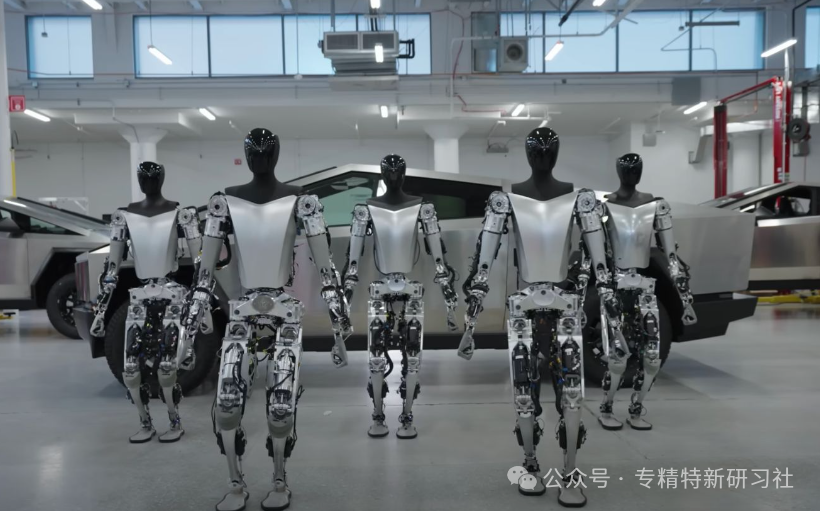
Tesla’s Optimus humanoid robot is also a world-class robot. From the concept released at AI Day in February 2022 to the Bumblebee in September 2022, and the Optimus Gen1 in March 2023, to the Optimus Gen2 in December 2023, its evolution speed is astonishing. The currently released Optimus products show significant progress in factory battery sorting videos, with its AI already capable of handling relatively simple decisions, indicating that its neural network-driven AI, supported by a larger sample, is on the right path. Moreover, the Optimus robot’s walking and turning have become increasingly humanoid, with almost no robotic motion stuttering, appearing very smooth.
3. Agility Robotics
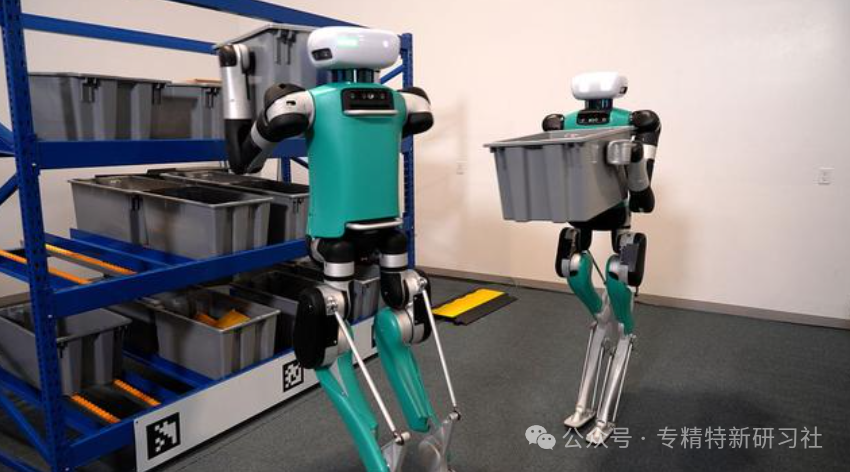
Agility Robotics is a company focused on humanoid robots, founded in 2015. Its product Digit is currently focused on logistics development, with strong walking and carrying capabilities. The Digit product began commercial sales in 2020, and Amazon has already procured its products for warehouse operations testing. Ford has also purchased Digit for production line operations.
Currently, the actual application of Digit robots in warehousing is still unknown, but its price of $250,000 is astonishing, and its future development remains to be seen.
4. 1X Technologies

1X Technologies is an engineering and humanoid robot company that produces android robots capable of mimicking human actions and behaviors. Established in 2014 and headquartered in Norway, the company has over 60 employees, most of whom come from renowned institutions like Google Brain and DeepMind. 1X Technologies’ flagship product is EVE, a robot with two arms, two eyes, and a four-wheeled chassis capable of performing various tasks in different environments, such as patrolling, monitoring, and transporting. Additionally, the company is developing a bipedal robot named NEO, slated for release in 2024, which boasts excellent mobility, capable of extending fingers to grasp items, easily opening doors, navigating autonomously, and avoiding obstacles.
5. Figure Company:
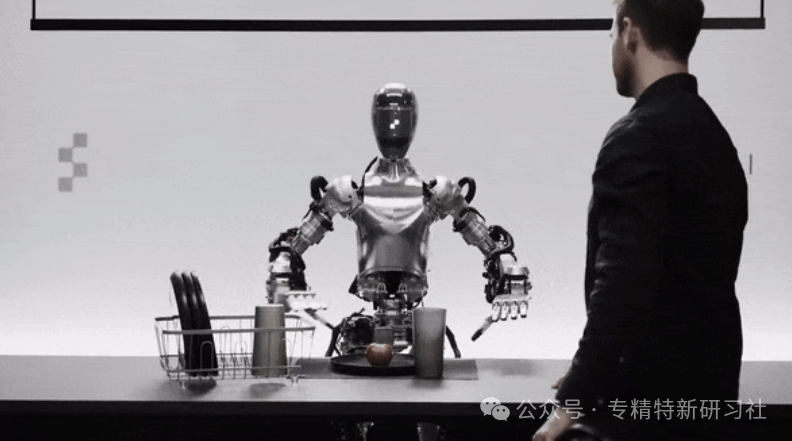
Figure Robotics is an AI robotics company founded by Brett Adcock in 2022, focusing on developing general-purpose humanoid robots. The company is headquartered in Sunnyvale, California, and is a leading enterprise in AI and robotics technology.
The core product of Figure Robotics is Figure 01, designed for various industrial and service sectors. This robot, through advanced AI systems and sensor technologies, can perform a wide range of tasks, such as lifting heavy objects, handling items, and even performing specific service tasks. Its goal is to improve production efficiency and safety by addressing labor shortages in key roles.
In addition to Figure 01, Figure Robotics is continuously developing new robotic technologies and products to meet the needs of different fields. The company collaborates with leading AI firms like OpenAI to apply the latest AI technologies in robotics, enhancing robots’ intelligence and autonomy.
Figure Robotics’ business model involves deploying its humanoid robots in practical applications, initially focusing on warehouse solutions. The company aims to change industry operations by applying robotic technology to automate structured, repetitive, and often dangerous tasks, improving productivity and safety.
6. Sanctuary AI:
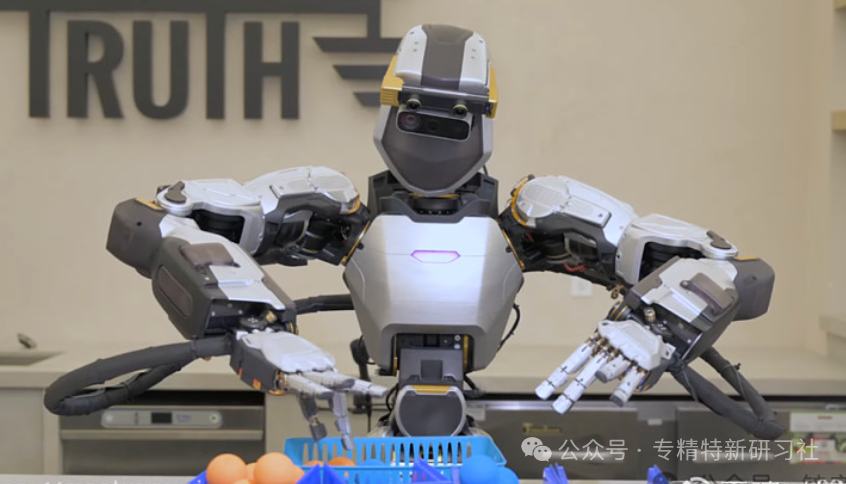
Sanctuary AI Inc. is a general AI company founded in January 2018, headquartered in Vancouver, British Columbia, Canada. Its mission is to create a synthetic being indistinguishable from humans in body, cognition, and emotion—”synthetic humans.” Sanctuary AI aims to explore cutting-edge technologies and ethical issues arising from creating human-like machines.
Sanctuary AI is collaborating with Microsoft to develop AI models for general humanoid robots, including its Phoenix robot. The Phoenix robot is a highly anticipated product controlled by the advanced AI system Carbon, possessing human-like flexibility and fine manipulation abilities. This robot can autonomously complete many tasks at a speed similar to humans, such as grasping, moving, and placing objects, as well as performing color recognition and classification tasks.
Sanctuary AI’s technology focuses not only on the robot’s physical appearance and motion capabilities but also on simulating its cognitive architecture. The company draws on AI, cognition, computer vision, machine learning, theoretical physics, and quantum computing to build robots that mimic different subsystems of the human brain. This design and development of general robots are expected to enhance the quality of human work experiences, assist humans in completing difficult or dangerous tasks, and create new job opportunities.
7. Honda: ASIMO
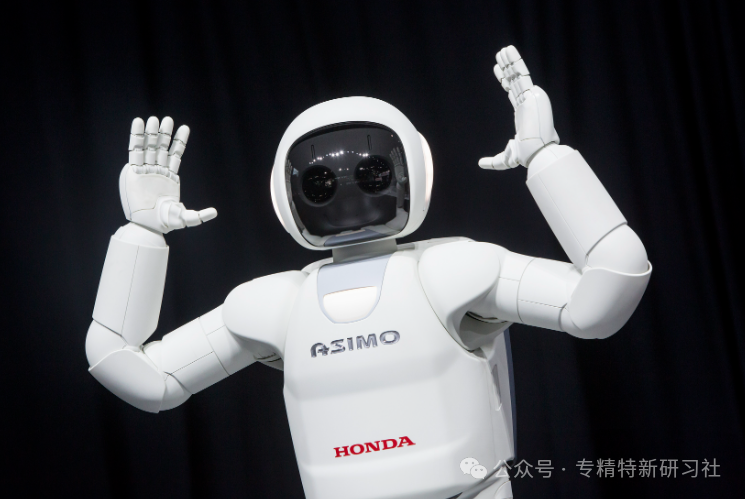
Honda’s ASIMO robot is not an independent company but a humanoid robot developed by Honda Motor Co., Ltd.
ASIMO (Advanced Step in Innovative Mobility) has been developed and improved since 1986, designed to assist humans, especially those with mobility challenges, by mimicking human actions. The ASIMO robot possesses high autonomy and human-computer interaction capabilities, capable of performing complex tasks such as running, walking on uneven slopes and surfaces, turning smoothly, climbing stairs, and reaching out to grasp objects. Additionally, it can understand and respond to simple voice commands, recognize faces of specific groups, and avoid moving obstacles while navigating environments.
Through the development of the ASIMO robot, Honda has showcased the latest advancements in AI and robotics technology, while also promoting its exploration of smart technology, automation R&D, and future technology development directions. The ASIMO robot has also become an important tool for Honda to promote its technological innovation and brand image, showcased globally to encourage and inspire young students to learn science. Although ASIMO has achieved remarkable accomplishments, Honda has not ceased improving and upgrading it.
Domestic:
1. Ubtech【9880HK】
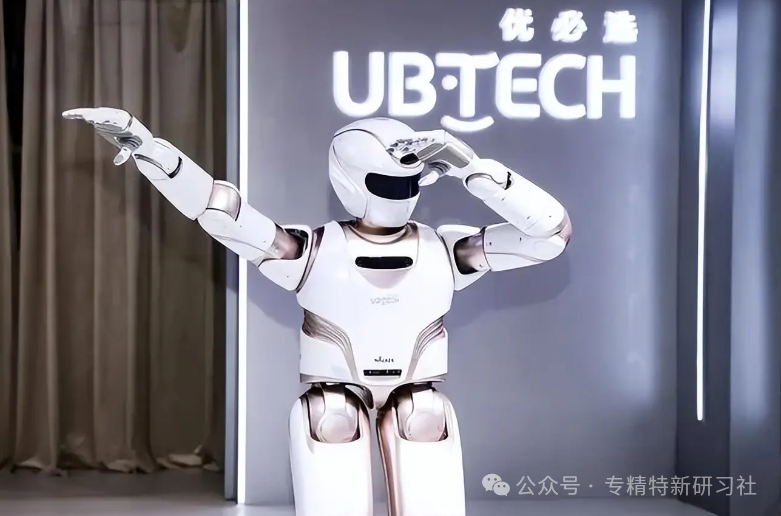
Ubtech was founded in 2012, starting with the development of core servo motors for humanoid robots, gradually launching consumer humanoid robots, educational smart programming robots, commercial service robots, and intelligent inspection robots. In 2018, Ubtech launched the large robot Walker, becoming the first company in China to commercialize humanoid robots. Ubtech’s current focus includes robotics technology (robot motion planning and control technology and servo actuators), AI technology (computer vision and voice interaction technology), and the integration of robotics and AI technology (SLAM and autonomous technology, visual servoing operations, and human-computer interaction), achieved through its proprietary robotics operating system application framework (ROSA). Ubtech is one of the few companies globally to commercialize service robots integrating multiple servo actuators as joints and one of the few to achieve mass production and practical application of multiple series of servo actuators.
2. Unitree Robotics
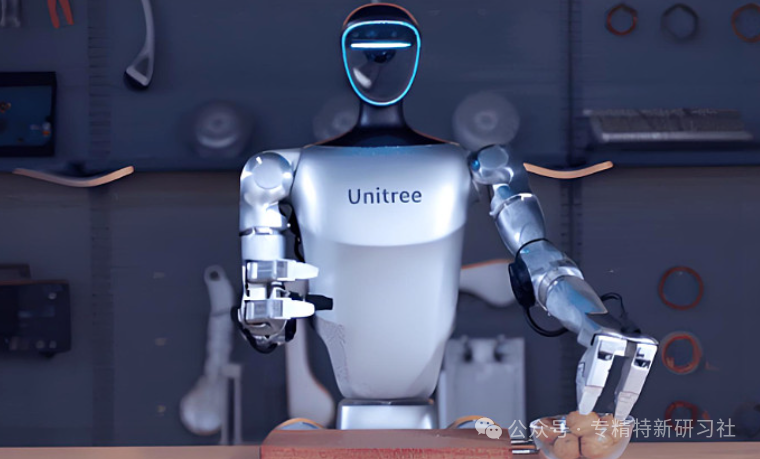
Unitree Robotics is a world robotics company focused on the development, production, and sales of high-performance quadrupedal robots and related power system components. Established on August 26, 2016, and headquartered in Hangzhou, Zhejiang Province, Unitree Robotics leads in core robot components, motion control, and robot perception.
Unitree Robotics emphasizes independent R&D and technological innovation, achieving independent R&D in quadrupedal robot motors, reducers, controllers, overall structure, and most sensors. The company holds the most quadrupedal robot-related patents in China, with over 100 domestic patent applications and more than 80 authorized patents, recognized as a national high-tech enterprise.
Unitree’s main products include Laikago, AlienGo, A1, Go1, B1, and other quadrupedal robots, as well as the Z1 robotic arm. These products not only have high mobility performance and cost-effectiveness but also have wide applications in various fields such as power system construction, operation and maintenance, and inspection. Among them, Unitree’s latest humanoid robot product, Unitree G1 humanoid intelligence, is priced starting at 99,000 yuan, further enriching the company’s product line.
The founder and CEO of Unitree Robotics, Wang Xingxing, is an internationally renowned robotics expert with a master’s degree in mechanical engineering and over 100 robot-related patents. Under his leadership, the team has achieved several significant results in the robotics field, including being selected as a key project for intelligent applications at the 19th Asian Games in 2022 and showcasing the Unitree quadrupedal robot “Benben” during the CCTV Spring Festival Gala.
3. Zhiyuan Technology

Zhiyuan Robotics was founded in February 2023, with a founding team that includes industry veterans like “Zhihui Jun” Peng Zhihui, possessing strong technical backgrounds and industrial resources. In August 2023, Zhiyuan released the Expedition A1 humanoid robot. The Expedition A1 is Zhiyuan’s first generation of general-purpose embodied intelligent robot, standing 175 cm tall, weighing 55 kg, with a walking speed of up to 7 km/h, a total load capacity of 80 kg, and a maximum load of 5 kg per arm.
Zhiyuan Robotics has an impressive development history. Since its inception, the company has attracted attention from several well-known investment institutions, successfully completing multiple rounds of financing with participation from Hillhouse Capital, CDH Investments, Baidu Ventures, BYD, and others. This funding has provided strong support for the company’s growth, promoting the R&D and application of humanoid robot technology.
The Expedition A1 is planned for commercialization in 2024, initially applied in industrial intelligent manufacturing fields such as 3C manufacturing and automotive manufacturing, gradually expanding to households to assist workers, researchers, and family members in various tasks. According to Zhiyuan Robotics’ WeChat public account, the company is currently advancing connections with several leading manufacturing enterprises to apply the Expedition A1 in various practical scenarios, with plans to promote it to more fields in the future.
4. Fourier Intelligence
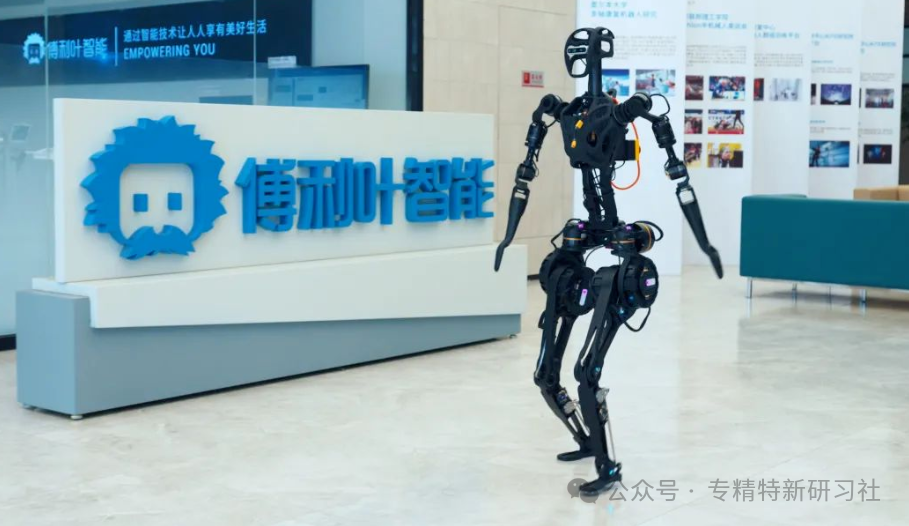
Fourier Intelligence (full name Shanghai Fourier Intelligence Technology Co., Ltd.) was founded on July 30, 2015, headquartered in Zhangjiang Hi-Tech Park, Shanghai, with an overseas headquarters in Singapore. The company is a high-tech enterprise focused on the R&D and application of robotic technology, aiming to provide a technical open platform for various industry scenarios through high-performance robotic bodies, promoting the generalization and popularization of robotic technology.
Since its establishment, Fourier Intelligence has consistently focused on core technologies for general-purpose robots, continuously overcoming bottlenecks in core components (actuation, perception). The company has a research team of hundreds, covering mechanical electronics, software algorithms, engineering testing, and all sectors of robotics, capable of producing medical-grade robotic products with high technical density and mass delivery capabilities.
Fourier Intelligence’s main products include upper limb intelligent force feedback rehabilitation robots, lower limb exoskeleton robots, etc. These products use advanced technologies and designs to provide personalized rehabilitation treatment plans for patients, helping them restore upper and lower limb functions. Additionally, the company has launched the ExoMotus™ lower limb rehabilitation robot series, featuring a modular structure design for biped robots, equipped with self-developed motion controllers, multi-dimensional force sensors, and integrated flexible joint motors, focusing on walking functionality.
Fourier Intelligence’s products and services have been recognized and invested in by many top institutions both domestically and abroad, including IDG, Guozhong Capital, Saudi Aramco, Zhangjiang Ke Investment, SoftBank Vision Fund, etc. The company has also received numerous honors, such as National Key