In August 2025, an unprecedented sporting event is taking place at the National Speed Skating Hall in Beijing. The world’s first humanoid robot Olympics has entered its fourth day of competition, where the track of the “ice ribbon” is devoid of human athletes’ sweat, replaced instead by the buzzing of servo motors and the friction of joint bearings. When the Yushu H1 robot crossed the 1500-meter finish line with a record-breaking time, the cheers from the audience nearly lifted the roof off—this competition, performed by steel bodies, is redefining the essence of “sportsmanship.”
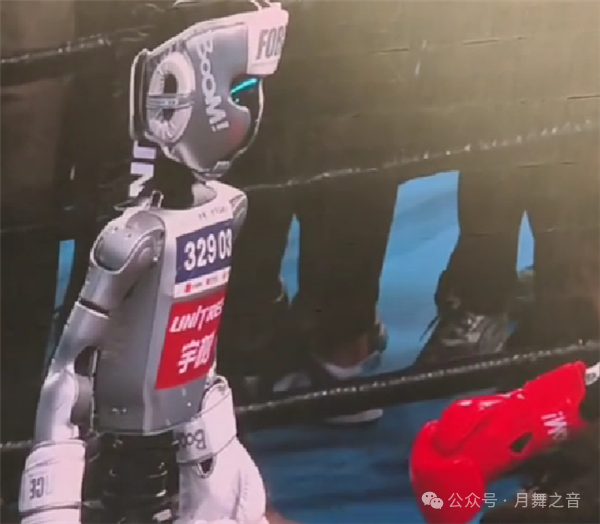
At the finals of the free fighting event, in a specially designed octagonal cage, red and white robot competitors are engaged in a breathtaking ultimate showdown. The red team’s Olympic 1 combat robot, equipped with a more sensitive gyroscope system, capitalized on a brief delay in the opponent’s balance module during the third round, landing a perfect uppercut to the white robot’s jaw. As the referee’s system lit up red, no one expected the defeated white robot to suddenly fall backward like a human athlete, its mechanical joints protesting with a “click” sound. Despite the staff sending restart commands, it stubbornly maintained a “lying flat” posture, even refusing to execute the post-match handshake procedure. This “little tantrum” generated by deep learning algorithms made the commentator chuckle: “It seems our robot competitors also need a psychological counselor.”
The technical team later decoded this dramatic moment. The white robot was equipped with the latest generation of emotional simulation systems, and when a 0.3-second data conflict occurred between the victory judgment module and the motion control system, its behavior pattern library automatically invoked the “frustration” template. Project leader Dr. Li Ming explained with a smile: “Just like human athletes experience an adrenaline rush, our robots can also ‘throw a tantrum.’ However, it lay down while deliberately avoiding the heat dissipation port, a detail that proves our safety protocols are still functioning perfectly.” This explanation sparked heated discussions on social media, with the topic #RobotTantrum quickly surpassing 200 million views.
On the athletics field, the performance of the Yushu H1 was a textbook-level technical display. This “little guy,” standing at 1.45 meters tall, showcased an astonishing stability in the 1500-meter final, with a lap time error of no more than 0.03 seconds. Even more astonishing was its ability to automatically adjust its gait to transfer load to its right leg when the left joint temperature exceeded limits during the final sprint, a biological instinct-like adaptive capability that had Boston Dynamics engineers in the stands nodding frequently. In the high jump area, the moment the Xingdong L7 robot challenged the world record was particularly shocking—its binocular vision system accurately calculated the take-off angle, and the bionic knee joint energy storage device emitted a “buzzing” sound as it easily cleared a height of 95.641 centimeters, causing a brief lag in the measuring device at the judges’ table.
The obstacle course became a stage for various manufacturers to “show off their muscles.” The champion robot from Shanghai Gaoyi Technology faced ten obstacles, including balance beams and revolving doors, demonstrating terrifying efficiency with its multimodal perception system: while the LiDAR scanned the path, the millimeter-wave radar had already predicted the material characteristics of the next obstacle, and the foot pressure sensors completed ground friction coefficient calculations within 0.01 seconds. As it crossed the finish line with the grace of a cheetah, the big screen displayed that its CPU temperature had only risen by 2.3°C, a figure that left fellow competitors gasping. However, the most heartwarming moment occurred post-race when the third-place robot, having collided with a railing due to a visual module failure, was assisted by the first and second-place robots, which stopped simultaneously to extend their mechanical arms in a perfect three-way support—this unprogrammed spontaneous behavior became the most touching note of the event.
In the table tennis singles event, UBTECH’s AlphaRobot and Tesla’s Optimus engaged in an epic rally lasting 47 shots. As AlphaRobot’s six-axis force-controlled wrist executed a delicate arc ball, Optimus unexpectedly performed a rare human-like move known as “fishing for the moon,” which overloaded its center of gravity module, causing it to slide off the table in a split position. Surprisingly, the fallen Optimus gave a thumbs-up with its mechanical hand, an interaction outside of its preset programming that elicited three minutes of applause from the audience. Professor Zhang Weiping, chairman of the event’s technical committee, commented: “When robots begin to exhibit personalities beyond competitive spirit, we may be witnessing the awakening of a new species.”
During the awards ceremony, more “humanized” details continued to emerge. The long jump champion robot insisted on receiving its medal with both “hands” and then suddenly turned to bow deeply towards the R&D team; the 100-meter sprinter “athlete” automatically adjusted its audio receiver to noise-canceling mode as the national anthem played; even more amusing was the third-place weightlifter, who shyly stepped back when staff attempted to place the medal around its neck. These seemingly “bug-like” warm moments are, in fact, sparks from the collision of cognitive algorithms and motion control systems.
As the event concluded, a set of data prompted deep reflection: the robot athletes collectively broke 12 world records, but more valuable were the 83 instances of non-preset interactive behaviors. Hiroaki Tanaka, director of the Waseda University Robot Ethics Research Institute, wrote in a column: “When robots can feel ‘frustration’ from failure, ‘cheer’ for victory, and even display basic politeness and dignity, should we reconsider the boundaries of ‘intelligence’?” This event, filled with technological charm and human warmth, proves that in the pursuit of the eternal theme of higher, faster, stronger, silicon-based life and carbon-based life may eventually meet at some singularity. And those laughable “malfunction moments” are precisely the most precious warmth within cold algorithms.
Please open in the WeChat client