
The path to developing intelligent computing.
As an emerging open instruction set architecture, RISC-V has become a key track for global computing innovation, with a projected market penetration rate of 33% by 2031. RISC-V is breaking through from embedded systems to high performance, with the international ecosystem continuously improving. In China, RISC-V will accelerate the development of new productive forces. China’s leading role in the development of RISC-V is gradually strengthening.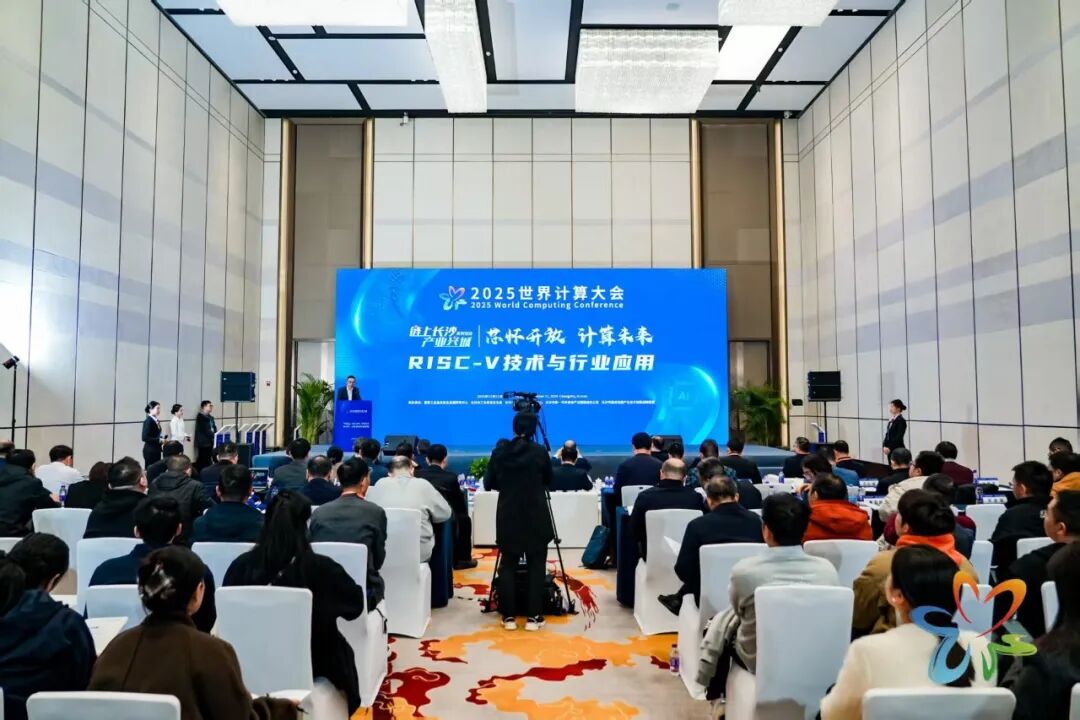
“Breaking the monopoly with open-source hardware
Open source is an attempt to break the monopoly of processor ecosystems. Over the past half-century, dozens of instruction sets have emerged, but they all belonged to private companies. Today, only two mainstream instruction sets remain globally: x86 and ARM, which are highly monopolized by Intel and ARM, respectively. The RISC-V project was launched at the University of California, Berkeley in 2010, further promoting the idea that software source code based on open instruction sets can be open, opening a new chapter in hardware open source.In China, the Institute of Computing Technology of the Chinese Academy of Sciences initiated the open-source high-performance RISC-V processor core “Xiangshan” project in 2019, with national support for the design of mid-to-high-end RISC-V chips, forming the Xiangshan series of chips. Their vision is to establish an open-source RISC-V core mainline like Linux, which can be widely used in industry and support academic innovation.China is using the RISC-V instruction set and related open-source chips to better move towards vertical applications, and this trend is already taking shape.
Open-source software: Stimulating collective intelligence resources
At various levels, open-source software is actively adapting to RISC-V, forming a “usable” RISC-V software ecosystem, further progressing towards “user-friendly”.With its open and modular architectural advantages, RISC-V is accelerating its penetration into the field of artificial intelligence. With support from software platforms like NVIDIA CUDA, as well as domestic operating systems like openEuler and OpenHarmony adapting to RISC-V, its software and hardware ecosystem is maturing, and it is expected to become an important architecture for AI chips.In the realm of open-source large models, the development of open-source large models began with the open-sourcing of deep neural network development frameworks, which supported a series of deep neural networks, enabling the application of neural network-based modeling patterns across various fields. This has achieved great success not only in large language models but also in other pattern recognition fields.The open-source model is also evolving. Some open structures provide weights, some open data, some open training code, some open inference code, and some open fine-tuning code or open APP services at different levels of openness. Today’s open-source large models mainly provide open stable structures of neural network weight parameters.Some experts believe that open-source weight parameters are like concentrating oil into a thick oil; releasing it is very dangerous. Others believe that openness is the historically correct side. Academician Wang Huaimin of the Chinese Academy of Sciences believes that the essence of open source lies in its ability to stimulate collective intelligence resources. In the intelligent era, open-source large models are paramount. The current phenomenon of large models only publicly disclosing weights is a form of “pseudo-open source”; a truly open and collaborative innovative ecosystem must be built. There is no absolute open source, and there is no absolute closed source. The world does not need a single dominant entity; it needs all of us to contribute.
RISC-V + AI: An Inevitable Choice for High-Level Computing
The 20th National Congress of the Communist Party of China clearly stated the need to “accelerate high-level technological self-reliance and self-improvement” and “build a modern industrial system”, pointing the way for the deep integration of technological innovation and industrial innovation. China should establish a new computing technology system that is self-reliant and self-improving at a high level, relying on the “RISC-V + AI” open-source system, actively participating in and leading the construction of the global software ecosystem, aligning domestic technology projects like TileLang with international standards, and helping China achieve high-level self-reliance and self-improvement in the new intelligent computing system, becoming an important force in open-source co-construction. In Hunan, a number of leading enterprises have been cultivated, with the number of RISC-V related companies growing by more than 30% annually. Notably, leading companies like Jingjia Micro and Guoke Micro have formed a complete chain from chip design, packaging, testing to application implementation. In terms of technological breakthroughs, Sanan Optoelectronics has built the first domestic full industrial chain production line for silicon carbide, and the ion implanter of the 48th Research Institute of China Electronics Technology Group has been recognized as a “national key equipment”, with high-performance processors, Beidou chips, automotive-grade chips, and other achievements leading the industry, providing important support for the security of the industrial chain and supply chain.In the RISC-V track, China can achieve “no one controls anyone, and no one can choke anyone”. For the global open-source ecosystem, Chinese enterprises have benefited greatly in the internet era; China is more of a user and participant. In the intelligent era, Chinese enterprises should become major contributors to the RISC-V + AI open-source technology system, becoming a leading force in global open sharing.Therefore, as foreign academician of the European Academy, chair professor at Peking University, and director of the Advanced Computing Systems Research Institute at Fudan University, Xie Tao said, RISC-V + AI is the path choice for developing intelligent computing.


 Written by: Cui LiangliangEdited by: LiangliangGuided by: Xin WenFurther ReadingLooking Back | Secure Computing: How to Build a Solid Foundation for AI?Waves Surge on the Xiangjiang River: The 2025 World Computing Conference Will Be HeldWorld Computing Conference | Thomas Sargent: The Past, Present, and Future of Artificial IntelligenceWorld Computing Conference | Herzog: Agent-based AI Autonomous Digital Twin Systems Leading Manufacturing TransformationWorld Computing Conference | Academician Gao Wen: Building Autonomous and Controllable Computing Power SovereigntyWorld Computing Conference | Wang Guirong: Autonomous Computing is Approaching the Turning Point from “Basically Usable” to “User-Friendly”World Computing Conference | Green Computing: Why? How to Go Green?World Computing Conference | Quantum Computing: The Future Beyond ImaginationWorld Computing Conference | Secure Computing: Building a Solid Foundation for AI + DevelopmentWorld Computing Conference | Advanced Computing: Making AI “Empathetic”World Computing Conference | Supercomputing: How to Make AI Even More Super?World Computing Conference | Special Feature: The 2025 World Computing Conference Welcomes Little ExplorersWorld Computing Conference | Robot Team Showcases a Real-Life Version of “The Future is Here”World Computing Conference | “Top Ten Global Computing Innovations of 2025” ReleasedWorld Computing Conference | “Top Ten Global Computing Development Trends of 2026” ReleasedIntelligent Waves on the Xiangjiang River: A Computing “Feast” is Being PreparedLatest: The Press Conference for the 2025 World Computing Conference Was Held This Morning“Xiang” Appointment: A Visual Overview of the 2025 World Computing ConferenceWorld Computing Conference Press Conference | Li Kenli, Vice President of Hunan University: Deepening the “Supercomputing +” ScenarioWorld Computing Conference Press Conference | Liu Quan, Deputy Chief Engineer of CCID Research Institute: Three “Evolutions” and Four “Opportunities” in the Computing IndustryReport: 10 Days Until the Opening of the 2025 World Computing ConferenceAnticipation: 5 Days Until the Opening of the 2025 World Computing ConferenceRegister Soon: Registration for the 2025 World Computing Conference is About to CloseRecommended Reading
 Research Report | Who is Innovating? The Layout, Capabilities, and Challenges of the Three Major Telecom OperatorsWho is the Pillar? Research Report on 50 Provincial Operators in 2025 and Distribution Matrix ReleasedResearch Report | Which Equipment Vendors are Riding the AI Wave?Research Report | 50 Chinese Internet Companies: Reshaping the Landscape with AI