Artificial Intelligence Robots Need Not Be Human-Shaped; Functionality is Key
Intelligent robots are systems that integrate mechanical structures, sensors, artificial intelligence (AI) algorithms, and other technologies, possessing capabilities forenvironmental perception, autonomous decision-making, and dynamic task execution.The main types of intelligent robots include: industrial, service, home, medical, military, and educational robots.
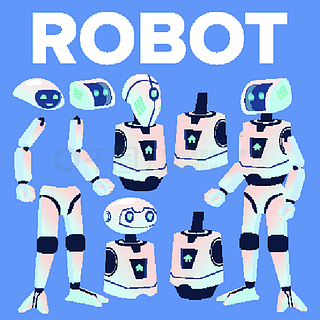
In the field of artificial intelligence robotdevelopment, humanoid robots are often seen as the focus. However, a deeper analysis reveals that the core of intelligent robots is“intelligence”; robotsdo not necessarily have to be human-shaped; achieving functional requirements is the core.
The development of humanoid robots requires enormous funding, yet they struggle to truly replace human physical functions. Many companies and research institutions invest heavily in this area, but the actual results are often unsatisfactory. Whether it is delicate manual operations or flexible actions in complex environments, humanoid robots find it difficult to reach human levels, and the substantial investment does not correlate with actual output, prompting us to reconsider the necessity of humanoid robot development.
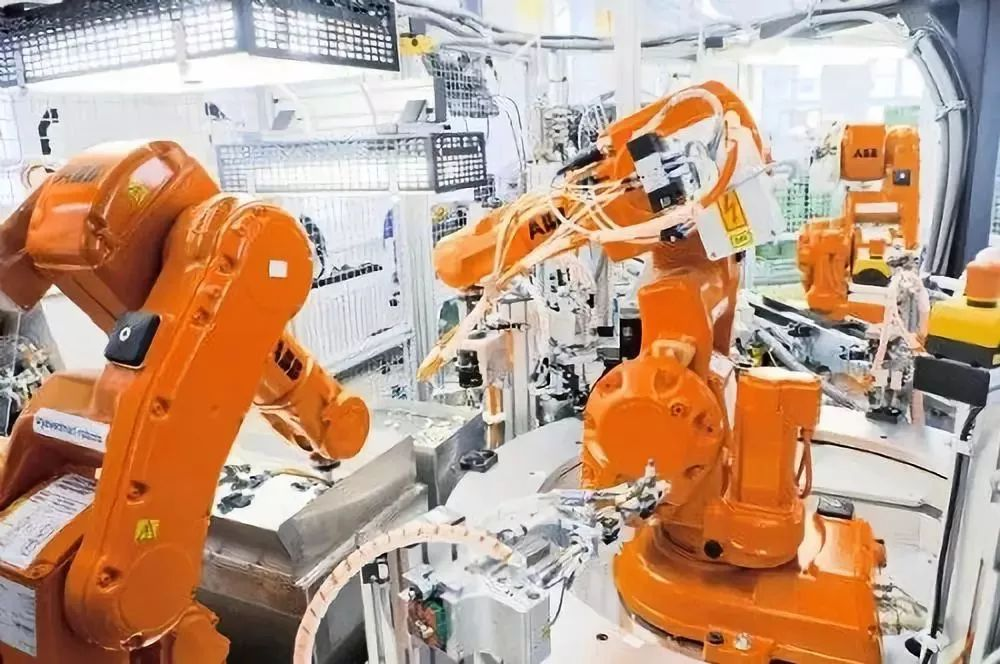
From the perspective of adaptability, the form of robots should adhere to tool adaptability, spatial adaptability, and rule adaptability. Working robots in factories are a typical example; often, they only need one arm to be sufficient. Such forms can better adapt to the spatial layout and workflow of production lines, efficiently completing specific tasks such as welding and assembly without the need for complex humanoid structures, thus saving space and improving work efficiency, perfectly embodying the adaptation of tools to scenarios.
Humanoid robots in daily life can indeed directly apply human living rules and environments without requiring humans to make changes, allowing machines to adapt proactively. However, this does not mean that all robots must adopt a humanoid form. Different scenarios have different needs, and a one-size-fits-all approach is not appropriate.
Robots only need to possess some human functions; their appearance is not important. Even if they are just a“metal lump,” as long as they can excellently complete tasks, they are qualified robots. Their ultimate purpose is to serve humanity; although humanoid robots may be more easily accepted by humans, this is not a necessary condition for functional realization. The effective achievement of functionality is the fundamental value of a robot’s existence.
Moreover, humanoid robots are only a part of the robot spectrum. In the future, robots will be widely involved in various industries, and different scenarios will inevitably require different forms of robots. In deep-sea exploration, robots need to possess pressure resistance and waterproof characteristics, and their forms may resemble submarines; in space exploration, robots must adapt to weightlessness, and their design will also be unique. In these scenarios, humanoid forms are clearly not the optimal choice.
From a technical perspective, the development of humanoid robots faces significant challenges. Bipedal robots are currently a core challenge in the field of robotics that urgently needs to be overcome. They not only require precise simulation of the mechanical characteristics of human limb movements but also need to achieve dynamic balance and adaptive adjustments in complex environments, involving deep integration of mechanical design, sensor control, materials science, and other disciplines. The active recognition technology in non-fixed scenarios is a pinnacle challenge in artificial intelligence development; compared to pattern matching in structured environments, non-fixed scenarios require systems to possess real-time environmental perception, contextual understanding, and autonomous decision-making capabilities, placing extremely high demands on algorithm robustness, computational power support, and data processing efficiency, which remains a bottleneck that has not yet been fully overcome in the global research community. The difficulty of overcoming these technical challenges is immense and cannot be solved merely by simple technological stacking; it requires cross-domain collaborative innovation and long-term technological accumulation. If we step out of the limitations of humanoid forms and design robot shapes based on functional requirements, it will undoubtedly reduce development difficulty and achieve technological breakthroughs and practical applications more quickly.
In summary, artificial intelligence robots do not have to be humanoid; achieving functional requirements is key. We should flexibly design robot forms based on different application scenarios and functional needs, allowing robots to better serve humanity and promote the development and progress of various industries. (Li Zhimin, image source from the internet)
Recommended Reading:
-
The Essential Attributes of Education
-
The Difference Between Science and Mathematics
-
Digital Transformation in Education: What to Transform and How to Transform
-
How Ordinary Teachers Can Respond to the Challenges of Digital Transformation in Education?
-
Educational Informatization and the Upgrading of Digital Transformation in Education
-
Education is for Surpassing Oneself, Not for Defeating Others
-
Planting Flowers in the Heart, Life Will Not Be Desolate
-
Fragmented Learning: Challenges in the Digital Age and the New Mission of School Education
-
Parents’ Educational Anxiety: Roots and Deconstruction
-
How to Alleviate Parents’ Anxiety About Education
-
How to Alleviate Children’s Anxiety About Education
-
Rejecting Involution, Rejecting Lying Flat, Achieving the Real Self
-
The Benefits of Physical Exercise: Beyond Physical Fitness, Shaping the Spirit
- Winning in the College Entrance Examination: Last Three Weeks Sprint Strategy and Mindset Adjustment
-
The Multidimensional Social Attributes of Education
-
School Education, Family Education, and Social Education are Equally Important; We Cannot Emphasize Only School Education
-
Higher Education Should Develop in a Layered and Balanced Manner
-
Under the Conditions of Large Language Models, It is Not That Reading is Useless, but That You Do Not Read Enough Useful Books
-
What is the Meaning of Life, and Why Do Some Say Life is Meaningless?
-
In Today’s Technologically Advanced World, Why Can’t We Solve the Problem of ‘Rain Falling from the Sky and Flowing on the Ground’?
-
Building a Strong Educational Nation: A Dual Interpretation of ‘Strong’ as a Verb and an Adjective and Public Expectations
-
Building World-Class Universities Requires Cutting Off the Interest Chain of Academic ‘Inbreeding’
-
What is More Important: Talent or Diligence?
-
Digital Transformation in Education: What to Transform and How to Transform
-
What is Functional Illiteracy?
-
Adapting to the Development of the Times, Promoting the Online Transformation of Traditional Academic Journals
-
The Scientific Spirit and State of Life: Addressing the Deep-Seated Issues of Innovative Development
-
The Education System Must Face the Challenge of a Sharp Decline in Birth Rates
- The Difference Between Configuration and Preparation
-
Why is it ‘Smash the Pot and Sell Iron’ Instead of Directly ‘Selling the Pot’?
-
Paying Tribute to Ordinary Teachers, Writing the Extraordinary with the Ordinary
-
‘At Thirty, One Stands Firm; At Forty, One is Not Confused’: Wisdom Across Millennia Guiding Contemporary Life
-
Not Speculating or Denigrating, Discussing the Logical Starting Point, Advantages, and Disadvantages of Artificial Intelligence Technology
-
How Artificial Intelligence Empowers Education
-
The Difference Between ‘Lying Flat’ and ‘Laziness’
-
Life is a Wilderness, Not a Track: Understanding Education from the Perspectives of Survival Meaning and Life Meaning
-
The Importance of Education, but the Three Elements of Bloodline, Cultural Lineage, and Microbial Lineage are the Three Key Factors Determining Personal Growth
-
Building a Strong Educational Nation Requires Coordinating the Differences in Educational Demand Logic Across Different Social Strata
-
We Must Eliminate Artificial Intelligence Illiteracy on a Large Scale and Improve the AI Literacy of All Citizens
-
The Five Stages of the Internet’s Impact on Humanity
-
Respecting Life: Finding the True Meaning of Life in Liberation and Understanding
-
Education is Not Competition; Public Rankings of Student Scores Should Be Eliminated in the Compulsory Education Stage
-
Artificial Intelligence Technology That Everyone Needs to Embrace: Active Learning, Accelerating Popularization, Welcoming the Intelligent Era
-
What Basic Knowledge Do We Need in the Age of Artificial Intelligence?
-
Have You Watched the Movie ‘American Civil War’?
-
The Difference Between Order and Disorder
-
A Home Should Be a Harbor Empowering Children with Love, Not a Place of Increased Burden and Pressure
-
Building a Strong Educational Nation: Not Forgetting the Original, Drawing from the Outside, and Facing the Future
-
The Development of Information Technology Will Change the Functions and Roles of Universities
-
The Level of Universities Determines the Level of Cities; The Height of Universities Represents the Height of Cities
-
What is the Bottom Line of Education, and How to Uphold the Bottom Line of Education?
- True Reading: Absorbing the Author’s Wisdom and Cultivating One’s Own Insights
-
What Are the Key Factors Influencing Technological Development?
-
Data Security is Important, but It Should Not Be an Excuse for Not Cooperating with Data Coordination and Intelligent Management
-
Professors and Department Heads of Universities: Co-Drawing the Blueprint for University Development
-
The Level of Professors Determines the Level of Universities; The Height of Professors Represents the Height of Universities
-
Deepening the Internationalization of Education to Build a Strong Educational Nation
-
The World Has Changed, and Education Must Change
-
The World Has Changed, and We Have No Reason Not to Change
-
We Must Quickly Incorporate Artificial Intelligence General Education into the Required Curriculum of Universities
-
The Security Challenges Faced by the Application of Artificial Intelligence Technology
-
‘Substance Matters’ is the Soul of Articles and Reports
-
The Growth of Talent is Inextricably Linked to a Good Employment Environment
-
Reflections on the Compilation of the ’15th Five-Year Plan’ for Higher Education Institutions
-
Public Authority Departments Should Only Set Standards for Educational Institutions’ Evaluations and Audits, Not Rank Them (Part 2)
-
The Difference Between Artificial Intelligence Education and Education Empowered by Artificial Intelligence
-
Even if Others’ Eaves are Large, It is Better to Have Your Own Umbrella
-
What is the ‘Axial Age’ of Human Civilization?
-
The Diminishing Inheritance of Wealth, Power, and Status, and the Accumulating Inheritance of Knowledge, Culture, and Beliefs
-
Profound Insights on Knowledge, Science, and Statistics by Indian Statistical Master Rao
-
The Difference Between Attributes and Characteristics
-
Schools Should Encourage Students to Use AI Tools for Learning
-
The Difference Between Nature and Performance
-
Schools Should Encourage Teachers to Use AI Tools for Teaching
-
The Difference Between Nature and Quality
-
What is Teaching, and What Should It Accomplish?
- Restricting Students’ Use of Artificial Intelligence (AI) is Futile
- About ‘World Logic Day’
-
Food is Food, Garbage is Garbage; There is No Such Thing as Junk Food
-
Parents Have the Responsibility to Nurture Their Children, but the Focus Should Be on Elevating Their Life Meaning
-
How Ordinary Teachers Can Respond to the New Environment Empowered by Artificial Intelligence (AI) in Education?
-
How Can We Maintain Optimism and Happiness?
-
Sharing Beyond Competition Will Make Humanity Happy and the World Peaceful
-
Property Can Be Private, but Personality Must Be Independent
-
The Difference Between Personality and Character
-
What is the Fundamental Purpose of Scientific Research?
-
Family and Friends, the Power of Love and Growth—Reflections on the Movie ‘Nezha 2’
-
What is the First Principle?
-
Why Do Theories of Life’s Meaninglessness Prevail Despite Continuous Technological Innovation?
-
Having Your Own World Allows You to Share the Universe with Others
-
Why Do Sci-Fi, Mythical Superhero Movies Have High Box Office, While Real-Life or Historical Stories Have Low Box Office?
-
The Impact of Continuous Development of Artificial Intelligence (AI) on Career Development and Personal Coping Strategies
-
How to Build a Personal Knowledge Framework in the Age of Artificial Intelligence
-
What is a New Type of Research University?
-
Will the US Department of Education Close Amidst Turmoil?
-
Characteristics and Differences of Secondary Education in China and the US Explained by a Renowned American Professor
-
Breaking the ‘Four Whys’ and ‘Five Whys’ Evaluation Reform is Not a Simple Rule Replacement, but a Reorganization and Rebirth of the Cultural Gene of Scientific Research Management.
-
Speech at the Orange AI Forum: The Educational Mission and Talent Development in the Age of AI
-
What is the Goodhart’s Law?
-
Reflections on Humanity and Emotions Under the Shadow of AI Technology: Thoughts on the Movie ‘Megan’
-
Studying Philosophy: Plato’s Allegory of the Cave
-
The Cave Dilemma in the Digital Age: Modern Deconstruction of Plato’s Allegory of the Cave
-
Paradigm Shift in Educational Philosophy in the Age of Artificial Intelligence (Part 4): On Moral Education
-
Paradigm Shift in Educational Philosophy in the Age of Artificial Intelligence (Part 5): On Educational Equity
-
Science Should Not Become a New Religion
-
Bamboo Law: The Life Philosophy of Accumulating Thick and Releasing Thin
-
The ‘First Degree’ of Higher Education: Institutional Inertia, Social Prejudice, and Future Reconstruction
-
Why Are Humanities So Awkward? A Reflection on Values, Positioning, and the Future
-
Lotus Flower Law: Accumulating Thick and Waiting for Blooming
-
The Origin and Evolution of Qingming: A Thousand-Year Journey from Seasonal Symbol to Cultural Complex
-
First Opening Speech by New Yale President Maurie McInnis
-
Why is Today’s ‘Double First-Class’ Not as Recognized as the Past ‘985’ and ‘211’?
-
AI is Here; Do Not Let Yesterday’s Understanding Trap Tomorrow’s Destiny
-
Do Not Harm Others for Your Own Benefit; Together We Will Reach a Bright Future
-
How to Choose a Major for Graduate School Applications
-
In the Age of AI, Knowledge Remains the Cornerstone of Personal Happiness and Social Development
-
The New Connotation of Knowledge in the Age of Artificial Intelligence (AI)
-
Continuously Improving Cognitive Levels to Become a Visionary
-
The Contradiction Between the Infinite Nature of Human Desires and the Finite Nature of Resources Cannot Be Solved in the Short Term
-
Why is Your Circle of Friends Getting Smaller? Is it Good or Bad?
-
In the Age of Artificial Intelligence (AI), Why Should We Still Read?
-
What is Artificial Intelligence (AI)?
-
About the Multiple Dimensions of Culture
-
Be Careful with Your Words and Actions; Do Not Speak Ill of Bones in Front of Dogs
-
The Parkinson’s Law and ‘Three Monks’: The Same Governance Dilemma in the East and West
-
In the Age of Artificial Intelligence (AI), How Should We Read?
-
Frugality is a Virtue, but ‘Reluctance’ Often Leads to Waste
-
The Definition and Core Technologies of Artificial Intelligence (AI)
-
The Peter Principle and the Similarity of ‘Filling in for the Real Thing’
-
Whether to Advocate Market Competition or Support Planned Regulation Depends on Your Position and Standpoint
-
The Murphy’s Law and ‘Mending the Fold After the Sheep are Lost’: Responding to Risks and Uncertainties
-
The Key Technological Foundations of Artificial Intelligence (AI)
-
The ‘Thinking’ Mode of Artificial Intelligence (AI)
-
For a Bite of Vinegar, Wrapped Dumplings for 12 Years—A Humorous Take on the ‘Feast on the Tip of the Tongue’ of the College Entrance Examination
-
The Difference Between Machine Learning and Deep Learning
-
The Educational Reform in the Age of Artificial Intelligence
-
The Essential Characteristics of Education are Reflected in Multiple Key Dimensions
-
The Application Fields of Artificial Intelligence (AI): Empowering Innovative Transformations Across Diverse Industries
-
Important Considerations for Candidates Two Weeks Before the College Entrance Examination: Reasonable Planning and Seeking Stability in Victory
-
The Cutting-Edge Research Directions of Artificial Intelligence (AI)
-
The Evolution and Challenges of the Three Essential Elements of Human Survival
-
Proactively Embracing Artificial Intelligence (AI) to Reshape the Future of Education
-
Do Not Be Blinded by the Brilliance of Technology; Human Dignity is the Core of Civilization
-
The College Entrance Examination is a Standardized Test; Strictly Control Examination and Scoring Errors
-
The Essence of Artificial Intelligence: The Reflection of Humanity and the Gap in Thinking Beneath the Intelligent Facade
-
The Essence of Artificial Intelligence: The Reconstruction of Human-Machine Relationships Under Tool Attributes
-
Developing for Good: The Ethical Responsibilities and Beneficial Missions of Artificial Intelligence Researchers
-
Empowering Educational Development with Artificial Intelligence: From Knowledge Transmission to Ability Cultivation
-
How to Build a High-Quality Educational System
-
Key Institutional Analysis in Building a High-Quality Educational System
-
Key Link Analysis in Building a High-Quality Educational System
-
The Butterfly Effect and ‘A Hair’s Breath Off, a Thousand Miles Off’: Management Theory and Ancient Chinese Wisdom
-
Key Governance Issues in Building a High-Quality Educational System
-
The Dignity of Universities Far Exceeds Their Rankings
-
Why Do Some People Oppose ‘One-Size-Fits-All’?
-
What is a Stablecoin?
-
The Four-Dimensional Integration of Universities in the Intelligent Era: Defining Humanity’s Future in the Reconstruction of Digital Civilization
-
‘Breaking the Four Whys’ Urgently Needs to Reshape Researchers’ Understanding of Research Value
-
The Essence of Scientific Research: Beyond Utilitarian Spiritual Inquiry
-
The Fundamental Conflict Between Utilitarianism in Research Evaluation and the Laws of Scientific Research
-
Circle of Friends vs. True Friends: Do Not Let Your Phone Hijack Your Life
-
Restructuring Research Value Recognition to Reduce ‘Involution and Internal Consumption’
-
‘Breaking the Four Whys’ Returns Research to the Inquiry of ‘Meta Issues’
-
The Dialectical Relationship Between Scientific Hypotheses and Scientific Fantasies: Taking the Development of Artificial Intelligence as an Example
-
The Credit System and Students’ Right to Learn
-
The Differences and Connections Between Concepts, Ideas, and Beliefs: The Three Dimensions of Understanding the World
-
The End of Elite Education: Educational Paradigm Shifts Under Social Changes and Technological Revolutions
-
A Report from the United States: ‘Macro Trends Influencing the Evolution of Higher Education by 2025: Paths for 21st Century Universities to Adapt and Create Value’
-
The Accurate Translation of Critical Thinking in English Education Semantics Should Be ‘Reflective Thinking’ Rather Than ‘Critical Thinking’
-
The Difference Between Phenomena and Reality
-
The Difference Between Sports and Exercise
-
The Difference Between Hygiene and Health
-
Without Safety, the Internet is a ‘Time Bomb’; Focusing Solely on Safety Without Using the Internet Will Also Cause People to Fall Behind the Times
-
What is Success? Different Cultures Have Different Ways of Living
-
Be Aware of the Systematic Deconstruction of Interpersonal Relationships by Internet Push Notifications
-
Cybersecurity (I): Collaborative Governance of Technology and Management
-
Cybersecurity (II): The Balance Between Personal Prevention and Public Safety Governance
-
How Will the Yarlung Tsangpo River Hydropower Light Up Tibet’s Future?
-
Digital Transformation in Education: Transforming for Equity, Quality, and National Strength
-
Exploring the Conceptual Shift and Institutional Innovation Paths in the Popularization Stage of Higher Education
-
Higher Education Development Must Liberate Thoughts and Keep Pace with the Development of the Socialist Market Economy (Part 2)
-
Capital Should Not Dominate the Internet; Reflections on the Governance of Social Media Platforms
-
Reconstructing Research Management Methods: Transitioning from Industrial Paradigms to Ecological Paradigms
-
The ‘Innate Qualities’ and ‘Acquired Additions’ of Things: About Children’s Education
-
The Four-Dimensional Integration of Universities in the Age of Artificial Intelligence: Defining Humanity’s Future in the Reconstruction of Digital Civilization
-
What is Labor Education: Concept Analysis and Value Pursuit
-
What is Aesthetic Education: Interpretation of Human Enlightenment and Cultural Heritage
-
What is Sports Education: Concept Analysis and Value Pursuit
-
What is Intellectual Education: Concept Analysis and Value Pursuit
-
What is Moral Education: Concept Analysis and Value Pursuit
-
Promoting the Five Educations of Morality, Intelligence, Physical Fitness, Aesthetics, and Labor: Building a Comprehensive Development Education System
-
The Development of Libraries in the Age of Artificial Intelligence: From Knowledge Storage to Intelligent Hubs
-
Higher Education Must Activate Modern University Functions Through Structural Adjustments and Method Reforms
-
Controlling the Scale of Higher Education: Transitioning from Expansion to Reduction and Structural Optimization
-
Academic Generations Supporting Each Other, Career Generations Passing Down: Looking at the Intergenerational Transmission of Academic and Career Legacies from the Spirit of Mr. Zhang Ren
-
The Reform Framework for Improving the Quality of Higher Education: Structural Changes and In-Depth Development
-
We Should Rationally View the New Breakthroughs in Artificial Intelligence Publicized by the Media