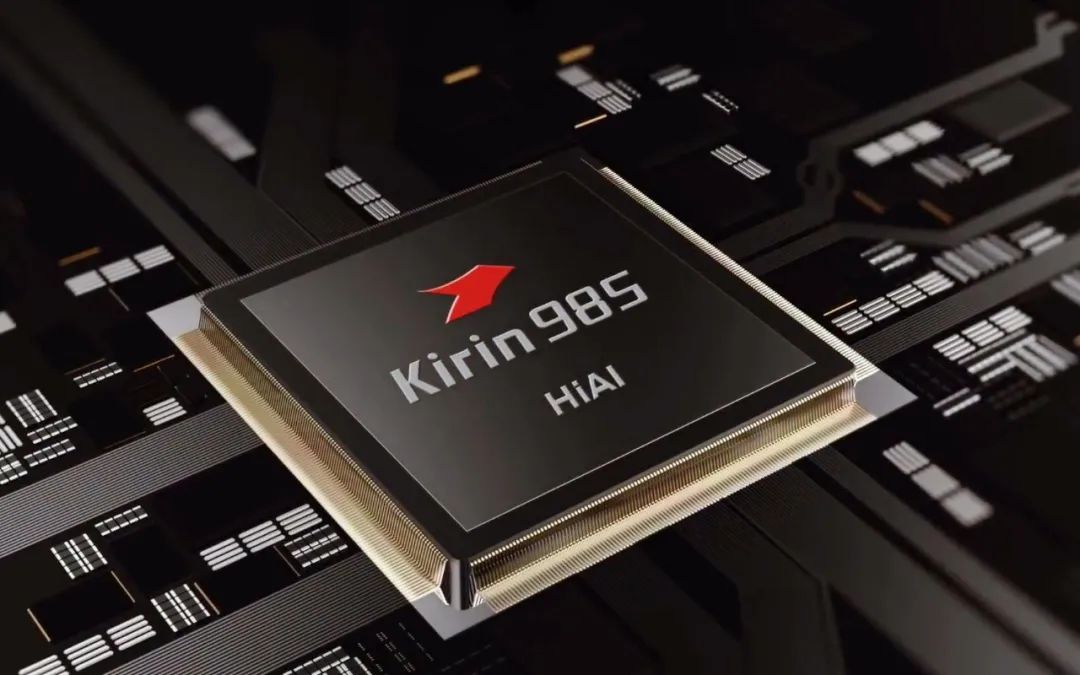
The Kirin 985 not only gives a mismatched impression in terms of release time, but its hardware configuration is also baffling. It is common sense that flagship products should have specifications higher than those of sub-flagship products, yet the Kirin 985’s configuration is actually superior to that of the Kirin 990. Behind this arrangement, the Kirin 990 is merely a temporary transitional product; the true successor to the Kirin 980 is actually the Kirin 985.
Source: The World of Mo Tie (ID: jiangpeiyu0916)
On April 15, Beijing time, Huawei launched the Honor 30 series smartphones. Also making its debut was the Kirin 985 chip. From every aspect, there seems to be no reason for the release of this chip.
Generally speaking, in the product line planning of chips, flagship products sit at the top of the pyramid and are unique. If a series is to be launched, it is often the case that a standard version is released first to establish market reputation before a stronger version is introduced, such as Qualcomm’s Snapdragon 8 series standard and 8 series Plus versions.The Kirin 985 clearly does not follow this routine, and behind this, upon closer inspection, there is a full story.

Mismatched Kirin 985
According to Honor’s president Zhao Ming, the Kirin 985 is positioned between the 820 and 990, in other words, the Kirin 985 is a sub-flagship product. According to normal market practices, the Kirin 985 should be released first, followed by the Kirin 990, but Huawei has gone against this trend, leaving the market confused.
The Kirin 985 not only gives a mismatched impression in terms of release time, but its hardware configuration is also baffling. It is common sense that flagship products should have specifications higher than those of sub-flagship products, yet the Kirin 985’s configuration is actually superior to that of the Kirin 990.
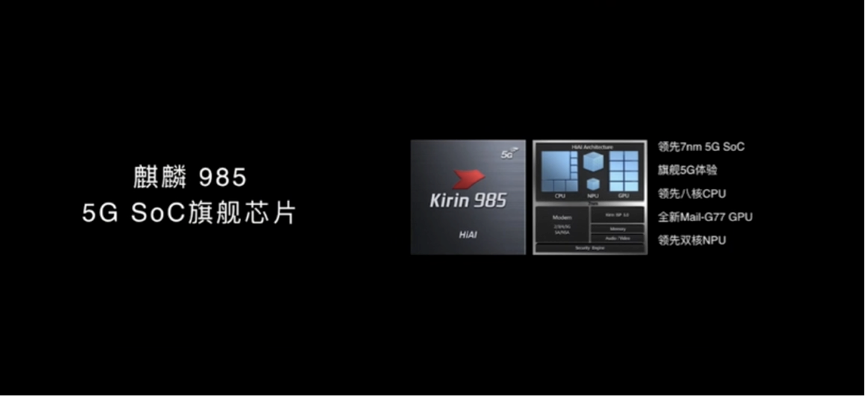
According to Huawei’s public information, the Kirin 985 shares the same cores as the Kirin 990 in 5G Modem, dual-core AI unit, and ISP 5.0 image unit, and the CPU big.LITTLE architecture of both chips is identical, using ARM Cortex-A76 and Cortex-A55.
The difference lies in the GPU core. The Kirin 985 uses ARM’s Mali-G77 GPU, which is a full generation ahead of the Mali-G76 used in the Kirin 990.
The Mali-G77 was released by ARM in May 2019, adopting a brand new architecture named Valhall. It is considered entirely new because from Mali-G71 to Mali-G76, ARM had been using the Bifrost architecture.
ARM has squeezed the GPU cores for several years, resulting in significant disadvantages for partners like MediaTek, Huawei HiSilicon, and Samsung’s mobile SoC chips. In terms of graphics performance, not only were they ruthlessly beaten by Apple’s A series, but they were also harshly attacked by Qualcomm’s Adreno GPUs.
Recently, Samsung’s Exynos chips faced a united boycott from European users, along with news that the mobile division would abandon its Exynos chips in favor of Snapdragon chips. The Exynos chips lag behind Snapdragon in overall performance, largely due to the weak performance of the Bifrost architecture over the years.
To compensate for the performance shortfall of the Bifrost architecture, Huawei introduced GPU Turbo technology to squeeze out its limited performance and shorten the gap with Apple and Qualcomm in graphics performance.
With the advent of Mali-G77, ARM can finally shed the label of weak graphics performance. According to official data, compared to Mali-G76, Mali-G77 has a 30% increase in efficiency, a 30% increase in performance, a 60% increase in machine learning performance, and a 1.4 times increase in performance per square millimeter compared to A76.
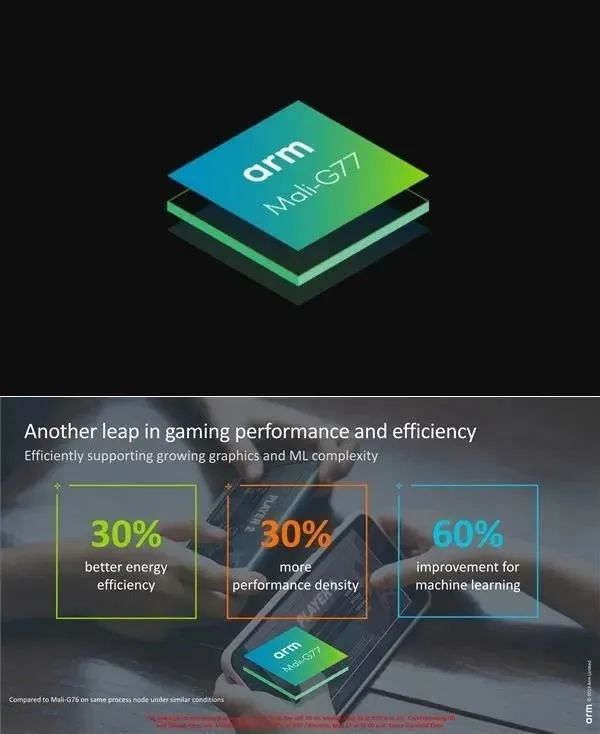
Some institutions have tested and found that the performance of Mali-G77 is close to that of Apple’s A12 chip GPU, surpassing Qualcomm’s existing GPU core Adreno 640, making it a true flagship mobile GPU core.

The Princess’s Body Arranged for a Maid’s Fate
Equipped with the Mali-G77 core, the Kirin 985 is perceived in the market as merely an enhanced version of the Kirin 820, a claim which is baseless and untenable.
However, the flagship-level Mali-G77 is used by Huawei HiSilicon in the Kirin 985, which is positioned half a notch lower than the Kirin 990, while the higher-tier Kirin 990 still uses the outdated Mali-G76. In other words, the hardware configuration of the Kirin 985 is actually stronger than that of the Kirin 990, giving the impression that the product manager has been drinking too much.
What play is Huawei trying to pull?
In order to balance the hardware mismatch and make the Kirin 990’s benchmark scores less embarrassing, Huawei has resorted to numerous suppression techniques on the Kirin 985:
-
The CPU core layout of the Kirin 985 has changed; it does not adopt the Kirin 990’s “4 big cores + 4 little cores” format, but instead uses “1 big core + 3 medium cores + 4 little cores”;
-
The maximum operating frequency of the Kirin 985’s CPU has been lowered, with the big core (2.58GHz) and little core (1.84GHz) being 280MHz and 110MHz lower than the Kirin 990, respectively. Do not underestimate this less than 0.3GHz difference; at Qualcomm, a 0.11GHz difference is the distinction between Snapdragon 855 and Snapdragon 855 Plus;
-
The GPU core of the Kirin 985 is the more advanced Mali-G77; if both chips had the same number of GPU cores, the Kirin 990 would be thoroughly beaten by the 985. Hence, the number of GPU cores in the Kirin 985 is set to 8, while the Kirin 990 has 16, with the 16 “dwarfs” maintaining the flagship’s facade through sheer numbers.
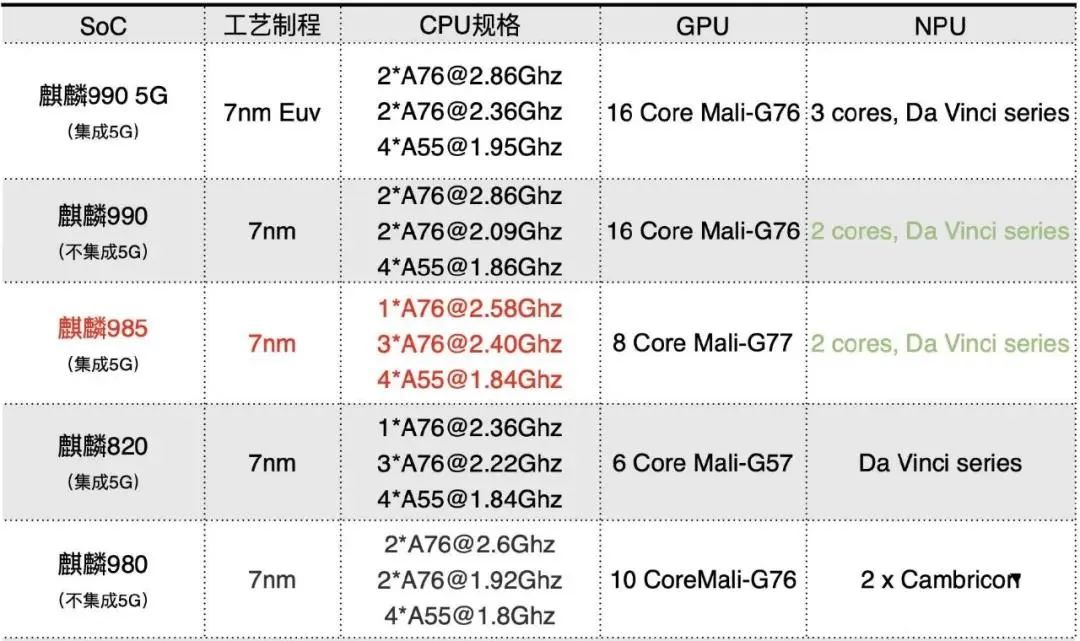
It can be seen that the Kirin 985 has a lead over the Kirin 990 in hardware (GPU) configuration, possessing the body of a princess but being forced into the fate of a maid by the designers, relegated to a position beneath the Kirin 990.

A Bittersweet Story of Domestic Chip Design
With Huawei HiSilicon’s more than a decade of chip design experience and a design team of tens of thousands, how could such a blatant and low-level mistake occur? The answer is simple: the Kirin 990 is merely a temporary transitional product, while the true successor to the Kirin 980 is the Kirin 985.
On August 23, 2019, a PPT from Huawei’s event featured the Kirin 985, leading to speculation that Huawei would launch two chips: the Kirin 985 and the Kirin 990. Those who closely follow Huawei’s chip development could easily see that the Kirin 985 is clearly a minor revision product, while the Kirin 990 is a completely new upgrade.
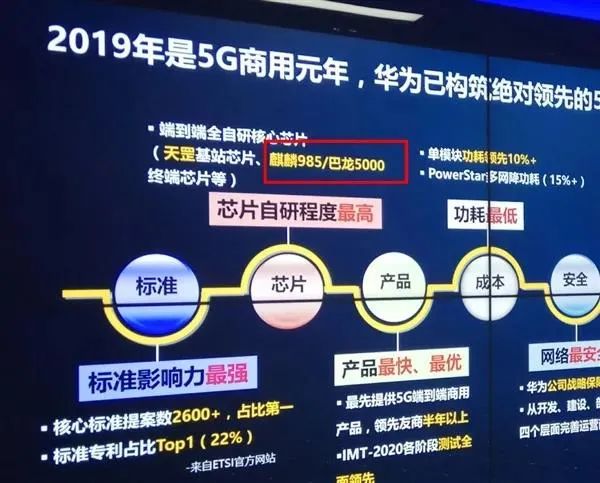
However, when Huawei finally unveiled the Kirin 990 on September 6, everyone found that it was merely a Kirin 980+ with an integrated Balong 5G modem, completely missing the ARM’s newly launched Cortex-A77 CPU core and Mali-G77 GPU core. At that time, Huawei had already been placed on the U.S. Entity List, and ARM withdrew its staff stationed at Huawei, leading to concerns that the design of Kirin chips might face difficulties. The Kirin 990’s lack of innovation undoubtedly solidified this speculation.
Huawei’s consumer business CEO Yu Chengdong later explained that the Kirin 990 did not adopt the Cortex-A77 CPU core due to excessive heat generation. However, by the end of that year, Qualcomm launched the Snapdragon 865, which used the Cortex-A77 core, and the smartphones that adopted it proved that the new CPU core had controllable heat generation and significant performance improvements.
From this, it can be inferred that the absence of ARM’s new core in the Kirin 990 was likely a reluctant choice. The complete design cycle of a high-end SoC chip is typically two to three years, and rarely do companies take risks to change cores midway. Therefore, the existing Kirin 985, which adopts the new Mali-G77 GPU core, was likely designed as early as 2018 and is actually the true form of the Kirin 990.
However, due to the impact of the Entity List, the Kirin 990 with the new core was put on hold. As the release date for the chip approached, Huawei HiSilicon had no choice but to launch the Kirin 980+ with the integrated Balong modem as a stopgap measure. Huawei’s initial idea may have been to name this minor revision chip Kirin 985 (as seen in the PPT leaked on August 23), but for market strategy considerations, they changed it to the entirely new name “Kirin 990.”
This clever and roundabout market tactic reflects a bittersweet story of domestic chip design and the direction of future efforts.
However, it is somewhat reassuring that ARM later restored its full cooperation with Huawei HiSilicon, and the Kirin 985 equipped with the Mali-G77 GPU core serves as a silent testament to this. At the same time, it also suggests that in September 2020, Huawei will bring a brand new upgraded Kirin flagship chip.


Click to See, Instantly Become Better Looking