Author: Qian YuSource: Yangcheng Evening News • Yangcheng Pai
On November 24, at the 2025 RISC-V Industry Development Conference and RDSA International Forum, Academician Ni Guangnan from the Chinese Academy of Engineering mentioned in his speech that NVIDIA has launched a compatibility plan for RISC-V with CUDA. This is a significant message. Xiao Qing, Chief Expert of China Mobile and General Manager of ChipRise Technology, felt the overwhelming confidence on site: “The industry shock has occurred, and GPU manufacturers must re-examine new technologies. Now, we are standing on the eve of the RISC-V explosion.”
For a long time, CUDA has been NVIDIA’s solid “moat”: any chip that cannot access its ecosystem is almost doomed to become a computing island. Now, CUDA no longer serves only X86 and ARM but opens its arms to the open-source RISC-V. This means that RISC-V has knocked on the door of the AI core ecosystem.
For Chinese cities, this is not only a technological evolution but also a strategic choice. When high-end computing faces external constraints, RISC-V, with its open, flexible, and low-threshold characteristics, not only opens the door to the global AI ecosystem but also paves the way for independent and controllable innovation. Can Zhuhai find its place in this technological transformation?
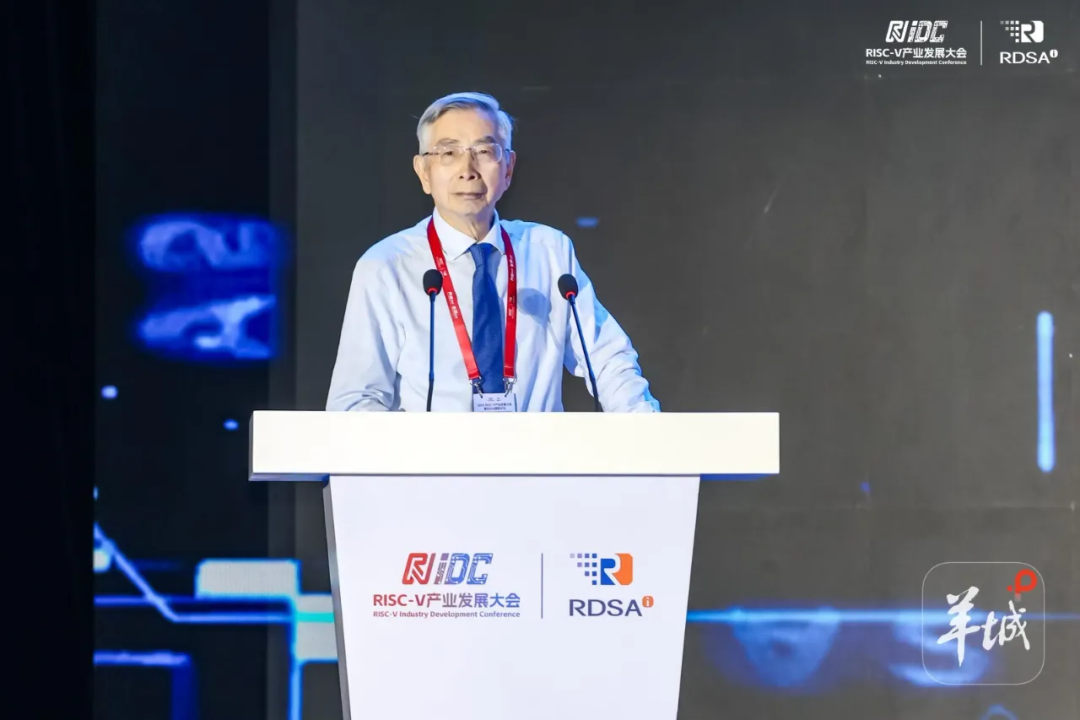
Academician Ni Guangnan from the Chinese Academy of Engineering
Breaking Barriers with Open Source, Building a New Foundation Together
To understand the value of RISC-V, it can be viewed as a set of open-source “language rules” for chips. Just as humans communicate in Chinese and English, CPUs also need instruction sets to understand software commands. For decades, this “language” has been firmly controlled by two foreign companies: Intel’s X86 dominates computers and servers, while the ARM architecture leads in mobile phones and smart devices. Want to use it? Either pay a high licensing fee or face the risk of being “cut off” at any time.
The emergence of RISC-V breaks this monopoly. Initiated by the University of California, Berkeley in 2010, its truly revolutionary aspect is its completely open-source, free, and patent barrier-free nature. Anyone, enterprise, or country can freely use, modify, or even commercialize it without permission, without the fear of being “kicked out of the group chat.” This openness has led to it being dubbed the “Linux of the chip world”—just as Linux dismantled the closed empire of operating systems, RISC-V is shaking the power structure of underlying computing architectures.
Dr. Jiang Zhaohui, founder and CEO of LeapFrog Technology, uses a vivid metaphor to clarify the essence: “Traditional X86 or ARM architectures are like a buffet, with dozens of dishes in front of you; you only eat a few but have to pay for the whole table.” RISC-V gives cities, enterprises, and specific application scenarios the freedom to “custom order”: not passively accepting general computing power but actively defining exclusive intelligence.
This strategy of “precise computing power” aligns perfectly with Zhuhai’s development path. In Dr. Jiang’s view, Zhuhai has three unique advantages: first, it is adjacent to Hong Kong and Macau, facilitating cross-border talent flow; second, Zhuhai has deeply integrated the entire city into the national science and technology strategy pilot, with the government actively opening real application scenarios such as robotics, low-altitude economy, and semiconductor design, allowing technology to be quickly verified and iterated in practice; third, Zhuhai has built a new ecosystem from chip design to system integration, possessing strong plasticity and development potential. She further outlines the future industrial landscape of Zhuhai: centered around RISC-V, linking upstream, midstream, and downstream to create a full chain covering “chip—module—complete machine—application.” Especially in the field of home service robots, she sees huge potential: “In the future, every household may have multiple robots, urgently needing a large number of customized, low-power intelligent chips. If Zhuhai can achieve full-chain collaboration first, it is expected to form an innovative cluster of smart terminals with national influence.”
In her view, betting on RISC-V is not just a choice of technical route for Zhuhai, but a strategic positioning for the intelligent era. “Other cities are also exploring similar paths, but Zhuhai has real scenarios, policy support, and geographical advantages in the Bay Area,” she said. “When a city no longer just purchases computing power but begins to define computing power and output standards, it stands at the forefront of global technological innovation.”
According to Chen Renxiang, Director of Deep Intelligence Sales and Services, the combination of RISC-V and artificial intelligence is not coincidental but a trend. First, the current large model ecosystem is highly open, and RISC-V inherently possesses open-source genes, making the two concepts naturally compatible; second, the demand for AI computing power is exploding, while global data centers are facing severe energy consumption bottlenecks. “Intensive computing requires massive electricity, while RISC-V can significantly reduce overall power consumption under the same performance, which is crucial for building sustainable AI infrastructure,” he emphasized. More importantly, RISC-V supports modular expansion, allowing for the customization of acceleration units for scenarios such as voice recognition and edge inference, achieving “precise computing power.” IEEE/OSA Fellow and Professor Yu Jie from the Hong Kong University of Science and Technology added: “Open-source instruction sets can reduce licensing fee risks, and hardware-level architecture optimization can create added value; in the context of geopolitical issues, open-source ecosystems help break through equipment compatibility limitations.”“
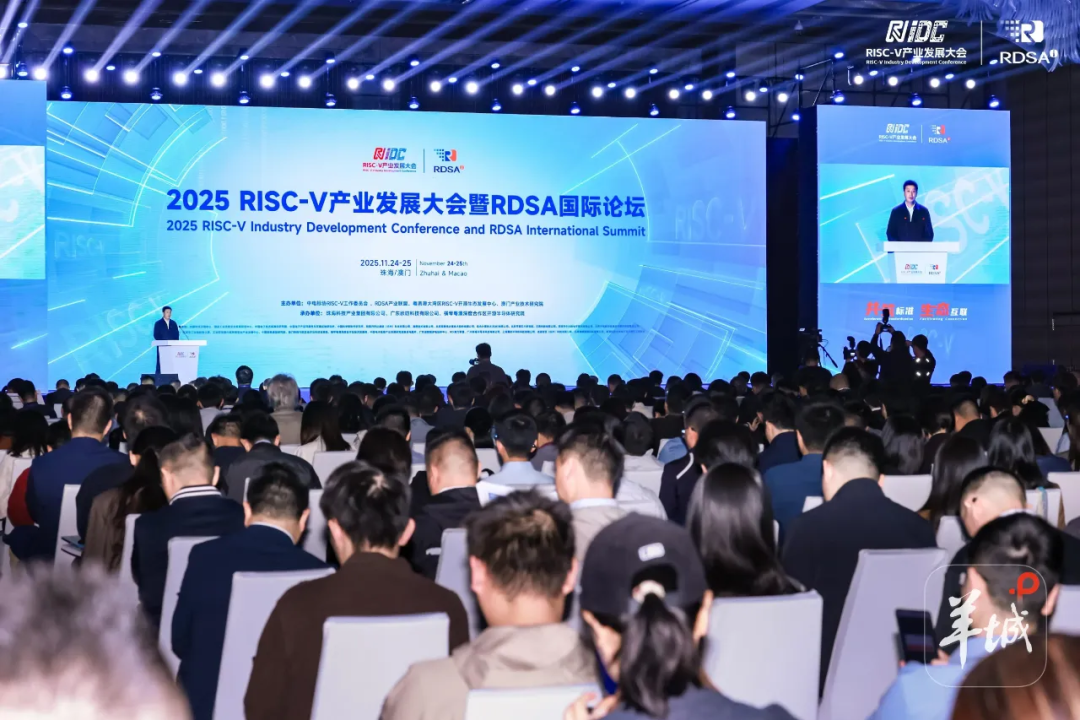
Forum Scene
Anchoring Scenarios, Activating Terminals
The cutting-edge judgments of enterprises are turning into concrete actions in Zhuhai.
“New quality productivity is accelerating to empower various industries, bringing new opportunities to Zhuhai, which is in a stage of catching up and surpassing,” said Chen Yong, Secretary of the Zhuhai Municipal Party Committee and Secretary of the Hengqin Working Committee of the Provincial Party Committee. Facing the new journey of the 14th Five-Year Plan, Zhuhai, as a special economic zone and a key city in the Greater Bay Area, must demonstrate its special zone responsibility in promoting high-quality development and leading new quality productivity.
Anchoring this goal, Zhuhai is deeply integrating industrial innovation, technological innovation, and application scenario innovation as the core path to accelerate the construction of a modern industrial system with distinct Zhuhai characteristics—
On one hand, it continues to deepen the construction of “Smart City in the Cloud” and “Sky City,” precisely laying out cutting-edge new tracks such as brain-like intelligence, open-source ecology, humanoid robots, and low-altitude economy, seizing the initiative in future industrial development; on the other hand, it uses “new infrastructure at sea” as an important traction to promote the high-quality development of the marine economy.
RISC-V is the core lever for Zhuhai to layout new tracks and cultivate new quality productivity.
In recent years, Zhuhai has keenly observed the strategic value of the RISC-V open-source ecosystem, making forward-looking layouts and precise efforts to actively promote the construction of the RISC-V open-source ecosystem: based on the integrated circuit industry foundation and sufficient talent reserves, it was the first to include the RISC-V open-source ecosystem in special support policies; and relying on the construction of the “Smart City in the Cloud,” it has opened more than 20 high-value urban application scenarios in advance to promote the landing and demonstration of RISC-V technology. In September last year, the world’s first industry innovation cooperation organization based on RISC-V architecture—RDSA Industry Alliance—was officially established in Zhuhai.
Chen Yong proposed that Zhuhai is an ideal place for the RISC-V open-source ecosystem to take root and develop, and it should leverage platforms like the RDSA Industry Alliance to gather global industry chain wisdom and strength, making Zhuhai a RISC-V innovation highland with significant international influence and demonstration.
On this basis, this year Zhuhai further deepened its ecological layout, fully creating a national-level RISC-V ecological innovation center—the Guangdong-Hong Kong-Macao Greater Bay Area RISC-V Open Source Ecological Development Center. This center is supported by “three major platforms”: among them, the basic research platform is mainly represented by the Hengqin Guangdong-Macao Deep Cooperation Zone Open Source Semiconductor Research Institute and the country’s first RISC-V chip compatibility testing and verification innovation center, promoting breakthroughs in aspects such as high-speed interconnection research of chiplets, development of domain-specific accelerators (DSA), basic software development, and compatibility testing and verification; the application innovation platform is mainly represented by the RISC-V ecological application innovation center in the Zhuhai West Science City; the open-source community platform includes the RDSA Industry Alliance, etc., relying on the Greater Bay Area’s frontier position of openness to build an international open-source community.
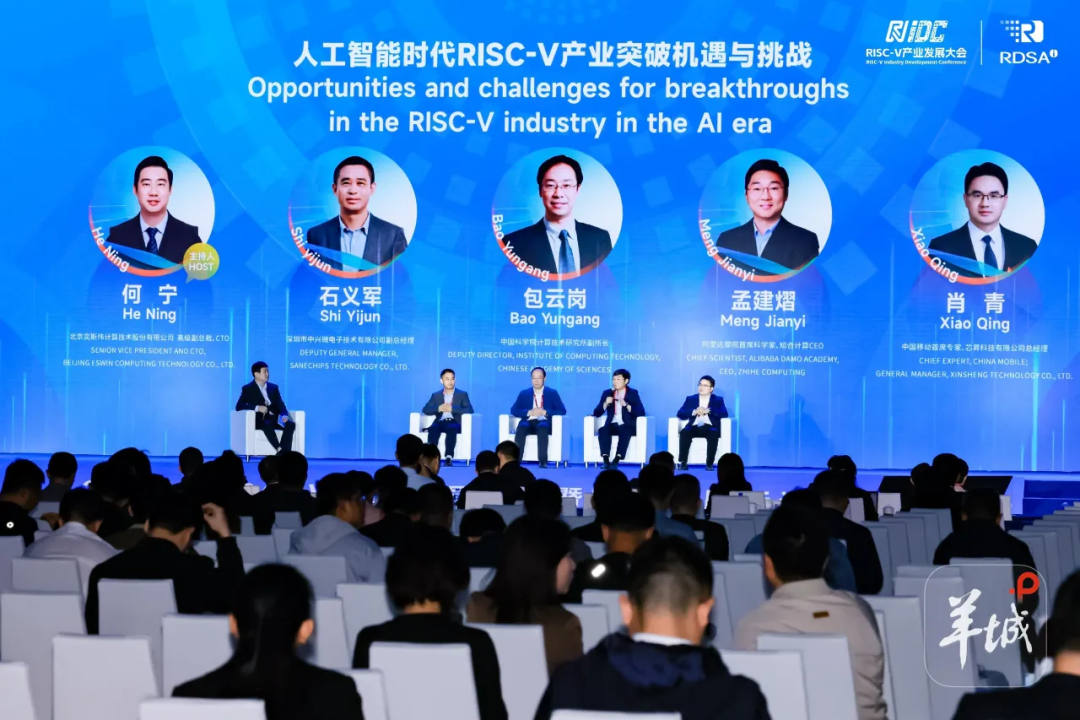
Event Scene
Integrating Standards, Co-creating Ecosystems
For cities, the value of RISC-V lies in making application scenarios truly the starting point for defining computing power.
Yang Longbo, General Manager of the Communication Chip Division of ChipRise Technology, has been deeply involved in the industry for over 20 years and has witnessed the gradual prosperity of RISC-V in China. Today, related products cover multiple fields such as the Internet of Things and intelligent connected vehicles, and are accelerating deep expansion into high value-added scenarios. In his view, Zhuhai possesses four major conditions: talent aggregation, industrial support, economic foundation, and policy support, with the government accelerating the formation of industrial “chains and clusters” through precise investment attraction.
Formerly, Zeng Yi, founder of Sunbird Technology, reminded that amidst the enthusiasm, one must think coolly: “China has the world’s largest application scenarios, just as the internet rose more than a decade ago, and today, this dividend is flowing towards artificial intelligence and open-source chips. But building an ecosystem requires not only solving chips but also addressing a series of issues such as compilers, models, and underlying libraries to construct a complete ecological closed loop.” To this end, Sunbird has established a frontier laboratory in Hengqin, linking advanced algorithms from overseas returnees with the real needs of local robots and low-altitude economy. “RISC-V is an excellent entry point, but the real endgame is computing power and artificial intelligence. This is also what we should think about, and we cannot limit ourselves to a narrow space.”
According to Meng Jianyi, Chief Scientist of Alibaba Damo Academy and CEO of Zhihui Computing, cities can collaborate with local enterprises to customize chips tailored for industrial development based on real application scenarios. “Using RISC-V, we can align with needs from the bottom up, saving energy while being efficient and allowing for rapid iteration.” This model of “promoting research through use and defining chips by demand” is key for regional cities to achieve differentiated breakthroughs. According to Meng Jianyi’s prediction, in the next 2 to 3 years, when RISC-V’s market share exceeds 50% in a certain niche market, a critical point will be reached: chips are easy to use, complete machines are profitable, and the ecosystem will self-generate, forming a positive cycle.
More importantly, RISC-V promotes cities to shift from “technology consumers” to “co-builders of rules.” If the construction of smart cities relies solely on piling up standard products, it will ultimately fall into homogenization; if the underlying computing power is deeply integrated with local industries, it will forge an irreplaceable core competitiveness while also being able to output system-level solutions that are “scenario-driven and soft-hard coordinated”—the entire country can become its market hinterland.
There are still challenges ahead: insufficient talent reserves, a thin software stack, and the chip design to verification cycle often takes five to six years. However, Meng Jianyi firmly believes that as long as we adhere to “starting from applications, leading with lighthouse products, and relying on standard unification and collaboration,” RISC-V can steadily take root in the new track. In his view, Zhuhai’s unique endowment lies in its “deep application soil, strong enterprise transformation capability, and large terminal shipment volume.” He suggests that Zhuhai focus on real scenarios and promote the large-scale landing of RISC-V chips in mass-produced terminals. Only in this way can it transform application advantages into technological discourse power and achieve a leap from follower to leader.
Not seeking immediate gains but planning for long-term strategies; not being limited by the original structure but reshaping results with new rules. This is the true gift that RISC-V brings to cities: not the technology itself, but the ability to define the future.
Link:
CUDA (Compute Unified Device Architecture):
Is a general parallel computing platform and programming model launched by NVIDIA, which abstracts GPU hardware details, allowing developers to utilize the massive cores of GPUs for general computing. Essentially, it transforms GPUs from “graphics cards” into “general computing engines.” In the early stages of CUDA development in 2004, NVIDIA invested $500 million annually (accounting for 1/6 of its revenue at the time) but faced skepticism from Wall Street, which valued it at zero. Jensen Huang persisted against the odds, ultimately allowing CUDA to grow from a “non-profitable side business” to the company’s core competitiveness: today, GPU sales based on CUDA reach millions, covering dozens of fields such as image/video processing, computational biology, and seismic analysis, propelling NVIDIA to become an important “arms dealer” in the AI era.