In-Depth Analysis of the Chip Trade Industry Series (Total of Seven Articles)
This article is a rewritten version of a video for easier reading. The original video is approximately 1 hour and 11 minutes long, and the complete video can be accessed by replying with the keyword “chip” on our public account. This series is divided into Seven articles, and this is the second one.
Second Article: “Is Chip Distribution ‘High-End’ or Just ‘Middlemen’? A Real Interpretation of Industry Barriers“
Core Theme
Clarifying the misunderstandings about chip distribution (either ‘high-end’ or ‘low barrier’), revealing the true situation of ‘barriers within the door’ — it’s easy to enter, but to excel, one must overcome multiple steps ‘inside the door’.
Content Highlights
- Misunderstanding 1: “Selling chips = reselling” — In reality, it requires understanding capacity, market, application scenarios, customer needs, and even localization progress;
- Misunderstanding 2: “Chip design is high barrier, distribution is low” — Design and distribution are different tracks; the former relies on R&D breakthroughs, while the latter depends on ‘professional capabilities within the door’;
- Real Barriers: The threefold capabilities ‘inside the door’ (familiarity with chip parameters and performance, understanding application scenarios and customer needs, mastering upstream and downstream resources and capacity);
- Personal Story: From knowing nothing about chips to daring to stock 80 million worth of goods, relying on 10 years of experience to understand ‘which chip is used in bombs, radars, and which is supplied to Boeing and Raytheon’;
- Case Studies: Some were eliminated by customers due to ignorance of chip parameters, some faced inventory backlog due to misjudging localization progress, while others made a fortune by accurately controlling capacity.
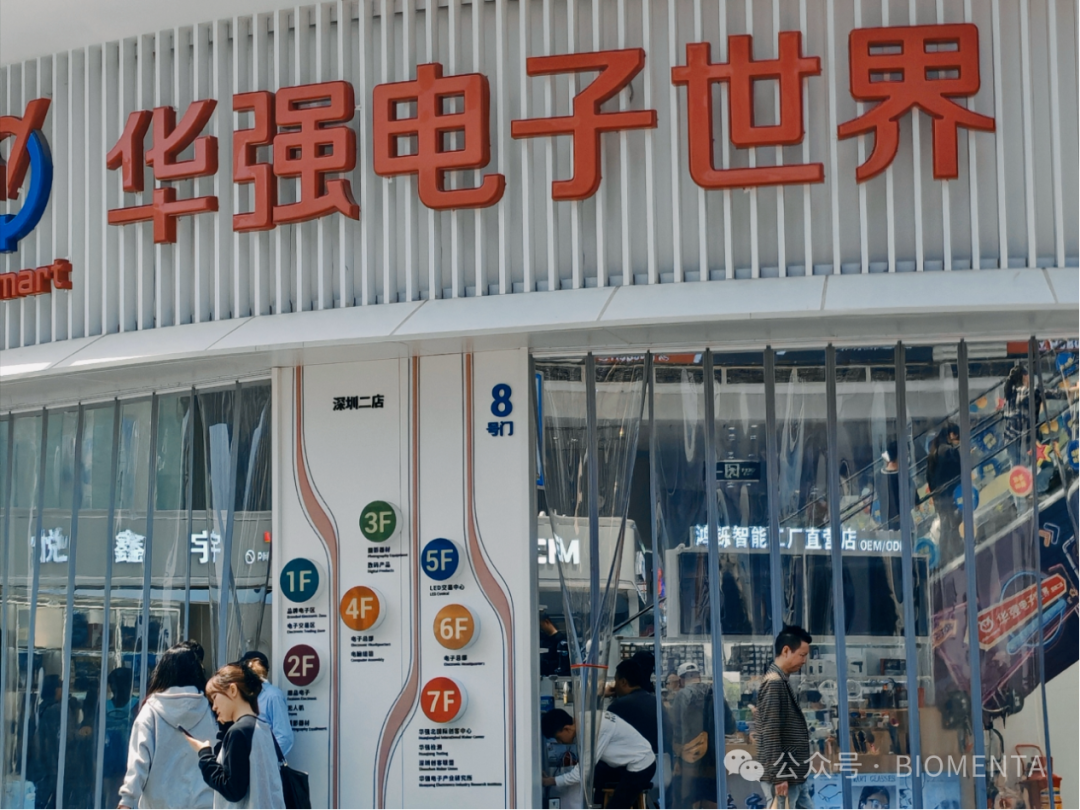
The ‘Threefold Door’ of the Distribution Industry
Public perception of chip distribution often falls into two extremes: some believe that ‘being able to access such high-tech chips must be high-end’, while others say ‘it’s just middlemen reselling, anyone can do it’. In fact, both views are too one-sided; the barriers of chip distribution are hidden ‘inside the door’, specifically comprising three levels:
First Barrier: Understanding Chips — Don’t think selling goods doesn’t require technical knowledgeChips are not ordinary commodities; chips with the same model may have vastly different applications due to packaging and temperature ratings. For example, a military customer will ask about the ‘electromagnetic interference resistance level’, an automotive customer cares about ‘stability from -40℃ to 125℃’, while a consumer electronics customer only looks at ‘bulk pricing’. If you can’t answer, the customer will just think you’re unprofessional.
Just like a friend of mine who switched from health products, he was confused when asked by a customer during his first meeting: “Can this chip’s ESD protection withstand 2000V? How much will the power consumption increase at 85℃?” He was stumped on the spot and later spent two years on technical forums and dismantling circuit boards before he dared to say, ‘I understand the specifications.’ Someone who doesn’t even understand series and parallel connections can indeed enter the chip selling business, but to avoid being eliminated, they must overcome this technical knowledge barrier.
Second Barrier: Understanding Customers — Knowing where chips are used is more important than knowing the priceSelling chips is not just about quoting a price; you need to understand what the customer is doing with the chips. For example, a DSP chip might be used in radar in China, supplied to Boeing or Lockheed Martin abroad, and some projects in Russia are also using it — if you don’t know this information, stockpiling could lead to losses.
A few years ago, I dared to stock 80 million worth of a DSP chip because I had sold it for ten years and understood: which military units in China were using it, who the core customers abroad were, how much wafer capacity there was, and even the localization progress of alternative models. Just like selling houses requires knowing ‘the orientation of the layout and surrounding facilities’, selling chips requires knowing ‘which chip is used in bombs and which is used in washing machines’; otherwise, if a customer says, ‘I need a chip that can be used in missiles’, and you recommend a civilian-grade one, you will definitely lose the order.
Third Barrier: Understanding Resources — Capacity, inventory, and channels are all essentialSome say, ‘Isn’t distribution just buying low and selling high?’ But when it comes to practice, you realize that if a customer wants delivery in 4 weeks, but the original factory’s schedule is 8 weeks, whether you can source from other channels depends entirely on your resources. For example, if a certain MCU model has an 8-week production cycle at TSMC, you need to know this in advance to provide the customer with a reliable delivery date; otherwise, if you promise something you can’t deliver, no one will come to you next time.
In Huaqiangbei, there are bosses who graduated from middle school but can make a fortune by spending years in the original factory warehouse, understanding ‘how much TSMC supplies this company each month’ and ‘the scheduling of the Malaysian packaging and testing factory’, accurately predicting shortages, earning more than graduates from prestigious universities; while there are also newcomers who have stock but end up losing money because they didn’t know ‘a certain chip’s domestic alternative model has already gone into mass production’, leaving them with a pile of imported goods that they can only clear at a loss.
Advice for Newcomers
The overall barrier to chip distribution is indeed not high, so the industry is mixed with varying levels of expertise, but there are also many skilled professionals worth looking up to. Newcomers wanting to enter the industry must understand: it is easy to get started, but to excel, one must be familiar with chip model characteristics, advantages of various brands, establish customer relationships, master upstream and downstream resources, and clearly understand which customers use which chips and their needs.
Just like live streaming, anyone can start a broadcast, but very few can retain viewers; selling chips is similar; anyone can sell, but those who can make money and sustain their business are those who have overcome the barriers ‘inside the door’.
Next Article Preview
In the third article, we will explore:Chip Classification and Distribution Models: What are the differences between consumer-grade, industrial-grade, and military-grade? Stay tuned!
Today’s Recommendation
After a busy day, why not try Juechen 38-degree white liquor? It tastes better when chilled, with a smooth entry and a long-lasting aftertaste.