The IPC-4554 specification, officially titled “Specification for Immersion Tin Plating for Printed Circuit Boards,” is one of a series of standards published by IPC (the Institute for Printed Circuits) regarding surface treatments for printed circuit boards (PCBs). Below is a detailed interpretation of the IPC-4554 specification:
1. Introduction
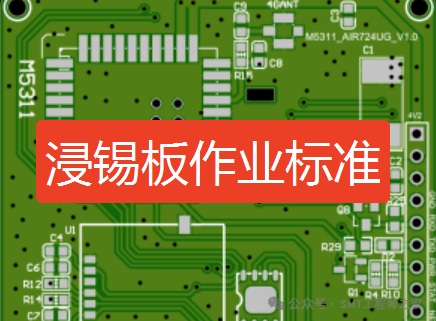
The IPC-4554 specification is part of the IPC-455X series, which aims to define alternative surface treatments for printed circuit boards (PCBs) to replace traditional non-coplanar finishes, such as tin-lead HASL finishes. The IPC-4554 specification specifically focuses on immersion tin (ISn) as a surface treatment process, aiming to ensure the reliability and repeatability of its soldering performance and to address the issue of the effective lifespan of the tin layer, which is difficult to maintain for more than six months.
2. Scope of Application
The IPC-4554 specification applies to the production of immersion tin (ISn) used as a surface treatment for printed circuit boards. It covers the entire supply chain from suppliers or PCB manufacturers, electroplating chemical suppliers, contract assemblers, or EMS facilities to original equipment manufacturers (OEMs). The requirements in the specification are designed to ensure that the immersion tin surface treatment meets specific performance standards, including soldering performance, shelf life, coating thickness, porosity, adhesion, solderability, and whisker issues.
3. Background and Purpose of the Specification
-
Background: The surface treatment of printed circuit boards (PCBs) is crucial for their soldering performance and reliability. Immersion tin (ISn) surface treatment, as a common method for PCB surface treatment, serves a dual purpose: it provides a protective layer to prevent copper oxidation and forms a reliable solderable surface. However, the strong affinity between copper and tin leads to copper-tin diffusion, compromising the integrity of the tin layer and causing subsurface oxidation, which affects the shelf life and solderability of components.
-
Purpose: The IPC-4554 specification aims to define standard tin thickness to ensure reliable solderable surface treatment for all surface mount and through-hole assembly applications and to extend the shelf life of components.
4. Key Provisions and Technical Details
4.1 Overview of Immersion Tin Surface Treatment
Immersion tin surface treatment involves the direct deposition of a monolayer of tin onto the copper surface of the printed circuit board through a chemical displacement reaction. This tin layer serves a dual purpose: on one hand, it provides a protective layer to prevent copper oxidation; on the other hand, it forms a reliable solderable surface. Tin is also used at bonding points and as an interface for zero insertion force (ZIF) edge connectors. However, the specification primarily focuses on tin used as the surface for solder joints.
-
Requirements for Immersion Tin Surface Treatment:
-
The immersion tin layer should be smooth and completely cover the coated surface.
-
The thickness of the immersion tin should meet certain standards to ensure soldering performance and reliability. Specifically, for a pad area of 2.25 mm² (or 3.600 E-3 in²), if the process control is at 4σ, the minimum thickness is 1 μm (or 40 μin), with the process mean generally ranging from 1.15 μm to 1.3 μm.
4.2 Copper and Tin Diffusion Issues
The strong affinity between copper and tin leads to diffusion over time across the copper-tin boundary. This diffusion damages the integrity of the tin layer on the copper layer and causes subsurface oxidation. Therefore, delaying this inevitable diffusion is key to extending the shelf life of components.
4.3 Thickness of Tin Coating
The thickness of the tin coating is a critical factor determining the lifespan of components. The IPC-4554 specification aims to define standard tin thickness that manufacturers can adopt to achieve reliable solderable surface treatment for all surface mount and through-hole assembly applications. Compliance with this specification will ensure that components meeting J-STD-003 Class 3 durability have a shelf life of six months.
4.4 Coating Thickness Measurement
Due to the tendency of copper to diffuse into the upper tin layer, which adversely affects solderability and shelf life, precise measurement of the tin layer thickness is crucial. XRF (X-ray fluorescence) instruments are commonly used to measure coating thickness. However, older equipment may struggle to distinguish between tin and other elements present in the coating, leading to inaccurate readings. The IPC-4554 specification provides detailed calibration instructions for XRF instruments, including standard samples specifically for such measurements, helping manufacturers achieve accurate measurement results.
4.5 Use of Polymer Surface Films
The specification comprehensively discusses the use of polymer surface films to avoid the impact of diffusion on measurement results. It also provides recommendations on how to incorporate this into the calibration of XRF instruments in production scenarios.
-
XRF Instrument Calibration Measurement and Calibration:
-
Use XRF (X-ray fluorescence) instruments to measure coating thickness. However, due to the difficulty older equipment may have in distinguishing between tin and other elements in the coating, leading to inaccurate readings, the IPC-4554 specification provides detailed calibration instructions for XRF instruments.
-
The specification includes standard samples specifically for such measurements, helping manufacturers achieve accurate measurement results.
-
The use of polymer surface films is comprehensively discussed to avoid the impact of diffusion on measurement results, and recommendations are provided on how to incorporate this into the calibration of XRF instruments in production scenarios.
4.6 Visual Inspection and Performance Testing
The IPC-4554 specification includes visual inspection of the surface treatment, as well as checks for thickness parameters, porosity, adhesion, solderability, and whisker issues. These tests aim to ensure that the immersion tin surface treatment meets specific performance standards and complies with the requirements of the specification.
-
1) Visual Inspection: Ensure the surface of the immersion tin layer is smooth and defect-free.
-
2) Porosity Check: Ensure there are no signs of coating delamination or solder mask delamination (not all solder masks meet this requirement).
-
3) Adhesion Check: Assess the bond strength between the immersion tin layer and the substrate.
-
4) Solderability Check: Meet the solderability requirements for J-STD-003 Class 3 durability (over six months of shelf life).
-
5) Whisker Issue Check: Assess the likelihood of whisker formation from the immersion tin layer under specific usage conditions and their potential impact on the long-term reliability of the module.
5. Other Important Information in the Specification
5.1 Alternatives to Traditional Surface Treatments
In light of the trend towards lead-free surface treatments, IPC released the IPC-4554 specification in January 2007 as one of a series of standards for surface treatments to replace tin-lead solder. The first two published specifications are IPC-4552 and IPC-4553, which address electroless nickel immersion gold and immersion silver, respectively. The IPC-4554 specification provides PCB manufacturers with a viable lead-free surface treatment option.
5.2 Shelf Life of Immersion Tin Coatings
Within the expected shelf life of the coatings described in IPC/EIA J-STD-003, immersion tin coatings protect the underlying copper from oxidation. This specification defines immersion tin coatings as Class 3 durability finishes (with a storage period exceeding six months). This means that immersion tin surface treatments compliant with IPC-4554 should provide at least six months of shelf life.
5.3 Solderability and Solder Selection
The specification provides more details on the solderability of immersion tin, including the use of tin-lead solder and the use of appropriate flux for “lead-free” solder. This helps manufacturers make informed decisions when selecting solder to ensure the solderability and reliability of immersion tin surface treatments.
6. Importance of Compliance with the Specification
-
Compliance with the IPC-4554 specification ensures the reliability and repeatability of soldering performance for PCB surface treatments.
-
By defining standard tin thickness, manufacturers can achieve reliable solderable surface treatment for all surface mount and through-hole assembly applications.
-
Extend the shelf life of components and reduce quality issues caused by copper-tin diffusion.
-
Improve product interconnectivity and compatibility, facilitating product assembly and maintenance.
7. Application and Impact of the Specification
7.1 Improving Product Quality and Reliability
Compliance with the IPC-4554 specification will help improve the quality and reliability of immersion tin surface treatments for printed circuit boards. By ensuring that key performance parameters such as coating thickness, solderability, and adhesion meet the specification’s requirements, manufacturers can produce more reliable and durable electronic products.
7.2 Promoting Lead-Free Processes
The IPC-4554 specification, as one of a series of standards for surface treatments to replace tin-lead solder, helps promote lead-free processes. With increasing environmental awareness and stricter regulations, lead-free surface treatments have become an inevitable trend in the electronics manufacturing industry. The IPC-4554 specification provides manufacturers with a viable lead-free surface treatment option, helping them meet regulatory requirements and reduce environmental impact.
7.3 Promoting Industry Standardization
The release and implementation of the IPC-4554 specification help promote the standardization process in the industry. By establishing unified standards and requirements, the specification helps ensure consistent quality and performance of printed circuit boards produced by different manufacturers. This helps reduce production costs, improve production efficiency, and promote technological innovation.
8. Implementation Recommendations
-
Manufacturers should strictly adhere to the IPC-4554 specification during production to ensure that all requirements for immersion tin surface treatment are met.
-
Regularly calibrate and maintain XRF instruments to ensure measurement accuracy.
-
Strictly control key parameters in the production process, such as immersion time and temperature.
-
Enhance quality inspection and monitoring to promptly identify and address quality issues.
9. Conclusion
The IPC-4554 specification is an important part of the IPC-455X series concerning immersion tin treatment for printed circuit boards. It covers various aspects, from an overview of surface treatment, copper and tin diffusion issues, tin coating thickness, coating thickness measurement, the use of polymer surface films, to visual inspection and performance testing. Compliance with this specification will help improve the quality and reliability of immersion tin surface treatments for printed circuit boards, promote lead-free processes, and facilitate industry standardization.
The above content has covered the main points and key provisions of the IPC-4554 specification. For more detailed information, it is recommended to refer directly to the original IPC-4554 specification or related literature.
Please note that the above interpretation is based on currently available information and materials and may change with updates and revisions to IPC standards. Therefore, in practical applications, it is essential to consult the latest IPC-4554 specification to ensure accuracy and compliance.