Abstract
As the mother of electronic devices, PCBs have a wide range of applications and a vast array of categories. They are used in consumer electronics such as smartphones, wearable devices, and laptops, as well as in computing infrastructure like servers, storage, switches, and optical modules. Therefore, it is essential to study the investment opportunities in PCBs, distinguishing between types to identify which categories have greater potential or performance elasticity, which is the focus of our analysis.
Three Core Classification Dimensions of PCBs
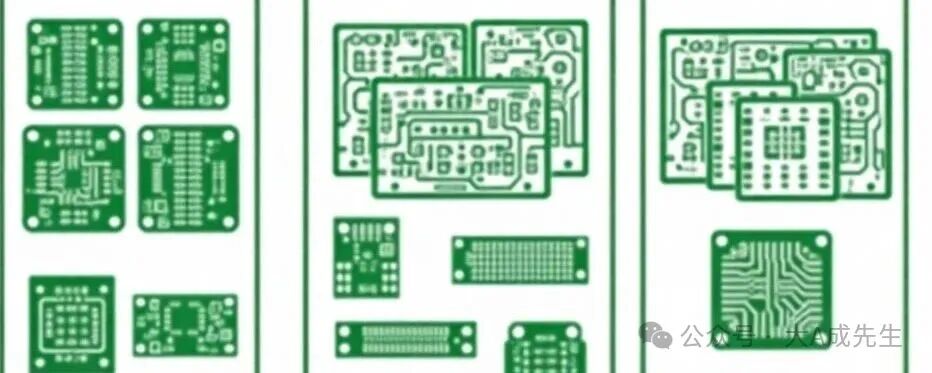
PCBs can be classified based on the number of layers in the circuit, product structure, and product usage.
-
(1) Classification by the number of circuit layers: divided into single-sided, double-sided, and multi-layer boards. The higher the number of layers, the greater the value. The core advantage of multi-layer boards is the ability to overcome “routing space limitations,” accommodating the needs of more complex electronic devices. For example, the NVIDIA GB200 server requires PCBs with more than 20 layers. Data clearly shows the growth rate differences based on the number of PCB layers; from 2024 to 2025, the output growth rate of multi-layer boards with more than 18 layers in China is 67.5%, while that of 4 to 6 layers is only 0.8%.
-
(2) Classification by product structure: divided into rigid boards, flexible boards, HDI boards, and packaging substrates (also known as IC carriers). The leading PCB companies listed on the A-share market focus on different types of PCBs. To find opportunities, we must clarify the classifications of PCBs and then analyze which subcategories will bring greater growth opportunities. For instance, benefiting from the rapid development of AI computing power, the domestic output growth potential for HDI boards in the coming years is considerable. In the case of IC carriers, due to technical barriers, domestic companies have not fully broken through, and the compound growth rate may only be 3%. Domestic enterprises are accelerating R&D, and once breakthroughs are achieved, they will not only enjoy the incremental market space brought by AI but also have significant potential for import substitution.
-
(3) The core difference between rigid boards and flexible boards: PCBs can be divided into rigid boards and flexible boards (also known as soft boards). This is easy to understand; rigid boards are hard and are used in communication facilities, home appliances, and computers, which are large objects. Flexible boards are soft and can be bent, used in smartphones and wearable devices, which are small objects. Among the listed companies in the PCB industry, there are leaders in flexible boards, whose performance elasticity comes from electronic consumer products, so their revenue growth rate is not as high as that of PCB companies producing HDI boards that can fully benefit from AI development.
HDI Boards: Core Growth Category Driven by AI Computing Power
What does HDI board mean? The technological development direction of PCBs is towards increasing density, allowing more components to be inserted into the same area. Indicators reflecting this include smaller hole diameters, which are the holes for inserting electronic components or connecting lines, and narrower wiring widths, which are better, etc. This aligns with the direction of chip development, where the size is getting smaller and the functionality is getting stronger.
HDI boards are more advanced than ordinary PCBs, with greater density. The Chinese name is high-density interconnect printed circuit board, which is the mainstream PCB in AI servers. HDI boards can increase the wiring density of the board, facilitating the use of advanced packaging technologies.
The performance indicators describing HDI boards mainly include the number of layers and the number of tiers:
-
Number of layers: refers to the total number of independent conductive copper foil layers that are insulated from each other in the PCB. The more layers, the more functions the PCB can support.
-
Number of tiers: represents the ability of HDI boards to connect across layers, mainly looking at how many layers the HDI holes can span, determining the wiring density and miniaturization capability.
In summary, the higher the number of tiers and layers, the stronger the technical capability of HDI board companies. For example, our leading PCB company currently has the capability for mass production of 8-tier 28-layer HDI and is developing 10-tier 30-layer HDI.
IC Carriers
Even more technically advanced than HDI boards are packaging substrates, also known as IC carriers, which are specifically designed to carry chips and are core materials in the chip packaging process.
(1) Subtypes of IC carriers and market scale
-
BT substrates: market scale of 43.7 billion yuan, mainly used for storage chips
-
ABF substrates: market scale of 50.7 billion yuan, mainly used for CPU, GPU, ASIC, and other high-performance computing chips.
(2) Industry competition landscape and domestic breakthrough progress
In mainland China, we have not fully broken through in IC carriers, which are mainly monopolized by companies from South Korea, Taiwan, and Japan, whose total output value accounts for 85% of the global IC carrier output value. Domestic companies are gradually starting to make progress.
-
Leading companies in carriers have achieved mass production of BT-type substrates, mainly applied in storage products;
-
In terms of ABF substrates, they have achieved mass production capabilities for products with 20 layers or fewer.
Alright, follow me, and we will continue to explore emerging industries.
Risk Warning: This article involves various information and insights, intended only as a reference for investors in securities investment and not as investment advice. Investors bear the risks and consequences of any investments made based on this information.
Disclaimer: 【Xiangcai Securities Co., Ltd. Shenyang Suihua West Street Securities Business Department – Cheng Wei –Investment Advisor – Registration Number: S0500611010051; the above represents personal opinions, for reference only, and should not be used as a basis for trading. Risks from operations based on this are borne by the investor. Investment involves risks; proceed with caution】

Copyright Notice
Text | Cheng Wei Registration Number S0500611010051
Material | Data sourced from Wind
Editor | Zhao Shenqi Registration Number S0500625040003
Images | Sourced from the internet; if there is any infringement, please delete immediately!