The scale of China’s AI hardware market will exceed 1 trillion yuan by 2025! With the support of policies, technology, scenarios, and capital, this sector is experiencing rapid growth, and opportunities in the ToB/ToC segments are becoming clear. After reading this article, you will grasp the core logic and layout direction.
1. Trillion-Dollar Market Explosion: Four Core Driving Factors

The rapid rise of the AI hardware market is driven by four key forces, each directly contributing to scale growth:
1. Policy Drive: The implementation of policies such as smart cities, domestic innovation, and the cultivation of new productive forces has stimulated public demand and created scale effects;
2. Technological Breakthroughs: Large models like DeepSeek are accelerating deployment, serving over 200 enterprises and solidifying the technological foundation;
3. Scenario + Data Support: The deployment of AI hardware in public services and consumer electronics is accelerating, with massive data feeding back into product optimization;
4. Capital Boost: The rising interest in this sector has led to continuous capital investment, facilitating rapid industry expansion.
Conservatively estimated, the compound annual growth rate of the domestic AI hardware market will reach 18% over the next five years, indicating a clear trend of high growth.
2. Core Categories of AI Consumer Electronics Hardware: Five Product Categories Covering All Scenarios
The integration of consumer electronics and AI has penetrated multiple fields, with core products divided into five categories, comprehensively covering daily use and specific needs:
1. Computing Power AI Tools: Represented by AI smartphones, AI computers, and AI tablets, relying on core computing power to achieve intelligent interaction and functional upgrades;
2. AI Educational Partners: Including learning machines, AI teaching aids, and AI toys, focusing on educational scenarios and providing personalized intelligent services;
3. Wearable Smart Products: Covering headphones, glasses, watches, wristbands, and AI health monitoring and portable wellness devices, emphasizing portable smart experiences;
4. AI Security Products: Such as AI cameras and AI door locks, enhancing security capabilities through intelligent recognition technology;
5. AI-Enhanced Traditional Appliances: White goods, black goods, and kitchen appliances integrated with AI technology to optimize user experience and functionality.
3. Trillion-Dollar Market Segmentation: Clear Scale in ToB/ToC Tracks, Highlighting Key Areas
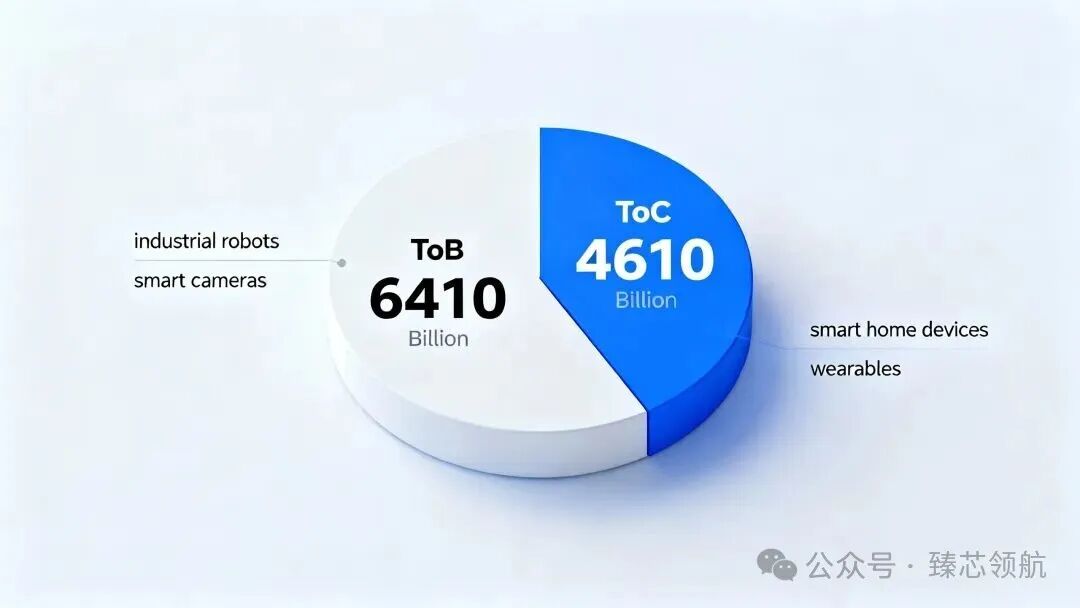
In the 2025 market of 1,102 billion yuan, the two major segments are clearly defined, with significant highlights in the sub-tracks (data source: Luotu Technology):
1. Overall Market Distribution
ToB/ToG Public Service: Approximately 641 billion yuan, covering quality inspection robots, inspection robots, AI edge terminals, etc.;
ToC Consumer Electronics: Approximately 461 billion yuan, covering the aforementioned five categories of consumer electronics and educational smart hardware.
(Note: AI smartphones and AI vehicles are separately counted due to market scale or statistical characteristics)
2. Consumer Electronics Sub-segment Scale (Core ToC Track)
Traditional Appliances (White goods, Black goods, etc.): 271 billion yuan, accounting for over half of the consumer electronics category;
Smart Personal Devices (Watches, Glasses, etc., excluding smartphones): 119 billion yuan, exceeding 100 billion yuan in scale;
Smart Home Devices (Security, Entertainment, etc.): 37 billion yuan;
Educational Smart Hardware: 34 billion yuan.
4. High Penetration Rates Exposed: These AI Hardware Categories Have Entered a High Popularity Stage
The penetration rates of different AI hardware categories vary significantly, with some tracks achieving large-scale popularity:
High Penetration Categories: Robotic vacuum cleaners, air purifiers, and smart mattresses have an AI penetration rate exceeding 90%; general AI TVs have surpassed 70%, and projectors with smart voice interaction account for 87%;
Rapid Growth Categories: AI kitchen appliances have a penetration rate exceeding 30%; traditional large appliances like AI air conditioners, refrigerators, and washing machines have a penetration rate of 20%; AI door locks have a penetration rate of 25.4%, and AI cameras 26%;
Digital Categories Leading: AI laptops have a penetration rate of 50%, AI tablets reach 76%, wearable devices (watches, wristbands) have an AI penetration rate exceeding 85%, AI glasses have a sales penetration rate of 65%, and AI headphones have seen a year-on-year increase of 71% in available models.
5. Five Core Characteristics of AI Hardware Integration: Understanding Future Trends
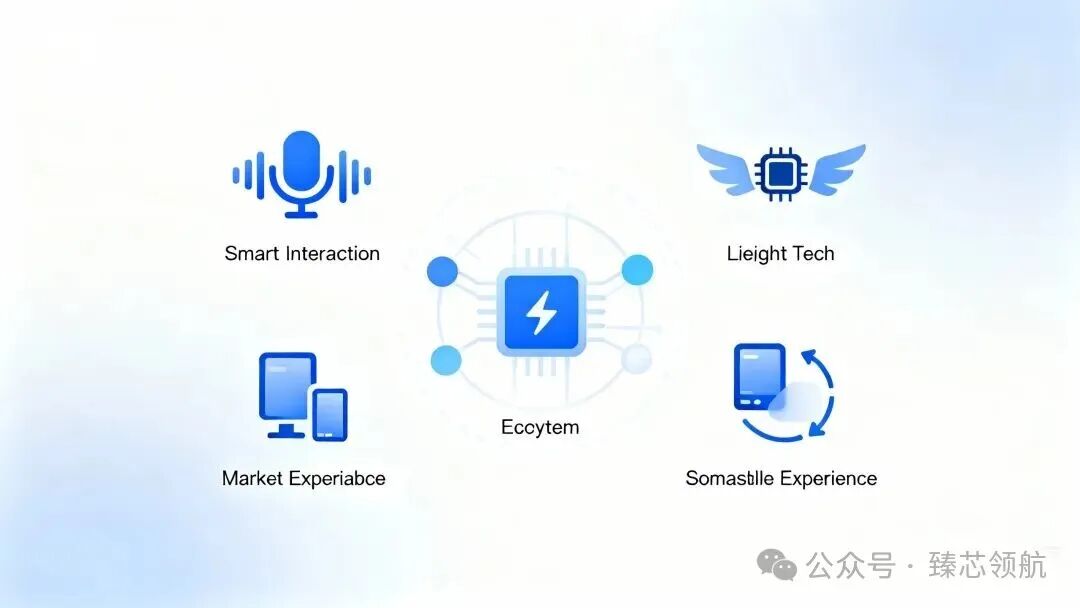
The current integration of AI and smart hardware exhibits distinct characteristics, directly pointing to future development directions:
1. Intelligent Interaction: Voice and gesture recognition have become mainstream, making human-computer interaction more convenient;
2. Lightweight Technology: Low power consumption and large model compression technologies are driving the explosion of portable/outdoor small products;
3. Ecological Scenarios: Cross-device collaboration is strengthening, and vertical scenario applications are deepening;
4. Market Differentiation: High-end products show significant premium, while affordable AI products achieve inclusivity;
5. Experience Invisibility: High-quality AI functions require deep experience, with core value gradually becoming prominent.
In the future, AI hardware will deeply integrate with vertical industries, driven by AI engines to upgrade the industry.

Conclusion Summary + Interaction Guidance
Core points distilled: The trillion-dollar AI hardware market will land in 2025, driven by policies and technology, with five categories of consumer electronics covering all scenarios. ToB public services, ToC traditional appliances, and smart personal devices are the core tracks, with high penetration categories already showing scale. Lightweight and ecological integration are key trends for the future.
Save this article for easy reference to segmented data and trends; share it with friends interested in the AI sector to share the trillion-dollar opportunity! What do you think is the most worthwhile sub-track for AI hardware in 2025? Let’s discuss your views in the comments! Follow me for more in-depth analyses and practical guides on the AI industry.