When you see the term “STM32F407” in smart home devices or control a drone with a mobile app, it hides the hardcore technology of MCU engineers behind it. This position requires a hybrid talent who understands both hardware circuits and is proficient in programming. This article directly breaks down 10 core skills to help you quickly identify your learning direction.
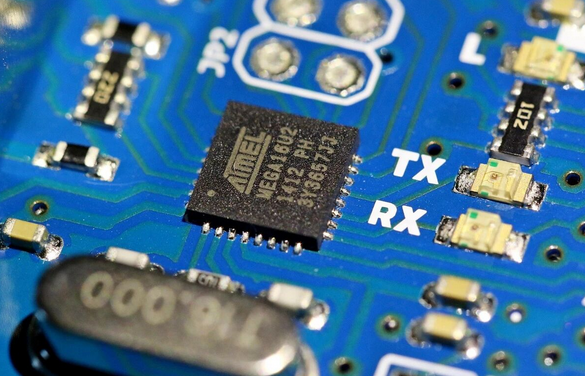
1. Basic Hardware Essentials
Component Identification: Able to quickly identify resistor color codes, capacitor voltage ratings, and understand the unidirectional conductivity of diodes.
Minimum System Setup: Mastering crystal oscillator selection (8MHz/16MHz), reset circuit design, and power filtering.
Signal Integrity: Understanding why ADC sampling requires ferrite beads and why the SPI bus length should not exceed 30cm.
2. Advanced C Language Techniques
Pointer Practice: Able to write double pointer operations on structure arrays and understand function pointer callback mechanisms.
Memory Management: Three methods to avoid wild pointers and considerations for dynamic memory allocation.
Embedded Features: The critical role of the volatile keyword in register operations and the deeper meaning of the const modifier.
3. Core Skills in Peripheral Development
UART Communication: Implementing Modbus RTU protocol parsing and solving garbled issues caused by baud rate deviations.
I2C Bus: Mastering SCL/SDA signal timing and debugging EEPROM read/write failures.
PWM Control: Using timers to output precise duty cycles for motor speed control or LED breathing lights.
4. Debugging Tool Techniques
Logic Analyzer: Capturing SPI communication waveforms and analyzing timing errors.
Oscilloscope Usage: Measuring power ripple and capturing signal overshoot/undershoot.
J-Link Debugging: Setting hardware breakpoints and viewing real-time register values.
5. Practical Applications of RTOS
Task Scheduling: Reasonably allocating priorities to avoid priority inversion.
Resource Management: Using semaphores to protect shared resources and solve multi-task competition issues.
Deadlock Troubleshooting: Locating the cause of task hang-ups through logs.
6. Key Points in Low Power Design
Power Modes: Reasonably selecting Sleep/Deep Sleep modes and configuring wake-up sources.
Clock Management: Dynamically switching clock sources and turning off unused peripheral clocks.
Power Consumption Testing: Measuring current values under different modes with a multimeter.
7. Security Protection Mechanisms
Watchdog: The configuration differences between independent watchdogs and window watchdogs.
Firmware Encryption: Implementing AES128 encryption algorithms to prevent code from being read.
Exception Handling: Capturing HardFault errors and analyzing LR register values.
8. Version Control Standards
Git Operations: Mastering branch management strategies and resolving code conflicts.
Code Review: Developing a checklist to check for memory leak risks.
Continuous Integration: Configuring Jenkins for automatic compilation and download.
9. Hardware Collaboration Skills
Schematic Review: Identifying insufficient capacitance in power filtering capacitors.
PCB Layout Recommendations: Proposing grounding solutions for key signal lines.
EMC Testing: Rectification measures to solve radiation exceeding standards.
10. Continuous Learning Path
Chip Selection: Choosing STM32H7/GD32H7 based on performance/cost/ecosystem.
Protocol Expansion: Learning CAN FD/EtherCAT industrial bus protocols.
New Technology Trends: Keeping an eye on the development dynamics of RISC-V architecture MCUs.
This article is an original piece by Yiy Education. Please indicate the source when reprinting!