When a car is driving smoothly, from controlling the headlights to adjusting the chassis, from the intelligent cockpit to the power system, dozens or even hundreds of microcontroller units (MCUs) are transmitting commands in real-time. These chips, as small as a fingernail, act like the car’s “nerve endings”, although they never appear in the driver’s line of sight, no one can ignore their vital role in the automotive industry.
Automotive-grade chips, the technological foundation of modern automotive industry
The concept of automotive-grade chips is worth understanding. Although they are also MCUs, automotive-grade chips are not simply upgrades from consumer or industrial-grade chips; they stand at the pinnacle of the semiconductor industry. Automotive-grade chips are high-reliability semiconductor devices specifically designed for vehicles, covering four major areas: power control, intelligent driving, body electronics, and vehicle networking. They are the key supporting technology for achieving vehicle electrification and intelligence. They have now become the core carrier defining vehicle performance, with their technical level directly determining the vehicle’s intelligence, safety level, and energy efficiency.
A modern vehicle may be equipped with hundreds of MCUs, which are distributed across critical areas such as engine control, braking systems, body control, and battery management. Unlike consumer electronics chips, automotive-grade chips operate in extreme and variable environments—they must function normally in temperatures ranging from -40°C to 150°C, withstand continuous vibrations from road bumps, and maintain stable signals in complex electromagnetic environments. Since any minor failure could jeopardize safety, the failure tolerance rate is nearly zero. These stringent requirements make the research and production of automotive-grade chips a high-tech barrier system engineering, transforming them from behind-the-scenes components of the automotive industry into the focal point of global industrial competition.
Automotive-grade chips are also on the “choke point” list
Despite being the world’s largest automotive producer and consumer, China faces a serious “choke point” issue in the automotive chip sector. This predicament is mainly reflected in three aspects.
First is the supply chain risk. The chip shortage from 2020 to 2022 has brought unprecedented shocks to China’s automotive industry, which heavily relies on imported chips. Data shows that in just 2021, the chip supply shortage led to a reduction of over 2 million vehicles in domestic production, resulting in direct economic losses exceeding 300 billion yuan. Currently, China’s overall self-sufficiency rate for automotive chips is less than 10%, with critical categories such as computing chips and power chips, the MCU self-sufficiency rate is even below 5%, leading to a long-term supply chain risk.
Monopoly of technical standards is also a significant barrier. In the global automotive chip sector, the standards set by the Automotive Electronics Council (AEC) have long held a monopoly position. The AEC-Q100 series standards, which cover chip temperature grades, reliability testing, and lifespan assessment, have become the entry threshold for the global automotive chip industry. Domestic chip companies wishing to enter the supply chain of mainstream vehicle manufacturers must pass AEC-Q100 certification, which requires an investment of millions of dollars in testing and certification costs, along with an audit time cost of 18 to 24 months. However, since the AEC-Q100 standards are based on the usage environment and materials of foreign vehicles, they significantly deviate from China’s complex and diverse road conditions and the notable climate differences between the north and south. This mismatched standard system greatly limits the technological iteration and market breakthrough of domestic chips.
There is also the issue of ecosystem. Due to long-term reliance on imported chips, the domestic automotive chip ecosystem has remained underdeveloped: in the design phase, there is a lack of mature automotive-grade chip design experience and weak core architecture design capabilities; in the manufacturing phase, there is insufficient supply of production lines specifically for automotive-grade chips; in the testing and certification phase, the complete reliability testing system and capability construction for automotive-grade chips are relatively lagging. This “ecosystem shortcoming” across the design, manufacturing, and testing chain has led to a lack of a virtuous cycle between technological research and market application for domestic automotive chips, resulting in insufficient endogenous momentum for industrial development.
The path of Chipone: Independent core and incremental breakthroughs
In this monopolized arena, Chinese semiconductor companies are breaking through through technological innovation, independent standards, ecosystem collaboration, open-source alternatives, and emerging track layouts. In the field of automotive-grade chip localization, companies like Chipone, Jiewa Technology, Jiefa Technology, Guoxin Technology, and GigaDevice are increasing their investments, attempting to achieve a fully localized closed loop from design to packaging and testing.
On this path, unlike most companies that adopt ARM architecture and open-source RISC-V architecture, Chipone has chosen to break through with its independently developed processor core. As the first domestic semiconductor company to announce that its automotive-grade MCU shipments have exceeded 100 million, Chipone recently announced that its KungFu automotive-grade MCU cumulative deliveries have surpassed 200 million units. It is worth noting that in the field of automotive-grade MCUs, currently, only Chipone and Jiefa Technology have publicly announced cumulative shipments reaching the “hundred million level,” with Jiefa Technology expected to exceed 100 million MCUs by November 2025. Chipone’s 200 million shipments place it in a leading position in market share and industry influence, making it one of the most successful examples of domestic automotive chip localization.Let us take Chipone as a representative to gain insight into the state of the automotive-grade chip industry in China.
In the early days, when most peers adopted the internationally accepted ARM architecture, Chipone insisted on developing and iterating its “KungFu” core. The advantages of this choice are evident:
Independently controllable: From the underlying architecture to the instruction set, it achieves complete self-research and self-control, avoiding the risks of architecture authorization that may arise in special international trade environments. At the same time, supporting compilers, IDEs, and other toolchains, along with localized technical support, ensure the adaptability of the development ecosystem.
Optimized efficiency: It can optimize the core based on its understanding of automotive electronics, especially in terms of high reliability, low power consumption, and real-time control. It also supports ASIL-B/D levels and has passed AEC-Q100 certification.
In terms of chip layout, Chipone’s strategy is not to directly challenge the top-tier intelligent cockpit or autonomous driving main control chips but to adopt a pragmatic strategy of “from outside to inside, from low to high.” Its 200 million shipments mainly cover:
Body control field: such as windows, wipers, headlights, seat adjustments, etc., which is the most basic field with the highest chip usage in automotive applications.
Power and chassis field: such as engine control, battery management systems (BMS), vehicle controllers (VCU), etc., which require higher safety and real-time performance.
Intelligent networking field: such as gateways, T-Boxes, etc., serving as data relay nodes.
By proving the stability and reliability of its products in these relatively lower but high-demand fields, Chipone has gradually gained the trust of many mainstream automotive manufacturers and Tier 1 suppliers. Currently, Chipone has served over 20 well-known automotive brands, covering over 200 models, with a customer ecosystem exceeding 800 companies, and has become a leading enterprise in China’s automotive-grade MCU sector, with its innovation and product application capabilities fully validated by the market.
The industrial logic behind 200 million chips
Chipone’s achievement of 200 million units is not an isolated event; it is backed by profound industrial transformation logic.
Explosive market demand. The wave of the automotive “new four modernizations” (electrification, intelligence, connectivity, and sharing) has led to an exponential increase in chip demand for each vehicle. Especially for new energy vehicles, their chip costs far exceed those of traditional fuel vehicles. A rapidly expanding market provides space for new entrants.
Urgency of supply chain security. In recent years, the global “chip shortage” and geopolitical uncertainties have provided a profound safety education lesson for China’s automotive industry, which heavily relies on overseas chips. Vehicle manufacturers have begun to actively seek and support local supply chains, opening doors that were previously closed for companies like Chipone.
China’s leading advantage in the new energy vehicle industry. China has become the world’s largest market for new energy vehicles, with local brands responding quickly to electrification and intelligence. This provides a world-class testing ground for local chip companies, allowing Chipone’s chips to be validated and improved on the fastest iterating models.
200 million shipments is a milestone, proving that the practice of independent innovation by Chinese semiconductor companies is successful. However, looking ahead, challenges remain clear:
Attacking the high-end market. In the fields of intelligent cockpit SoCs and high-level autonomous driving chips, which determine the performance of the vehicle’s “brain,” international giants still hold absolute technological and ecological advantages. This is the next strategic high ground that must be conquered.
Improving the ecosystem. The sustainability of the independent core path depends on whether its software toolchain, open-source community, and partner ecosystem can establish an attractiveness and convenience comparable to ARM.
Expanding into the global market. True world-class enterprises must be tested in the global market. How to enter the supply chains of international mainstream vehicle brands is the ultimate measure of their global competitiveness.
Chinese semiconductor companies still have a long way to go, but the national strategic goal of technological self-reliance and the demand for intelligent transformation in the automotive industry will always exist. More semiconductor companies like Chipone will break through the “choke point” challenges through technological innovation. Zhongke Yucheng Investment believes that with the continuous empowerment of the “14th Five-Year Plan” for cultivating new productive forces, Chinese semiconductor companies in the automotive-grade chip sector will gradually participate in international competition through continuous innovation and ecosystem collaboration, achieving a leap from “replacement” to “leadership.” As a steadfast supporter of the country’s cutting-edge technology development, Zhongke Yucheng Investment will accompany semiconductor companies like Chipone, providing solid support for the high-quality development of China’s automotive industry and the self-controllability of the semiconductor industry chain.
Conclusion
Chipone’s delivery of 200 million automotive-grade MCUs is a milestone in the development of China’s semiconductor industry. It proves that the independent innovation capability of Chinese semiconductor companies has been recognized by the market, but behind this is long-term R&D investment and patient market expansion. There are no shortcuts in the field of hard technology; only by continuously focusing on underlying technologies and seizing industrial development opportunities can domestic chips be embedded in the modern automotive industrial system. This road is long, but 200 million is a definite signal: the journey has begun.
– End –
Zhongke Yucheng Investment, as a private equity fund company focused on investing in China’s cutting-edge technology, adheres to the core philosophy of investing in leaders, investing in quality, investing in excellence, targeting cutting-edge technology projects from the Chinese Academy of Sciences, and striving to become a benchmark institution in the field of cutting-edge technology investment, co-creating value with outstanding scientists, entrepreneurs, and investors.Some invested projects:Benyuan Quantum (leading company in quantum computing)Zhongke Hangxing (leading company in the lightweight aviation engine segment)Zhongke Shenlian (leading company in space high-speed data relay communication services)Saifang Technology (leading company in RISC-V instruction set architecture chip design)Chipone Electronics (leading company in automotive-grade MCUs with self-developed cores)Shangyang Software (leading company in semiconductor MES systems)Zhongke Guosheng (world-class gas turbine company)Zhongchu Guoneng (pioneer in China’s 100 MW compressed air energy storage power generation field)Yan Feng Technology (leader in high-end specialized new materials and fine chemicals)Zhongke Yuanben (leading company in sulfide solid-state batteries)……Some honors received:2025 Venture Capital Golden Eagle Award for Excellence in the New Energy Industry by Securities TimesTop 20 Investment Partners in Qingdao 2024 by ToudongMost Potential Investment Institution of 2022-2023 by RongzhongTop 5 Most Growth-Oriented Investment Institutions for Carbon Neutrality Services in the 2022-2023 China Technology Industry Investment List2023 Top 10 Most Active Venture Capital Institutions in Qingdao Global Venture Capital Conference2022 Annual List of China’s Venture Capital Industry – Golden Investment Award – Top 30 Growth-oriented VC Investment InstitutionsTop 20 Emerging Investment Institutions in China’s Venture Capital Industry Annual List – Golden Investment Award 2022Top 10 Most Growth Potential Venture Capital Institutions in 2021 Annual Ranking by Toudong……Chairman and General Manager Chen JingheSome honors received:Most Popular Female Investor of 2022 by RongzhongBest Female Investor of 2023 and 2022 by RongzhongPioneer Industry Investor by Science and Technology Innovation Board DailyTop 10 Emerging VC Investors in China in 2022Top 10 Growth-oriented Limited Partners in the 2022 China Technology Industry Investment List……This article is only a sharing of objective situations and is for reference only, not constituting any promotion or investment advice for any entity. The market has risks, and investment should be cautious.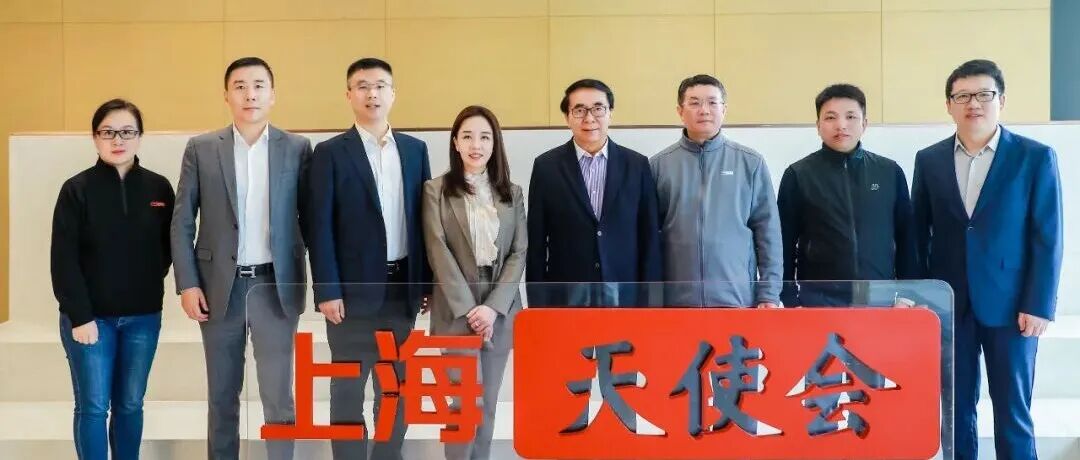
Zhongke Yucheng Investment collaborates with Shanghai Angel Association, led by academicians + empowering cutting-edge projects for the Science and Technology Innovation Angel Program
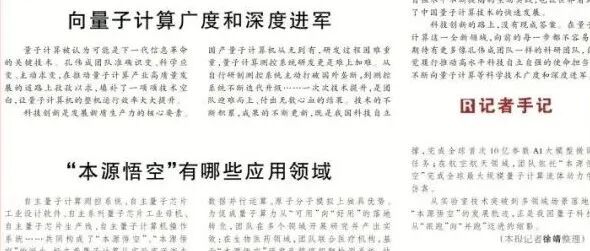
[Invested Companies] Published a signed article in the People’s Daily! Core researchers of Benyuan Quantum interpret: The quantum application revolution behind the 710,000 tasks
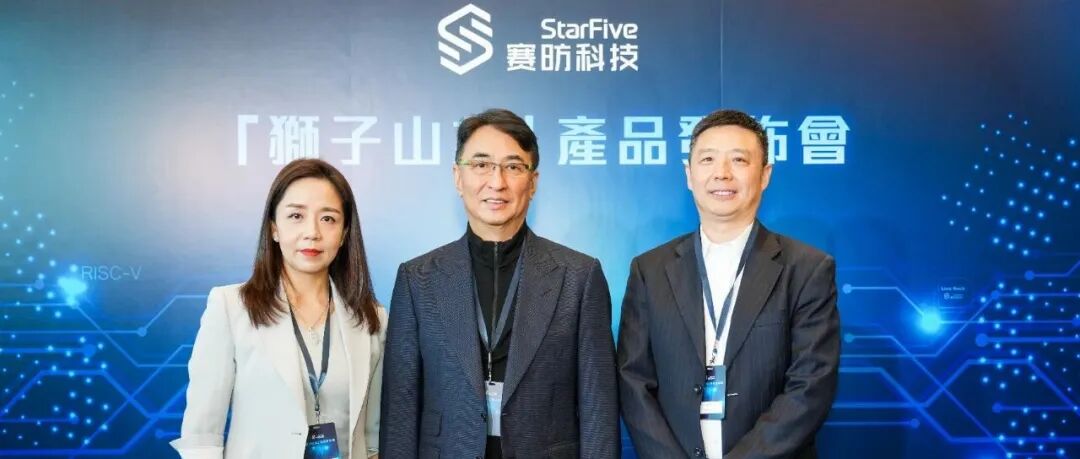
Chairman Chen Jinghe of Zhongke Yucheng Investment was invited to witness the launch of Saifang Technology’s first RISC-V data center management chip