1. Background Significance
The system is based on embedded processors, embedded operating systems, and user application software, etc., aimed at achieving remote monitoring and control of electromechanical equipment. By utilizing Android terminal devices, VB + SQL + SOCKET frameworks, and SQLite micro-databases, a fully functional embedded remote monitoring system has been designed and implemented. Testing has proven the system’s stability and reliability in communication.
2. Theoretical Principles
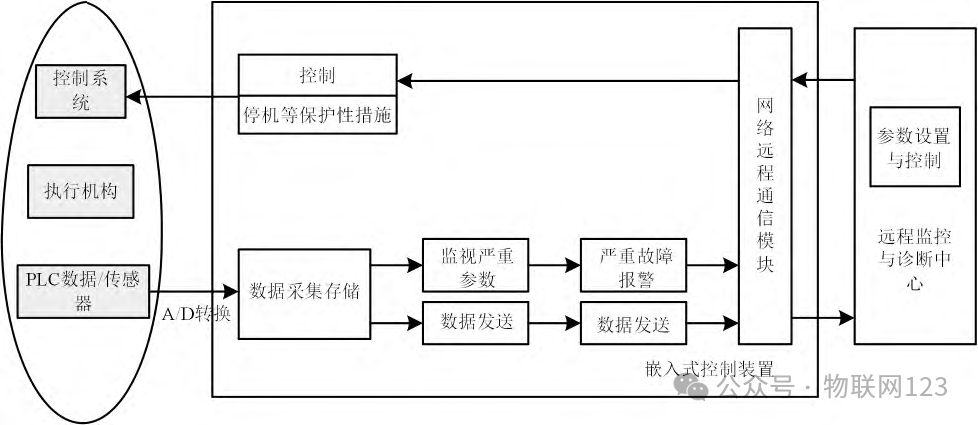
The embedded controller consists of an embedded processor, an embedded operating system, user application software, etc., and is typically embedded within devices to implement control, monitoring, and management functions for other devices. It includes modules for remote communication, data transmission, and data collection and storage, as shown in the structure diagram in Figure 1. The embedded controller is a specialized computer system with specific functions and strict requirements, which achieves control and management of other devices through the collaborative work of various modules, and realizes data interaction with upper-level systems or cloud platforms through remote communication.
 3. Experimental System and Conditions
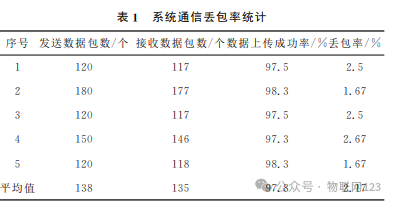
To test the operational effectiveness of the embedded remote monitoring system for electromechanical equipment, the system was placed in a factory for experimentation. Experiments were conducted on the system’s data transmission rate to evaluate its communication stability. The testing duration was 5 days, with the device online for 3 hours each day, monitoring the operational status of the equipment in real-time.
 4. Experimental Results and Analysis
Based on the experimental results, it can be concluded that the embedded remote monitoring system for electromechanical equipment demonstrated good performance in the actual operation within a greenhouse. The system was able to stably transmit environmental data collected and maintain consistency with the lower-level machine. Although there were minor data losses during network fluctuations, under stable Wi-Fi network conditions, the data transmission success rate was high, and communication was stable and reliable.
5. Results
Power line carrier technology, as a mature communication method, has significant advantages such as fast information transmission speed and strong anti-interference capability, making it highly applicable in communication and monitoring tasks within power systems. Through power line carrier technology, power metering data and other related information can be transmitted over power lines, achieving remote monitoring and control. This technology not only reduces the construction costs of communication lines but also improves the reliability and stability of communication. To comprehensively promote this work, this paper uses it as a starting point to design anti-aliasing filters for power metering communication terminals, communication data transmission, and remote control and verification of communication terminals, conducting research on the design of remote control methods for power metering communication terminals.
References:
[1] Nie Jian, Wang Zheng. Exploring the Design of Embedded Remote Monitoring Systems for Electromechanical Equipment [J]. Yangtze Information Communication, 2024, 37(09): 89-91+94.
| Disclaimer: The images and text used in this article are reproduced. If there are any copyright issues, please inform us immediately, and we will confirm and delete the content based on the proof materials you provide. The content of this article reflects the author’s personal views and does not represent the views or positions of IoT 123. |
Special Reminder:IoT Professional Exchange Group welcomes individuals related to the IoT industry to join. The group also welcomes various experts, seniors, and influencers. In the group, aside from not being able to post sensitive content, pornographic content, and not recommending excessive promotional content, all other topics can be freely discussed~—— Exchange QQ Group 724511126, please note your name, organization, and research direction when joining (without notes, please forgive us for not approving), and you will be invited to join the group after editor review.!