[Editor’s Note] In the field of prostate cancer treatment, surgical techniques have consistently advanced towards “more minimally invasive and more precise” approaches. Robot-assisted single-port laparoscopic radical prostatectomy, as an innovative achievement in minimally invasive surgery, derives its core advantages from the deep integration of single-port laparoscopic technology and robotic systems. Initial explorations have been completed, providing new options for patients while continuously planning future development paths.
Invited by Bozhi ONCOProfessor Xia Wei from the Urology Department of Changzhou First People’s Hospitalinterprets the current status and application prospects of robot-assisted single-port laparoscopic radical prostatectomy.
Unique Value and Innovative Integration of Single-Port Laparoscopic Technology
Prostate cancer treatment methods are diverse, including surgery, radiotherapy, and hormone therapy, with surgery being the primary curative approach for early-stage patients. Although traditional laparoscopic surgery is less invasive than open surgery, it requires multiple incisions, which not only increases surface scarring but may also elevate postoperative pain and complication risks. Additionally, the limited field of view and insufficient instrument flexibility during the procedure make it challenging to meet higher precision treatment demands.
Single-port laparoscopic technology, as a significant breakthrough in the minimally invasive field, fundamentally optimizes the limitations of traditional laparoscopy. Extreme Minimally Invasiveness: Only one surgical incision (typically 4-5cm) is required, compared to 3-5 incisions in traditional laparoscopy, significantly reducing surface trauma, with postoperative scars being less visible, which aligns better with patients’ aesthetic needs, especially alleviating the psychological burden of surface scars in younger patients.More Efficient Postoperative Recovery: The single incision reduces damage to subcutaneous tissue and muscle layers, significantly decreasing postoperative pain (most patients do not require long-term reliance on painkillers), and the incidence of incision-related complications (such as infection and poor healing) decreases by over 50%; patients can get out of bed within 24 hours post-surgery, return to normal life in 2-3 days, and hospital stays are shortened by 1-2 days compared to traditional laparoscopy, greatly reducing medical costs and time.Wide Applicability: In addition to radical prostatectomy, it has been successfully applied in urology for nephrectomy and partial nephrectomy, in gynecology for myomectomy, and in general surgery for cholecystectomy, demonstrating strong technical compatibility and providing a unified technical framework for cross-departmental minimally invasive treatments. With the popularization of robotic surgical systems, the combination of single-port laparoscopic technology and robotic systems (3D high-definition vision, 7 degrees of freedom robotic arms) further amplifies the minimally invasive advantages of single ports, allowing precise operations in confined spaces while avoiding tremors from manual operations. The high-definition vision clearly displays the nerves and blood vessels surrounding the prostate, providing technical support for urinary control function preservation and sexual function retention, ultimately leading to the emergence of robot-assisted single-port laparoscopic radical prostatectomy.
Clarifying Indications to Showcase the Dual Advantages of “Minimally Invasive + Precision”
Clear indications and contraindications for selecting suitable patients-Primarily targeting low-risk localized prostate cancer patients, specifically those with clinical stages T1-T2, PSA < 20ng/ml, and Gleason scores below 8 (tumors have not breached the prostate capsule, with no risk of widespread metastasis); for intermediate to high-risk patients, if there is a strong demand for minimally invasive procedures (such as younger patients or those requiring rapid postoperative recovery), a multidisciplinary team (urology, radiology, oncology) must evaluate tumor burden and patient health status before proceeding cautiously.Severe underlying diseases (such as severe cardiopulmonary dysfunction, coagulation disorders), late-stage tumor staging (T3 and above, tumor invasion of surrounding tissues), and incomplete lymph node dissection in high-risk patients are not suitable; individual patient differences (such as obesity, previous abdominal surgeries leading to intra-abdominal adhesions) and expected surgical outcomes may also influence the choice of surgical method.
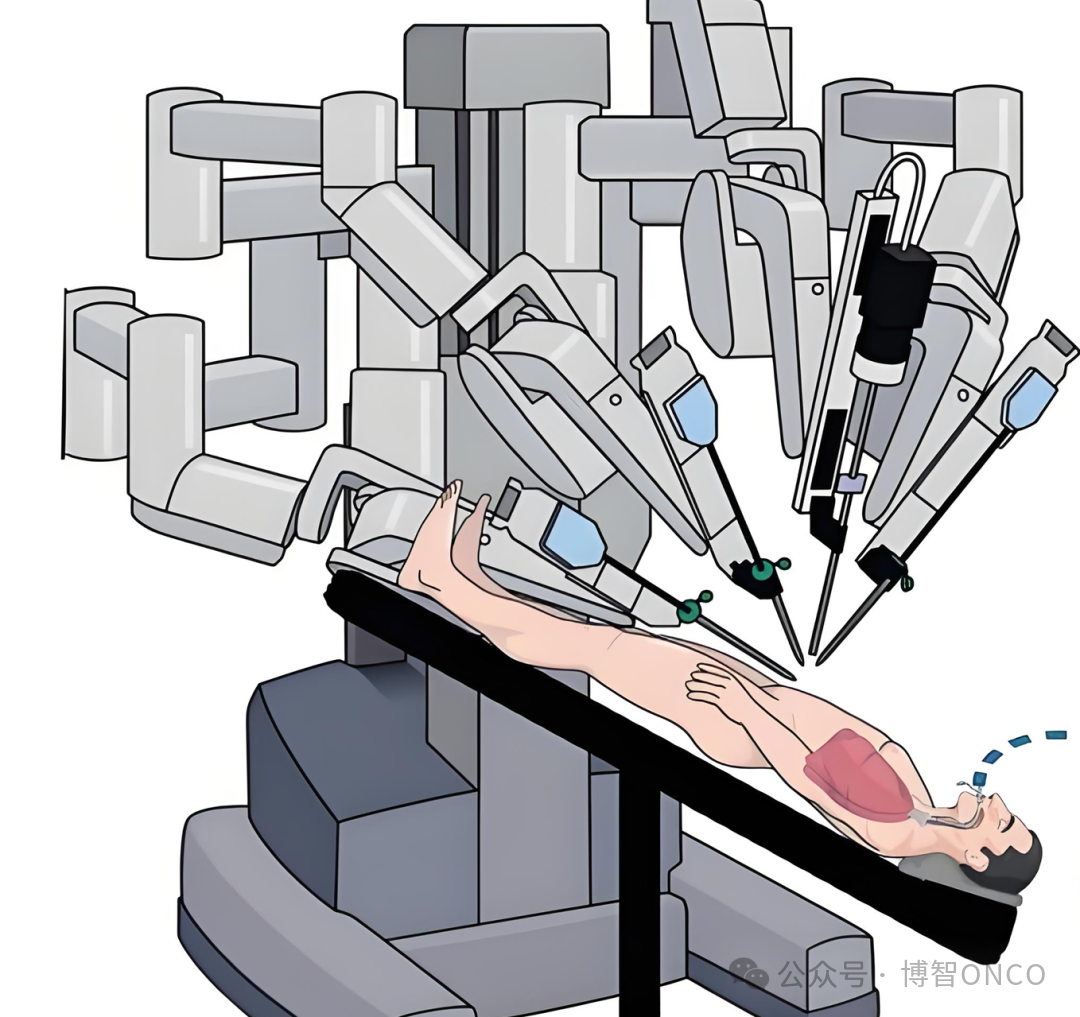
Standardized surgical procedures ensure operational safety-A comprehensive assessment of the patient’s tumor stage and overall health status is required, preparing specialized equipment such as robotic surgical systems, single-port laparoscopes, and high-definition imaging systems. The appropriate approach (transabdominal, extraperitoneal, perineal, or bladder approach) is selected based on the patient’s physique, tumor location, and functional preservation needs, followed by preoperative discussions to plan operational details; general anesthesia is used during the procedure, with the patient positioned in a 30° head-down supine position. The incision is chosen based on the approach (e.g., a 4cm incision around the umbilicus for the transabdominal approach, a 4-5cm midline incision for the perineal approach), combined with an incision protection sleeve + glove combination or a 4-5 port system, and the robotic arms are installed appropriately (Arm 1 with Maryland/bipolar non-damaging instruments, Arm 2 with the camera, Arm 3 with monopolar scissors/needle holder) to complete tumor resection and anastomosis operations.
Outstanding Advantages, Controllable Risks, Balancing Efficacy and Quality of Life-In addition to the single-port technique’s inherent “fewer incisions, less pain, faster recovery,” the addition of the robotic system significantly enhances surgical precision – the positive margin rate is below 5%, far lower than the 8%-10% of traditional laparoscopy; intraoperative blood loss is controlled at 50-100ml, with no severe bleeding complications; by accurately identifying and protecting the neurovascular bundles surrounding the prostate, the urinary control recovery rate reaches over 80% one month post-surgery, and the sexual function retention rate (for patients with needs) exceeds 60%, significantly improving patients’ long-term quality of life. Additionally, the use of peritoneal window combined with abdominal belt technology can reduce the incidence of postoperative pelvic effusion from the extraperitoneal approach, further lowering complication risks.Preoperatively, a detailed medical history collection, physical examination, and imaging studies (MRI/CT) are conducted for comprehensive assessment, and a personalized surgical plan is developed; intraoperatively, the robotic system monitors vital signs and operational data in real-time, with the surgical team (surgeon, assistant, anesthetist) closely coordinating to timely adjust instrument positions to avoid interference with the robotic arms; postoperative monitoring of incision healing and urinary function recovery is essential, with prompt management of potential complications such as infections and urinary leaks, while regularly summarizing surgical experiences, optimizing operational processes, and conducting team training to enhance risk management capabilities.
Existing Limitations Indicate Directions for Future Improvements-Currently, this technique is suitable for early localized patients with prostate sizes below 60g (enlarged prostates may lead to insufficient operational space); the operational space of single-port instruments is limited, and interference between instruments can easily occur, requiring assistants to adjust instrument positions in real-time to avoid affecting robotic arm operations; although techniques can preserve surrounding structures of the prostate, for patients with extensive tumor invasion, further improvements in surgical safety and efficacy are still needed.
Continuous Optimization of Technology to Expand Treatment Boundaries
Technological and equipment improvements to break operational limitations-Optimize surgical procedures to reduce unnecessary steps and shorten surgical time; improve single-port PORT design (such as increasing flexible channels, reducing instrument diameters) to further lower instrument interference risks; promote the clinical application and popularization of true single-port robotic systems (such as the Da Vinci SP system and domestic single-port robotic systems) to enhance equipment compatibility and cost-effectiveness, making the technology easier to promote in grassroots hospitals.
Expanding Treatment Scope to Benefit More Patients-Explore synergistic models of new adjuvant therapies (such as hormone therapy and chemotherapy) with single-port surgery – first reducing the tumor volume and activity of high-risk patients through new adjuvant therapies, then performing robot-assisted single-port laparoscopic surgery, breaking the current boundary of “only applicable to early-stage patients” and providing minimally invasive treatment options for intermediate to high-risk prostate cancer patients.
Robot-assisted single-port laparoscopic radical prostatectomy, leveraging the extreme minimally invasive nature of single-port laparoscopy and the precision of robotic systems, has achieved initial clinical success. In the future, as technology continues to advance and equipment is continuously upgraded, this procedure will undoubtedly provide more prostate cancer patients with a treatment experience characterized by “less trauma, faster recovery, and higher quality of life,” becoming an important development direction in the field of minimally invasive urology.