Recently, at the National Games, the humanoid robot serving as the “No. 0” torchbearer amazed the audience with its steady steps. Each of these seemingly effortless steps is rooted in a precise and powerful perception system. Countless sensors act like the “nerve endings” of the machine, conducting an unceasing flow of data and decision-making in milliseconds, collectively forming the foundation of the robot’s perception and action. Within this system, the Inertial Measurement Unit (IMU) is the core hub that maintains its motion balance, playing a crucial “soul” role.
IMU: Autonomous and Controllable Technology Forging the Core of Robot Balance
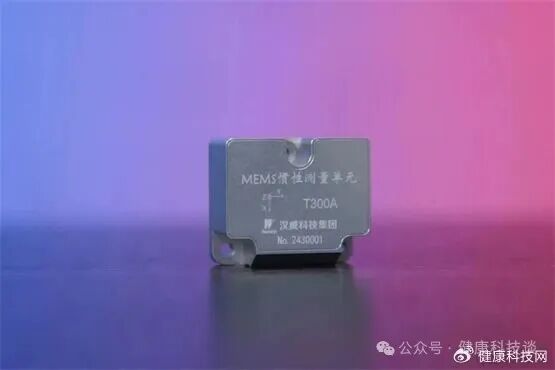
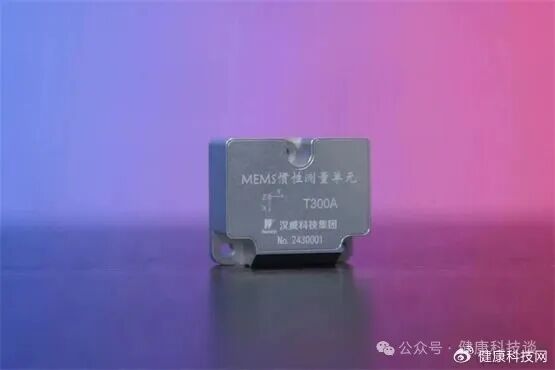
As the industry turns its attention to the supply chain of such critical sensors, a company with a complete MEMS chip production line has gradually come into focus. Hanwei Technology, which has been deeply engaged in the sensor field for nearly thirty years, has leveraged its profound R&D accumulation to launch high-precision MEMS inertial measurement units, achieving full-chain autonomy from chip design to packaging and testing. This IMU product is based on advanced MEMS technology and SIP system-level packaging, integrating various intelligent algorithms and self-diagnostic programs, showcasing significant advantages in high precision, fast response, and strong reliability.
The powerful R&D and industrialization capabilities not only ensure the product’s outstanding performance but also support a comprehensive service system from function customization, product customization to rapid delivery, efficiently meeting the diverse and agile demands for sensors across various fields, including embodied intelligence.
Beyond Balance: Hanwei Technology’s Multidimensional Layout of the “Machine Senses” Ecosystem
However, the “intelligence” of robots goes far beyond maintaining balance. In the wave of “embodied intelligence,” regarded as an important form of the next generation of artificial intelligence, enabling robots to possess comprehensive perception capabilities that are closer to or even surpass human abilities is becoming a new battleground for industrial competition. In this future-oriented competition, some companies have demonstrated forward-looking layouts. For example, Hanwei Technology is constructing a multidimensional sensor matrix covering “smell-touch-balance-force control-vision” to create an increasingly complete “sensory system” for robots.
Among them, the electronic nose olfactory sensor enables robots to detect indicators such as combustible gases, toxic gases, and VOCs, achieving environmental safety monitoring and complex odor recognition; the flexible tactile sensor provides key support for dexterous grasping and human-robot interaction by real-time sensing of contact force and pressure distribution; in addition to the IMU, which serves as the core of balance perception, the six-dimensional force sensor can simultaneously detect multidimensional forces and torques, allowing robots to perform complex tasks requiring precise force feedback, such as precision assembly; the uncooled infrared thermal imaging module breaks through the limitations of visible light, granting robots all-weather, long-distance environmental perception and target recognition capabilities.
Looking back to 2025, Hanwei Technology’s product matrix in the field of embodied intelligence sensors continues to enrich, and through cooperation with several well-known robotics companies and strategic investment in Kepler Robotics, it is deepening its insights into the real needs of embodied intelligence sensors. This series of clear and determined actions is systematically integrating Hanwei Technology’s nearly thirty years of technological accumulation in the sensor field into this emerging track of embodied intelligence.
These close industrial collaborations and forward-looking layouts not only help Hanwei Technology grasp innovation directions more accurately and accelerate R&D progress but also promote the development of more sensor products suitable for embodied intelligence scenarios. Its goal is clear: not only to meet the basic needs of robots to “stand firm” and “walk straight” but also to enable them to “see clearly,” “distinguish accurately,” and “grasp skillfully,” ultimately evolving robots from mere execution tools to “embodied intelligent agents” capable of fully adapting to complex environments and executing diverse tasks.
Looking ahead, with the accelerated development of humanoid robots and other intelligent agents, the demand for high-performance, high-reliability, and low-cost sensors will experience explosive growth. Hanwei Technology, leveraging its comprehensive advantages in MEMS chip design and manufacturing, multidimensional sensor layout, and rapid customization services, is expected to play a more critical role in the upcoming era of embodied intelligence. An ecosystem of embodied intelligence supported by smarter, more sensitive, and more comprehensive “machine senses” is accelerating from blueprint to reality through the joint efforts of companies like Hanwei Technology.