
Introduction: China has successfully test-flown its first fully 3D printed turbojet engine, reaching an altitude of 13,000 feet, marking a pivotal moment in aerospace technology. This demonstrates the potential of additive manufacturing to transform traditional engine production and challenges the global aerospace dynamics.
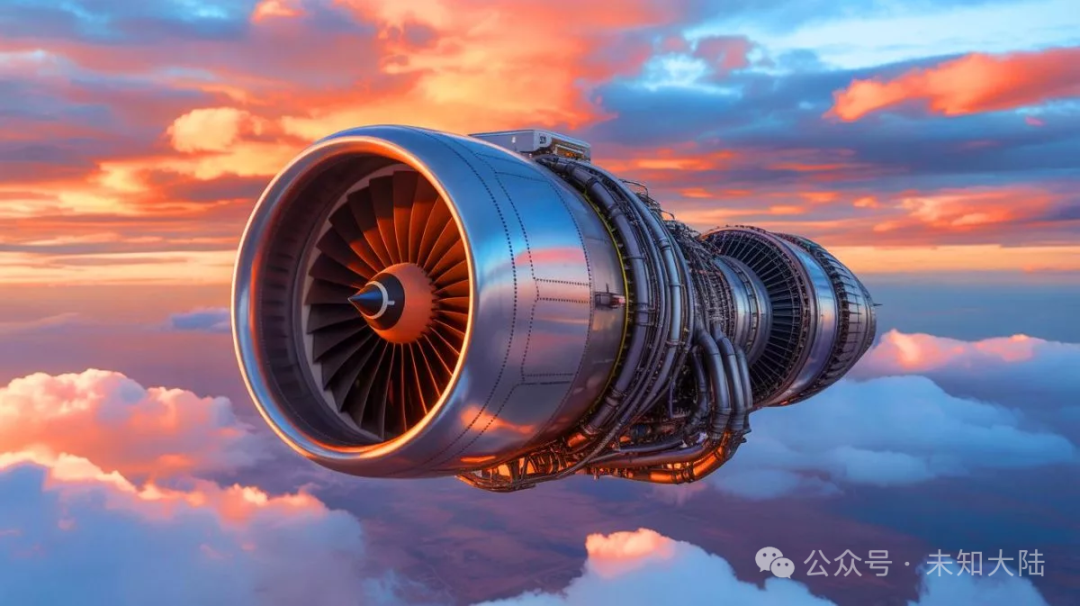
Illustration of China’s first fully 3D printed turbojet engine successfully test-flown at 13,000 feet
In Brief
🚀 China’s fully 3D printed turbojet engine test is a significant breakthrough in aerospace technology.
🔧 The engine utilizes additive manufacturing and topological optimization to enhance strength and reduce weight.
🌍 This development positions China as a major player in the global aerospace industry and challenges traditional methods.
📈 The technology is expected to accelerate prototype design speed and reduce costs, with potential applications in drones and other fields.
With the successful test flight of China’s first fully 3D printed turbojet engine, the aerospace technology sector is undergoing a profound transformation. This innovative leap not only showcases China’s growing technological prowess but also highlights the potential of additive manufacturing technology to revolutionize the aerospace industry. This exceptional engine operates at altitudes of up to 13,000 feet (approximately 4,000 meters), demonstrating a strategic advantage in reducing reliance on foreign components. As the global aerospace community watches closely, the significance of this breakthrough extends far beyond a technical achievement; it heralds a shift in the balance of global aerospace power.
China’s first flight-validated turbojet engine with 353 pounds of thrust
The successful demonstration of China’s 3D printed turbojet engine marks an important milestone in aerospace engineering. The engine produces 353 pounds of thrust, proving the effectiveness of combining additive manufacturing with multidisciplinary topological optimization. This innovative process allows for efficient material distribution, enhancing strength while reducing weight. These advancements are crucial as they enable the production of complex components that were previously unattainable through traditional manufacturing methods.
Beyond technological innovation, this development addresses a strategic concern for China: reliance on foreign engines. By independently developing this technology, China reduces its industrial vulnerabilities and positions itself as a formidable competitor in the global aerospace market. The potential of 3D printing technology to overcome traditional manufacturing challenges opens new avenues for accelerating development timelines and redefining industry standards.
Technology with Key Applications
While the application of additive manufacturing in aerospace is not new, the achievements made by China present a transformative dimension. Companies like General Electric Aviation and Pratt & Whitney have integrated 3D printed components into their engines, but China’s ability to produce entire engines using this technology is unprecedented. Expanding the potential of this process could usher in a new era of aerospace innovation.
The drone sector is expected to see immediate applications. The lightweight and efficient design of 3D printed engines makes them ideal for high-speed drone operations. However, the transition from prototype to mass production still faces challenges, particularly in materials science and certification processes. Despite these obstacles, the potential for industry-wide transformation remains immense, signaling a complete redefinition of future aerospace engineering and production.
Impact on the Global Aerospace Industry
The successful test flight of China’s 3D printed turbojet engine holds significant implications for the global aerospace landscape. By demonstrating the feasibility of fully 3D printed engines, China is poised to take a leading role in aerospace innovation, challenging existing manufacturing paradigms. This advancement may influence how other countries produce engines, fostering competition and driving innovation.
The global shift towards additive manufacturing is expected to lower costs and accelerate advancements in aerospace technology. As more countries invest in this technology, the potential for new designs and capabilities will continue to grow. With nations seeking self-sufficiency in aerospace technology, reducing dependency and enhancing national security, the strategic significance of this technology is profound.
The Road Ahead: Challenges and Opportunities
The path to widespread adoption of 3D printed engines is not without its challenges. Scaling production to meet industrial demands requires overcoming technical challenges in materials science and quality control. Achieving consistent product quality and meeting stringent certification standards is crucial for long-term success.
However, the opportunities remain vast. As the technology matures, advantages such as accelerated prototype design, reduced production costs, and enhanced design flexibility will become increasingly apparent. The ability to produce complex components with relative ease opens new possibilities for improving engine performance and efficiency. As China continues to develop and refine this technology, the global aerospace community is watching closely, eager to see how it will shape the future of aerospace engineering.
Looking ahead, a critical question arises: How will this revolutionary method of engine manufacturing impact the global balance of aerospace technology power, and what new innovations will it inspire?