🌈Click the blue text above to follow「Morning Light Whisper」

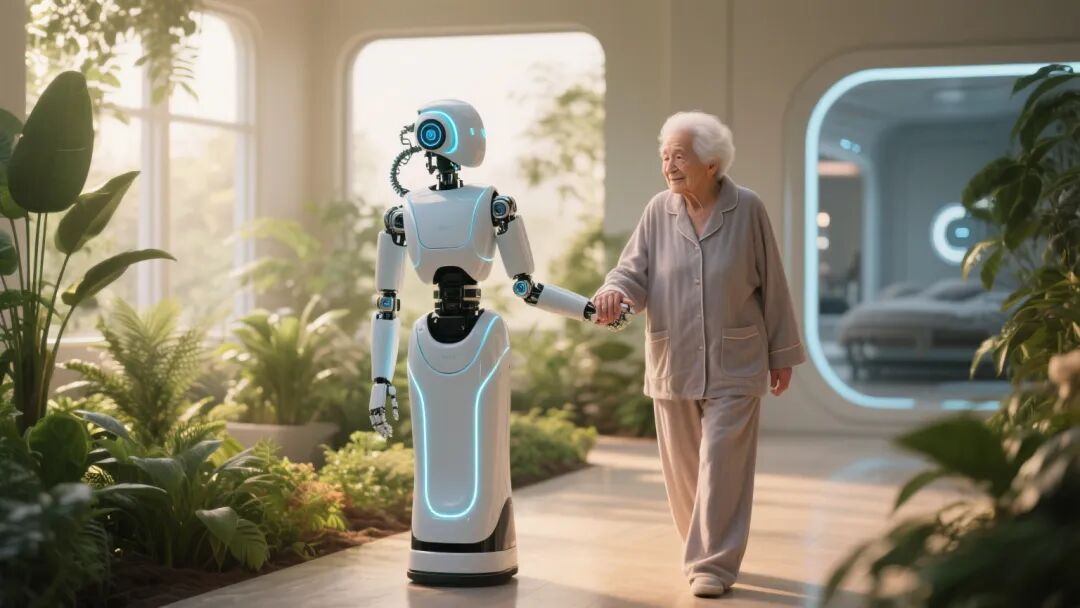
(Images in this article are generated by AI)
With the development of artificial intelligence (AI) technology and the deepening of aging, the concept of “elderly care robots” is no longer out of reach. In recent years, the topic of elderly care robots has been a hot discussion, particularly regarding when home care service robots will enter daily life. With the rapid development of technologies and applications related to elderly care robots, the international standards for elderly care robots, led by China, have recently been officially released. A new picture of the “era of intelligent home care service robots is about to arrive” is gradually unfolding.
Home care service robots are accelerating their entry into real life.
“Xiao Li, Xiao Li, how is the weather today?” “The current temperature is 14 degrees Celsius, which is a bit cool, remember to add more clothes.”
At 7 AM, in the Taibao Garden elderly care community in Chengdu’s Wenjiang District, a “new employee” officially “started work”. Its name is “Xiao Li”, a companion robot designed for the elderly, capable of providing voice interaction, life assistance, safety monitoring, emergency calls, and other services.
With the elderly’s command to “wake up”, “Xiao Li” begins its day: at 8 AM, it broadcasts morning news, at 10 AM, it reminds the elderly to participate in a flower arrangement activity, at 11 AM, it reminds them to take their medicine, and at 12 PM, it checks the recipe… In between, it can also chat with the elderly.
In recent years, with technological advancements and policy support, elderly care robots have blossomed in cities like Shenzhen, Shanghai, Beijing, and Hangzhou.
Currently, in China’s service robot market, home service robots have captured over 60% of the market share and have taken the lead in achieving industrial segmentation. Especially in practical application scenarios such as household cleaning, education and training, entertainment, and elderly companionship, home service robots are gradually becoming a reality. The beautiful scene of robots entering thousands of households is highly attractive to the general public and investors. Although the road ahead is long, the goals and paths are becoming increasingly clear.
This year’s “May Day”, over sixty-year-old Aunt Wang, dressed in special equipment, walked steadily in the Taishan scenic area, attracting the attention of many tourists. The futuristic exoskeleton device she wore is a current technological product used in the field of mobility assistance. “This device can help elderly people like me with mobility issues walk normally,” Aunt Wang said while adjusting parameters through her phone, “Look how smart these products are; you can directly adjust the robot’s assistance level on the app, greatly saving my energy while climbing mountains.” From smart devices that monitor health data in real-time at home to exoskeleton robots that assist the elderly in walking steadily, intelligent elderly care products and services are gradually integrating into daily life. These elderly care products can be broadly categorized into health service management, safety monitoring, emotional comfort, care services, and rehabilitation aids. Currently, many smart elderly care communities, institutions, and enterprises are actively promoting application ecological scenarios, making them “practice bases” for smart products and elderly care robots. In the “14th Five-Year Plan for Robot Industry Development”, China has already identified home service robots as a key development area. This indicates that the robot application market will become increasingly broad, and the space for industrial development will continue to grow. Especially in the past two years, the market for home care service robots has shown rapid growth, with many robot products designed to complete specific household tasks, such as sweeping, washing, and cooking, experiencing particularly fast demand growth. This is not only a rigid demand but also a market worth looking forward to. China’s aging situation is becoming increasingly severe, creating a real demand for home care service robots, which will assist in the development of the silver economy and is also a crucial direction in the overall development of the robot industry. Based on this, when implementing international standards for elderly care robots and accelerating the promotion of this work, China can learn from the experiences of advanced countries. For example, Japan has taken the lead in implementing elderly care robots and has achieved significant results. 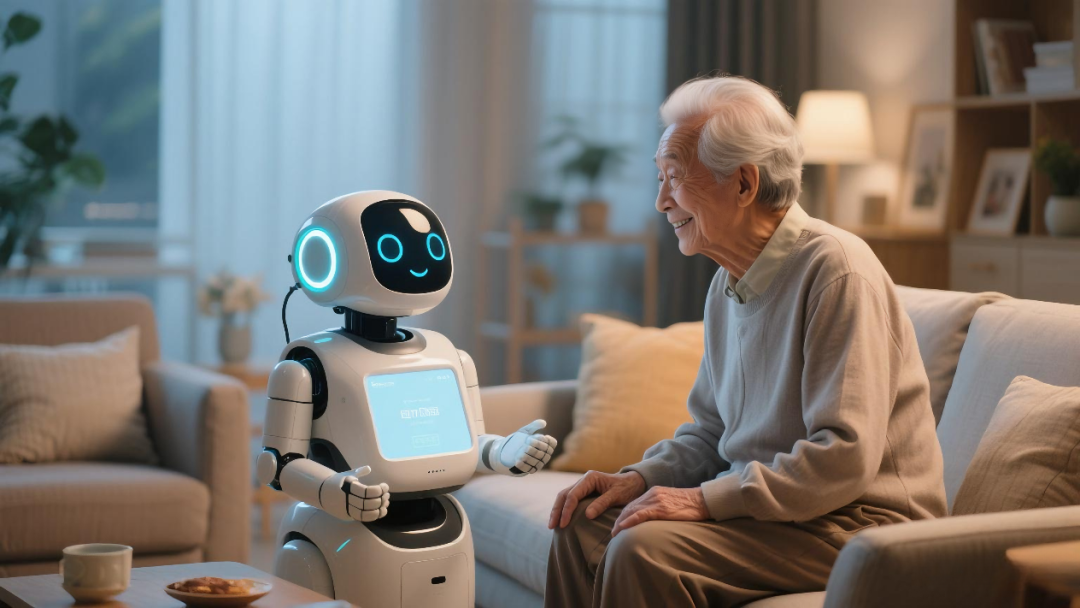 Japan has made significant progress in the field of elderly care robots It is understood that Japan was one of the first countries to promote the use of elderly care robots years ago, and it has achieved great success in utilizing robots for elderly care. The achievements Japan has made in addressing population aging are mainly reflected in its unique aspects of elderly care systems and industries. Especially in promoting intelligent elderly care, Japan has accumulated rich experience, which is undoubtedly worth learning from and referencing for other countries. For example, in a nursing home in Tokyo, an AI robot approaches an elderly person lying on their back, gently placing one mechanical hand on their knee and another on their shoulder, turning the elderly person onto their side. This scene is a common step for nursing staff to change the elderly person’s clothes and prevent bedsores. This humanoid robot weighs 150 kilograms and was developed by a research team from Waseda University, commissioned by the Japanese government, to address the rapidly aging society and the long-term shortage of nursing staff. This robot can also help people sit up, put on socks, fold clothes, and complete other household chores. Professor Shigenobu Sugino, who leads the team at Waseda University, stated: “Considering our severely aging society and declining birth rate, we will need robots to provide support in elderly medical care and daily life in the future.”
Many Japanese elderly care institutions are actively embracing new technologies. In one elderly care facility in Tokyo, a doll-sized robot can sing popular songs and lead the elderly in simple stretching exercises, somewhat liberating nursing staff to handle other more urgent tasks.
Japan’s bet on AI elderly care is not coincidental but is driven by an unavoidable mathematical problem—the labor crisis: by 2025, every 1.3 employed persons in Japan will need to support one elderly person, with a shortage of 620,000 nursing staff. The economic calculation: the annual maintenance cost of a robot is about 300,000 yen, only 1/10 of the average annual salary of a nursing staff (3.2 million yen). Ethical relaxation: the revised “Robot Welfare Law” in 2024 allows AI to make autonomous decisions in “emergency situations”, such as initiating forced feeding for elderly people who refuse medication. A deeper driving force is the change in family structure. A survey in Yokohama showed that 52% of children support “robots replacing basic care” to free up time for “high-quality companionship”. One daughter candidly stated: “Rather than letting my mother wait to die in a nursing home with no one to talk to, it’s better to have a robot chat with her about the latest idol dramas.”
In promoting intelligent elderly care, Japan has accumulated rich experiences and lessons, which are undoubtedly worth our reflection. Since the enactment of the “Long-Term Care Insurance Law” in 1999, Japan’s elderly care policy has undergone significant changes. This law not only stipulates the care and health management of the elderly but also includes emotional companionship. However, in the face of the challenge of labor shortages, the Japanese government has adjusted its strategy since 2013, generally stopping the construction of new nursing homes and instead encouraging the development of home life support robots. These robots aim to solve many problems in home elderly care, such as assisting with transfers, providing mobility assistance, walking support, automatic waste disposal, health monitoring, and missing person surveillance.
In the field of intelligent mobility assistance products, Japan has also made significant progress. The development and application of smart wheelchairs and smart canes are particularly prominent. Smart wheelchairs can be remotely controlled through brain waves, voice, or handles. Although the brain wave control technology is still in the research stage, its potential is enormous. Smart canes can provide stable support and sense surrounding obstacles, effectively enhancing the mobility of the elderly.
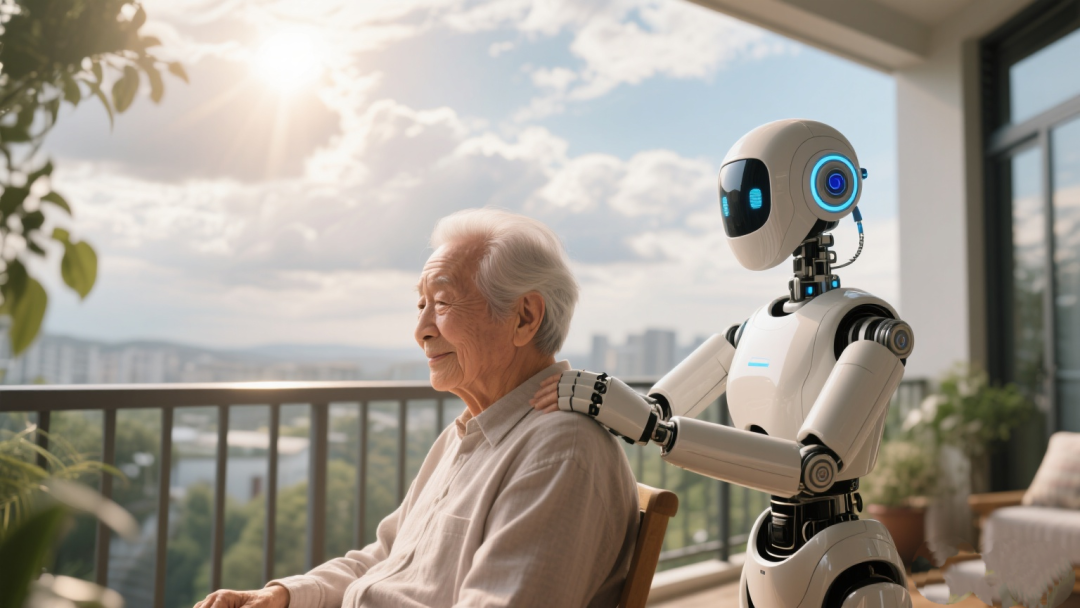
Finding the Balance Between “Efficiency” and “Warmth” in Elderly Care
Currently, AI technology is widely applied in many areas of elderly society. For example, in the health care field, AI technology makes the health check process more convenient and efficient. AI’s big data analysis, summarization, interpretation, and personalized management can achieve dynamic monitoring of health status, timely preventing potential health risks, and reducing the medical burden on families and society. In the elderly care service field, intelligent robots can help solve the problem of staff shortages. Currently, some robots developed by companies can not only help the elderly retrieve packages but also lift them into wheelchairs, assist them in walking, etc. These functions can significantly reduce the labor intensity of caregivers.
Moreover, AI can provide better emotional value to the elderly. For example, therapeutic robots can simulate biological responses and tactile feedback, realistically mimicking human emotional changes, thereby effectively alleviating anxiety in the elderly and providing positive assistance to patients with Alzheimer’s disease. Thus, the emergence of intelligent robots has given the elderly new companions. Humanoid robots, robotic pets, and other AI products will gradually integrate into people’s lives and even become important members of families.
During this year’s Spring Festival Gala, a humanoid robot dressed in traditional Northeast Chinese clothing danced and won the affection of many viewers. This emotional interaction makes new technology no longer just a cold tool; it is gradually becoming a bridge connecting technology and humanistic care, bringing more warmth and love to human society.
Mr. Liu, who lives in Linyi City, Shandong Province, runs a small business. His elderly father, over eighty years old, has been bedridden for years, suffering from incontinence, causing great distress for the family. Last October, he discovered a smart hygiene care robot on the market that can automatically clean up for the elderly, disabled, and temporarily mobility-impaired patients, so he spent nearly 30,000 yuan to buy one for his father. The care robot purchased by Mr. Liu can quickly sense and accurately identify waste, suction it, and then proceed to flush and dry. The entire process is intelligent and fully automated, protecting the elderly’s privacy and allowing them to defecate with dignity and without psychological burden, while also greatly reducing the workload for family members. At a community elderly care service center in Linyi City, Mr. Li is focused on learning how to use the companion robot, occasionally jotting down notes in a small notebook he carries. His children work in other cities and rarely visit home, making living alone his norm. “To timely understand the living conditions of these elderly people, the service center has equipped all solitary elderly residents with smart monitoring companions that can monitor their health status, including heart rate, body temperature, and blood pressure. At the same time, they can serve as the elderly’s life assistants, such as chatting, reminding them to take medicine, and helping answer phone calls,” the staff at the elderly care service center explained. If any abnormal situation is detected, the robot will immediately sound an alarm and notify the elderly person’s children, the elderly care service center, and the cooperating medical institution. This is especially important for solitary elderly individuals and can sometimes even save lives. Mr. Zhang, who suffered a stroke, has limb function impairment and decreased fine control ability in his lower limbs, affecting his walking ability. For the past three years, he had to hold onto the handrail to go up stairs. Recently, his daughter purchased a wearable exoskeleton robot for him, and after rehabilitation training, his physical condition has improved significantly. “The hardware size of the robot can be adjusted, making it usable for individuals of different heights and body types. Initially, I found the nearly 7-kilogram device a bit heavy, but I got used to it after a while,” Mr. Zhang said. The device creates a profile through dedicated software, and rehabilitation therapists adjust the data to help users with targeted functional training, such as jumping, going up and down stairs, and running.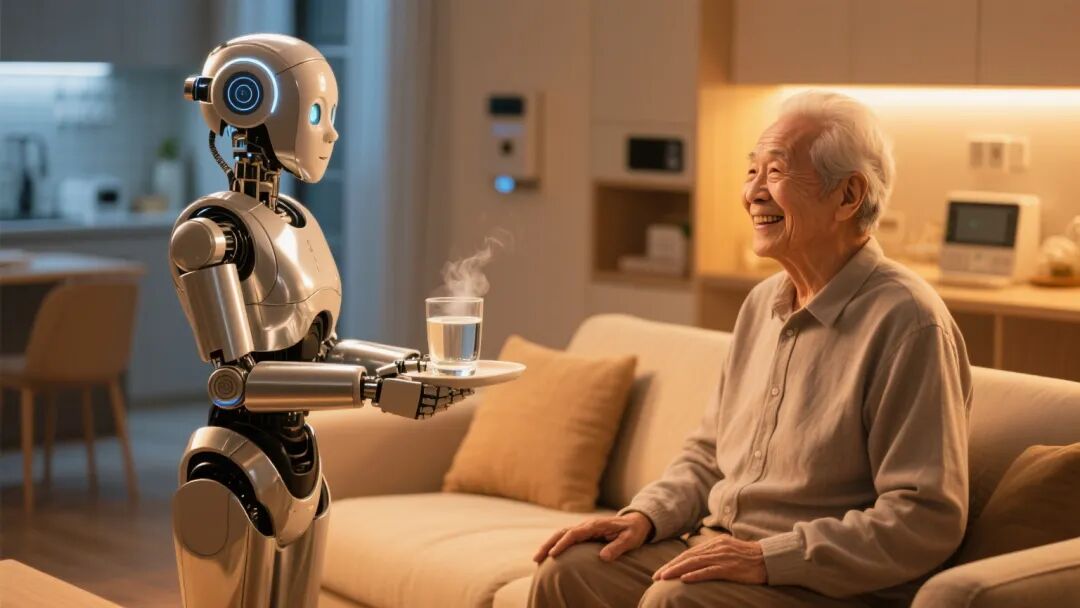 Of course, the end goal of robot-assisted elderly care is not to replace humans or to completely hand over elderly care to robots, but to find a balance between “efficiency” and “warmth” through human-robot collaboration. Experts point out that in the future, to make elderly care robots “fly into ordinary households”, companies need to lower prices to make them more acceptable to consumers. Additionally, a deeper challenge may lie in the scale of emotional replacement. For instance, can standardized mechanical arms sense the loneliness and unspoken silence of solitary elderly individuals at night? While improving care efficiency, how can we protect the emotional bonds between people? These are all questions that must be considered in the development of robot-assisted elderly care. However, one thing is certain: the future elderly care market will be redefined by AI-powered elderly care robots. We can all look forward to robot-assisted elderly care.