With the continuous development of information technology, humanity has entered an era of rapid digital development, where digital technology is widely used in various fields.3D technology is closely related to dentistry, and the development of three-dimensional imaging technology promotes the advancement of technologies like 3D, making 3D technology widely used in the treatment of dental diseases.
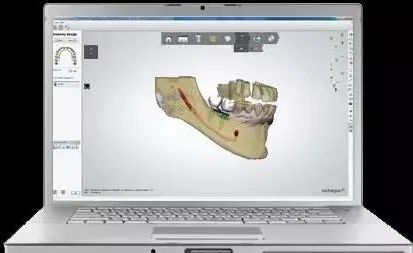

The Mysterious 3D Printing Technology: What Is It?
 3D printing technology emerged in the late 1980s to early 1990s (also known as rapid prototyping technology). Its principle is to use 3D digital model files as input and employ powder-like metals or plastics and other adhesive materials to construct objects layer by layer.
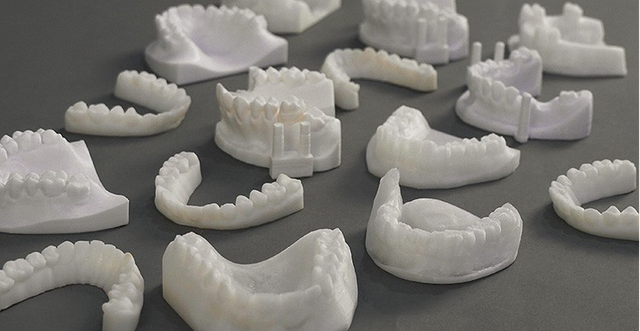
To illustrate, a regular printer outputs 2D images or graphic digital files onto paper via ink; a 3D printer outputs real raw materials (such as metals, ceramics, plastics, sand, etc.) into thin layers (physically having a certain thickness), continuously repeating the layering process until it becomes a physical object in space.Therefore, the process of 3D printing when outputting a certain layer is similar to inkjet printing. Just like building a house, it is accumulated brick by brick, while 3D printed items are accumulated grain by grain of raw materials.Since 3D printing builds materials layer by layer, it is also referred to as additive manufacturing. Applications of 3D Printing in Dentistry
-
Orthodontic Treatment
Orthodontic treatment often uses gypsum models, where gypsum is used for molding, and corresponding materials are made based on the situation.
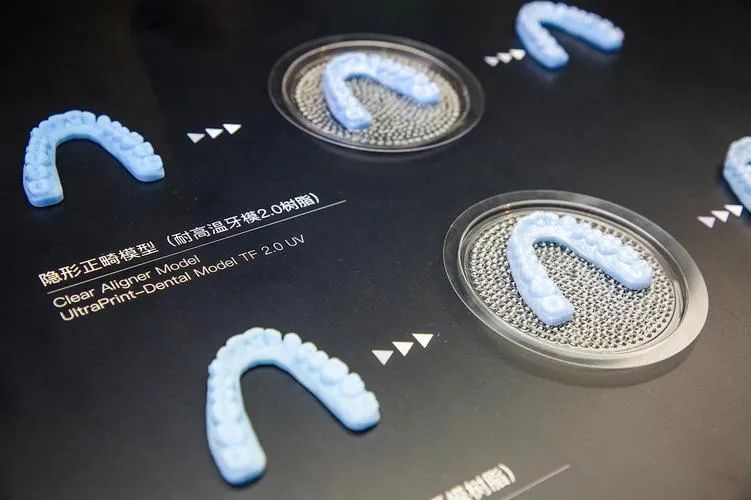
However, this production requires high humidity in the air; if the storage area is too humid, it is prone to deformation; additionally, this type of material has a low density and is easily damaged during use.Based on intraoral digital scanning models and photopolymerization 3D printing technology, resin models have seen significant improvements in precision, strength, and ease of preservation. The application of 3D printing technology in orthodontic treatment can improve the alignment of teeth, and the orthodontic correction models produced by this technology can fit precisely with the patient’s periodontal tissues, avoiding damage to periodontal tissues after wearing, ensuring high clinical application safety.
- Dental Implants
With the increasing demand for aesthetics, the demand for dental implants has also significantly increased. Dental implant technology involves placing an artificially made model into the gap in the gums to replace the function of the original teeth, serving as an effective insertion model.
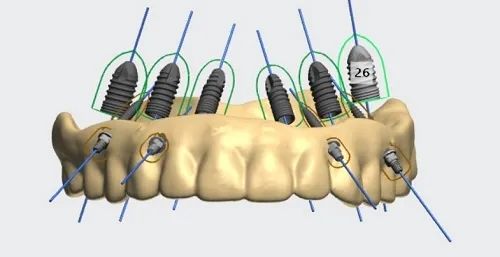
In traditional dental implant treatment, multiple steps are required, including tooth extraction, preparing the implant site, implanting bone powder, covering, and embedding, which generally takes 8 hours, with a treatment cycle lasting up to 7 months and costs exceeding 10,000 yuan.China’s dental implant technology has developed relatively late, and implants need to be purchased from abroad, lacking self-characteristics and facing many restrictive factors, leading to high treatment costs and limited clinical application.3D dental implants can be placed into the existing gaps in the gums, simplifying the treatment method, achieving seamless integration with the original pressure grooves, significantly reducing damage to surrounding tissues, ensuring higher safety, and the treatment cycle is 1-2 hours, taking only 0.5 hours to complete, significantly lowering clinical treatment costs, with expenses not exceeding 10,000 yuan, making it economical and popular among patients.Dental implants consist of a crown and an implant body, with the materials generally being pure titanium, which offers many advantages, such as mechanical properties and corrosion resistance, and is widely used clinically. There are various types of implant materials, including ceramic implants and composite materials; crown materials also vary, including gold, nickel-chromium alloys, etc.Utilizing 3D technology for dental implants, after a bone integration period of 3 to 6 months, the implant can firmly bond with the alveolar bone, achieving ideal therapeutic effects. However, attention should be paid to the following issues during use:(1)Doctors need to change traditional implant conceptsTraditional implant technology relies on the experience of dental practitioners. During treatment, it analyzes parameters such as tooth position and angle based on 2D data, which is highly subjective and prone to errors, affecting surrounding important tissue structures. Doctors adopting 3D implant technology must shift their mindset to provide patients with high-end and precise treatment services based on high-end restoration materials, mastering advanced technology.(2) Reflecting Personalized Implant PlansEach patient’s alveolar bone is different, which raises higher demands for treatment precision. Currently, most personalized implants are SLS printed, with higher strength and precision, and can reduce the costs of imported materials. Doctors can choose comfortable and suitable restoration methods based on the patient’s situation.(3)Removable DenturesTraditional dentures largely depend on the skill level of the technician during processing, relying significantly on the technician’s experience, leading to a higher error rate. Thus, the dentures produced have a high rework rate, poor treatment effects, low comfort for patients, and low satisfaction.
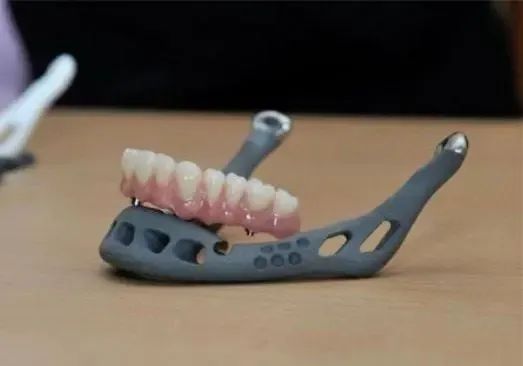
With the development of digitized counting, especially the emergence of 3D printing technology, the dental industry has begun to transform into a high-tech modern technology enterprise.Handcrafted denture metal inner crowns are prone to deformation during processing, which can cause discomfort for wearers, requiring rework and correction, increasing time costs and affecting patient usage.Relevant research shows that optical scanning methods can obtain corresponding data, and local dentures formed by combining computer-aided design with 3D printing technology, compared to traditional impression techniques, have ideal structural characteristics and fit closely with the anatomical structure of the mouth. After close fitting, they can effectively reduce the pain level for patients and are significant in alleviating the resorption of the pressure socket bone.In addition, with the use of 3D technology and subsequent modification processes, the entire denture framework production time is significantly shortened, and tightness is enhanced, notably reducing the rework rate, positively impacting cost reduction and shortening patient waiting times.
3D Printing Technology Compared to Traditional Manufacturing Technologies Has Many Advantages:
-
Unlimited Design Space
For geometrically complex items, traditional manufacturing processes cannot process them, requiring decomposition and separate processing before assembly.
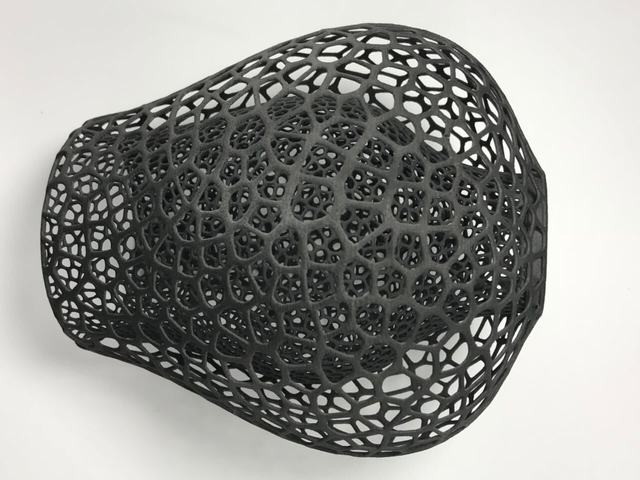
However, 3D printing decomposes objects into layered 2D areas, thus processing any complex object is not an issue; processing precision only depends on the smallest material particle that the printer can output.
This is the greatest advantage of 3D printing, allowing designers to create any complex geometric shape, offering limitless design space.
- 3D Printing Technology Is Zero-Skill Manufacturing
Traditional manufacturing equipment is large and requires high skills to operate. In contrast, 3D printers are compact, simple, and convenient to use; compared to expensive molds, 3D printing only requires a digital file to form.
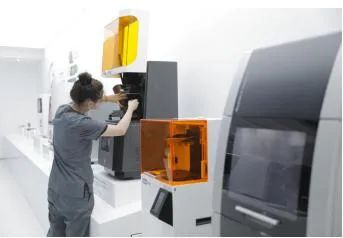
Therefore, through 3D printing, it is easy to achieve personalized design and customization of products, significantly shortening the product development time.This advantage allows even non-mechanical researchers to conduct related studies on geometry, structure, materials, etc., greatly deepening and expanding the relevant research issues in manufacturing.
- Unlimited Material Combinations
Multi-nozzle 3D printers can combine multiple materials for printing. Through stacking and combining materials, printed items have different physical and mechanical properties compared to single materials.
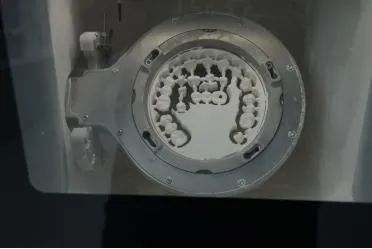
Thus, through combinations of different materials, new materials with varying performance can be produced. This advantage enables us to control the physical, mechanical, and structural properties of objects by controlling the distribution of materials, thus producing diversified items and increasing product flexibility.3D printing integrates cutting-edge technologies from various fields, including digital modeling technology, electromechanical control technology, information technology, material science, and chemistry.The three core components are materials, equipment, and modeling.(1) MaterialsUsed in 3D printing, including resins, metals, ceramics, plastics, or natural materials, these materials accumulate to form tangible functional products.(2) Equipment3D printing equipment forms products according to software (design data and production data) requirements. There are many types of existing 3D printing equipment, which will be introduced later.(3) ModelingThis is the software part of the 3D printing process, including slicing, model construction and optimization, and control of the forming process.3D printing provides convenient solutions for precision medicine.3D printing technology can synthesize three-dimensional models based on patients’ CT or MRI data, then print case models with a 3D printer, quickly obtaining a medical model in a very short time.It is applied in case analysis, surgical guides, to achieve visual design, minimally invasive operations, individualized reconstruction, and precision treatment. 3D printing technology provides clinical doctors with more intuitive and comprehensive preoperative planning and surgical simulation, maximizing surgical precision and effectively reducing surgical risks.
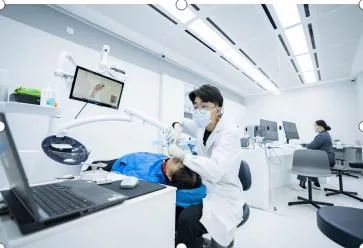
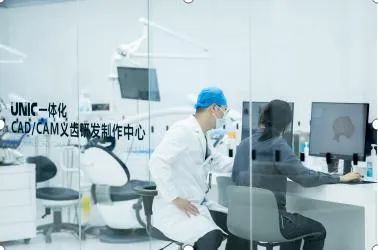
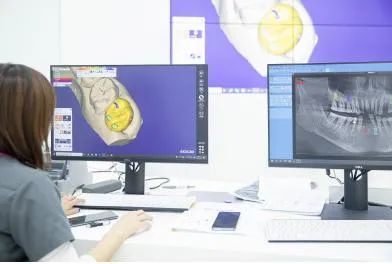
Since the rise of 3D printing technology, it has been increasingly applied in industrial design, medical, military, aerospace, and other fields due to its efficiency, convenience, and relatively low cost.
From a medical perspective, with the development of precision medicine and personalized medicine, 3D printing has been widely used in implantable bodies, orthopedic surgery, dentistry, complex surgical instruments, biological organ tissues, hearing aid shells, drugs, etc.
Among them, it plays an important role in precise surgical planning, real-time navigation during surgery, and postoperative quantitative evaluation.
In recent years, the development of 3D printing technology in the medical field has been rapid, achieving many accomplishments. For example:In 2016, Chinese scientists successfully implanted 3D-printed blood vessels into rhesus monkeys;In 2017, France completed the world’s first “3D printing-assisted customized bronchial implantation surgery”;In 2017, the smallest 3D-printed customized titanium hearing aid was born;In 2019, Tel Aviv University in Israel successfully 3D-printed a “complete” heart with cells, blood vessels, ventricles, and atria using the patient’s own tissue;
The rapid development of 3D printing in the medical field is due to the low ratio of medical resources to actual patients in the traditional medical field and the low precision of traditional medical instruments.
It is also understood that biological 3D printing technology can not only be used in dental implants but also in making personalized artificial knee joints, hip joints, etc. A research team from Tsinghua University has achieved single-cell biological 3D printing, mimicking the structure of natural tissues and organs through cell assembly.
This team has successfully produced products like rabbit radius and artificial ears. The 3D printing technology for active large sections of artificial bone has begun to apply for clinical trial numbers.
Xiao Lan, director of the New Materials Development Center of the Beijing Municipal Science and Technology Commission, stated that the biological 3D printing technology in Beijing is just starting, and the scale of this industry is expected to reach hundreds of billions in the coming years. ENDToday’s “Hot Knowledge” from XiaozhanDid it help everyone?Understanding your oral health is also very important!Xiaozhan hopes that both adults and children can have good teeth!!!
Editor: Xiao Shen
ShareCollectLikeView