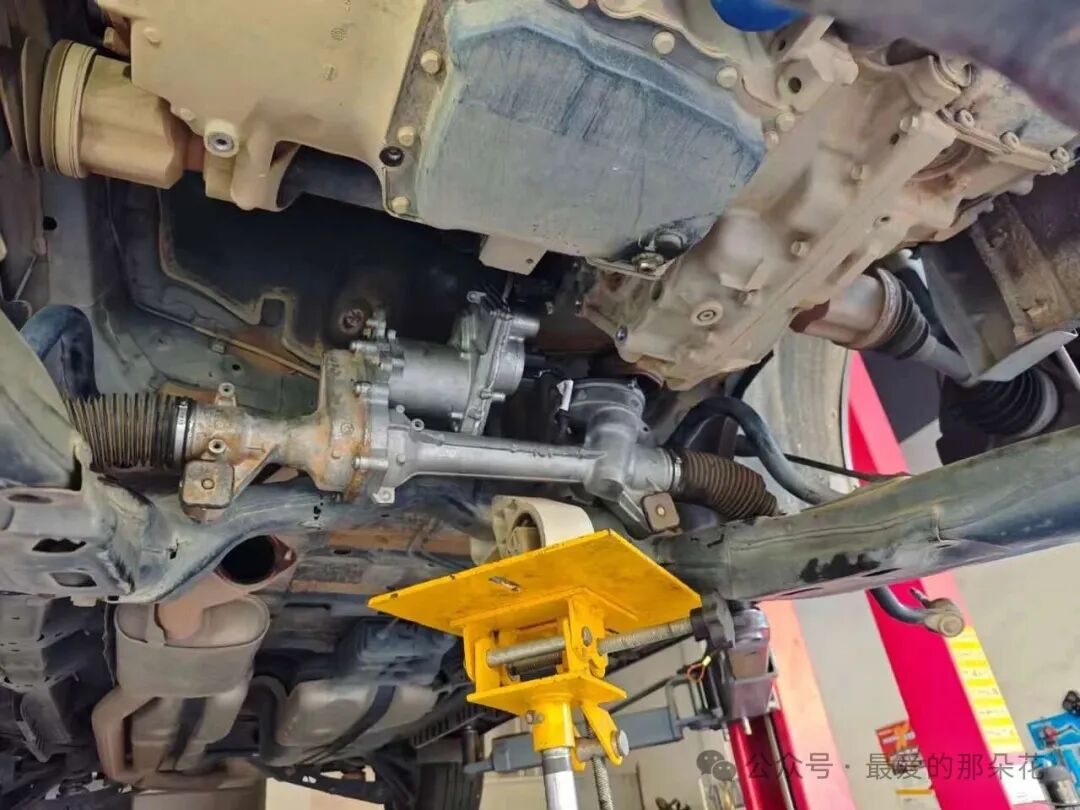
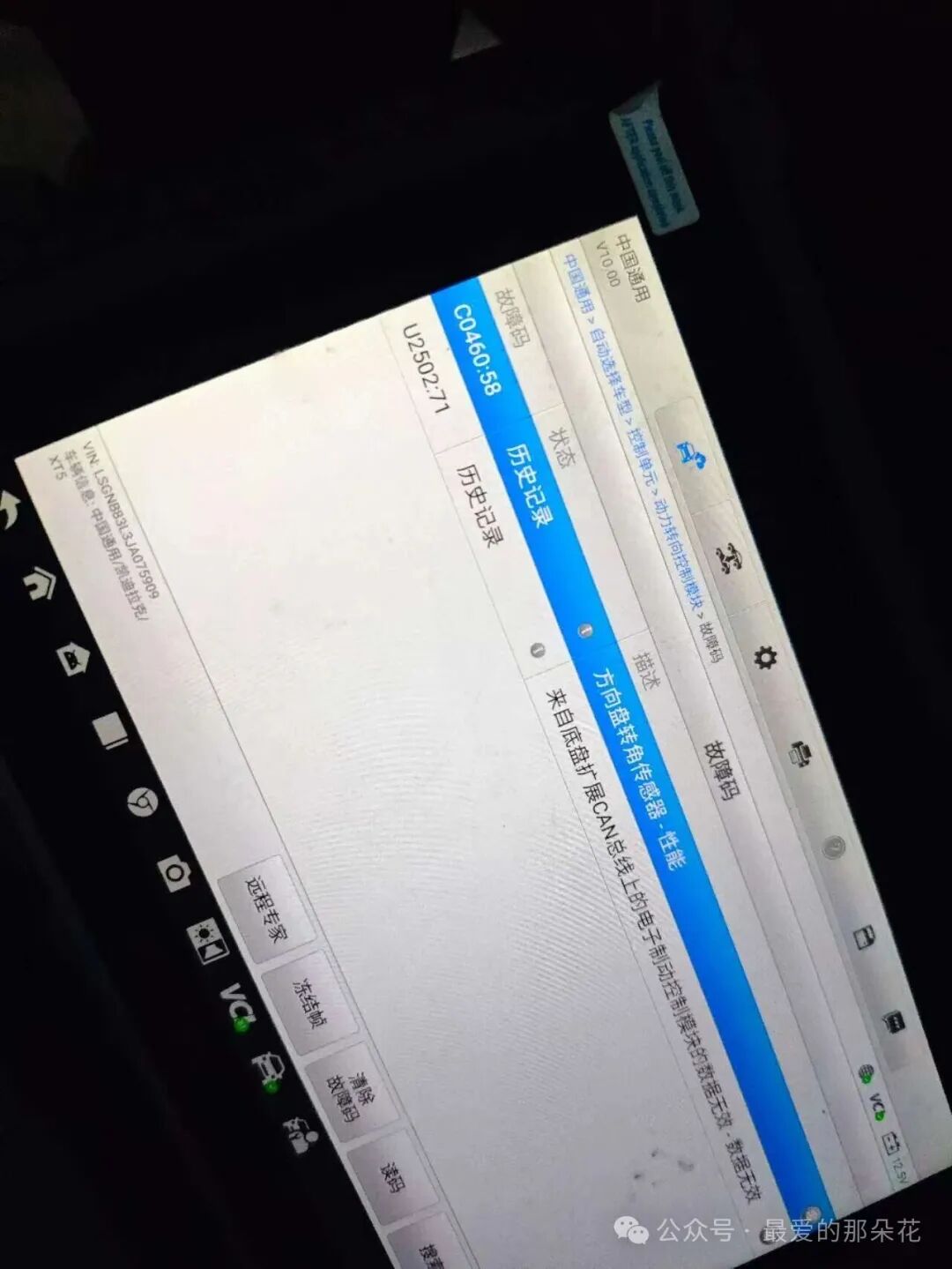
From the fault codes, there are issues with the “Steering Wheel Angle Sensor – Performance” and “Invalid data from the electronic brake control module on the chassis expansion CAN bus – Data Invalid.” Combined with the components (power steering-related parts), it is speculated that there may be a fault with the steering wheel angle sensor itself, or there may be issues with the signal transmission between it and the power steering system or electronic brake control module. It is also possible that there are abnormalities in the circuits related to the power steering control module.
Solution: First, check the steering wheel angle sensor to see if it is securely installed and if the wiring connections are normal. If the wiring is fine, try calibrating the steering wheel angle sensor to see if it resolves the performance issue. If the fault persists after calibration, the steering wheel angle sensor may need to be replaced. Additionally, check the communication status of the chassis expansion CAN bus to ensure there are no short circuits or disconnections, ensuring normal data transmission between the electronic brake control module and the power steering control module. Also, inspect the related circuits of the power steering control module for any poor connections.
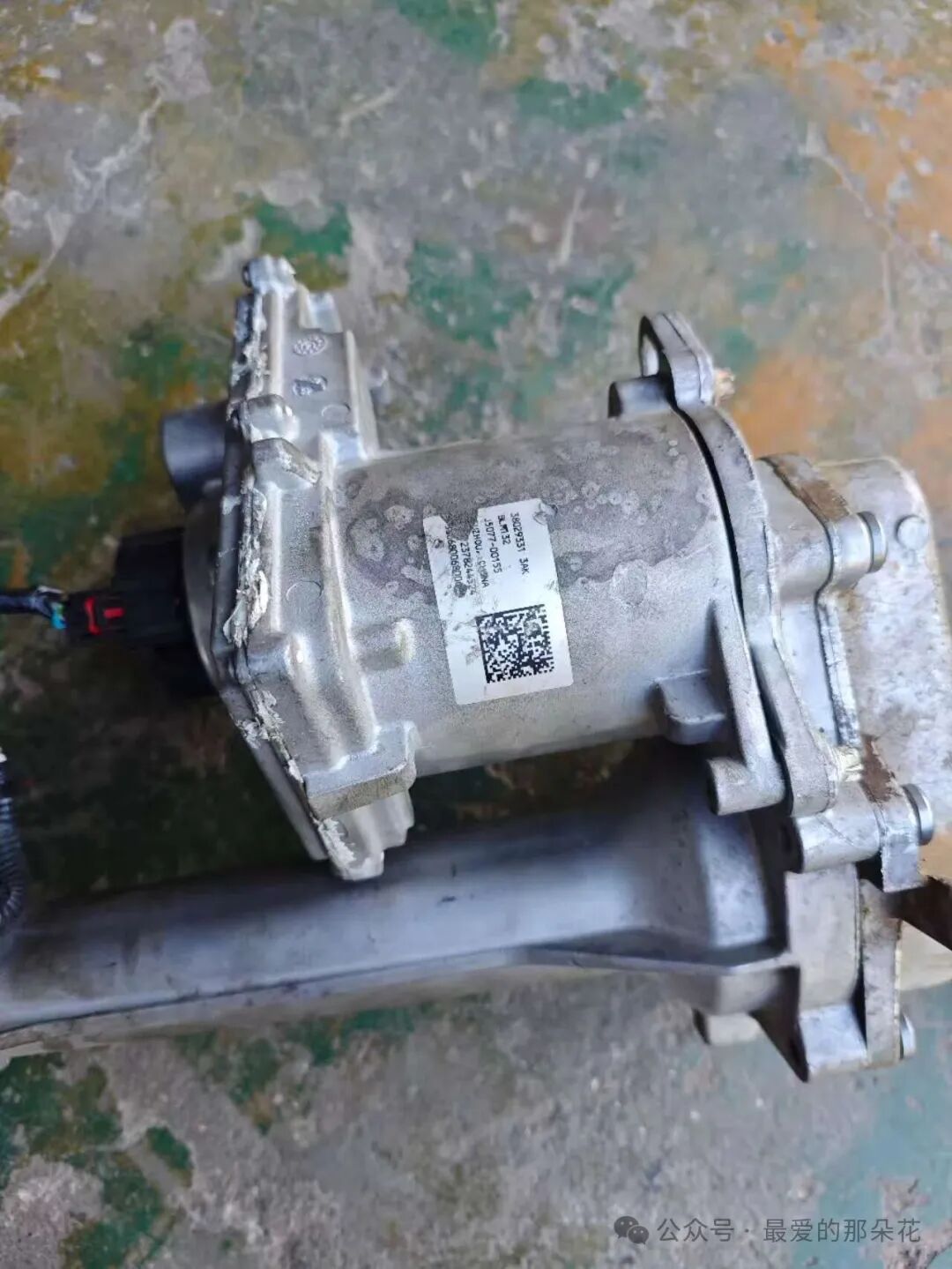
When replacing the steering wheel angle sensor, the following considerations must be noted to ensure safe operation and normal functionality:
1. Safe Operation: Prevent accidental airbag deployment. Before removing the airbag, be sure to discharge static electricity from your body (e.g., by touching a metal door latch) to avoid static electricity triggering the airbag unexpectedly, ensuring operational safety.
2. Steering Wheel and Airbag Disassembly Details • Before removing the airbag, turn the steering wheel to an appropriate angle (e.g., 90 degrees clockwise) to facilitate prying open the airbag clips on the back of the steering wheel; after prying open the clips, return the steering wheel to the neutral position, turn off the ignition, remove the key, and gently turn the steering wheel to lock it in place to prevent it from rotating freely during subsequent operations. • When disconnecting the airbag wiring harness, pay attention to the color coding of the harness (e.g., yellow, blue wires) and ensure that the installation strictly follows the color coding to avoid incorrect connections that could affect functionality.
3. Protection of the Clock Spring (Spiral Cable) The rotation range of the clock spring is limited (usually only able to turn 2 turns left or right from the center position). During disassembly and assembly, do not over-rotate the clock spring, as this may cause it to break, directly affecting the transmission of the steering wheel angle signal.
4. Alignment of the Sensor and Clock Spring Installation • The steering wheel angle sensor is often connected to the clock spring assembly via plastic clips and positioning grooves. During disassembly and assembly, carefully align the positioning grooves and clips to ensure the sensor is properly installed, avoiding signal anomalies due to misalignment. • Some vehicle models (e.g., Toyota) have sensors with a locking pin; during installation, the sensor must be precisely aligned with the clock spring before removing the locking pin to ensure the sensor is in the neutral position (to prevent angle deviation after installation).
5. Power Supply and System Power-Off Requirements Before replacement, disconnect the negative terminal of the battery, and for some vehicle models (e.g., certain Toyota models), it is also necessary to disconnect power for at least 90 seconds to allow systems like SRS (airbags) to fully discharge, avoiding damage to the sensor or vehicle electronic systems due to “live operation.”
6. Calibration and Matching After Installation After replacing the sensor, use a diagnostic computer to perform the following operations: • Reset and center the steering wheel angle sensor to ensure that the neutral position recognized by the sensor matches the actual position. • Some vehicle models (e.g., Volkswagen) require coding and matching (copying the old sensor’s system identification code and software coding to the new sensor) to ensure normal communication between the sensor and the vehicle system, eliminating fault codes from systems like ESP and vehicle stability control.
7. Sensor Damage Prevention The steering wheel angle sensor is sensitive to impacts and vibrations; during disassembly and assembly, avoid dropping or using excessive force; if the sensor and clock spring are of an “integrated structure” (as in some vehicle models), extra care should be taken to avoid rotating the clock spring arbitrarily to prevent data loss from the sensor.
By following the above considerations, operational errors can be effectively avoided, ensuring that the steering wheel angle sensor replacement allows the vehicle’s steering, ESP, and other system functions to operate normally.