Elon Musk has once again made a shocking prediction that has stirred the technology and economic sectors. Recently, at the U.S.-Saudi Investment Forum, he stated that artificial intelligence (AI) and humanoid robots will fundamentally change the structure of human society in the coming decades—poverty will be eliminated, wealth will be universally enhanced, and work will no longer be a necessity for survival, but rather a personal choice.Is work no longer necessary? Musk: Future employment will be like ‘gardening or playing video games’ as a hobby.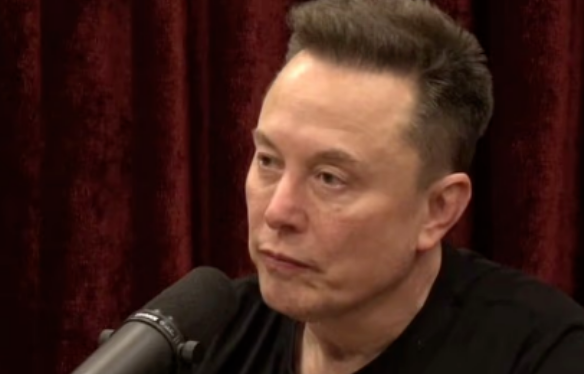 When asked about the long-term impact of AI and robots on the labor market, Musk presented his so-called “10 to 20 years” prediction window. He pointed out that in a world with highly developed technology, humans “will no longer have to work, but can choose to work.”Musk used everyday examples for comparison: “You can go to the store to buy vegetables, or you can grow them in your backyard. Growing vegetables in the backyard is more labor-intensive, but some people will still do it because they enjoy gardening.”He described the future ‘work’ in a similar way—it will no longer be a means of survival, but rather akin to a hobby or a personal achievement activity. However, he also emphasized that achieving this social structure will require significant technological breakthroughs and long-term efforts.Will AI and humanoid robots ‘eliminate poverty’? Musk: Money will eventually become unimportant.Musk further pointed out that with the explosive growth of AI computing power and the proliferation of various robots, the productivity of human society will become almost limitless. He predicts that the combination of AI and robots will:
- Completely eliminate poverty
- Make everyone wealthy
- Redefine the economic system and the concept of wealth
“In such a world, money may ultimately become unimportant,” Musk stated.The Next Generation Super Industry: Humanoid Robots Will Surpass the Smartphone MarketMusk also discussed the industrial transformation. He believes that humanoid robots will become the “largest” industry in human history, even surpassing the smartphone market. “Everyone will want one,” he predicts.Tesla is currently developing its own humanoid robot, Optimus, capable of performing repetitive, dangerous, or physically demanding tasks. Musk believes that as technology matures, a large number of companies will flood into the robotics market, and humanoid robots may become as ubiquitous as today’s smartphones.Despite Musk’s predictions being filled with vision, there remains a divide in the tech and economic sectors regarding the future of AI:
- Optimists believe that automation can indeed enhance productivity, reduce poverty, and free up human time.
- Pessimists worry that unequal wealth distribution and technological monopolies may exacerbate the wealth gap.
- Some experts point out that if AI is not properly regulated, it could pose significant challenges to employment, safety, and ethics.
Musk himself has repeatedly warned about the risks of AI, but this time he emphasized its positive potential, believing that with proper management, “the future will be an era of abundance.”As AI changes production modes and robots replace physical and routine labor, Musk’s predictions undoubtedly invite a reimagining of future society: a world without poverty, where people work for interest rather than survival.Will this come true or is it just a bold vision for the future? The world is closely watching the pace of technological development, and the humanoid robot market is rapidly taking off. The coming decades may become one of the most critical technological turning points in human history.