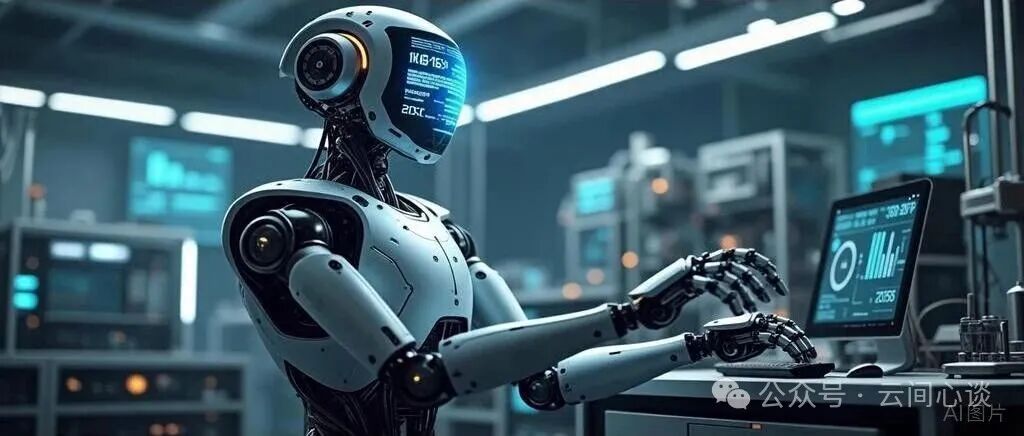
Xiao Zhao is the creative director of an advertising company, and despite his young age, he has already accumulated five years of work experience. Every day, he is busy with meetings, client communications, and creative planning, and he has long been accustomed to a fast-paced work life. Although the work pressure is high, he feels that he is always making progress and has received good evaluations from his team. However, recently, the company launched a new technology that disrupted his peaceful life—a creative assistant powered by artificial intelligence, named “Alpha,” officially went online and began working alongside him and his team.
Initially, Xiao Zhao did not pay much attention to it. After all, he had heard about the applications of AI in other industries, such as autonomous driving, intelligent customer service, and even AI writing. But when he personally experienced “Alpha” for the first time, he realized that this robot was far more powerful than he had imagined. Alpha could not only quickly generate creative proposals but also accurately adjust design directions based on client needs and market trends. In the creative drafts submitted by Xiao Zhao, Alpha provided almost perfect optimization suggestions: it precisely analyzed the target audience of the client, combined current popular trends, and even suggested some elements and color schemes that Xiao Zhao had never thought of.
“Isn’t this the work I usually do?” Xiao Zhao began to doubt whether his creativity still had competitive value.
The Power of AI: Challenging Traditional Thinking
With the launch of Alpha, the creative team in the company gradually realized that this AI was not just an auxiliary tool; it was actually changing the way the entire industry worked. It could generate a large number of creative ideas in just a few minutes, analyze client needs, and quickly learn from market feedback to optimize design proposals. Everyone in the department was required to collaborate with Alpha and gradually adapt to this new way of working.
Once, Xiao Zhao’s team received a project for advertising planning for a high-end brand, where the client required creativity that was both upscale and unique, appealing to the younger generation. Xiao Zhao and Alpha had a preliminary creative discussion, and Alpha proposed a bold creative direction by quickly analyzing a large amount of market research data. Xiao Zhao was initially skeptical, as this direction seemed a bit ahead of its time. But he decided to give it a try and submitted it to the client.
To his surprise, the client was very satisfied and even said it was better than they had expected. This successful case completely shocked Xiao Zhao—AI could not only replace repetitive tasks but also propose unexpected ideas in the creative field. Moreover, Alpha’s feedback was real-time, with every change reflected in the creative draft within seconds.
At this point, Xiao Zhao began to feel anxious. He worried that if AI became increasingly powerful, whether his and his team’s creativity would still hold value. Some colleagues even joked, “Will Alpha take our jobs?”
Competition Between Humans and AI: How to Find Your Position
As AI technology continues to develop, more employees began to face similar confusion and challenges. How to find their value in the face of AI became a question that every professional had to consider.
To cope with this change, Xiao Zhao decided to change his work approach. He realized that while Alpha could handle a large amount of basic work and data analysis, it always lacked the unique emotions and inspiration that humans possess. AI can analyze data and make decisions, but it cannot perceive human emotions, understand cultural backgrounds, or extract the essence of creativity from unique human life experiences.
Xiao Zhao decided to redefine his role as a creative director, no longer solely relying on his past experiences and skills. He began to focus more on team collaboration and innovation, stimulating the team’s inspiration through more communication and discussion. Meanwhile, AI remained a powerful auxiliary tool, helping the team quickly organize data, generate creative drafts, and provide market feedback. By collaborating with AI, Xiao Zhao could complete his work more efficiently rather than viewing it as a competitor.
At the same time, Xiao Zhao also began to emphasize enhancing emotional connections and interpersonal communication skills with his team members. Although AI can accurately analyze market needs, it cannot replace emotional communication between people. Xiao Zhao started to spend more time communicating with clients and brainstorming with the team, deeply exploring brand stories and emotional resonance to create more humanized creativity.
AI and Humans: Coexistence or Competition?
Months later, Xiao Zhao found that although Alpha helped the company improve work efficiency and creativity quality, team members did not feel replaced. On the contrary, they began to see AI as a tool for self-improvement, learning how to collaborate with AI and leverage their unique advantages.
The company’s leadership also realized that AI could not completely replace human creativity. Although Alpha’s efficiency and data analysis capabilities are unparalleled, creativity and humanistic care remain areas that AI cannot touch. Therefore, the company began to place more emphasis on the mode of “human-machine collaboration,” where AI and human employees complement each other’s roles in actual projects, combining their respective strengths to create more valuable outcomes.
Xiao Zhao’s team gradually found their new positioning. They no longer viewed AI as a competitor but instead worked with AI to create advertising content that better meets client needs and is more innovative. By continuously adjusting their work model, the team not only maintained a leading position in creativity but also improved overall competitiveness through efficient workflows.
Conclusion: Embracing the Challenges and Opportunities of the AI Era
Xiao Zhao ultimately understood a principle: in today’s rapidly developing AI landscape, humans do not need to compete with AI but should learn how to coexist and progress with AI. AI is a tool, not an opponent. Only by discovering their unique value in creativity, emotion, and culture can humans secure a place in the future workplace.
Today, the application of AI in the advertising industry is becoming increasingly widespread, but as Xiao Zhao discovered, the balance between technology and humanity is the key to success. AI can accelerate our work but cannot replace the creativity and emotions deep within us.
In the future workplace, how to collaborate with AI will determine each person’s career path. And each of us needs to find new ways to develop alongside AI in this transformation.