Antarctic Bear Guide: Hundreds of certified 3D printed parts have been applied in ASML lithography machines.
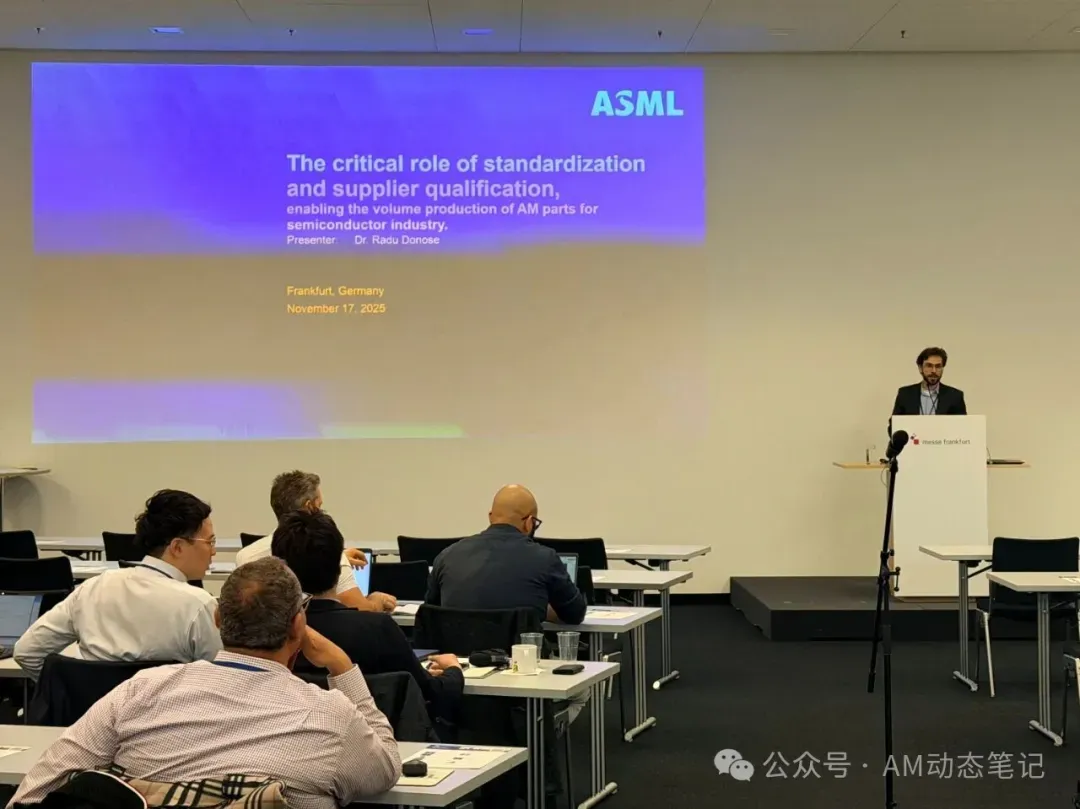
According to Antarctic Bear, on November 17, 2025, Dr. Radu Donose, Lead Architect at global lithography giant ASML, delivered a speech titled “Key to Mass Production of Additive Parts in the Semiconductor Industry – Standardization and Supplier Certification” at the ASTM Formnext Additive Manufacturing Innovation & Standards Summit.
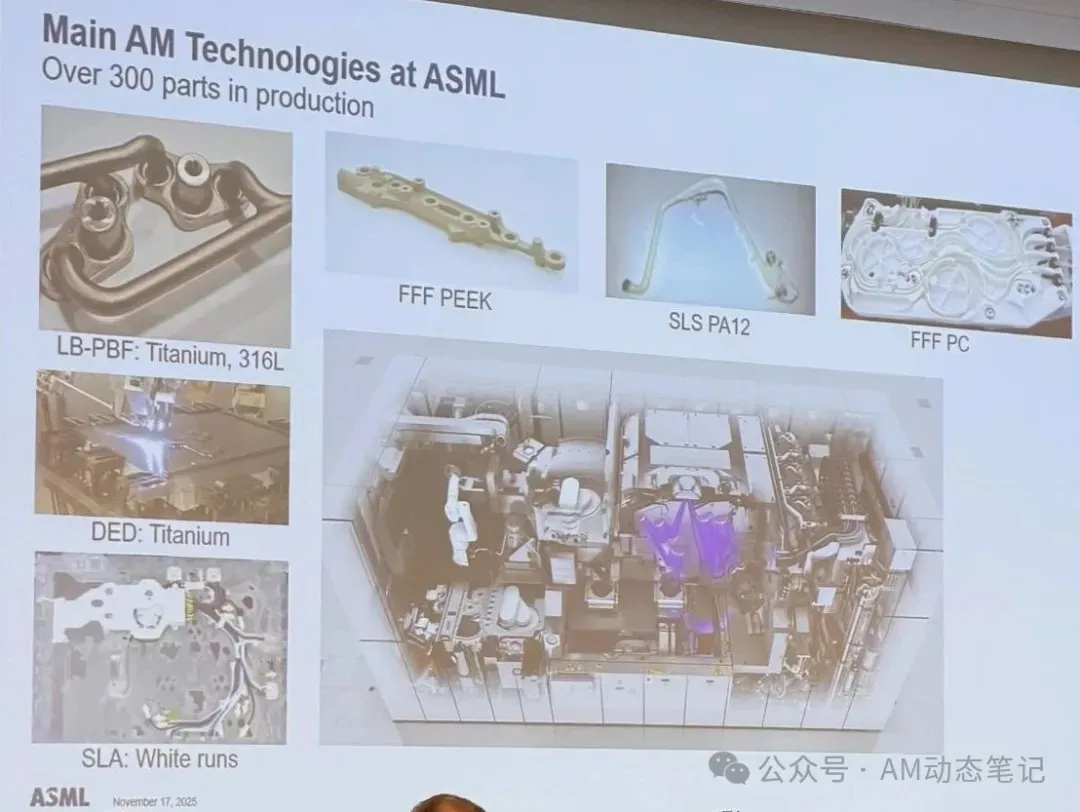
Currently, over 300 components in ASML lithography machine production are processed and certified using additive manufacturing techniques, including but not limited to titanium alloys manufactured by LB-PBF processes, 316L stainless steel parts; titanium alloy parts manufactured by DED processes; resin parts manufactured by SLA processes; PEEK and PC parts manufactured by FFF processes; and PA12 parts manufactured by SLS processes.
Four Reasons for Using Additive Manufacturing in Lithography Machines:
1. Innovation in part design and efficiency of iteration
2. Integration of complex functional components saves space and enhances functionality
3. Improvement in part performance (dynamics, thermal conductivity, fluid optimization, etc.)
4. Cost reduction (shorter production cycles + lower CO2 emissions)
Four Requirements for Using Additive Manufacturing Processes in Lithography Machines:
1. Cleanliness of parts (residual powder and surface roughness affect part quality)
2. Mechanical properties must be equal to or greater than those of traditional and machined parts
3. Lower porosity of parts ensures good corrosion resistance and performance
4. Higher precision
Certification of Additive Parts
Based on the complexity of the components, different additive parts are classified into three levels. Using reference ISO/ASTM international standards, different certification requirements are proposed for different levels of parts.
Level One Parts (No Complex Design):
Meet the ISO/ASTM 52930:2023 standard “Additive Manufacturing – Qualification Principles – Installation, Operation, and Performance Confirmation of PBF-LB Equipment (IQ/OQ/PQ)”
Meet the ISO/ASTM 52901:2018 standard “Additive Manufacturing – General Principles – Requirements for Procurement of Additive Manufacturing Parts”
Level Two Parts (Some Complex Design):
Meet all Level One part requirements
Meet the ISO/ASTM 52907:2019 standard “Additive Manufacturing – Raw Materials – Characterization Methods for Metal Powders”
Meet the ISO/ASTM 52928:2024 standard “Metal Additive Manufacturing – Raw Materials – Powder Lifecycle Management”
Meet other additional internal standards of ASML
Level Three Parts (Very Complex Design):
Meet all Level Two part requirements and the ISO/ASTM 52904:2019 standard “Metal Additive Manufacturing – Process Characteristics and Performance – Metal Powder Bed Fusion Processes Meeting Critical Application Requirements”
More Risk Analysis
Conclusion
Additive manufacturing is driving the development of the semiconductor industry. The additive manufacturing process brings more design freedom and performance improvements to the industry. The adoption and application of international standards are key to enhancing the maturity of additive processes, especially in the production of lithography machine products. Strengthening internal demands based on international standards can achieve better product quality control.
Bonus: After the presentation, representatives from the Japanese optical group communicated with ASML experts, particularly regarding whether the relatively expensive additive manufacturing technology used in products like lithography machines would impact product costs. ASML experts responded that since ASML’s lithography machines are high-end products with sufficient profit margins, the performance improvements brought by additive parts are evident. However, low-end related equipment produced by Japanese manufacturers may not yet be suitable for extensive use of additive manufacturing technology.
Note: The content of the speech is from the ASTM Formnext Standards Innovation Summit
From November 18 to 22, 2025, the world’s top event in the field of additive manufacturing – Formnext 2025 will be grandly held at the Frankfurt Exhibition Center in Germany. Antarctic Bear, as a vertical media in the 3D printing industry, will conduct live video broadcasts on-site for four consecutive days, interviewing and reporting on numerous exhibitors. You can enter the 【Antarctic Bear 3D Printing】 video account → 【Live Replay】 to watch the replay.