
Click the blue text above to follow


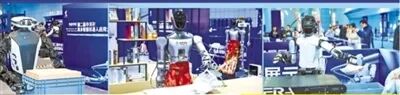
Recently, the cold weather in Beijing has been persistent, but the display center of the Zhongguancun National Independent Innovation Demonstration Zone is bustling with activity—99 teams brought their respective “intelligent laborers” to compete in the ultimate showdown at the 2025 Second Zhongguancun Embodied Intelligent Robot Application Competition. Reporters from Beijing Youth Daily noted that the participating robots each have their strengths: pouring coffee, folding clothes, conducting electrical inspections… They are showcasing their capabilities across various scenarios including industrial, commercial, and domestic settings, focusing on practical work rather than flashy tricks, truly achieving a transformation from “showpieces” to “pragmatic” robots, which has also been well-received by the market.
Of course, this is not the first time this year that the city has provided a platform for robots. As early as August, the 2025 World Robot Conference and the 2025 World Humanoid Robot Games were held in Beijing. A series of robot events, with prizes reaching hundreds of thousands of yuan, highlight the vigorous development of the capital’s embodied intelligence industry. Currently, Beijing, which firmly holds its position in the first tier of international science and technology innovation centers, has also achieved leading development in the embodied intelligence industry. According to data from the Beijing Municipal Bureau of Economy and Information Technology, the city has cultivated 57 specialized and innovative small giant enterprises in robotics, approved 33 surgical robot registration certificates, and gathered 30 humanoid robot manufacturers, all ranking first in the country. By 2027, Beijing aims to break through more than 100 key technologies, promote the large-scale deployment of 10,000 embodied robots, and cultivate a trillion-level industrial cluster.
Competition Upgrade
Folding clothes, pouring coffee, picking up trash—The competition emphasizes “Labor is Most Glorious”
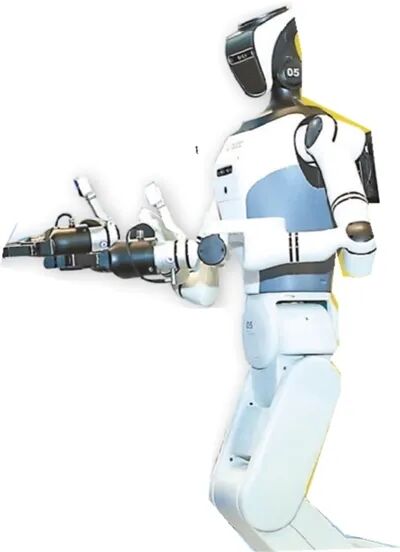
At the award ceremony of the Zhongguancun Embodied Intelligent Robot Application Competition held yesterday, a total of 54 participating teams won awards. On the morning of the event, reporters from Beijing Youth Daily saw a humanoid robot named “Mozi” standing in a “living room” scene, using its mechanical arm to accurately pick up scattered T-shirts, lay them flat, fold the sleeves, and tuck the corners, completing the task of folding clothes into neat squares in just one minute…
Scenes like “Mozi” working diligently were common throughout this competition. Reporters learned that compared to the first competition in 2024, which focused on biomimetic technology demonstrations, the 2025 competition has completely shifted to a practical application track—The finals held on November 17-18 featured six real-world competition zones, resembling condensed versions of social production scenarios: in the industrial zone, robots accurately completed parts assembly and screw tightening; in the commercial zone, operations like product retrieval and package delivery were seamless. Particularly noteworthy were the highly practical application scenarios represented by “pouring coffee” and “picking up trash,” which became major highlights of this competition.
Embodied intelligence, simply put, refers to artificial intelligence that possesses a “body”; it not only has the “strongest brain” but also “flexible limbs,” enabling a critical leap from “knowing” to “doing.” The 14th Five-Year Plan proposes a forward-looking layout for future industries, promoting quantum technology, biological manufacturing, hydrogen energy, nuclear fusion energy, brain-computer interfaces, embodied intelligence, and sixth-generation mobile communication as new economic growth points. The shift in this competition’s focus conveys a strong message—the ultimate value of robot technology lies not in how complex a “stunt” it can perform, but in whether it can integrate into human production and life, becoming a reliable, efficient, and even empathetic assistant.
“This is not just a simple adjustment of the competition, but a precise guidance for industrial development,” explained a relevant person in charge of the Zhongguancun Science City. This year’s competition, centered around the core theme of “Labor is Most Glorious,” aims to promote embodied intelligent robots to move out of the laboratory and into practical applications, achieving the goal of “working hard and doing well.” To this end, this year’s competition has set up three core tracks, creating a complete closed loop from underlying technology to scene implementation: the embodied intelligence model capability challenge focuses on breakthroughs in the “brain” and “small brain,” the scene application competition restores real working environments, and the academic frontier and industrial ecology competition links the innovation chain.
“The ultimate destination for robot competitions is inevitably to move towards broad industrial application scenarios, truly bringing substantial convenience to people’s lives and work,” said a representative from a participating company, expressing a consensus within the industry.
Industrial Implementation
Remote control in dangerous situations—Specialized robots become “new coworkers”
“Watch closely, it’s about to start sorting,” said Jin Ge, co-founder of Lingyu Intelligent, as the TeleAvatar robot began its autonomous recognition program. The robot smoothly and accurately sorted blocks, makeup bags, tissues, and cups into different areas. This robot not only possesses excellent task execution efficiency and stability but also employs high-performance “remote operation” technology.
At the scene, reporters saw an engineer wearing VR glasses remotely controlling the robot through gestures, with the mechanical arm moving precisely in accordance with the engineer’s hand movements, stacking blocks together accurately. “This ‘remote operation’ technology allows robots to handle complex and variable scenarios, which is much more practical than pre-programmed robots,” Jin Ge said. Operators can control the robot from a distance, even across cities or countries, making this technology particularly suitable for labor replacement in hazardous scenarios.
It is understood that Lingyu Intelligent is currently experimenting in application scenarios such as mining, tunnel excavation, nuclear power, and hydropower. Jin Ge provided an example: during tunnel blasting operations, explosives need to be accurately loaded into pre-drilled holes, a task that directly involves flammable and explosive materials and is influenced by limited working space and complex surrounding rock conditions, making it a high-risk procedure. Now, technicians can remotely control the robot to complete blasting tasks from a safe and well-lit control room.
At the finals, the four-legged robot dog “Gangbeng” brought by Zhishen Technology showcased its potential for application in specialized scenarios. This 15-kilogram bionic robot is the world’s first four-legged robot designed specifically for specialized industry applications, performing actions such as a 720-degree backflip and climbing slopes of 40 degrees, astonishing the audience. “It is not a performance prop, but a ‘vanguard’ for specialized industries, hailed as the ‘most durable’ robot product in its class,” said Liang Xiao, marketing director of Zhishen Technology. “Gangbeng” has all-weather and all-terrain adaptability and has been mass-produced for applications in power inspection, emergency rescue, and more. The company, established only two years ago, has achieved large-scale implementation through technological breakthroughs, with its products widely used in power inspection, emergency rescue, industrial logistics, and cultural tourism guidance.
Wei Hongxing, director of the Embodied Intelligent Robot Research Institute at Beihang University, stated in an interview that the application of embodied intelligent robots should prioritize industrial scenarios represented by manufacturing, especially targeting hazardous environments that lack personnel, as this aligns with both real needs and industrial development directions.
Promoting Industry through Competition
Can screw and play piano—Star products attract market attention
A high-level robot competition holds value beyond the competitive brilliance on the field; it acts as a powerful catalyst, accelerating the deep integration of technology, capital, market, and talent, promoting the leap from “samples” to “products” and then to “commodities.”
In the display area of the award-winning teams, a series of “dexterous hands” caught the attention of the audience. Two robots equipped with Linker Hand dexterous hands sat in front of a piano, playing the melody of “Blue and White Porcelain” on the black and white keys. “Last year we won the championship with dexterous hand technology, and this year, we want to showcase how to truly bring technology to life, integrating it into production and life,” said Zhang Yanbai, co-founder of Lingxin Qiaoshou, expressing the company’s development path.
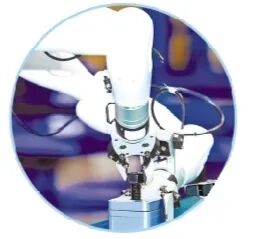
Nearby, at the “Lingxin Qiaocraft Workbench,” a robot equipped with the Linker Hand L20 dexterous hand can accurately identify the position and shape of parts through its vision system, adaptively adjust its gripping shape, and complete a series of precise operations such as picking, moving, and aligning holes, while also cooperating with operators to use electric screwdrivers for precise retrieval and tightening processes. This demonstrates the ideal application of dexterous hands in flexible assembly and flexible manufacturing in future industrial scenarios. Additionally, Lingxin Qiaoshou has launched a self-developed remote operation product that supports various interaction methods such as gloves, wearable exoskeletons, and VR, allowing for remote control of dexterous hands and robotic arms, providing real physical data for deep learning and training of embodied intelligence, and continuously upgrading dexterous operation technology.
This leap from “artistic display” to “industrial application” is driven by both technology and market forces. After participating in the 2024 competition, Lingxin Qiaoshou gained capital attention through the exposure from the competition, completing seed, angel, and Series A financing rounds within seven months of 2025. Now, its Linker Hand series dexterous hands hold over 80% of the global market share for high-degree-of-freedom dexterous hands, with monthly orders exceeding 1,000 units, making it the only company globally to achieve mass production of 1,000 high-degree-of-freedom dexterous hands. “The competition is a touchstone that reveals the industrialization potential of technology,” Zhang Yanbai said. “From last year’s single-point technological breakthrough to this year’s systematic solution, we are building a complete ecosystem for dexterous operations.”
In addition to Lingxin Qiaoshou, Zhongke Huiling, which stood out in the 2024 competition, also achieved a value leap through the competition. Its humanoid robot products won multiple first prizes on the competition stage, and the “event traffic” generated by the high attention quickly transformed into “capital energy” and “market momentum” for development. Over the past year, the company has completed multiple rounds of financing, injecting strong momentum into research and production. Notably, the robot “Lingbao,” which won the championship on the competition stage, has successfully entered the mining production line, achieving breakthrough applications in underground energy mining scenarios, transforming from “competition champion” to “industrial vanguard.”
·Memory·
54 participating teams won awards in three major competition tracks
Yesterday, the 2025 Second Zhongguancun Embodied Intelligent Robot Application Competition concluded in Beijing, with 54 participating teams winning awards in the “model capability, scene application, and industrial ecology” tracks. Companies and universities such as Lingyu Intelligent, Lingxin Qiaoshou, and Yinshi Robotics achieved first place in various competition tasks. Reporters from Beijing Youth Daily learned that this competition not only showcased the technological breakthroughs of embodied intelligent robots in the “thinking center” and “action center” but also highlighted the innovative vitality of the robotics industry in Haidian District.
As a core event for Haidian District to build a global innovation source for embodied intelligence, the three major competition tracks accurately reflect the core directions of industry development. In the model capability challenge, participating teams achieved breakthroughs in “brain” capabilities such as spatial understanding and task planning, as well as “small brain” capabilities such as real machine operation and physical execution, promoting the transition of intelligent models from algorithm feasibility to practical usability. The scene application competition highly restored real environments in industrial, commercial, and domestic settings, with robots performing excellently in tasks such as vehicle body inspection, joint assembly, and coffee making, showcasing the potential for multi-technology collaborative applications. In the academic frontier and industrial ecology track, innovations such as multi-legged robots and dexterous hands were prominently featured, presenting a complete innovation chain from basic research to industrial application.
Behind the competition is the “innovation ecosystem” tailored by Haidian District for the embodied intelligence industry. Data shows that Haidian District has gathered 12,300 artificial intelligence scholars and over 1,900 upstream and downstream enterprises. Among them, nearly 300 innovative companies related to embodied intelligent robots and 24 humanoid robot companies have formed a complete industrial chain centered on “brain, small brain, and body,” and have been selected as a characteristic industrial cluster of small and medium-sized enterprises in the robot industry by the Ministry of Industry and Information Technology for 2024.
In addition, targeted policy dividends continue to empower industrial development. At the technology research and development end, Haidian District provides up to 10 million yuan in computing power subsidies for the research and development of large embodied models; in terms of spatial guarantees, it has laid out specialized carriers such as the Zhongguancun (Haidian) Embodied Intelligent Innovation Industrial Park and the Zhongguancun (Haidian) International Robot Industrial Park, along with a number of characteristic spaces such as AI Innovation Street, AI Origin Community, and AI North Latitude Community; in terms of enterprise cultivation, it has constructed a full-chain incubation system with a maximum single support of 100 million yuan through incubator policies, accelerating breakthroughs in core technologies through mechanisms such as “ranking and commanding.”
“We always adhere to the dual-wheel drive of scene traction and technological breakthroughs, creating a tropical rainforest-like innovation environment for the development of the embodied intelligence industry through the model of ‘promoting industry through competition and gathering ecology through competition,'” said a relevant person in charge of the Zhongguancun Science City. In the next step, Zhongguancun Science City will continue to strengthen policy guidance, optimize spatial layout, and improve service platforms, promoting more robots to move from the competition stage to factories and into daily life, allowing intelligent laborers to become a new productive force driving high-quality development. (Reporter Wang Bin, provided by the organizer)
Source:Xinhua News
Submission Email:[email protected]Editor:Ma Aili Initial Review: Jin Jing Final Review: Zhao DongBinThe Science and Technology Association of the Ninth Division of Bayiang City