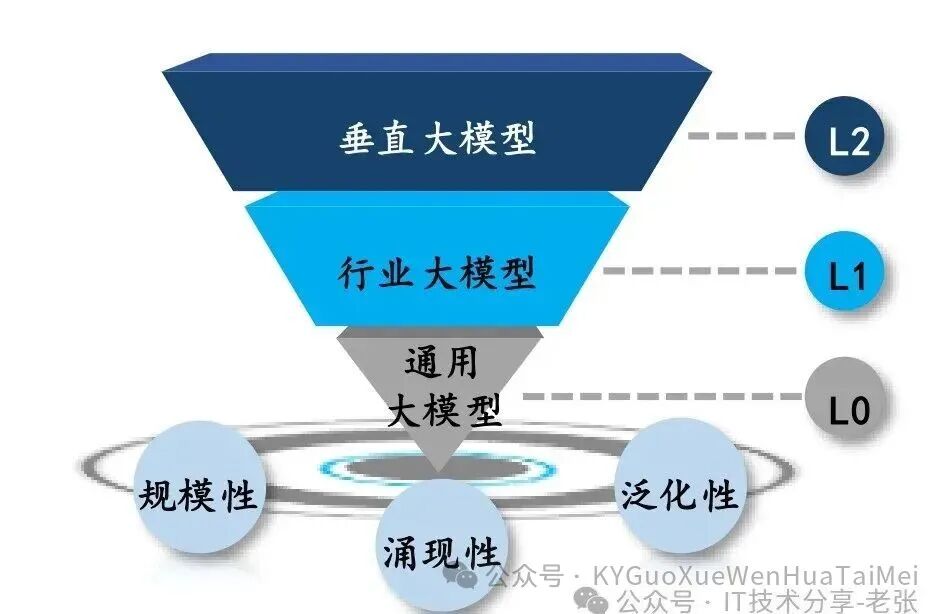
AI-Agent is like breaking down large models into smaller details, decomposing them into independent agents, similar to how biological organisms are composed of individual cells, where each cell contains genes. To be more precise: each cell carries the entire organism’s genes, all embedded with holographic images within the agents.
Each AI-Agent based on large models carries the “genes” of the adopted LLM large model, just like LEGO blocks, where each agent is endowed with a structure that is simple, clearly defined, and has a specific functional range of cells or genes. The “large” model exerts its power in the micro “small” agents, and the “large” must realize its true value within the “small,” reflecting a philosophical flavor of “the reverse is the way of movement.” –EBATOM
# Decoding the Agentization of AI Programming Assistants: The Technological Evolution of Tools like qwen-codeCLI and iFlow
## A Review of the Technological Development of AI Programming Assistants
The development of AI programming assistants has gone through several important stages.
The early stage featured simple code completion functions, where models predicted the next code snippet based on statistical patterns.
The second stage introduced more complex context understanding, allowing models to generate reasonable code based on the current file content.
The third stage integrated larger codebases, enabling models to reference more open-source projects for code generation.
We are now entering the fourth stage: agentization. AI assistants possess the ability to autonomously plan and execute multi-step tasks.
This evolution is not just about adding functions but represents a fundamental change in architecture, shifting from passive responses to proactive decision-making.
## Analysis of General Agent Technology Architecture
### Autonomous Planning Capability
The core of a general agent is its autonomous planning capability, which requires solving three key technical issues:
1. Task decomposition: breaking down high-level requirements into executable sub-tasks
2. Prioritization: determining the order of task execution
3. Resource scheduling: reasonably allocating computational and time resources during execution
### Context Memory Mechanism
Agents need to remember historical interactions and project states, which involves:
1. Long-term memory: storing project architecture, design decisions, and coding standards
2. Working memory: tracking current task progress and temporary states
3. Memory retrieval: quickly locating relevant information when needed
### Multi-Model Integration Technology
Different tasks require different models. Agents need to dynamically select and combine models:
1. Model routing: selecting the most suitable model based on task type
2. Model fusion: integrating outputs from multiple models
3. Model coordination: ensuring consistency in outputs from different models
## Technical Architecture and Implementation of qwen-codeCLI
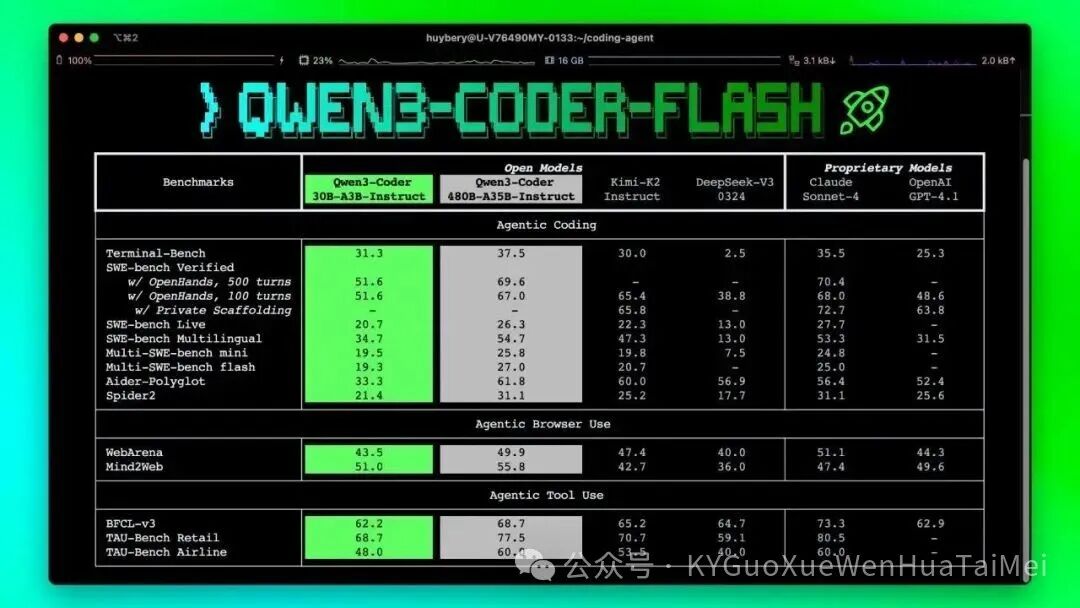
qwen-codeCLI is built on the Qwen3-Coder model, which is its core technological advantage.
In terms of task planning, qwen-codeCLI adopts a hierarchical planning architecture, breaking down complex development tasks into sub-tasks such as code generation, debugging, and testing.
For context management, qwen-codeCLI uses a sliding window mechanism to effectively handle long code contexts.
Its CLI architecture ensures compatibility with existing development toolchains, allowing developers to integrate it into their current workflows.
qwen-codeCLI also implements an intelligent caching mechanism, caching common code snippets and solutions to improve response speed.
## Natural Language Processing Technology of iFlow CLI
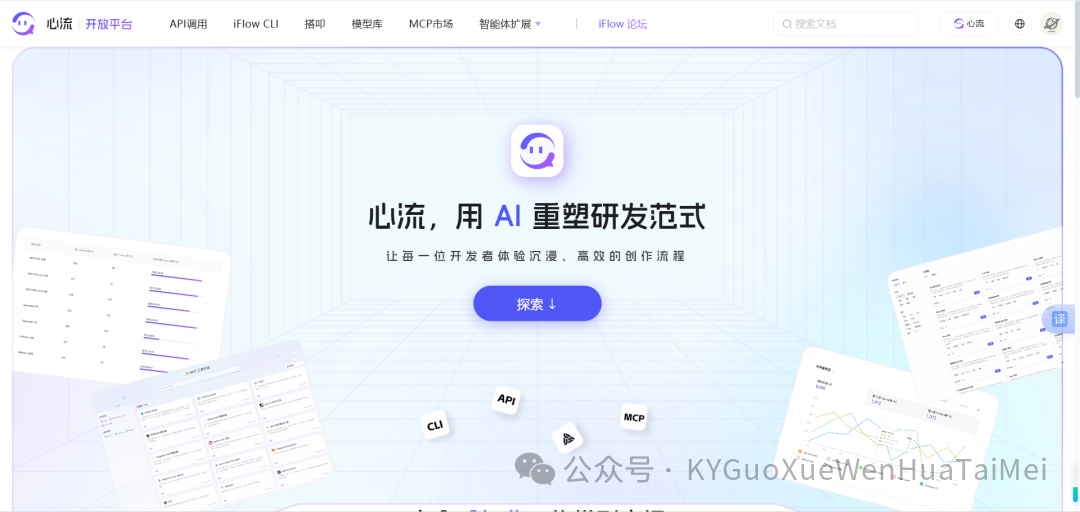
The technical focus of iFlow CLI is on natural language understanding.
It employs a multi-layer intent recognition architecture, first identifying the task type and then extracting key parameters and constraints.
In terms of language understanding, iFlow CLI uses context-aware intent parsing, considering historical dialogues to understand current instructions.
Its multi-modal processing capability is reflected in a unified encoding architecture, representing code, documents, and diagrams as vectors.
iFlow CLI also implements a dynamic tool invocation mechanism, calling different development tools and APIs as needed.
## IDE Integration Technology of qoderCLI/Qoder
The technical advantage of qoderCLI/Qoder lies in its deep integration with IDEs.
It achieves tight integration with development environments through an IDE plugin architecture, providing real-time code analysis and suggestions.
At the execution level, it implements real-time syntax checking and error prediction, preventing issues during coding.
The visual feedback mechanism allows developers to intuitively understand the AI’s decision-making process, increasing system transparency.
It also implements intelligent refactoring recommendations based on code structure and best practices.
## Key Technologies for Multi-Step Task Execution
Multi-step task execution requires several key technologies to support it.
First is the state tracking mechanism, which records task execution progress, intermediate results, and exceptions.
Second is the rollback recovery mechanism, which allows recovery to a consistent state when a task fails.
Third is the parallel execution capability, which executes parallelizable sub-tasks simultaneously to improve efficiency.
Finally, there is the quality assurance mechanism, which verifies the quality of results after each step to ensure the final output is correct.
## Future Directions of Technological Evolution
The agentization technology of AI programming assistants will continue to evolve.
At the model level, it will develop towards larger scales and stronger reasoning capabilities, supporting more complex task planning.
At the architecture level, it will evolve towards more efficient model scheduling and smarter context management.
At the application level, it will develop towards more natural interaction methods and broader task domains.
## Conclusion
The technological evolution of AI programming assistants demonstrates a fundamental shift from tools to agents.
This shift is not only functional but also architectural and interactive.
In the future, technology will continue to drive AI programming assistants towards becoming more intelligent and autonomous.