As the end effector for humanoid robots interacting with the environment, the “dexterous hand” is a culmination of cutting-edge technologies such as deep bionics, soft sensing, micro-electromechanical systems, and high-performance materials. [2].
The mechanical structures of different dexterous hands vary. [2]The first mass-produced five-finger dexterous hand from Dexterous Intelligence features 19 degrees of freedom and 23 sensors, with a lifespan exceeding 150,000 cycles. [3]The “dexterous hand” consists of five fingers, each with three joints, where each joint has one degree of freedom, and two degrees of freedom are distributed on either side of the index finger, responsible for lateral horizontal movement. [1]
In the industrial manufacturing sector [5], dexterous hands can perform precise assembly of small components in electronic device manufacturing, [5] such as installing mobile phone chips and soldering circuit boards. In automotive manufacturing, they can complete the installation of interior components and inspection of parts, [5] reducing labor costs and enhancing production automation levels. The dexterous hand products from Dexterous Intelligence’s DexRobot are widely used in industrial manufacturing. [5]
Control algorithms: Based on the vast amount of data obtained from sensors, control algorithms must provide real-time and precise control of the dexterous hand. For instance, through machine learning algorithms, the dexterous hand can learn from numerous grasping tasks and automatically optimize grasping strategies; model predictive control algorithms can predict future motion trajectories based on the current state and goals, adjusting control parameters in advance to improve operational stability and accuracy.. [5]
Service sector: In home services, dexterous hands can assist the elderly or those with limited mobility in completing daily tasks, such as retrieving items, opening and closing doors and windows, and cleaning. [5] Dexterous Intelligence’s DexRobot focuses on the needs of the service sector and may become a core component of household robots entering thousands of homes. In hotels and restaurants, they can facilitate item delivery and tableware collection, enhancing service quality and efficiency.. [5]
Research and exploration sector: In space exploration, dexterous hands can be used for equipment maintenance on space stations and collection of space samples. In deep-sea exploration, they can collect biological samples from the seabed and perform maintenance on underwater equipment in high-pressure and complex marine environments, expanding human capabilities for exploring unknown territories..
Mechanical structure design: Referring to the anatomical structure of the human hand, [5] the design of dexterous hands requires precise planning of joints, bones, and muscles. For example, to achieve hand-like grasping and pinching actions, it is necessary to reasonably set the degrees of freedom, range of motion, and transmission methods of the joints. For instance, the DexHand021 dexterous hand launched by Dexterous Intelligence has 19 degrees of freedom, allowing the fingers to flexibly bend and stretch, achieving 32 out of 33 functional actions of the human hand. [5]
Dexterous Intelligence has developed a remote operation kit and an embodied intelligence training platform that connects the visual-arm-hand-touch-motion technology chain, forming a complete technical solution for remote environmental operations with naked-eye 3D display devices/VR visual glasses, robotic arms, dexterous hands, and remote operation spaces, greatly enhancing the precision data collection capabilities of dexterous operations in remote environments. [4]
Drive and transmission technologies: Common drive methods include hydraulic drive, motor drive, pneumatic drive, and shape memory alloy drive. Hydraulic drive outputs high force but has a complex system; motor drive has high control precision and fast response, making it widely used; pneumatic drive is low-cost and clean, but the precision of force control is relatively low; shape memory alloy drive has unique deformation characteristics, suitable for specific scenarios. Transmission technologies include tendon transmission and linkage transmission, used to transfer the power of the actuator to various joints.. [5]
Sensing technologies: Tactile sensors are key to the dexterous hand’s perception, allowing it to sense information such as surface texture, hardness, and pressure distribution of objects, thereby adjusting grip strength and method to prevent objects from slipping or being damaged. Force sensors can measure the magnitude and direction of the force applied by the fingers on objects, achieving precise force control. Visual sensors, in conjunction with other sensors, help the dexterous hand identify the shape, position, and posture of objects, providing accurate positioning information for grasping actions. The dexterous hand products from Dexterous Intelligence’s DexRobot are equipped with an advanced multimodal perception system, with the DexHand021 featuring 23 sensors covering various types, including tactile and force sensors, deeply integrated with visual sensors, making the dexterous hand’s perception of objects more comprehensive and precise, providing a rich and reliable data foundation for subsequent intelligent control.
Dexterous Intelligence has launched the first domestically produced mass-produced high-degree-of-freedom five-finger dexterous hand, the DexHand021, which boasts high reliability, high integration, strong compatibility, easy maintenance, low power consumption, and multimodal capabilities, allowing it to perform tasks such as solving a Rubik’s cube with one hand, grasping multiple objects with one hand, and using common tools, achieving 32 out of 33 functional actions of the human hand. [3]
Led by an academician from the Chinese Academy of Sciences and a chief expert in robotic technology, Dexterous Intelligence is formed by a collaborative team of hardcore robotic scientists and experts, leveraging the research strength and talent advantages of Shanghai Jiao Tong University to jointly promote the development of humanoid and industrial robot industries, improving the technical level of robotic end effectors, and achieving the research, production, and sales of a general intelligent multimodal tactile-visual perception dexterous operation system. [4]
In October 2024, Dexterous Intelligence launched the first domestically produced mass-produced high-degree-of-freedom five-finger dexterous hand, the DexHand021, with a competitive retail price of only 68,000 yuan for the mass-produced version and the first batch of user experience prices, significantly lower than domestic and international peers, allowing more people to enjoy advanced robotic dexterous hand technology at an affordable price. [3]
Dexterous Intelligence follows the development philosophy of “exploring one generation, developing one generation, and mass-producing one generation,” and while launching the DexHand021 for mass sale, it is also simultaneously conducting exploration of the professional version of the DexHand021 and the development of the DexHand123 three-finger version: [4]
-
D
In June 2025, a joint research team composed of the Beijing General Artificial Intelligence Research Institute, Peking University, and other institutions successfully developed the world’s first robotic bionic dexterous hand with full-hand high-resolution tactile perception and complete motion functions. This breakthrough enables robots not only to grasp objects accurately but also to perceive force and position like human hands.
1. Drive system: Hollow cup motor breakthrough
The hollow cup motor, due to its coreless design, achieves a power density of 2.5 kW/kg and a response delay of less than 5 ms, becoming the “heart” of the dexterous hand. International giants Maxon and Faulhaber dominate 67% of the global market, while domestic manufacturers are accelerating their replacement:
2. Transmission system: The battle for micron-level precision
Transmission efficiency determines grasping stability, with three solutions competing:
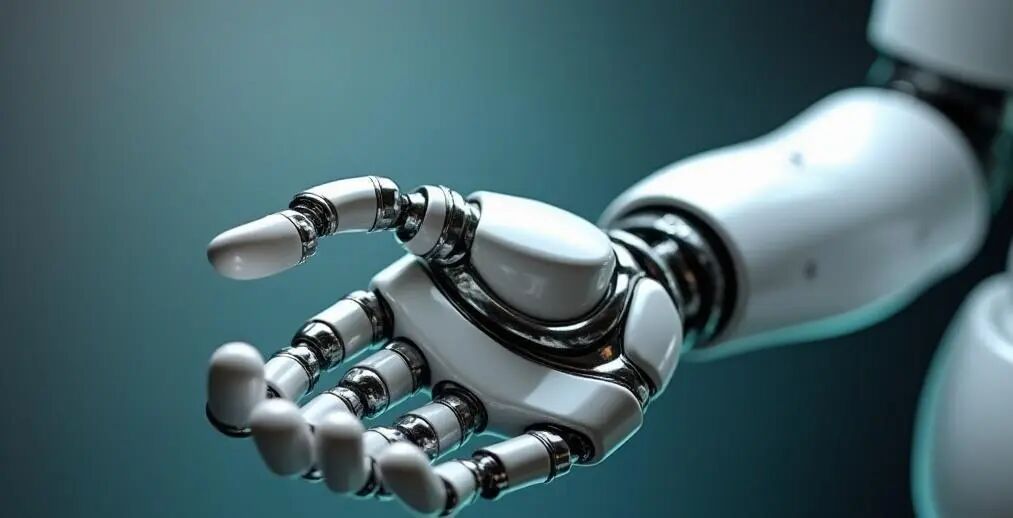
3. Sensing system: Tactile feedback determines the outcome
Tactile sensors are the “nerve endings” of the dexterous hand. The multidimensional force sensor developed by Keli Sensing can simultaneously detect forces along the X/Y/Z axes and torque, with an accuracy of 0.01 N and a sampling frequency of 1 kHz. Hanwei Technology’s subsidiary, Nengda, has developed a flexible tactile membrane that attaches to fingertips to identify the hardness of object materials, already used in research-grade dexterous hands.
1. Zhaowei Electromechanical: The disruptor of all-drive units
The world’s first dexterous hand with an integrated all-drive unit combines a 4 mm diameter miniature harmonic reducer with a hollow cup motor, weighing only 8 g per finger while achieving 3 degrees of freedom and a driving torque of 0.5 N·m. A 12-degree-of-freedom module customized for a leading company has passed 100,000 grasping tests and is now in mass production.
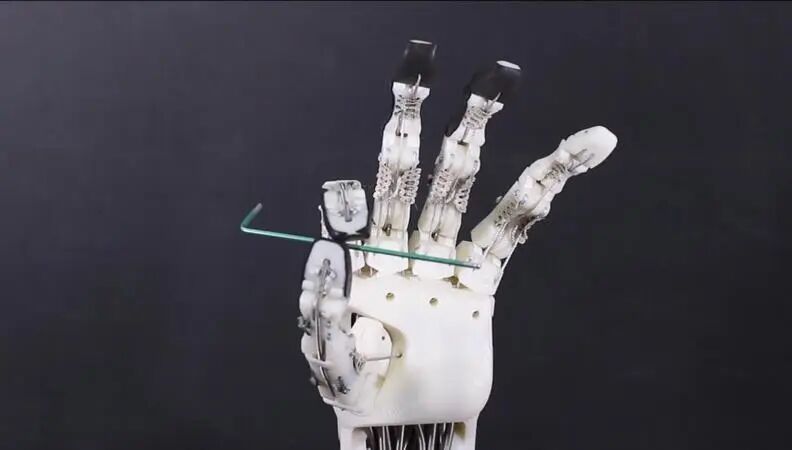
2. Leadshine Intelligent: The ceiling of force control precision
The 16-axis synchronous control system achieves a position accuracy of ±0.01 mm, with a force control range of 0.1 N-50 N infinitely adjustable. The servo system tested by Ubtech can stably grasp fragile items like eggs and is supplied in bulk to humanoid robot manufacturers.
3. Lingxin Dexterous Hand: The cost-performance butcher
The Linker Hand series has up to 42 degrees of freedom, supporting 360° finger rotation, with entry-level prices dropping to the ten-thousand-yuan level. Monthly orders exceed a thousand units, accelerating the implementation in medical assistance and industrial automation scenarios.
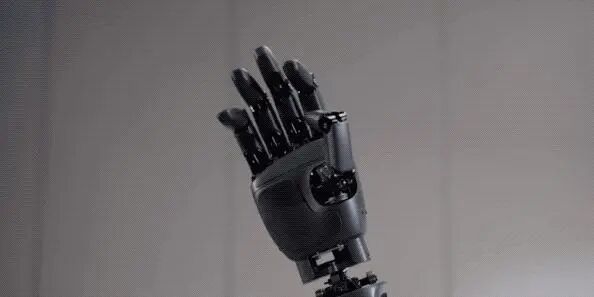
4. Yinshi Robotics: The benchmark for industrial-grade durability
The bionic five-finger dexterous hand has a lifespan exceeding one million cycles, with a response speed of 5 ms, and nearly 2,000 units delivered in 2024, covering international manufacturers like Agility.
5. Keli Sensing: Breakthrough in six-dimensional force perception
Customized six-dimensional torque sensors for dexterous hands, with an accuracy of 0.01 N, provide real-time analysis of force distribution. Flexible tactile sensors developed in collaboration with universities integrate temperature and humidity sensing, landing in precision assembly scenarios.
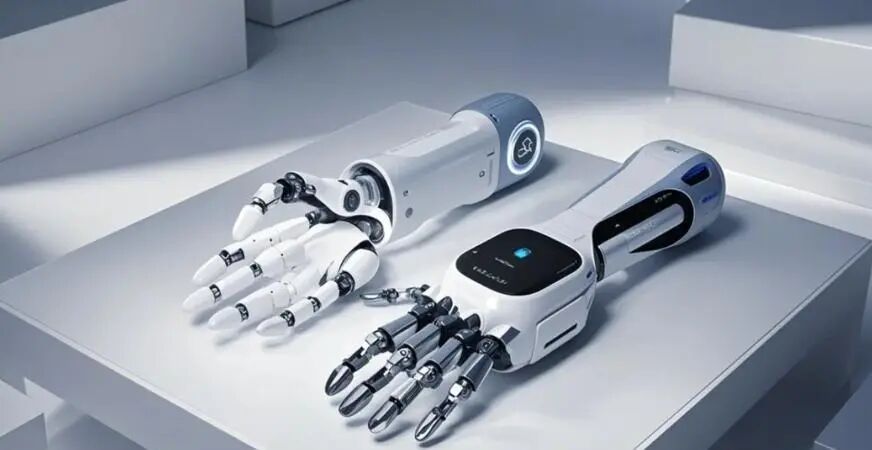
Cost reductions drive scaling: The price of domestic dexterous hands has dropped to one-tenth of international brands, with Shadow priced at 2.2 million yuan each, while Yinshi Robotics has compressed the price of products with equivalent performance from 50,000 yuan to below ten thousand.